
⚠️ We don't recommend this product
Two of five reviewers describe off-flavors — dirt, fishy, plastic — with one explicitly suspecting the leaves aren't pure pu-erh, and a third mentions weak flavor and missing earthiness; at five reviews, that off-note cluster outweighs the positives on taste.
Consider these alternatives


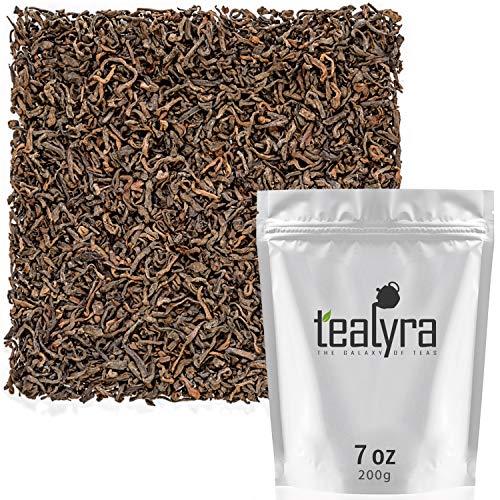


We analyze real customer reviews to surface what matters: key strengths, ideal use cases, and honest considerations — so you can make an informed choice.
Tealyra 35-Year Aged Guangxi Ripe Pu-erh Tea
Five reviews split sharply: two praise the company and packaging, two report off-flavors serious enough to question whether the leaves are pure pu-erh.
🍃 Strength: Light

What Stands Out
🍃 Flavor Profile
Strength: Light
One reviewer describes a deep auburn brew with full body, smooth texture, and no bitterness — the broad register you'd expect from a shou (ripe, post-fermented pu-erh). Others report dirt, plastic, and fishy notes that fall outside acceptable shou character. We have limited data so far, and what we have points in opposite directions.
🎯 Best For
Curious shou pu-erh drinkers willing to risk a polarizing bag
Brand: Tealyra
Category: Pu-erh Tea
As an Amazon Associate we earn from qualifying purchases.
About This Pu-erh Tea
Tealyra's 35 Years Golden Royal Pu-erh is a loose-leaf ripe (shou) pu-erh from Guangxi, positioned as a rare aged offering. Across just five reviews, opinion splits sharply. One reviewer describes a deep auburn brew with full body, smooth texture, and no bitterness — the broad register you'd expect from a post-fermented shou. Others, however, report off-flavors serious enough to question whether the leaves are pure pu-erh.
No consistent use-context signals emerge from such a small sample. The standard ripe pu-erh playbook of short, repeated steeps applies, but the data won't commit to a specific time-of-day or pairing recommendation. This is a moderate-caffeine tea, worth factoring in if you're considering it for late-evening drinking.
On brewing, one reviewer reports that a single teaspoon brews a full-bodied cup — a reasonable starting point for the short-steep, multi-infusion approach this ripe style rewards. Start there and adjust across successive infusions.
The honest caveats: two of five reviewers describe off-flavors — dirt, fishy, plastic — with one explicitly suspecting the leaves aren't pure pu-erh, and a third mentions weak flavor and missing earthiness. At this sample size, that off-note cluster outweighs the positives on taste. Company packaging and presentation are reported as strong, but what's in the cup is polarized, with one reviewer calling it not drinkable. We can't currently recommend it for gifting or as a first introduction to pu-erh, nor for drinkers seeking the deep, earthy register typical of well-aged shou.
For curious shou drinkers willing to risk a polarizing bag, it may still land. For most others, a better-vetted ripe pu-erh is the safer call.
Is Tealyra 35-Year Aged Guangxi Ripe Pu-erh Tea Right for You?
Is this pu-erh worth trying given the mixed reviews?
Honestly, the small review pool splits sharply — two reviewers praise the company and packaging while two report off-flavors serious enough that one suspects the leaves aren't pure pu-erh. At five reviews, the off-note cluster outweighs the positives on taste, so this is a risky pick if you want a reliable shou experience.
What does this pu-erh actually taste like?
The signal is contradictory at this review count. One reviewer describes a deep auburn brew with full body, smooth texture, and no bitterness — the broad register you'd expect from a ripe shou — while others report dirt, plastic, and fishy notes that fall outside acceptable shou character.
Is Tealyra a good tea brand for pu-erh?
Based on this product alone, the verdict is mixed — two of five reviewers specifically praise the company's quality, service, and presentation, but two others raised serious concerns about the tea inside the bag, including a suspicion of impurity. Brand-level reputation is best judged across their wider catalog rather than from this single sparse sample.
Is this a good pick for someone new to pu-erh?
No — the synthesis explicitly flags this as a poor choice for first-time pu-erh exploration or for gifting. With reviewers reporting weak flavor and missing earthiness alongside off-notes, a newcomer wouldn't get a representative impression of what well-made shou tastes like.
How should I brew this tea?
One reviewer reports that a single teaspoon brews a full-bodied cup, which is a reasonable starting point for the short-steep, multi-infusion approach ripe pu-erh rewards. With only one brewing data point in the reviews, treat this as a starting suggestion rather than a tested recommendation.
Does it have the deep, earthy flavor you'd expect from aged shou pu-erh?
Not reliably. Two of five reviewers describe weak flavor and a lack of the earthiness typical of well-aged shou, and the off-note cluster (dirt, plastic, fishy) suggests the character isn't landing as advertised. If deep, earthy register is what you're after, this isn't a confident bet at the current review count.
As an Amazon Associate we earn from qualifying purchases.
Will this keep me up at night?
The listing positions this as 'Bold Caffeine,' and the synthesis specifically flags late-evening drinking as a use case to avoid without considering caffeine load. Ripe pu-erh generally carries meaningful caffeine, so afternoon or earlier is the safer window.
What are the most common complaints about this tea?
The dominant complaint is an off-flavor cluster — dirt, fishy, and plastic notes across two of five reviewers, with one explicitly questioning whether the leaves are pure pu-erh. A separate concern is weak flavor and insufficient earthiness for what's marketed as a 35-year aged shou.
Who is this tea actually a fit for?
The synthesis narrows the audience tightly: curious shou pu-erh drinkers willing to risk a polarizing bag. Given the split reviews at this sample size, you'd want to be someone who treats it as an experiment rather than a reliable daily drinker.
Is the packaging and presentation reliable?
On that specific dimension, yes — two of five reviewers called out the company's packaging, presentation, and the intact condition of the leaves as strengths. The packaging side of the experience holds up better than the tea itself at this sample size.
Category: How much caffeine does pu-erh tea have?
Pu-erh is moderate-to-high in caffeine. The Yunnan large-leaf assamica varietal evolved high caffeine concentrations as a natural defense against insects, so the raw material is more caffeinated than the small-leaf cultivars used for many green and oolong teas. Fermentation does not reliably lower caffeine — one study of Xiaguan tuo tea showed caffeine actually increased by 59% over 56 days of pile fermentation as other leaf mass was consumed by microbes. The smoother feel of ripe pu-erh comes from the absence of catechins, not from less caffeine.
Category: How should I store pu-erh tea at home?
Pu-erh is the rare tea that benefits from breathing rather than being hermetically sealed. The widely accepted target is 20–30°C and 60–70% relative humidity, with stability prioritized over precision. A semi-sealed container (ceramic jar or unglazed yixing canister) in a dark, odor-neutral cupboard works well; in dry climates, a 'pumidor' — typically a cooler or unplugged fridge with two-way humidity packs — recreates the conditions pu-erh needs for slow microbial transformation.
As an Amazon Associate we earn from qualifying purchases.
Category: Does pu-erh tea expire?
Properly stored pu-erh does not expire the way fresh green tea does — it is designed to evolve over decades, and aged cakes from the 1990s (and earlier) are still actively drunk. However, pu-erh can be ruined by poor storage: relative humidity sustained above 75% encourages spoilage molds, prolonged dryness halts aging and dulls aromatics, and exposure to strong odors from a kitchen or aromatic woods gets absorbed permanently into the leaf. Stable, dark, odor-neutral conditions are the priority.
Taste Profile
One reviewer describes a deep auburn brew with full body, smooth texture, and no bitterness — the broad register you'd expect from a shou (ripe, post-fermented pu-erh). Others report dirt, plastic, and fishy notes that fall outside acceptable shou character. We have limited data so far, and what we have points in opposite directions.
Brewing: One reviewer reports that a single teaspoon brews a full-bodied cup — a reasonable starting point for the short-steep, multi-infusion approach this ripe style rewards.
Best Use Cases
🎯 Best For
- Curious shou pu-erh drinkers willing to risk a polarizing bag
⚠️ Not Ideal For
- Gifting or first-time pu-erh exploration
- Drinkers seeking the deep, earthy register typical of well-aged shou
- Late-evening drinking without caffeine consideration
How People Use It
No consistent use-context signals emerge from these five reviews — the standard ripe pu-erh playbook of short steeps applies, but at this sample size the data won't commit to a specific time-of-day or pairing recommendation.
What to Consider
- Off-flavor cluster: dirt, fishy, plastic notes — one reviewer suspects impurity
- Weak flavor and insufficient earthiness for an aged shou
- Polarized sentiment at low sample size — one reviewer called it not drinkable
⚠️ Important: This analysis is based on limited customer feedback (5 reviews). We've shared what we found, but there may be additional considerations we haven't captured.
About This Analysis
This analysis is based on 5 customer reviews. We're showing you everything we found, but with a small sample, there's a lot we likely haven't captured yet.
✅ What we're confident about: What customers love and best use cases
⚠️ What may be incomplete: Potential issues and considerations
For more perspectives, check customer reviews on Amazon.
Product Selection
In short: We only feature high-rated products.
Products on TeaDelight.net are selected based on strong Amazon customer ratings, sufficient review volume, and market presence. We focus on well-regarded products that tea enthusiasts are actively considering and purchasing.
As an Amazon Associate we earn from qualifying purchases.
You Might Also Like

✅ Long-lasting flavor across repeated steepings
Oriarmcha 2010 Lao Cha Tou Ripe Pu-erh Tea

✅ smoother, richer, sweeter than its price suggests
YiwuZhengshan Ancient Tree Pu'er Tea

✅ Fresh, never-bitter cup for the reviewers it lands with
FullChea Menghai Puerh Tea Cakes (2008/2018)

✅ Collectible premium tin and packaging