




We analyze real customer reviews to surface what matters: key strengths, ideal use cases, and honest considerations — so you can make an informed choice.
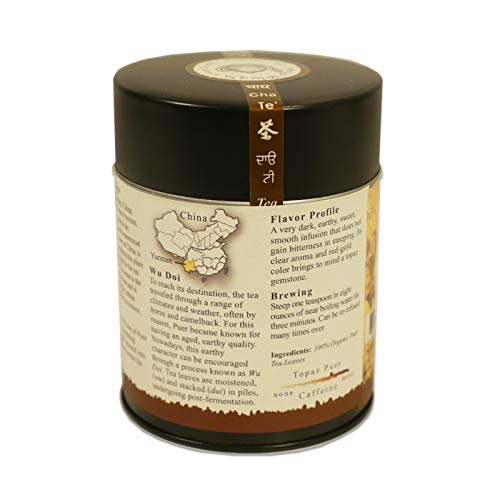
Tao of Tea Topaz Pu-erh Loose Leaf Tea
Earthy, dark, and unapologetically shou — this is pile-fermented pu-erh with the rich black-soil character the style is known for.
🎯 Best for: daily everyday brewing, gongfu-style sessions with many infusions
🍃 Strength: Bold

What Stands Out
🍃 Flavor Profile
Strength: Bold
Reviewers describe a smooth, complex profile with rich, dark, earthy depth — notes leaning chocolatey or mushroomy, layered with the classic 'pile flavor' (the barnyard-and-rich-black-soil aroma of shou processing — what happens when raw pu-erh is post-fermented for immediate drinkability). One drinker compares it to a robust, dry red wine; another to strong-tasting game meat.
✅ What Customers Love
- Smooth, complex profile
- Rich, dark, earthy depth
- Strong value with high infusion count
🎯 Best For
daily everyday brewing • gongfu-style sessions with many infusions • palate-cleansing alongside sweet foods
Brand: The Tao of Tea
Category: Pu-erh Tea
As an Amazon Associate we earn from qualifying purchases.
About This Pu-erh Tea
Earthy, dark, and unapologetically shou — this is pile-fermented pu-erh with the rich black-soil character the style is known for. Reviewers describe a smooth, complex profile with rich, dark, earthy depth, with notes leaning chocolatey or mushroomy and layered with the classic 'pile flavor' — the barnyard-and-rich-black-soil aroma that comes from post-fermenting raw pu-erh for immediate drinkability. One drinker compares it to a robust, dry red wine; another to strong-tasting game meat.
We'd reach for this as a daily brew — five reviewers report drinking it almost daily over months or years, which says a lot about how it wears with repetition. One pairs it specifically against sweet foods like pancakes, where the earthy depth cleanses the palate, and it slots in well for after-meal sipping when you want something dark and grounding without the brightness of a black tea.
Near-boiling water and 2-3 steepings work well in everyday brewing; in gongfu style, the leaves carry roughly fifteen short infusions per session, so a small measure goes a long way.
The 'pile flavor' aroma divides drinkers — fishy or barnyard to some — and that reaction is worth taking seriously if you haven't drunk shou pu-erh before. Two reviewers also report recent batches arriving in different packaging and tasting weak or grassy, so consistency may be hit-or-miss. Caffeine sits at moderate, so it's worth being mindful after mid-afternoon if you're sensitive.
Treated as a workhorse daily shou, it rewards both a strong pour against sweet bites and a patient gongfu approach across many short steepings.
Is Tao of Tea Topaz Pu-erh Loose Leaf Tea Right for You?
What does this pu-erh actually taste like?
Across roughly 10 reviewers, the profile reads smooth and complex with rich, dark, earthy depth — notes leaning chocolatey or mushroomy, with the classic shou 'pile flavor' (the barnyard-and-rich-black-soil character of post-fermented pu-erh). One drinker compares it to a robust, dry red wine; another to strong-tasting game meat.
Is the 'fishy' or barnyard smell really that strong?
It divides drinkers — a few reviewers describe a fishy or barnyard-and-fermented-hay note in the dry leaves, while others read the same aroma as rich black soil and pile flavor they actively seek. If you're new to shou pu-erh and aroma-sensitive, this one leans into the style rather than softening it.
Can I drink this every day?
Five reviewers report drinking it almost daily over months or years, which suggests it holds up as a daily brew rather than a once-in-a-while curiosity. The smooth, low-bitterness profile some drinkers describe seems to be part of why it stays in the rotation.
How should I brew it?
Reviewers point to near-boiling water with 2-3 steepings as a straightforward Western approach, and one suggests a 30-second rinse before the first infusion. In gongfu style, the leaves reportedly carry roughly fifteen short infusions — a lot of cups from one session.
Will I get many infusions out of the same leaves?
Yes — multi-steep mileage is one of the things reviewers call out, with mentions of reusing the leaves at least three times in Western brewing and around fifteen short infusions in gongfu style. A small handful of reviewers specifically flag this as part of why they keep coming back.
Is this a good pu-erh for beginners?
Probably not the easiest entry point — the synthesis flags it as leaning toward experienced drinkers, and the pronounced shou pile flavor is exactly the kind of aroma that newer pu-erh drinkers tend to bounce off. If you already enjoy earthy, fermented profiles, that same character is what reviewers seek out here.
As an Amazon Associate we earn from qualifying purchases.
Is this high in caffeine?
One reviewer specifically calls it high in caffeine and reports side effects, and the synthesis flags it as not ideal after mid-afternoon for caffeine-sensitive drinkers. With only a single direct mention in the reviews, treat that as a signal to start with a modest brew rather than a definitive caffeine reading.
Does it pair well with food?
One reviewer specifically pairs it against sweet foods like pancakes, noting the earthy depth cleanses the palate. That's a single-source pairing, so take it as a starting suggestion rather than a broadly tested match — but it lines up with how shou pu-erh tends to behave alongside richer or sweeter bites.
Have recent batches been consistent?
Two reviewers note the tea arriving in a different container and tasting weaker or grassier than they remembered, which the aggregation flags as a product-change signal. If you're ordering based on older reviews, it's worth knowing batch character may have shifted recently.
Do drinkers come back to this one?
Five of the reviewers signal repurchase intent, which is a meaningful share at this review count — typically tied to comments about consistent taste, multi-steep mileage, and the earthy profile holding up over months of daily drinking. The drinkers who like the shou pile flavor tend to like it strongly.
Category: What does pu-erh tea taste like?
Young raw pu-erh is robust and floral with noticeable bitterness, fresh hay, and stone-fruit notes. As it ages, the liquor darkens from gold through amber to mahogany and develops dried-fruit, honey, tobacco, and eventually camphor, leather, and earthy notes. Ripe (shou) pu-erh skips that youthful phase: it is dark, smooth, and earthy from the start, with cocoa, wood, and sometimes a 'wet basement' note in younger productions that mellows over a few years of resting.
Category: Can I drink pu-erh tea before bed?
Pu-erh — particularly young raw sheng — contains substantial caffeine and a complex stimulant profile that many drinkers describe as energizing for several hours. Aged sheng and ripe shou are often gentler subjectively because their catechins have largely polymerized into theabrownins, but the underlying caffeine load can still be high. Drinkers sensitive to caffeine typically find evening pu-erh disrupts sleep; favoring a later steep — which extracts less caffeine than the first — is one common workaround.
As an Amazon Associate we earn from qualifying purchases.
Category: How long should I steep pu-erh tea?
Steeping times depend on brewing style. Gongfu brewing uses short, repeated infusions: 10–20 seconds for the first few rounds, gradually lengthening as the leaves open up over six to ten or more infusions. Western-style brewing in a large mug or pot uses a smaller leaf-to-water ratio with longer steeps of 3–5 minutes, but the tea will only give one or two infusions this way. Ripe pu-erh tolerates longer steeps than raw without turning harshly bitter.
What Customers Love
⚠️ Limited sample based on limited customer feedback (10 reviews) • Our methodology
- Smooth, complex profile
- Rich, dark, earthy depth
- Strong value with high infusion count
Taste Profile
Reviewers describe a smooth, complex profile with rich, dark, earthy depth — notes leaning chocolatey or mushroomy, layered with the classic 'pile flavor' (the barnyard-and-rich-black-soil aroma of shou processing — what happens when raw pu-erh is post-fermented for immediate drinkability). One drinker compares it to a robust, dry red wine; another to strong-tasting game meat.
- sweet foods like pancakes — earthy depth cleanses the palate
Brewing: Near-boiling water and 2-3 steepings work well; in gongfu style, the leaves carry roughly fifteen short infusions.
Best Use Cases
🎯 Best For
- daily everyday brewing
- gongfu-style sessions with many infusions
- palate-cleansing alongside sweet foods
⚠️ Not Ideal For
- drinking after mid-afternoon if caffeine-sensitive
- drinkers averse to barnyard or fishy aromas
How People Use It
We'd reach for this as a daily brew — five reviewers report drinking it almost daily over months or years. One pairs it specifically against sweet foods like pancakes, where the earthy depth cleanses the palate.
For Experienced Users
✅ Worth Exploring
- Rewards gongfu-style brewing across ~15 short infusions
- Pronounced shou 'pile flavor' that experienced pu-erh drinkers recognize and seek
- Complex, layered profile with chocolatey-mushroomy depth and dry-red-wine comparisons
What to Consider
The pile-flavor aroma divides drinkers — fishy or barnyard to some — and two reviewers report recent batches arriving in different packaging and tasting weak or grassy.
- Polarizing pile-flavor aroma (fishy / barnyard)
- Recent batch / packaging variance
⚠️ Important: This analysis is based on limited customer feedback (10 reviews). We've shared what we found, but there may be additional considerations we haven't captured.
About This Analysis
This analysis is based on 10 customer reviews. We're showing you everything we found, but with a small sample, there's a lot we likely haven't captured yet.
✅ What we're confident about: What customers love and best use cases
⚠️ What may be incomplete: Potential issues and considerations
For more perspectives, check customer reviews on Amazon.
Product Selection
In short: We only feature high-rated products.
Products on TeaDelight.net are selected based on strong Amazon customer ratings, sufficient review volume, and market presence. We focus on well-regarded products that tea enthusiasts are actively considering and purchasing.
As an Amazon Associate we earn from qualifying purchases.
You Might Also Like

✅ Long-lasting flavor across repeated steepings
Oriarmcha 2010 Lao Cha Tou Ripe Pu-erh Tea

✅ smoother, richer, sweeter than its price suggests
YiwuZhengshan Ancient Tree Pu'er Tea

✅ Fresh, never-bitter cup for the reviewers it lands with
FullChea Menghai Puerh Tea Cakes (2008/2018)

✅ Collectible premium tin and packaging