




We analyze real customer reviews to surface what matters: key strengths, ideal use cases, and honest considerations — so you can make an informed choice.
Oriarmcha 2010 Lao Cha Tou Ripe Pu-erh Tea
A 2010 Menghai lao cha tou — aged shou pu-erh in nugget form — though four reviews and a 39% listing-mismatch rate mean the label is doing most of the talking here.
🎯 Best for: Multi-infusion gongfu-style sessions, Drinkers exploring aged shou pu-erh
🍃 Strength: Medium

What Stands Out
🍃 Flavor Profile
Strength: Medium
Early reports point to a sweet, mellow brew with one mention of a stimulating, body-felt lift that reads distinct from ordinary caffeine — initial signals only at this review count.
✅ What Customers Love
- Long-lasting flavor across repeated steepings
- Sweet character that develops in later infusions
- Easy nugget-format dosing
🎯 Best For
Multi-infusion gongfu-style sessions • Drinkers exploring aged shou pu-erh
Brand: oriarmcha
Category: Pu-erh Tea
As an Amazon Associate we earn from qualifying purchases.
About This Pu-erh Tea
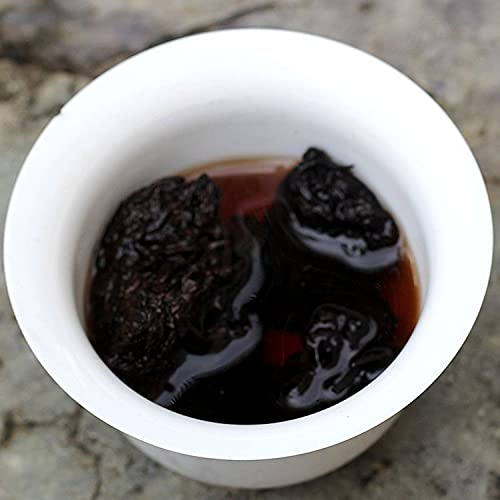
This is a 2010 Menghai lao cha tou — aged ripe (shou) pu-erh pressed into small, dense nuggets. The listing positions it as a Menghai-region shou from old trees, and the handful of drinker reports so far describe a sweet, mellow brew, with one mention of a stimulating, body-felt lift that reads distinct from ordinary caffeine.
The nugget format is built for multi-infusion gongfu-style sessions rather than a single quick cup. If you prefer one-and-done convenience, this likely isn't the right shape; it's better suited to drinkers exploring aged shou pu-erh who are willing to sit with a teapot through repeated steeps.
To brew, rinse the nuggets briefly with boiling water, then pull short, repeated infusions. One reviewer flags the third or fourth steeping as the sweetest, which fits the way cha tou tend to open up gradually as the compressed nuggets loosen across a session.
A note on the evidence here: review count is low, and roughly 39% of the reviews on this listing appear to describe a different product. That means much of the picture above leans on the 2010 Menghai shou label rather than corroborated drinker accounts — worth weighing if reviewer consensus matters to your buying decision. Caffeine-sensitive drinkers should also keep in mind that this is a moderate-caffeine tea brewed across many steeps.
The appeal, on the early signals available, is a long-lasting flavour across repeated infusions and a sweetness that develops further in the later steeps — the kind of session tea aged shou drinkers tend to reach for when they want to settle in with a pot.
Is Oriarmcha 2010 Lao Cha Tou Ripe Pu-erh Tea Right for You?
What kind of pu-erh is this?
The listing positions this as a 2010 Menghai shou (ripe) pu-erh in lao cha tou form — the naturally formed 'old tea nugget' clumps that occur during ripe pu-erh fermentation. Most of what's known here rests on the label rather than corroborated drinker reports.
How does it taste?
Early reports point to a sweet, mellow brew, with one reviewer of four flagging the third or fourth steeping as the sweetest. These are initial impressions at a very small review count rather than a settled flavor profile.
How should I brew lao cha tou nuggets?
A brief boiling-water rinse followed by short, repeated infusions suits the nugget format — the clumps are dense and reward multiple steepings rather than a single long brew. One reviewer notes the flavor peaks around the third or fourth steeping.
Is this a good fit for a quick single cup?
Not really — the nugget format is built for multi-infusion gongfu-style sessions where the leaf opens gradually across several short steeps. Drinkers wanting one-and-done convenience will get more out of a loose-leaf or bagged option.
Who is this tea aimed at?
It leans toward drinkers already exploring aged shou pu-erh and the lao cha tou format specifically — a tradition-specific style that rewards multi-infusion brewing. Beginners new to pu-erh would likely find a more conventional loose ripe pu-erh easier to approach first.
Will I feel the caffeine from this?
One reviewer of four describes a stimulating, body-felt lift that reads distinct from ordinary caffeine — consistent with the cha qi character drinkers of aged shou often seek out. This is a single early report rather than a corroborated pattern, and caffeine-sensitive drinkers should approach cautiously.
As an Amazon Associate we earn from qualifying purchases.
How much tea do I get in the 8oz package?
The listing specifies 8oz (225g) of compressed nuggets. Because lao cha tou is dense, a small amount of leaf per session typically yields many infusions, so 225g goes further than the same weight of loose-leaf would suggest.
How reliable are the reviews for this product?
Reviews here should be weighed cautiously — only a small handful are eligible, and the aggregation flags a 39% mismatch rate, meaning some review evidence appears to apply to a different product. Much of the picture rests on the 2010 Menghai label rather than corroborated drinker reports.
Does the flavor hold up across multiple steepings?
One of four reviewers reports long-lasting flavor across repeated steepings, with sweetness developing in later infusions rather than fading. This is consistent with how lao cha tou nuggets typically behave, though the in-review evidence here is thin.
What does 'from ancient trees' on the label mean?
The listing's 'ancient trees' phrasing refers to gushu — tea picked from old-growth trees, a common marketing claim on Menghai-region pu-erh that's rarely independently verifiable. Treat it as label positioning rather than a confirmed sourcing fact at this review count.
Category: How much caffeine does pu-erh tea have?
Pu-erh is moderate-to-high in caffeine. The Yunnan large-leaf assamica varietal evolved high caffeine concentrations as a natural defense against insects, so the raw material is more caffeinated than the small-leaf cultivars used for many green and oolong teas. Fermentation does not reliably lower caffeine — one study of Xiaguan tuo tea showed caffeine actually increased by 59% over 56 days of pile fermentation as other leaf mass was consumed by microbes. The smoother feel of ripe pu-erh comes from the absence of catechins, not from less caffeine.
Category: How is pu-erh tea made?
Production begins with maocha — sun-dried rough tea from large-leaf Yunnan trees, processed at lower heat than green tea so a portion of the leaf's enzymes survive for later aging. For sheng, the maocha is steamed, compressed into cakes or bricks, and aged. For shou, the maocha undergoes wo dui ('wet piling'): heaps of leaves are moistened, covered, and turned every 7–14 days for 45–60 days at 50–65°C, while Aspergillus niger, Blastobotrys yeasts, and other microbes drive a controlled solid-state fermentation.
As an Amazon Associate we earn from qualifying purchases.
Category: Who should be cautious about drinking pu-erh tea?
Because pu-erh is high in caffeine, people sensitive to stimulants, those with cardiac arrhythmia, and pregnant individuals should moderate intake or favor later steeps that extract less caffeine. Immunocompromised drinkers — transplant recipients, those on immunosuppressants, severe asthmatics — should avoid handling visibly moldy compressed cakes, since species like Aspergillus fumigatus that occur in pu-erh can be opportunistic pathogens, although the brewed tea itself is generally low-risk. Drinkers who are highly tannin-sensitive may find young raw pu-erh harsh on an empty stomach.
What Customers Love
⚠️ Limited sample based on limited customer feedback (2 reviews) • Our methodology
- Long-lasting flavor across repeated steepings
- Sweet character that develops in later infusions
- Easy nugget-format dosing
Taste Profile
Early reports point to a sweet, mellow brew with one mention of a stimulating, body-felt lift that reads distinct from ordinary caffeine — initial signals only at this review count.
Brewing: Rinse briefly with boiling water, then pull short repeated infusions — one reviewer flags the third or fourth steeping as the sweetest.
Best Use Cases
🎯 Best For
- Multi-infusion gongfu-style sessions
- Drinkers exploring aged shou pu-erh
⚠️ Not Ideal For
- Quick single-cup drinkers wanting one-and-done convenience
- Caffeine-sensitive drinkers
How People Use It
Best suited to multi-infusion sessions rather than a single quick cup — the nugget format is built for repeated steeps.
For Experienced Users
✅ Worth Exploring
- Aged shou pu-erh in lao cha tou nugget form — a tradition-specific format
- Rewards multi-infusion brewing with flavor that develops rather than diminishes
- Reviewer reports a stimulating, body-felt effect consistent with the cha qi character drinkers of aged shou seek out
What to Consider
Given the high mismatch rate, much of the picture here comes from the 2010 Menghai label rather than corroborated drinker reports — weigh review evidence accordingly.
- Review evidence partly applies to a different product
⚠️ Important: This analysis is based on limited customer feedback (2 reviews). We've shared what we found, but there may be additional considerations we haven't captured.
About This Analysis
This analysis is based on 2 customer reviews. We're showing you everything we found, but with a small sample, there's a lot we likely haven't captured yet.
✅ What we're confident about: What customers love and best use cases
⚠️ What may be incomplete: Potential issues and considerations
For more perspectives, check customer reviews on Amazon.
Product Selection
In short: We only feature high-rated products.
Products on TeaDelight.net are selected based on strong Amazon customer ratings, sufficient review volume, and market presence. We focus on well-regarded products that tea enthusiasts are actively considering and purchasing.
As an Amazon Associate we earn from qualifying purchases.
You Might Also Like

✅ smoother, richer, sweeter than its price suggests
YiwuZhengshan Ancient Tree Pu'er Tea

✅ Fresh, never-bitter cup for the reviewers it lands with
FullChea Menghai Puerh Tea Cakes (2008/2018)

✅ Collectible premium tin and packaging
TWG Emperor Pu-Erh Tea

✅ Variety across multiple flavor profiles