
⚠️ We don't recommend this product
Two reviewers raise authenticity concerns: one notes the box reads 'new product' in Chinese despite the eight-years-aged title, and another found a shred of blue plastic embedded in the brick.
Consider these alternatives



We analyze real customer reviews to surface what matters: key strengths, ideal use cases, and honest considerations — so you can make an informed choice.
Tian Hu Shan 8 Years Aged Puerh Tea Cake
An aged pu-erh cake that splits a small review pool — some drinkers find earthy sweetness at the price, others meet a fishy aroma right in the cake.
🍃 Strength: Bold

🍃 Flavor Profile
Strength: Bold
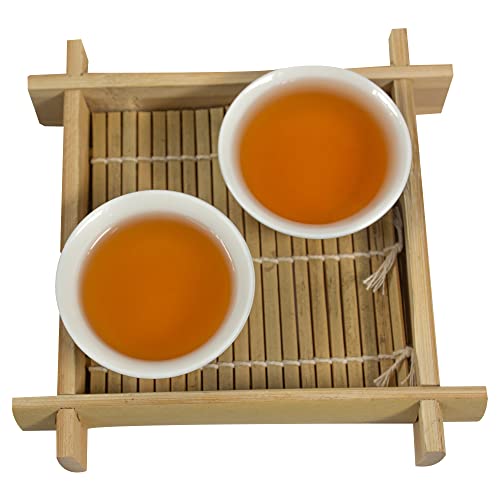
Drinkers who got along with it describe a strong, earthy cup with underlying sweetness and a full-bodied texture that brews dark from the first wash. The aroma divides the room — several reviewers report a fishy scent in both the dry cake and the brew, a note that can surface in pu-erh stored too damp.
🎯 Best For
gongfu-style pu-erh exploration on a budget • drinkers who want session longevity across many infusions
Brand: TIAN HU SHAN
Category: Pu-erh Tea
As an Amazon Associate we earn from qualifying purchases.
About This Pu-erh Tea
This 350g pu-erh cake is sold as eight years aged, and the small review pool splits sharply on what's inside. Drinkers who got along with it describe a strong, earthy cup with underlying sweetness and a full-bodied texture that brews dark from the first wash. Several others report a fishy scent in both the dry cake and the brew — a note that can surface in pu-erh stored too damp.
Reviewers who liked the cake brewed it gongfu-style — a short rinse, then escalating short steeps — and found the leaves held up across multiple infusions. That makes this a plausible budget pu-erh experiment for drinkers already comfortable with the category, not a clean introduction for someone trying their first aged tea.
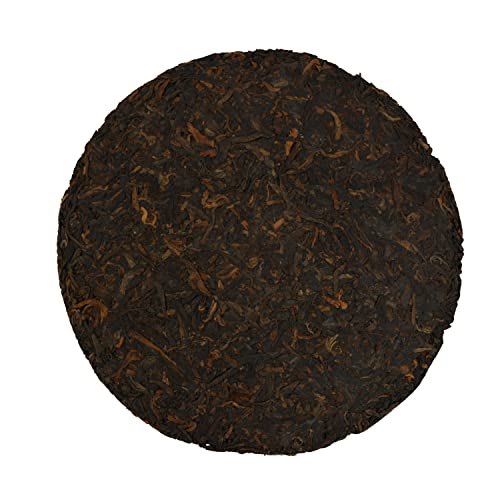
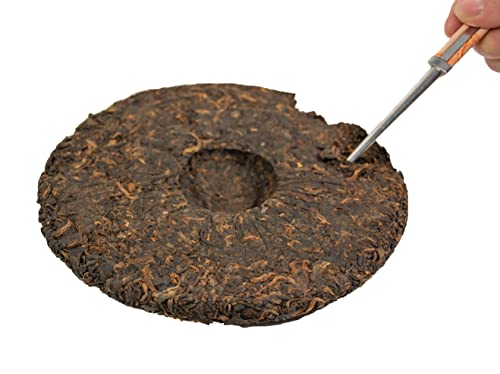
For the gongfu approach reviewers used: rinse the leaves two or three times before the first drinking infusion, then run short steeps of roughly 30, 60, and 90 seconds. The cake itself is dense and flaky with visible stems, which is worth knowing before you break it open.
We've marked this product not recommended. Two reviewers raised authenticity concerns — one noted the box reads "new product" in Chinese despite the eight-years-aged title, and another found a shred of blue plastic embedded in the brick. Combined with the fishy aroma several drinkers reported, the cake doesn't clear the bar for gift-giving, for buyers expecting verified aged provenance, or for anyone looking for a trustworthy first pu-erh.
If you're curious about gongfu pu-erh sessions on a budget and willing to absorb the risk, the value and session longevity are the parts of the review pool that hold up. Everything else points elsewhere.
Is Tian Hu Shan 8 Years Aged Puerh Tea Cake Right for You?
What does this puerh actually taste like?
Across a small review pool of around 10 drinkers, those who got along with it describe a strong, earthy cup with underlying sweetness and a full-bodied texture that brews dark from the first wash. Reactions split, though — a few reviewers found it bland or unpleasant rather than rich.
Why do some reviewers mention a fishy smell?
Roughly 4 of 11 reviewers describe a fishy aroma in both the dry cake and the brew — a note that can surface in puerh stored too damp. If a clean, woodsy aroma matters to you, this isn't a safe pick.
Is the eight-years-aged claim trustworthy?
Two reviewers raise authenticity concerns: one notes the box reads 'new product' in Chinese despite the eight-years-aged title, and labeling and false-advertising-on-age flags both fire in the data. The aged provenance appears unverified at this review count.
How should I brew this cake?
Rinse the leaves two or three times before the first drinking infusion, then run short steeps of roughly 30, 60, and 90 seconds. Drinkers who liked it brewed gongfu-style, with the leaves holding up across multiple infusions.
Is this a good first puerh for a beginner?
No — we'd reach for this as a budget puerh experiment, not as a clean introduction to the category. The fishy-aroma reports and authenticity questions make it a risky first impression of what aged puerh should taste like.
Who is this cake actually for?
It suits drinkers willing to brew gongfu-style — short rinses and escalating steeps — and explore aged puerh with the understanding that the cake may not match its label. One experienced drinker specifically called out the tea energy.
As an Amazon Associate we earn from qualifying purchases.
How many infusions can I get from these leaves?
One reviewer specifically cites decent longevity, and the synthesis notes the leaves hold up across multiple gongfu infusions when brewed with short, escalating steeps. With sparse data, expect session staying power rather than a precise count.
What does the cake itself look like when it arrives?
Reviewers describe a dense, flaky cake with stems visible in the brick, and one reviewer found a shred of blue plastic embedded in their cake. Compression runs high, so you'll want a sturdy puerh pick to break it apart.
Would this work as a gift?
We wouldn't recommend it. The authenticity concerns, fishy aroma reports, and the foreign-object incident make this a poor pick for gift-giving where presentation and trust matter — the synthesis explicitly flags it as not good for that use.
How does this compare to other puerh cakes reviewers have tried?
One reviewer said it was better than another puerh they'd ordered, while others reference Yunnan Sourcing and Chinese rolled-and-roasted teas as their reference points. With only a handful of comparisons in the data, the picture stays mixed rather than decisive.
Category: What is pu-erh tea?
Pu-erh is a post-fermented tea from Yunnan Province in southwest China, made from the large-leaf Camellia sinensis var. assamica plant. Unlike green or black teas, it is defined by its capacity for ongoing microbial fermentation — the leaf continues to chemically evolve for years or decades after processing. It exists in two forms: raw (sheng), which ages slowly through natural oxidation and microbial activity, and ripe (shou), which is rapidly fermented in piles to mimic decades of aging in about 45–60 days.
Category: Who should be cautious about drinking pu-erh tea?
Because pu-erh is high in caffeine, people sensitive to stimulants, those with cardiac arrhythmia, and pregnant individuals should moderate intake or favor later steeps that extract less caffeine. Immunocompromised drinkers — transplant recipients, those on immunosuppressants, severe asthmatics — should avoid handling visibly moldy compressed cakes, since species like Aspergillus fumigatus that occur in pu-erh can be opportunistic pathogens, although the brewed tea itself is generally low-risk. Drinkers who are highly tannin-sensitive may find young raw pu-erh harsh on an empty stomach.
As an Amazon Associate we earn from qualifying purchases.
Category: How much caffeine does pu-erh tea have?
Pu-erh is moderate-to-high in caffeine. The Yunnan large-leaf assamica varietal evolved high caffeine concentrations as a natural defense against insects, so the raw material is more caffeinated than the small-leaf cultivars used for many green and oolong teas. Fermentation does not reliably lower caffeine — one study of Xiaguan tuo tea showed caffeine actually increased by 59% over 56 days of pile fermentation as other leaf mass was consumed by microbes. The smoother feel of ripe pu-erh comes from the absence of catechins, not from less caffeine.
Taste Profile
Drinkers who got along with it describe a strong, earthy cup with underlying sweetness and a full-bodied texture that brews dark from the first wash. The aroma divides the room — several reviewers report a fishy scent in both the dry cake and the brew, a note that can surface in pu-erh stored too damp.
Brewing: Rinse the leaves two or three times before the first drinking infusion, then run short steeps of roughly 30, 60, and 90 seconds.
Best Use Cases
🎯 Best For
- gongfu-style pu-erh exploration on a budget
- drinkers who want session longevity across many infusions
⚠️ Not Ideal For
- a clean first introduction to pu-erh
- gift-giving where presentation and trust matter
- buyers expecting verified eight-years-aged provenance
How People Use It
Those who liked it brewed gongfu-style — short rinse, escalating steeps — with the leaves holding up across multiple infusions. We'd reach for this as a budget pu-erh experiment, not as a clean introduction to the category.
For Experienced Users
✅ Worth Exploring
- Rewards gongfu brewing with rinses and short escalating steeps
- Holds flavor across multiple infusions
- Tea energy mentioned by an experienced drinker
What to Consider
- Fishy aroma in the cake and brew
- Authenticity and labeling concerns
- Foreign object reported in one cake
- Stems and dense, flaky cake structure
⚠️ Important: This analysis is based on limited customer feedback (11 reviews). We've shared what we found, but there may be additional considerations we haven't captured.
About This Analysis
This analysis is based on 11 customer reviews. We're showing you everything we found, but with a small sample, there's a lot we likely haven't captured yet.
✅ What we're confident about: What customers love and best use cases
⚠️ What may be incomplete: Potential issues and considerations
For more perspectives, check customer reviews on Amazon.
Product Selection
In short: We only feature high-rated products.
Products on TeaDelight.net are selected based on strong Amazon customer ratings, sufficient review volume, and market presence. We focus on well-regarded products that tea enthusiasts are actively considering and purchasing.
As an Amazon Associate we earn from qualifying purchases.
You Might Also Like

✅ Long-lasting flavor across repeated steepings
Oriarmcha 2010 Lao Cha Tou Ripe Pu-erh Tea

✅ smoother, richer, sweeter than its price suggests
YiwuZhengshan Ancient Tree Pu'er Tea

✅ Fresh, never-bitter cup for the reviewers it lands with
FullChea Menghai Puerh Tea Cakes (2008/2018)

✅ Collectible premium tin and packaging