
Available Alternatives

✅ Long-lasting flavor across repeated steepings
Oriarmcha 2010 Lao Cha Tou Ripe Pu-erh Tea
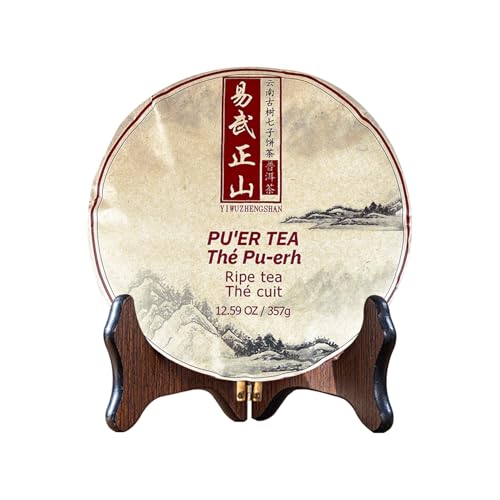
✅ smoother, richer, sweeter than its price suggests
YiwuZhengshan Ancient Tree Pu'er Tea

✅ Fresh, never-bitter cup for the reviewers it lands with
FullChea Menghai Puerh Tea Cakes (2008/2018)
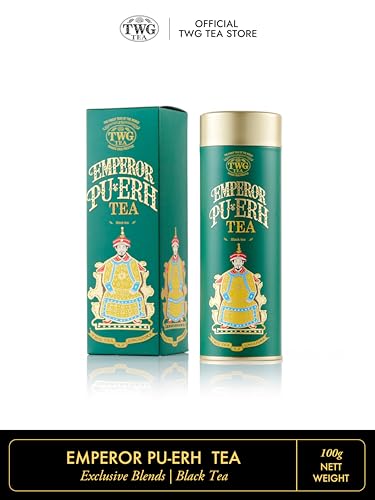
✅ Collectible premium tin and packaging
TWG Emperor Pu-Erh Tea




We analyze real customer reviews to surface what matters: key strengths, ideal use cases, and honest considerations — so you can make an informed choice.
Yan Hou Tang 10-Year Aged Ripe Puerh Tuo Cha 100g
A 10-year-aged ripe puerh — shou (cooked/ripe pu-erh, post-fermented for immediate drinkability) — in compressed tuo cha form; reviewers split on whether the cake lands clean or carries off-notes.
🎯 Best for: Gongfu-style sessions of aged ripe puerh, An everyday rotation pu-erh for an existing pu-erh drinker
🍃 Strength: Medium

🍃 Flavor Profile
Strength: Medium
When the cake lands well, reviewers describe a full-bodied texture and an authentic Chinese-tea character, and two of ten explicitly note no fishy smell.
✅ What Customers Love
- Full-bodied, authentic shou character when the cake is clean
- Resteeps well — one reviewer reports five solid infusions
- Versatile across gongfu sessions and daily-rotation use
🎯 Best For
Gongfu-style sessions of aged ripe puerh • An everyday rotation pu-erh for an existing pu-erh drinker
Brand: 燕侯堂
Category: Pu-erh Tea
As an Amazon Associate we earn from qualifying purchases.
About This Pu-erh Tea
This is a 10-year-aged ripe puerh — shou, the cooked/post-fermented style that's ready to drink without further aging — pressed into compressed tuo cha form. When the cake lands well, reviewers describe a full-bodied texture and an authentic Chinese-tea character, and two of ten explicitly note no fishy smell.
Reviewers reach for it for gongfu-style brewing — high-leaf, short-steep sessions — and as a daily pu-erh rotation. We'd treat it as a workable shou when the batch is clean: a fit for an existing pu-erh drinker looking for a session tea or an everyday cup, rather than a first pu-erh purchase.
One reviewer's gongfu setup: roughly eight grams to a 12-ounce (360 ml) vessel with boiling water and 15–30-second steeps. The cake resteeps well — one reviewer reports five solid infusions from a single measure.
The honest caveat: batch quality is polarized. Three of ten reviewers report off-notes — fishy, musty, or moldy aroma and taste — with one explicitly suspecting improper storage. A handful of reviewers also describe a flat, near-absent flavor profile, and the cake can be hard to break apart with a tea knife. If you have no tolerance for batch variance, this isn't the cake to start with.
Caffeine sits at moderate levels, so it's a daytime tea rather than an evening one for the caffeine-sensitive.
Is Yan Hou Tang 10-Year Aged Ripe Puerh Tuo Cha 100g Right for You?
What does this aged ripe puerh taste like when the cake is clean?
Reviewers describe a full-bodied texture and an authentic Chinese-tea character, and two of ten explicitly note no fishy smell. At this review count it appears to offer a workable shou (cooked) profile rather than a defining signature.
Are there reports of off-notes or musty smells?
Yes — roughly a third of reviewers (about 4 of 10) flag fishy, musty, or moldy aroma and taste, and one explicitly suspects improper storage. Batch quality appears polarized across this small reviewer set, so it's a real risk to weigh before buying.
How do reviewers brew this gongfu-style?
One reviewer's setup uses roughly 8 grams in a 12-ounce (360 ml) vessel with boiling water and 15-30-second steeps. That's a single data point, so treat it as a starting point rather than a definitive recipe.
Does it resteep well across multiple infusions?
One reviewer reports five solid infusions from a single session, which is consistent with what you'd expect from a compressed aged shou. With only one reviewer reporting numbers, read it as a promising signal rather than a confirmed pattern.
Who is this puerh best suited for?
It appears to fit existing pu-erh drinkers looking for an everyday rotation cake, or someone wanting a workable shou for gongfu-style sessions. The polarized batch reports make it a poor fit for buyers with no tolerance for variance.
Is this a good first puerh to try?
Probably not — the synthesis flags it as poorly suited to a first pu-erh purchase or a buyer with no tolerance for batch variance, given that roughly 4 of 10 reviewers describe off-notes. A cleaner reference cake would be a safer entry point.
As an Amazon Associate we earn from qualifying purchases.
Is the compressed cake easy to break apart?
One reviewer reports the cake can be hard to break with a tea knife. With only a single mention it's a soft signal, but compressed tuo cha generally rewards a sharp pick and a bit of patience.
Is this puerh okay to drink in the evening?
Not really — the synthesis calls out evening or pre-bed drinking as a poor fit for caffeine-sensitive drinkers, since ripe puerh still carries meaningful caffeine. Morning or early-afternoon sessions are the safer slot.
How does it compare to other aged ripe puerh cakes?
A handful of reviewers compare it to other 10-year ripe puerh, with one saying it 'holds its own' against a cake brought back from Taiwan. The comparison set is thin, so read these as individual takes rather than a consensus.
Do some reviewers find it flat or tasteless?
Yes — a small cluster of about 3 of 10 reviewers report no flavor, no aroma, or describe it as tasteless. That sits alongside the off-note reports as part of the polarized batch picture rather than a single isolated complaint.
Category: What is pu-erh tea?
Pu-erh is a post-fermented tea from Yunnan Province in southwest China, made from the large-leaf Camellia sinensis var. assamica plant. Unlike green or black teas, it is defined by its capacity for ongoing microbial fermentation — the leaf continues to chemically evolve for years or decades after processing. It exists in two forms: raw (sheng), which ages slowly through natural oxidation and microbial activity, and ripe (shou), which is rapidly fermented in piles to mimic decades of aging in about 45–60 days.
Category: How is pu-erh tea made?
Production begins with maocha — sun-dried rough tea from large-leaf Yunnan trees, processed at lower heat than green tea so a portion of the leaf's enzymes survive for later aging. For sheng, the maocha is steamed, compressed into cakes or bricks, and aged. For shou, the maocha undergoes wo dui ('wet piling'): heaps of leaves are moistened, covered, and turned every 7–14 days for 45–60 days at 50–65°C, while Aspergillus niger, Blastobotrys yeasts, and other microbes drive a controlled solid-state fermentation.
As an Amazon Associate we earn from qualifying purchases.
Category: Who should be cautious about drinking pu-erh tea?
Because pu-erh is high in caffeine, people sensitive to stimulants, those with cardiac arrhythmia, and pregnant individuals should moderate intake or favor later steeps that extract less caffeine. Immunocompromised drinkers — transplant recipients, those on immunosuppressants, severe asthmatics — should avoid handling visibly moldy compressed cakes, since species like Aspergillus fumigatus that occur in pu-erh can be opportunistic pathogens, although the brewed tea itself is generally low-risk. Drinkers who are highly tannin-sensitive may find young raw pu-erh harsh on an empty stomach.
What Customers Love
⚠️ Limited sample based on limited customer feedback (10 reviews) • Our methodology
- Full-bodied, authentic shou character when the cake is clean
- Resteeps well — one reviewer reports five solid infusions
- Versatile across gongfu sessions and daily-rotation use
Taste Profile
When the cake lands well, reviewers describe a full-bodied texture and an authentic Chinese-tea character, and two of ten explicitly note no fishy smell.
Brewing: One reviewer's gongfu setup: roughly eight grams to a 12-ounce (360 ml) vessel with boiling water and 15–30-second steeps.
Best Use Cases
🎯 Best For
- Gongfu-style sessions of aged ripe puerh
- An everyday rotation pu-erh for an existing pu-erh drinker
⚠️ Not Ideal For
- A first pu-erh purchase or a buyer with no tolerance for batch variance
- Evening or pre-bed drinking for the caffeine-sensitive
How People Use It
Reviewers reach for it for gongfu-style brewing (high-leaf, short-steep) and as a daily pu-erh; we'd treat it as a workable shou when the batch is clean.
For Experienced Users
✅ Worth Exploring
- Compressed cake (tuo cha) that rewards gongfu-style preparation and multi-infusion resteeping
- Aged ripe puerh character that an existing pu-erh drinker can read against the comparison set
What to Consider
Three of ten reviewers report off-notes — fishy, musty, or moldy aroma and taste — with one explicitly suspecting improper storage.
- Polarized batch quality — roughly a third of reviewers report fishy, musty, moldy, or storage-suspect off-notes
- Cake can be hard to break apart with a tea knife
- A handful of reviewers report a flat, near-absent flavor profile
⚠️ Important: This analysis is based on limited customer feedback (10 reviews). We've shared what we found, but there may be additional considerations we haven't captured.
About This Analysis
This analysis is based on 10 customer reviews. We're showing you everything we found, but with a small sample, there's a lot we likely haven't captured yet.
✅ What we're confident about: What customers love and best use cases
⚠️ What may be incomplete: Potential issues and considerations
For more perspectives, check customer reviews on Amazon.
Product Selection
In short: We only feature high-rated products.
Products on TeaDelight.net are selected based on strong Amazon customer ratings, sufficient review volume, and market presence. We focus on well-regarded products that tea enthusiasts are actively considering and purchasing.
As an Amazon Associate we earn from qualifying purchases.