


We analyze real customer reviews to surface what matters: key strengths, ideal use cases, and honest considerations — so you can make an informed choice.
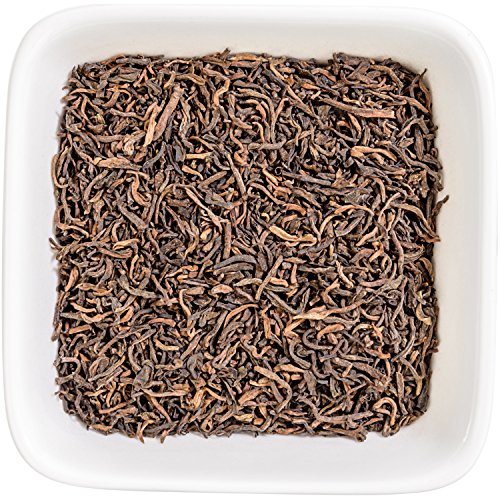
Tealyra 20-Year Aged Ripe Pu-erh Loose Leaf Tea
Twenty years of aging mellows shou pu-erh from cooked-and-clean into woodsy and round — this Tealyra cake trades the fresh-leaf edge for a smoother, earthier register.
🎯 Best for: Daily morning cup or once-a-day ritual, Drinkers seeking the smoother, woodsy register of aged shou over young pu-erh
🍃 Strength: Medium

What Stands Out
🍃 Flavor Profile
Strength: Medium
Reviewers describe an earthy aroma and a smooth, woodsy taste, with one repeat customer saying it's what keeps them coming back. We'd call the aged-shou character soft and round — one drinker explicitly contrasts it with non-aged pu-erh on the absence of fresh-leaf bitterness.
✅ What Customers Love
- Smooth, woodsy aged-shou character
- Quality is the standout impression for buyers
- Worth the cost for genuine aged material
🎯 Best For
Daily morning cup or once-a-day ritual • Drinkers seeking the smoother, woodsy register of aged shou over young pu-erh • Aspiring pu-erh drinkers comparing aging vintages
Brand: Tealyra
Category: Pu-erh Tea
As an Amazon Associate we earn from qualifying purchases.
About This Pu-erh Tea
Twenty years of aging mellows shou pu-erh from cooked-and-clean into a woodsy, rounded cup, and this Tealyra cake trades the fresh-leaf edge for a smoother, earthier register. Reviewers describe an earthy aroma and a smooth, woodsy taste — one repeat customer says it's what keeps them coming back. The aged character runs soft and round; one drinker explicitly contrasts it with non-aged pu-erh on the absence of fresh-leaf bitterness.
Drinkers reach for it as a daily ritual — one calls it a once-a-day treat, another a morning cup. As ripe pu-erh (post-fermented for immediate drinkability), it drinks easily without the gongfu setup that younger sheng demands, which is part of why it slots into a regular rotation rather than a special-occasion brew. One reviewer pairs it with a teaspoon of dried tea fruit on the side — a tasting cue rather than a brewing rule.
The honest caveat is price. One reviewer flags it as steep; three others frame the cost as worth a budget reallocation for genuine 20-year material, calling it a considered purchase rather than a daily-driver buy. If you prefer the bitter, vegetal bite of young sheng pu-erh, the smoother register here may read as too tame.
Aspiring pu-erh drinkers comparing aging vintages will get the most out of this cake — reviewers reference both 5-year and older pu-erh teas when placing it on the aged-shou spectrum. For drinkers curious about what twenty years actually does to a leaf, it's a reasonable way in.
Is Tealyra 20-Year Aged Ripe Pu-erh Loose Leaf Tea Right for You?
What does this 20-year aged pu-erh taste like?
Across the small pool of reviewers, it appears to drink smooth and woodsy with an earthy aroma — the softer, rounder register of aged shou rather than the fresh-leaf edge of younger pu-erh. With this few drinkers reporting, treat those notes as the dominant signal rather than a comprehensive flavor map.
How does this compare to younger pu-erh?
One reviewer explicitly contrasts it with non-aged pu-erh and notes the absence of fresh-leaf bitterness — the aging mellows the cooked-and-clean edge into something rounder. Reviewers also benchmark it against 5-year and 35-year pu-erh, so the comparative aging is part of the appeal here.
Is this a good daily-drinker?
A couple of reviewers reach for it as a morning cup or once-a-day ritual, and the aged shou character drinks easily without the gongfu setup that younger sheng tends to demand. With limited review data, that's a small but consistent use signal rather than a broad pattern.
Who should skip this tea?
Drinkers who prize the bitter, vegetal bite of young sheng pu-erh — one reviewer explicitly flags the absence of that fresh-leaf bitterness, framed positively in the review but a real fit signal. Caffeine-sensitive drinkers should also steer away from evening cups, since the listing flags caffeine as high.
What's special about the 20-year aging?
The listing positions this as a 20-year aged Yunnan shou, and reviewers actively benchmark it against 5-year, non-aged, and 35-year pu-erh — the kind of vintage comparison enthusiasts shop for. Twenty years on a ripe pu-erh trades the cooked-and-clean character for a woodsier, rounder register.
Is this a good entry point for someone new to pu-erh?
Aged shou is gentler than young sheng, which can lower the entry barrier for a pu-erh-curious drinker. That said, the synthesis flags it as leaning toward experienced drinkers — the aging story and vintage framing are aimed at people who already know what they're shopping for.
As an Amazon Associate we earn from qualifying purchases.
Can I drink this every day?
A couple of reviewers describe it as a once-a-day treat or morning cup, so daily use fits the pattern reviewers report. Keep in mind the listing flags caffeine as high, so this isn't an evening cup for caffeine-sensitive drinkers.
Does anyone pair this with food or other ingredients?
One reviewer prepares it with a teaspoon of dried tea fruit alongside the brew — a single data point rather than a common pattern, but a hint of the playful pairing some pu-erh drinkers explore. Most of the small reviewer pool drinks it straight.
Will this satisfy someone who already enjoys pu-erh?
Reviewers benchmark this cake against 5-year, non-aged, and 35-year pu-erh — the comparative aging framing that more experienced pu-erh drinkers look for. One repeat customer says it's what keeps them coming back, though that's a single voice in a small reviewer pool.
Category: What does pu-erh tea taste like?
Young raw pu-erh is robust and floral with noticeable bitterness, fresh hay, and stone-fruit notes. As it ages, the liquor darkens from gold through amber to mahogany and develops dried-fruit, honey, tobacco, and eventually camphor, leather, and earthy notes. Ripe (shou) pu-erh skips that youthful phase: it is dark, smooth, and earthy from the start, with cocoa, wood, and sometimes a 'wet basement' note in younger productions that mellows over a few years of resting.
Category: What are the famous pu-erh tea mountains?
Tradition divides Xishuangbanna's growing regions into the Ancient Six Great Tea Mountains east of the Lancang River (Yiwu, Yibang, Gedeng, Manzhuan, Mangzhi, and Youle) and the New Six Great Mountains to the west (Bulang, Menghai, Nannuo, Jingmai, Mengsong, and Bada). Eastern mountains are generally associated with softer, sweeter, more elegant teas — Yiwu being the most famous — while western mountains tend toward bolder, more bitter, more energizing profiles, with Lao Ban Zhang village on Bulang producing the most sought-after intensity. Beyond Xishuangbanna, Lincang's Bingdao is widely considered one of the top single-origin sources.
Category: What is the difference between ancient-tree (gushu) and plantation pu-erh?
Gushu refers to tea harvested from trees typically over 100 years old (often hundreds), growing semi-wild in biodiverse forests with deep taproots reaching mineral subsoils. Taidi (terrace or plantation) tea comes from densely planted young bushes — usually under 50 years, often cloned for uniformity — with shallow surface roots. Gushu leaves grow slowly under shade, concentrating sugars, minerals, and aromatic compounds, which translates to a heavier mouthfeel, deeper throat-sweetness (hui gan), and slower-developing bitterness. Plantation tea is sharper, thinner-bodied, and shows immediate bitterness that may not resolve as gracefully.
What Customers Love
⚠️ Limited sample based on limited customer feedback (5 reviews) • Our methodology
- Smooth, woodsy aged-shou character
- Quality is the standout impression for buyers
- Worth the cost for genuine aged material
- Repeat-purchase signal from at least one reviewer
Taste Profile
Reviewers describe an earthy aroma and a smooth, woodsy taste, with one repeat customer saying it's what keeps them coming back. We'd call the aged-shou character soft and round — one drinker explicitly contrasts it with non-aged pu-erh on the absence of fresh-leaf bitterness.
- A teaspoon of dried tea fruit alongside, as one reviewer prepares it
Best Use Cases
🎯 Best For
- Daily morning cup or once-a-day ritual
- Drinkers seeking the smoother, woodsy register of aged shou over young pu-erh
- Aspiring pu-erh drinkers comparing aging vintages
⚠️ Not Ideal For
- Drinkers who prefer the bitter, vegetal bite of young sheng pu-erh
- Strict-budget shoppers buying tea by the pound
- Caffeine-sensitive evening drinking
How People Use It
Reviewers reach for it as a daily ritual — one calls it a once-a-day treat, another a morning cup. The aged shou (ripe pu-erh, post-fermented for immediate drinkability) drinks easily without the gongfu setup that younger sheng demands.
Good for Beginners
⚠️ Considerations
- Aged shou is gentler than young sheng, which lowers the entry barrier for pu-erh-curious drinkers
For Experienced Users
✅ Worth Exploring
- 20-year aging on a Yunnan shou is the kind of vintage marker pu-erh enthusiasts actively shop for
- Reviewers explicitly compare it across 5-year, non-aged, and 35-year pu-erh — connoisseur-style benchmarking
What to Consider
One reviewer flags the price as steep, though three others frame the cost as worth a budget reallocation for genuine 20-year material — a considered purchase rather than a daily-driver buy.
- Premium pricing relative to everyday teas
- Lacks the assertive bitterness fans of young sheng look for
⚠️ Important: This analysis is based on limited customer feedback (5 reviews). We've shared what we found, but there may be additional considerations we haven't captured.
About This Analysis
This analysis is based on 5 customer reviews. We're showing you everything we found, but with a small sample, there's a lot we likely haven't captured yet.
✅ What we're confident about: What customers love and best use cases
⚠️ What may be incomplete: Potential issues and considerations
For more perspectives, check customer reviews on Amazon.
Product Selection
In short: We only feature high-rated products.
Products on TeaDelight.net are selected based on strong Amazon customer ratings, sufficient review volume, and market presence. We focus on well-regarded products that tea enthusiasts are actively considering and purchasing.
As an Amazon Associate we earn from qualifying purchases.
You Might Also Like

✅ Long-lasting flavor across repeated steepings
Oriarmcha 2010 Lao Cha Tou Ripe Pu-erh Tea

✅ smoother, richer, sweeter than its price suggests
YiwuZhengshan Ancient Tree Pu'er Tea

✅ Fresh, never-bitter cup for the reviewers it lands with
FullChea Menghai Puerh Tea Cakes (2008/2018)

✅ Collectible premium tin and packaging