




We analyze real customer reviews to surface what matters: key strengths, ideal use cases, and honest considerations — so you can make an informed choice.
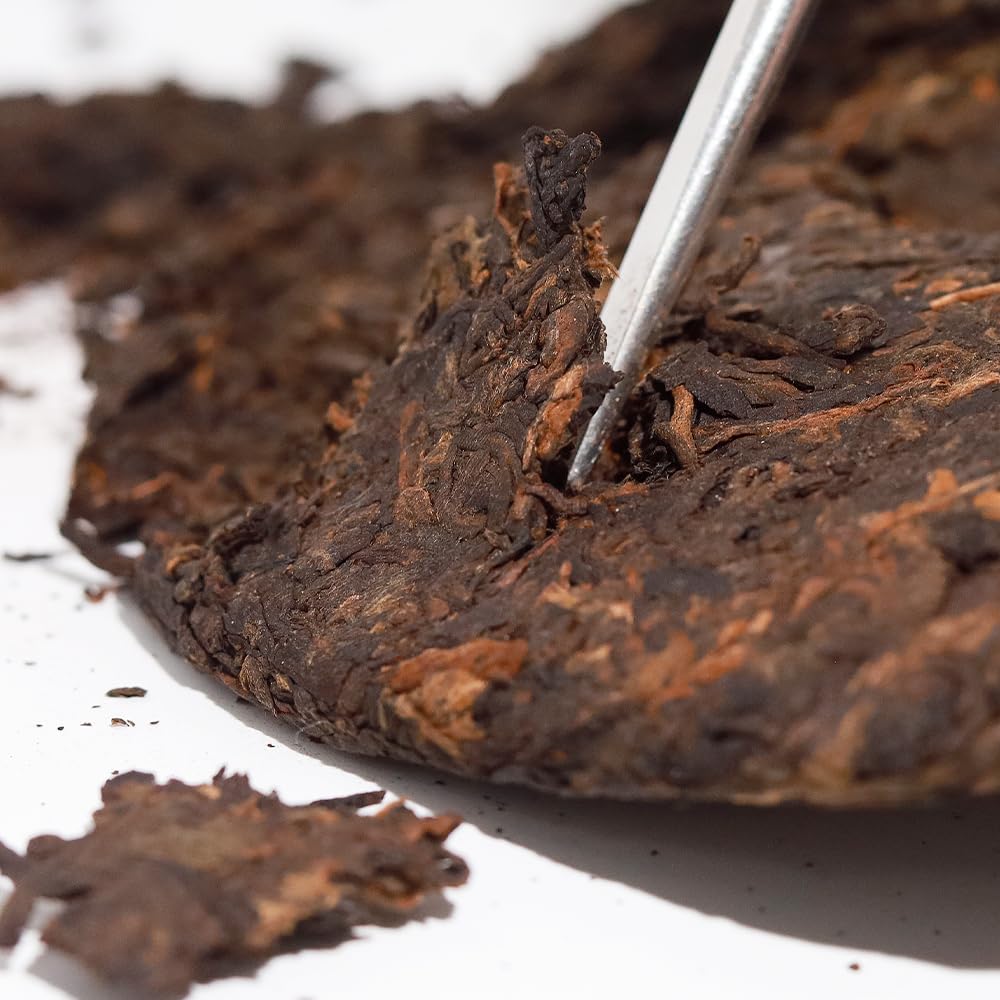
LWXLJMJZC Yi Wu Ripe Puerh Tea Cake 2013
Three reviews isn't a pattern — these are initial signals on a 2013 Yi Wu shou (ripe pu-erh, post-fermented for immediate drinkability).
🎯 Best for: daily simple drinking, gongfu-style multi-infusion brewing
🍃 Strength: Light

What Stands Out
🍃 Flavor Profile
Strength: Light
Early notes point to a silky-smooth, earthy cup, with one reviewer calling it noticeably less astringent than other shou they've tried — though another found the flavor mild at the bag's recommended dose.
✅ What Customers Love
- silky-smooth, low-astringency texture
- approachable as a daily-drinker shou
🎯 Best For
daily simple drinking • gongfu-style multi-infusion brewing
Brand: LWXLJMJZC
Category: Pu-erh Tea
As an Amazon Associate we earn from qualifying purchases.
About This Pu-erh Tea
This is a 2013 Yi Wu ripe pu-erh (shou) — a post-fermented Yunnan cake pressed for immediate drinkability rather than long aging. Early reviewer signals are limited but consistent: a silky, smooth cup with earthy character, and one reviewer specifically calls it noticeably less astringent than other shou they have tried. Another found the flavor mild at the bag's recommended dose, so the impression depends partly on how heavily you brew it.
The everyday use case is straightforward. One reviewer reaches for this cake as a daily drinker — a current favorite for a simple, no-fuss cup. That tracks with the broader shou profile: smooth and forgiving enough to sit in a regular morning rotation, without the brisk astringency that puts off newer pu-erh drinkers.
For gongfu-style brewing, one reviewer's measurement is the only specific guidance available so far: 11 grams in a 100ml gaiwan delivers about five solid steeps. That's a fairly dense leaf-to-water ratio — useful if the bag's recommended dose has come across as too light. Western-style brewing isn't covered in the reviewer notes.
Honest caveat: data on this listing is thin. Three reviews genuinely describe this 2013 Yi Wu shou, but roughly 83% of reviews on the page appear to describe a different product entirely, so the picture above rests on a small sample. If you want bold, pronounced shou earthiness, what we have so far suggests this one leans toward the gentler end of the spectrum, and you may need to push past the bag's recommended dose to bring the flavor forward.
A 357g cake stores well in a cool, dark cabinet in an airtight container away from strong odors, and a single cake yields many sessions when brewed gongfu-style.
Is LWXLJMJZC Yi Wu Ripe Puerh Tea Cake 2013 Right for You?
What does this puerh taste like?
Based on a small handful of early reviews, initial impressions point to a silky-smooth, earthy cup, with one reviewer describing it as noticeably less astringent than other shou they'd tried. With only three eligible reviews, treat this as a preliminary signal rather than a settled profile.
Is the flavor strong or mild?
It reportedly reads on the lighter side — two of the three matched reviewers describe the cup as mild or weak at the dose printed on the bag. If you want bold, pronounced shou earthiness, this one may underdeliver at standard portions.
How should I brew this puerh?
One early reviewer reports using 11g in a 100ml gaiwan and getting about five solid steeps, and suggests pushing to 11-12g if you want the earthy character to come forward. That's a single brewer's setup — your gaiwan, water, and taste will shift the numbers.
Is this a good everyday daily drinker?
Reportedly yes for one of the three matched reviewers, who calls it a current favorite for a simple, everyday cup. With this little review data, it's an initial signal rather than a pattern.
Why are the reviews on this listing so mixed?
Roughly 83% of the reviews on this listing appear to describe a different product, so most star ratings and comments don't apply to the 2013 Yi Wu shou you'd actually receive. The picture above rests on the three reviews that do match — a thin base by any measure.
Is this ripe (shou) or raw (sheng) puerh?
The listing positions this as ripe puerh — the title calls it 'Ripe Puerh', 'Shu Puer', and 'Aged Fermented Cook Pu erh', all labels for shou, which has been post-fermented for immediate earthy drinkability rather than left to age slowly like sheng.
As an Amazon Associate we earn from qualifying purchases.
What do 'Yi Wu' and '2013' on the label mean?
From the label rather than the drinkers, Yi Wu is a well-known puerh-producing region in Yunnan that connoisseurs follow, and 2013 is the production year stamped on this cake. We can't verify either claim from review data here, so treat both as listing-stated rather than corroborated.
How much tea is in the cake, and what format is it?
The listing states 357g (about 12.6oz), pressed into a traditional puerh cake — the standard 'bing' format you break pieces off as you brew. That's a substantial amount of tea aimed at drinkers who already know how to portion from a cake.
Is this a good first puerh for a beginner?
Probably not. A 357g pressed cake of dated shou is a format aimed at established puerh drinkers, and you'll want to be comfortable breaking pieces off a cake and dialing in a gongfu-style session before committing to this much tea.
Does it work for gongfu-style multi-infusion brewing?
Reportedly yes — the one reviewer who shared brewing details runs it gongfu-style in a 100ml gaiwan and reports around five usable steeps. That's a single data point, but it lines up with how a pressed shou cake is typically meant to be brewed.
Category: What is pu-erh tea?
Pu-erh is a post-fermented tea from Yunnan Province in southwest China, made from the large-leaf Camellia sinensis var. assamica plant. Unlike green or black teas, it is defined by its capacity for ongoing microbial fermentation — the leaf continues to chemically evolve for years or decades after processing. It exists in two forms: raw (sheng), which ages slowly through natural oxidation and microbial activity, and ripe (shou), which is rapidly fermented in piles to mimic decades of aging in about 45–60 days.
Category: How is pu-erh tea made?
Production begins with maocha — sun-dried rough tea from large-leaf Yunnan trees, processed at lower heat than green tea so a portion of the leaf's enzymes survive for later aging. For sheng, the maocha is steamed, compressed into cakes or bricks, and aged. For shou, the maocha undergoes wo dui ('wet piling'): heaps of leaves are moistened, covered, and turned every 7–14 days for 45–60 days at 50–65°C, while Aspergillus niger, Blastobotrys yeasts, and other microbes drive a controlled solid-state fermentation.
As an Amazon Associate we earn from qualifying purchases.
Category: How can I tell if pu-erh tea is authentic?
Counterfeiting is widespread in the aged-pu-erh market, particularly for famous recipes and single-village teas like Lao Ban Zhang. Authentic compressed cakes carry an embedded inner ticket (nei fei) pressed into the leaf rather than laid loose on top, and modern reputable factories (such as Dayi) print anti-counterfeit features that react under UV light. Sensory checks matter too: a genuinely aged tea smells of camphor, wood, or incense — never of ammonia, sharp mildew, or chemicals. Any tea claiming famous-village or 30-year-aged provenance from a mass-market source is almost certainly mislabelled.
What Customers Love
⚠️ Limited sample based on limited customer feedback (3 reviews) • Our methodology
- silky-smooth, low-astringency texture
- approachable as a daily-drinker shou
Taste Profile
Early notes point to a silky-smooth, earthy cup, with one reviewer calling it noticeably less astringent than other shou they've tried — though another found the flavor mild at the bag's recommended dose.
Brewing: Early guidance from one reviewer: 11g in a 100ml gaiwan delivers about five solid steeps.
Best Use Cases
🎯 Best For
- daily simple drinking
- gongfu-style multi-infusion brewing
⚠️ Not Ideal For
- drinkers wanting bold, pronounced shou earthiness
How People Use It
One reviewer reaches for it as a daily drinker, calling it a current favorite for a simple, everyday cup.
Good for Beginners
⚠️ Considerations
- 357g pressed cake of dated shou is a format-and-format aimed at established pu-erh drinkers, not first-cup buyers
For Experienced Users
Has Some Depth
- Title positions this in Yi Wu / 2013 territory that connoisseurs care about, but the high mismatch rate plus thin review count make any quality claim premature
What to Consider
We have limited data so far, and roughly 83% of reviews on this listing appear to describe a different product — so the picture above rests on the three reviews that do match.
- high mismatch rate suggests many reviews describe a different product
- flavor reads mild or weak at the bag's recommended dose
⚠️ Important: This analysis is based on limited customer feedback (3 reviews). We've shared what we found, but there may be additional considerations we haven't captured.
About This Analysis
This analysis is based on 3 customer reviews. We're showing you everything we found, but with a small sample, there's a lot we likely haven't captured yet.
✅ What we're confident about: What customers love and best use cases
⚠️ What may be incomplete: Potential issues and considerations
For more perspectives, check customer reviews on Amazon.
Product Selection
In short: We only feature high-rated products.
Products on TeaDelight.net are selected based on strong Amazon customer ratings, sufficient review volume, and market presence. We focus on well-regarded products that tea enthusiasts are actively considering and purchasing.
As an Amazon Associate we earn from qualifying purchases.
You Might Also Like

✅ Long-lasting flavor across repeated steepings
Oriarmcha 2010 Lao Cha Tou Ripe Pu-erh Tea

✅ smoother, richer, sweeter than its price suggests
YiwuZhengshan Ancient Tree Pu'er Tea

✅ Fresh, never-bitter cup for the reviewers it lands with
FullChea Menghai Puerh Tea Cakes (2008/2018)

✅ Collectible premium tin and packaging