




We analyze real customer reviews to surface what matters: key strengths, ideal use cases, and honest considerations — so you can make an informed choice.
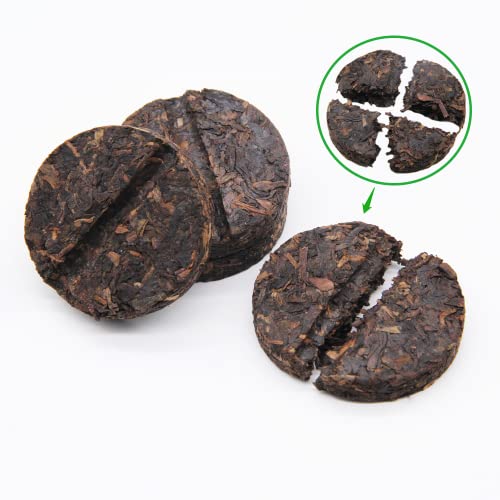
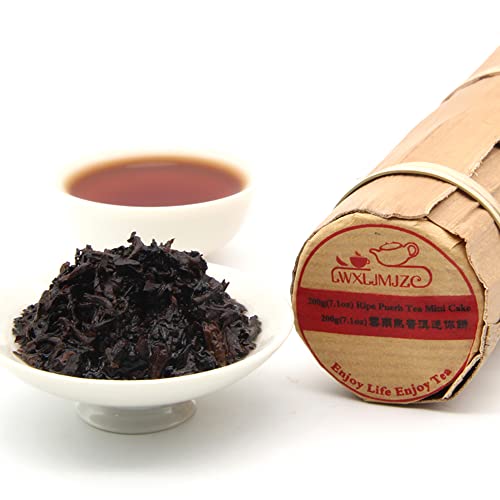
LWXLJMJZC Ripe Puerh Tea Mini Cakes in Bamboo Tube (200g)
A 200g ripe pu-erh cake portioned into 96 bamboo-tubed coins — a convenient daily-drinker format that recent batches don't always honor.
🎯 Best for: Daily morning cup, Gongfu-style multi-infusion sessions in yixing or gaiwan
🍃 Strength: Medium

🍃 Flavor Profile
Strength: Medium
'Smooth' and 'mellow' lead three of thirteen reviewer descriptions. Malty, earthy, and sweet notes appear at lower frequency. A few drinkers detect grassy character — unusual for ripe shou (the post-fermented, ready-to-drink style this cake claims).
✅ What Customers Love
- Smooth, mellow profile when the cup lands right
- 96-coin format simplifies daily portioning
- Earned repeat-purchase loyalty over multiple years
🎯 Best For
Daily morning cup • Gongfu-style multi-infusion sessions in yixing or gaiwan • Single-cup portioning without breaking a full cake
Brand: LWXLJMJZC
Category: Pu-erh Tea
As an Amazon Associate we earn from qualifying purchases.
About This Pu-erh Tea
This is a 200g ripe pu-erh cake portioned into 96 bamboo-leaf-tubed coins — a convenient daily-drinker format that recent batches don't always honor. Across thirteen reviewer descriptions, 'smooth' and 'mellow' lead the profile, with malty, earthy, and sweet notes appearing at lower frequency. A few drinkers detect grassy character — unusual for ripe shou, the post-fermented, ready-to-drink style this cake claims.
Reviewers reach for it as a morning or daily brew, and the 96-coin format is the standout convenience signal: single-cup portioning without breaking a full cake. Four reviewers mention repeat orders across multiple years, which speaks to the format more than any single batch.
For brewing, rinse the coin with boiling water first, then steep roughly 2–3g per 200ml. The leaves open up best from the second infusion onward, which rewards gongfu-style short steeps in a yixing teapot or gaiwan over a single long brew. One reviewer notes the cup takes well to dried peppermint and a few drops of honey, which brings out a floral, honeysuckle finish.
The caveats are real and worth weighing. Several reviewers flag quality shifts on this listing — one mildewy delivery, others noting profiles reading closer to raw sheng or rooibos than to ripe pu-erh, a pattern consistent with the listing-change flag in our data. Initial-impression complaints range from fishy and dusty to manure-like aromas. The listing also carries no return eligibility, which matters more here than on a steadier cake. Drinkers seeking the classic earthy, cocoa-and-mushroom shou profile may not find it consistently in this batch, and the moderate caffeine level makes it a better morning than late-evening choice.
Best-case, it's an easy, low-friction daily ripe in a format that solves the chip-the-cake problem. Worst-case, you get a coin that drinks like something else entirely — go in with that range in mind.
Is LWXLJMJZC Ripe Puerh Tea Mini Cakes in Bamboo Tube (200g) Right for You?
What does this ripe pu-erh actually taste like?
Across 13 eligible reviewers, 'smooth' and 'mellow' lead the descriptions, with malty, earthy, and sweet notes appearing at lower frequency. A few drinkers find grassy character, which is unusual for ripe shou and worth noting before you commit to a full cake.
Will this give me the classic earthy, cocoa-and-mushroom shou profile?
Probably not reliably. Some reviewers report profiles reading closer to raw sheng or even rooibos than to traditional ripe pu-erh, a pattern consistent with the listing-change flag in our data. If that signature shou earthiness is what you're after, this isn't the safest pick.
How should I brew these mini cakes?
Rinse with boiling water first, then steep roughly 2–3g per 200ml. A few reviewers note the leaves open up best from the second infusion onward, so short gongfu-style steeps reward this cake more than a single long brew.
Is the 96-coin format actually convenient for daily use?
Yes — this is the standout convenience signal. The 200g cake splits into roughly 96 ~2g coins in individual bamboo tubes, so you can portion a single cup without breaking down a full cake. Four of thirteen reviewers describe coming back for repeat orders across multiple years.
Who should think twice before drinking this pu-erh?
Anyone sensitive to caffeine in the evening should skip it — ripe pu-erh still carries meaningful caffeine, and reviewers here lean on it as a morning brew. Drinkers expecting the classic shou earthiness may also be disappointed given the profile variability some reviewers describe.
Is this beginner-friendly or better for experienced pu-erh drinkers?
It leans toward experienced drinkers. The cake rewards gongfu-style preparation with a rinse and multiple short infusions, and reviewers actively benchmark it against other teas like oolong and green tea — signalling a comparison-aware buyer base rather than a first-pu-erh audience.
As an Amazon Associate we earn from qualifying purchases.
Are there quality issues I should know about before buying?
Yes — several reviewers flag quality shifts including one mildewy delivery and profiles reading closer to raw sheng or rooibos than ripe pu-erh. Our data shows a product-change flag on this listing, so what's in the tube today may not match what earlier reviewers received.
Does the first whiff smell off?
For some reviewers, yes. Three or four describe unpleasant initial aromas — fishy, manure-like, dusty, or grassy — which is unusual for properly fermented ripe shou. A rinse-and-discard first steep is standard practice and helps, but the reports are worth weighing.
How does this compare to other pu-erh or tea styles reviewers have tried?
Reviewer comparisons are mixed and revealing. One drinker rates it above any oolong they've tried; another finds it lighter and more refreshing than the famous 826 shou; a third says it reads closer to green tea than traditional pu-erh. That spread itself signals the profile inconsistency flagged in our data.
Any pairings worth trying with this cake?
One reviewer suggests dried peppermint with a few drops of honey, which they say brings out a floral-honeysuckle finish. It's a single voice rather than a pattern, but a reasonable starting point if you want to experiment beyond a plain brew.
Category: What is the difference between sheng (raw) and shou (ripe) pu-erh?
Sheng is the traditional form: leaves are processed, compressed, and left to age slowly — typically 10 to 30 years — to reach a mellow profile. Shou was developed in 1973 at the Kunming and Menghai tea factories, where wet-piling under canvas drives a rapid microbial fermentation that produces a dark, smooth tea in weeks rather than decades. Young sheng tastes robust, floral, and bitter — similar in character to a strong green tea — while shou is immediately dark, earthy, and low in astringency from day one.
Category: Who should be cautious about drinking pu-erh tea?
Because pu-erh is high in caffeine, people sensitive to stimulants, those with cardiac arrhythmia, and pregnant individuals should moderate intake or favor later steeps that extract less caffeine. Immunocompromised drinkers — transplant recipients, those on immunosuppressants, severe asthmatics — should avoid handling visibly moldy compressed cakes, since species like Aspergillus fumigatus that occur in pu-erh can be opportunistic pathogens, although the brewed tea itself is generally low-risk. Drinkers who are highly tannin-sensitive may find young raw pu-erh harsh on an empty stomach.
As an Amazon Associate we earn from qualifying purchases.
Category: How much caffeine does pu-erh tea have?
Pu-erh is moderate-to-high in caffeine. The Yunnan large-leaf assamica varietal evolved high caffeine concentrations as a natural defense against insects, so the raw material is more caffeinated than the small-leaf cultivars used for many green and oolong teas. Fermentation does not reliably lower caffeine — one study of Xiaguan tuo tea showed caffeine actually increased by 59% over 56 days of pile fermentation as other leaf mass was consumed by microbes. The smoother feel of ripe pu-erh comes from the absence of catechins, not from less caffeine.
What Customers Love
⚠️ Limited sample based on limited customer feedback (14 reviews) • Our methodology
- Smooth, mellow profile when the cup lands right
- 96-coin format simplifies daily portioning
- Earned repeat-purchase loyalty over multiple years
Taste Profile
'Smooth' and 'mellow' lead three of thirteen reviewer descriptions. Malty, earthy, and sweet notes appear at lower frequency. A few drinkers detect grassy character — unusual for ripe shou (the post-fermented, ready-to-drink style this cake claims).
- Dried peppermint and a few drops of honey to bring out a floral-honeysuckle finish
Brewing: Rinse with boiling water first, then steep roughly 2–3g per 200ml; the leaves open up best from the second infusion onward, rewarding gongfu-style short steeps over a single long brew.
Best Use Cases
🎯 Best For
- Daily morning cup
- Gongfu-style multi-infusion sessions in yixing or gaiwan
- Single-cup portioning without breaking a full cake
⚠️ Not Ideal For
- Drinkers seeking the classic earthy, cocoa-and-mushroom shou profile
- Buyers who need return-policy protection
- Late-evening drinking
How People Use It
Reviewers reach for this as a morning or daily brew, and we'd call the 96-coin format the standout convenience signal — four reviewers mention repeat orders across multiple years.
For Experienced Users
✅ Worth Exploring
- Rewards gongfu-style preparation with rinse and multi-infusion sessions
- Reviewers actively benchmark against other teas (oolong, the 826, green tea), signalling a comparison-aware buyer base
What to Consider
Several reviewers flag quality shifts — one mildewy delivery, others noting profiles reading closer to raw sheng or rooibos than ripe pu-erh — a pattern consistent with the listing-change flag in our data.
- Quality drift and product-mismatch reports (mildew, profile reading like raw sheng or rooibos rather than ripe shou)
- Off-aroma initial impressions (fishy, manure, dusty, grassy)
- No return eligibility — relevant given the quality variability
⚠️ Important: This analysis is based on limited customer feedback (14 reviews). We've shared what we found, but there may be additional considerations we haven't captured.
About This Analysis
This analysis is based on 14 customer reviews. We're showing you everything we found, but with a small sample, there's a lot we likely haven't captured yet.
✅ What we're confident about: What customers love and best use cases
⚠️ What may be incomplete: Potential issues and considerations
For more perspectives, check customer reviews on Amazon.
Product Selection
In short: We only feature high-rated products.
Products on TeaDelight.net are selected based on strong Amazon customer ratings, sufficient review volume, and market presence. We focus on well-regarded products that tea enthusiasts are actively considering and purchasing.
As an Amazon Associate we earn from qualifying purchases.
You Might Also Like

✅ Long-lasting flavor across repeated steepings
Oriarmcha 2010 Lao Cha Tou Ripe Pu-erh Tea
✅ smoother, richer, sweeter than its price suggests
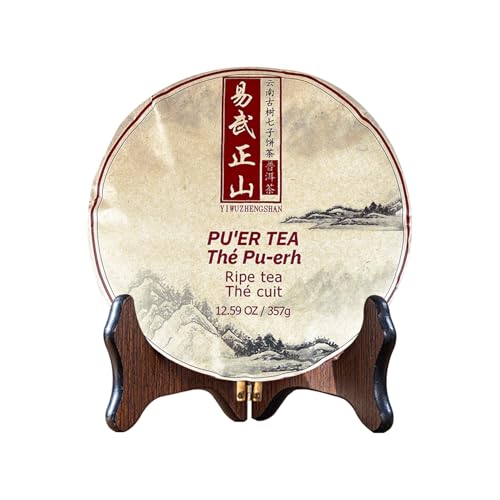
YiwuZhengshan Ancient Tree Pu'er Tea

✅ Fresh, never-bitter cup for the reviewers it lands with
FullChea Menghai Puerh Tea Cakes (2008/2018)
✅ Collectible premium tin and packaging