



We analyze real customer reviews to surface what matters: key strengths, ideal use cases, and honest considerations — so you can make an informed choice.
Jinglong Tea Factory Ripe Pu-erh Tea Mini Cake
A ripe Yunnan pu-erh in mini-cake form — earthy and approachable enough to read as black-tea-adjacent for anyone new to shou (ripe/cooked pu-erh, post-fermented for immediate drinkability).
🎯 Best for: an everyday earthy cup, hot or iced, a lower-caffeine swap for the morning coffee habit
🍃 Strength: Medium

What Stands Out
🍃 Flavor Profile
Strength: Medium
The defining note across reviews is earthiness (mentioned in three of nine), the signature character of properly fermented shou. Behind it, individual reviewers picked up creamy, buttery body, light wood notes, and a 'pure, black-tea-like' aroma, while another found the sharpness too pronounced. We'd call it a register split typical of an entry-level shou cake — drinkable, but uneven from cup to cup.
✅ What Customers Love
- Earthy shou character delivered consistently
- Versatile across hot, iced, and cold-brew preparations
- Convenient mini-cake format — break off, brew, repeat
🎯 Best For
an everyday earthy cup, hot or iced • a lower-caffeine swap for the morning coffee habit • a multi-brew session — three or more infusions per chunk
Brand: Jinglong Tea Factory
Category: Pu-erh Tea
As an Amazon Associate we earn from qualifying purchases.
About This Pu-erh Tea
A ripe Yunnan pu-erh pressed into mini-cakes, this is shou (cooked, post-fermented pu-erh) at its most approachable — earthy enough to read as black-tea-adjacent for anyone new to the style. Earthiness is the defining note across reviews, the signature character of properly fermented shou; individual reviewers picked up creamy, buttery body, light wood notes, and a 'pure, black-tea-like' aroma, while another found the sharpness too pronounced. The register splits cup to cup — drinkable, but uneven — which is typical of an entry-level shou cake.
Reviewers reach for it across everyday rituals: morning cups, iced glasses, even a mason jar left in summer sun for cold-brew. One drinker uses it as a lower-caffeine swap for the morning coffee habit, leaning on the earthy weight rather than the caffeine kick.
Standard shou practice applies. Break off a chunk and rinse it once with boiling water before your first drinking infusion — this washes off fermentation residue and primes the leaves. A single portion will give you three or more infusions, which is part of where the mini-cake format earns its keep.
Caveats worth knowing. Three of nine reviewers push back on price-to-quality, calling it overpriced or a poorer value than their usual shou. One separately reported a lingering fishy odor — a known storage funk that surfaces occasionally in less-aged ripe pu-erh. If you're expecting a refined, aged-character cake, this reads entry-level rather than nuanced.
One reviewer paired it with a wedge of orange — an easy cue if you want to brighten the earthy base.
Is Jinglong Tea Factory Ripe Pu-erh Tea Mini Cake Right for You?
What does this puerh actually taste like?
Earthiness is the through-line — three of nine reviewers call it out, which is the signature character of properly fermented ripe pu-erh. Behind that, individual drinkers picked up creamy body, light wood notes, and a clean black-tea-like aroma, though the cup-to-cup register splits between mild and sharp.
Is this a good entry point if I've never had pu-erh before?
Yes — it reads as black-tea-adjacent and approachable, which is what you want from a starter shou. The mini-cake breaks off by hand with no special tools, and it's forgiving across hot, iced, and cold-brew methods.
Can I cold-brew it or drink it iced?
Reviewers do exactly that — one even left a mason jar out in summer sun to brew. Across a small handful of reports, it appears to hold up across hot, iced, and cold-brew preparations rather than being locked to a single method.
Do I need to rinse the cake before brewing?
Yes — break off a chunk and rinse once with boiling water before your first drinking infusion. That's standard shou practice: it washes off fermentation residue and primes the leaves for multiple brews, and at least one reviewer specifically flagged skipping the rinse.
How many infusions can I get from one chunk?
One reviewer reported three brewings from a single chunk, which is consistent with how ripe pu-erh is typically used. With the limited review data here, treat three-plus infusions as the working expectation rather than a guarantee.
Could this work as a lower-caffeine morning coffee swap?
One drinker uses it exactly that way — as a less-caffeinated stand-in for the morning coffee habit. With only a single reviewer reporting this, take it as one person's working solution rather than a documented pattern.
As an Amazon Associate we earn from qualifying purchases.
Are there any off-aromas I should know about?
One of nine reviewers reported a lingering fishy odor — a known storage funk that surfaces occasionally in less-aged ripe pu-erh rather than a defect unique to this cake. It's a single report, but worth flagging since the aroma can be hard to brew out once it's there.
Is the flavor consistent cup to cup?
Not entirely — the register appears split. A couple of reviewers described it as weak or bland while another found the sharpness too pronounced, which reads as uneven cup-to-cup rather than a single consistent profile.
Will this satisfy a seasoned ripe pu-erh drinker?
Probably not as a daily driver — it reads as entry-level shou rather than a refined, aged-character cake. A few reviewers familiar with ripe pu-erh felt it underdelivered compared to their usual cake, so set expectations accordingly if you're already drinking shou regularly.
Does anything pair well with it?
One reviewer drinks it alongside a wedge of orange, which plays nicely off the earthy register. It's a single pairing report rather than a documented pattern, but citrus is a common companion for shou and worth a try.
Category: What is the difference between sheng (raw) and shou (ripe) pu-erh?
Sheng is the traditional form: leaves are processed, compressed, and left to age slowly — typically 10 to 30 years — to reach a mellow profile. Shou was developed in 1973 at the Kunming and Menghai tea factories, where wet-piling under canvas drives a rapid microbial fermentation that produces a dark, smooth tea in weeks rather than decades. Young sheng tastes robust, floral, and bitter — similar in character to a strong green tea — while shou is immediately dark, earthy, and low in astringency from day one.
Category: Who should be cautious about drinking pu-erh tea?
Because pu-erh is high in caffeine, people sensitive to stimulants, those with cardiac arrhythmia, and pregnant individuals should moderate intake or favor later steeps that extract less caffeine. Immunocompromised drinkers — transplant recipients, those on immunosuppressants, severe asthmatics — should avoid handling visibly moldy compressed cakes, since species like Aspergillus fumigatus that occur in pu-erh can be opportunistic pathogens, although the brewed tea itself is generally low-risk. Drinkers who are highly tannin-sensitive may find young raw pu-erh harsh on an empty stomach.
As an Amazon Associate we earn from qualifying purchases.
Category: How much caffeine does pu-erh tea have?
Pu-erh is moderate-to-high in caffeine. The Yunnan large-leaf assamica varietal evolved high caffeine concentrations as a natural defense against insects, so the raw material is more caffeinated than the small-leaf cultivars used for many green and oolong teas. Fermentation does not reliably lower caffeine — one study of Xiaguan tuo tea showed caffeine actually increased by 59% over 56 days of pile fermentation as other leaf mass was consumed by microbes. The smoother feel of ripe pu-erh comes from the absence of catechins, not from less caffeine.
What Customers Love
⚠️ Limited sample based on limited customer feedback (9 reviews) • Our methodology
- Earthy shou character delivered consistently
- Versatile across hot, iced, and cold-brew preparations
- Convenient mini-cake format — break off, brew, repeat
Taste Profile
The defining note across reviews is earthiness (mentioned in three of nine), the signature character of properly fermented shou. Behind it, individual reviewers picked up creamy, buttery body, light wood notes, and a 'pure, black-tea-like' aroma, while another found the sharpness too pronounced. We'd call it a register split typical of an entry-level shou cake — drinkable, but uneven from cup to cup.
- A wedge of orange alongside the cup — one reviewer's combination
Brewing: Rinse the broken-off chunk once with boiling water before your first drinking infusion — standard shou practice that washes off fermentation residue and primes the leaves for multiple brews.
Best Use Cases
🎯 Best For
- an everyday earthy cup, hot or iced
- a lower-caffeine swap for the morning coffee habit
- a multi-brew session — three or more infusions per chunk
⚠️ Not Ideal For
- drinkers expecting a refined, aged-character ripe pu-erh — this reads entry-level
- buyers sensitive to wet-storage funk
How People Use It
Reviewers reach for it across everyday rituals — morning cups, iced brews, even a mason jar left in summer sun — and one drinker uses it as a lower-caffeine coffee swap.
Good for Beginners
✅ Yes
- Reads as black-tea-adjacent — an accessible entry into shou
- Mini-cake breaks off easily — no special tools required
- Forgiving across hot, iced, and cold-brew methods
What to Consider
Three of nine reviewers push back on price-to-quality, calling it overpriced or a poorer value than their usual shou, and one separately reported a lingering fishy odor — a known storage funk that surfaces occasionally in less-aged ripe pu-erh.
- Price-to-quality complaints — multiple reviewers feel it underdelivers for the cost
- Occasional fishy off-aroma — storage funk surfaces in some cakes
- Cup-to-cup register is split between mild/weak and strong/sharp
⚠️ Important: This analysis is based on limited customer feedback (9 reviews). We've shared what we found, but there may be additional considerations we haven't captured.
About This Analysis
This analysis is based on 9 customer reviews. We're showing you everything we found, but with a small sample, there's a lot we likely haven't captured yet.
✅ What we're confident about: What customers love and best use cases
⚠️ What may be incomplete: Potential issues and considerations
For more perspectives, check customer reviews on Amazon.
Product Selection
In short: We only feature high-rated products.
Products on TeaDelight.net are selected based on strong Amazon customer ratings, sufficient review volume, and market presence. We focus on well-regarded products that tea enthusiasts are actively considering and purchasing.
As an Amazon Associate we earn from qualifying purchases.
You Might Also Like

✅ Long-lasting flavor across repeated steepings
Oriarmcha 2010 Lao Cha Tou Ripe Pu-erh Tea
✅ smoother, richer, sweeter than its price suggests
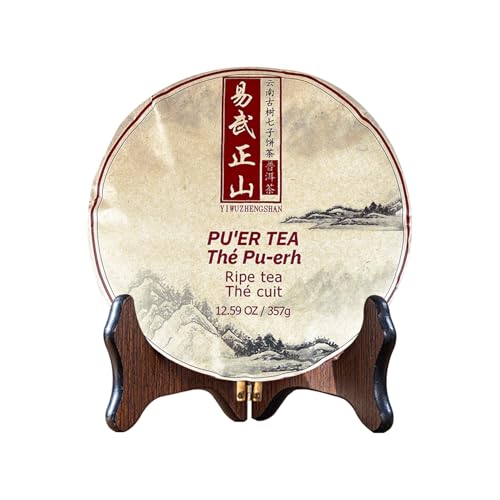
YiwuZhengshan Ancient Tree Pu'er Tea

✅ Fresh, never-bitter cup for the reviewers it lands with
FullChea Menghai Puerh Tea Cakes (2008/2018)
✅ Collectible premium tin and packaging