
Available Alternatives

✅ Long-lasting flavor across repeated steepings
Oriarmcha 2010 Lao Cha Tou Ripe Pu-erh Tea
✅ smoother, richer, sweeter than its price suggests
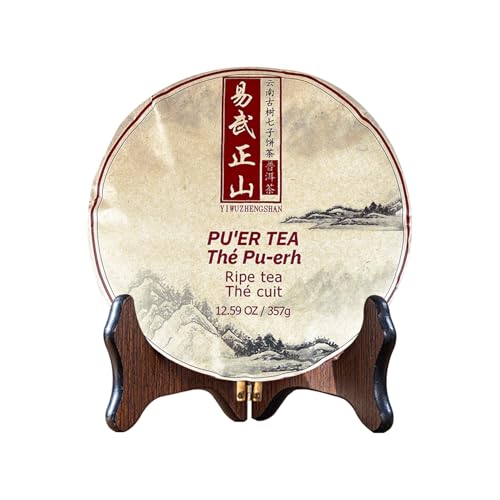
YiwuZhengshan Ancient Tree Pu'er Tea

✅ Fresh, never-bitter cup for the reviewers it lands with
FullChea Menghai Puerh Tea Cakes (2008/2018)
✅ Collectible premium tin and packaging
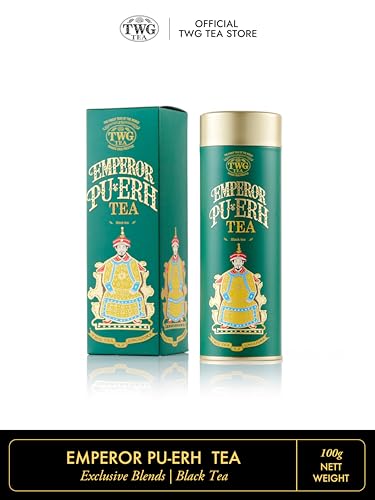
TWG Emperor Pu-Erh Tea


We analyze real customer reviews to surface what matters: key strengths, ideal use cases, and honest considerations — so you can make an informed choice.
Jinglong Tea Factory Ripe Pu-erh Tea Cake
Mellow and forgiving — a ripe pu-erh cake that two reviewers have folded into a months-long morning ritual.
🎯 Best for: Smooth, mellow ripe pu-erh as a daily morning cup, Value-conscious pu-erh drinkers buying in bulk
🍃 Strength: Medium

🍃 Flavor Profile
Strength: Medium
Most reviewers describe the cup as smooth (three of nine), leaning earthy with nutty and rich edges. One drinker picks up honey-like undertones alongside butter and caramel; another flags a fishy note — a quirk that often fades once a shou (ripe, post-fermented pu-erh) cake has had time to air out. The liquor pours deep amber to dark brown, with a texture some reviewers describe as gentle on the tongue.
✅ What Customers Love
- Smooth, mellow shou character
- Strong value at scale
- Rewards multiple short infusions
🎯 Best For
Smooth, mellow ripe pu-erh as a daily morning cup • Value-conscious pu-erh drinkers buying in bulk • Gongfu-style brewing with multiple short infusions
Brand: Jinglong Tea Factory
Category: Pu-erh Tea
As an Amazon Associate we earn from qualifying purchases.
About This Pu-erh Tea
A ripe (shou) pu-erh cake from Jinglong Tea Factory that two reviewers have folded into a months-long morning ritual. Three of nine reviewers describe the cup as smooth, leaning earthy with nutty, rich edges. One drinker picks up honey-like undertones alongside butter and caramel; another flags a fishy note — a quirk that often fades once a shou cake has had time to air out. The liquor pours deep amber to dark brown, with a texture some reviewers describe as gentle on the tongue.
We'd reach for this in the morning. Two reviewers have made it a daily staple over the past two months, and another saves it for Sunday afternoons. At roughly 150 cups per cake, the value math is generous for someone already drinking pu-erh regularly — two buyers specifically called out the value at the 'excellent' end, and another two at the 'good' end.
The cake rewards short steeps under a minute across multiple gongfu-style infusions. Reviewers especially flagged the second pour as where this cake hits its stride.
Two of nine reviewers report packaging issues on arrival — a broken outer box and small holes in the cake wrapper — though the cake itself was well protected in both cases. One reviewer also notes the cake can be hard to separate, which is typical for compressed pressings, and one flags that this is not a premium-grade leaf if you're shopping for named-mountain provenance.
A forgiving, daily-driver shou cake — best for drinkers who want bulk value over fine-grade pedigree, and who enjoy working a cake through short, repeated infusions.
Is Jinglong Tea Factory Ripe Pu-erh Tea Cake Right for You?
What does this pu-erh taste like?
Across nine reviewers, the cup leans smooth and earthy with nutty edges — three describe it as smooth, and individual drinkers picked up honey-like undertones, butter, and caramel. The liquor pours deep amber to dark brown with a texture some reviewers call gentle on the tongue.
Is it bitter or harsh?
It appears to be on the mellow side — reviewers describe the cup as smooth, not bitter, and not overly strong, which is in line with what a well-made ripe pu-erh (shou) usually delivers. That forgiving character is part of why two reviewers folded it into a daily morning routine.
One reviewer mentions a fishy note — is that a problem?
A single reviewer out of nine flagged a fishy off-note, which is a quirk that often shows up on freshly opened shou cakes and commonly fades once the cake has had time to air out. With sparse review coverage, treat it as a known possibility rather than a consistent trait.
How should I brew this cake?
Reviewers who described their method favor short steeps under a minute across multiple gongfu-style infusions, with the second pour singled out as notably good. Because it's pressed as a cake, you'll need to break off a portion for each session rather than scooping loose leaf.
Is this a good everyday morning pu-erh?
Two of nine reviewers have made it a daily morning staple over the past two months, and another saves it for Sunday afternoons. The smooth, mellow profile is what makes it work as a repeatable cup rather than a special-occasion brew.
Is this a good pu-erh to start with if I'm new to the style?
It appears to be a forgiving entry point — reviewers describe it as smooth, mellow, and not bitter, which are the traits that usually make a shou cake approachable for newcomers. With only nine reviewers in the sample, treat this as a reasonable first cake rather than a universally vetted one.
As an Amazon Associate we earn from qualifying purchases.
Does it hold up to multiple infusions?
Reviewers who brewed it gongfu-style call out the second steep as a high point, and the cake format rewards multiple short pours rather than a single long steep. With sparse review coverage on brewing specifics, the second-pour callout is the strongest signal we have.
How many cups does the cake make, and do I have to break it apart?
The listing positions the 12.6-ounce cake as making roughly 150 cups, and yes — one reviewer notes the brick needs to be cut into pieces for each session, which is standard for pressed pu-erh. A pu-erh knife or pick makes the job easier than trying to pry chunks off by hand.
Category: What is pu-erh tea?
Pu-erh is a post-fermented tea from Yunnan Province in southwest China, made from the large-leaf Camellia sinensis var. assamica plant. Unlike green or black teas, it is defined by its capacity for ongoing microbial fermentation — the leaf continues to chemically evolve for years or decades after processing. It exists in two forms: raw (sheng), which ages slowly through natural oxidation and microbial activity, and ripe (shou), which is rapidly fermented in piles to mimic decades of aging in about 45–60 days.
Category: Who should be cautious about drinking pu-erh tea?
Because pu-erh is high in caffeine, people sensitive to stimulants, those with cardiac arrhythmia, and pregnant individuals should moderate intake or favor later steeps that extract less caffeine. Immunocompromised drinkers — transplant recipients, those on immunosuppressants, severe asthmatics — should avoid handling visibly moldy compressed cakes, since species like Aspergillus fumigatus that occur in pu-erh can be opportunistic pathogens, although the brewed tea itself is generally low-risk. Drinkers who are highly tannin-sensitive may find young raw pu-erh harsh on an empty stomach.
Category: How much caffeine does pu-erh tea have?
Pu-erh is moderate-to-high in caffeine. The Yunnan large-leaf assamica varietal evolved high caffeine concentrations as a natural defense against insects, so the raw material is more caffeinated than the small-leaf cultivars used for many green and oolong teas. Fermentation does not reliably lower caffeine — one study of Xiaguan tuo tea showed caffeine actually increased by 59% over 56 days of pile fermentation as other leaf mass was consumed by microbes. The smoother feel of ripe pu-erh comes from the absence of catechins, not from less caffeine.
What Customers Love
⚠️ Limited sample based on limited customer feedback (9 reviews) • Our methodology
- Smooth, mellow shou character
- Strong value at scale
- Rewards multiple short infusions
- Repeat-purchase signal in a small sample
Taste Profile
Most reviewers describe the cup as smooth (three of nine), leaning earthy with nutty and rich edges. One drinker picks up honey-like undertones alongside butter and caramel; another flags a fishy note — a quirk that often fades once a shou (ripe, post-fermented pu-erh) cake has had time to air out. The liquor pours deep amber to dark brown, with a texture some reviewers describe as gentle on the tongue.
Brewing: The cake rewards short steeps under a minute across multiple gongfu-style infusions; reviewers especially flagged the second pour.
Best Use Cases
🎯 Best For
- Smooth, mellow ripe pu-erh as a daily morning cup
- Value-conscious pu-erh drinkers buying in bulk
- Gongfu-style brewing with multiple short infusions
⚠️ Not Ideal For
- Drinkers seeking premium leaf grade or named-mountain provenance
- Anyone wanting bag-style convenience with no preparation
How People Use It
We'd reach for this in the morning — two reviewers have made it a daily staple over the past two months, and another saves it for Sunday afternoons. At roughly 150 cups per cake, the value math is generous for someone already drinking pu-erh regularly.
Good for Beginners
✅ Yes
- Smooth, mellow, not bitter — forgiving for shou newcomers
- Low cost-per-cup at ~150 cups per cake lowers experimentation risk
For Experienced Users
✅ Worth Exploring
- Cake format invites gongfu-style short-steep practice with a notably good second infusion
- Compares favorably against other cakes one reviewer has bought from other vendors
What to Consider
Two of nine reviewers report packaging issues on arrival — a broken outer box and small holes in the cake wrapper — though the cake itself was well protected.
- Packaging integrity issues on arrival
- Occasional fishy off-note
- Not a premium-grade leaf cake
⚠️ Important: This analysis is based on limited customer feedback (9 reviews). We've shared what we found, but there may be additional considerations we haven't captured.
About This Analysis
This analysis is based on 9 customer reviews. We're showing you everything we found, but with a small sample, there's a lot we likely haven't captured yet.
✅ What we're confident about: What customers love and best use cases
⚠️ What may be incomplete: Potential issues and considerations
For more perspectives, check customer reviews on Amazon.
Product Selection
In short: We only feature high-rated products.
Products on TeaDelight.net are selected based on strong Amazon customer ratings, sufficient review volume, and market presence. We focus on well-regarded products that tea enthusiasts are actively considering and purchasing.
As an Amazon Associate we earn from qualifying purchases.