


We analyze real customer reviews to surface what matters: key strengths, ideal use cases, and honest considerations — so you can make an informed choice.
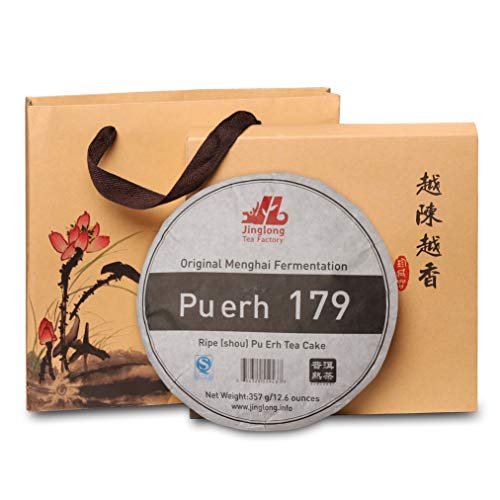
Jinglong Tea Factory Chinese Pu-erh Tea Cake
A traditional pressed pu-erh cake from Jinglong Tea Factory — 357 grams of leaf to break, rinse, and brew across many infusions.
🎯 Best for: daily pu-erh drinking, iced brewing
🍃 Strength: Medium

What Stands Out
🍃 Flavor Profile
Strength: Medium
Smooth shows up most across eight early reviews. One detailed account picks up a plumy aroma with tree-bark and camphor shades over a dense, moderately rich body with a long aftertaste. Another notes an earthy, slightly mineral undertone they call refreshing when iced.
✅ What Customers Love
- Smooth, never-bitter character
- Full-bodied liquor with a long aftertaste
- Aromatic complexity for a daily-cake pu-erh — plumy, camphor, tree-bark
🎯 Best For
daily pu-erh drinking • iced brewing • multi-infusion gongfu-style sessions
Brand: Jinglong Tea Factory
Category: Pu-erh Tea
As an Amazon Associate we earn from qualifying purchases.
About This Pu-erh Tea
A traditional pressed pu-erh cake from Jinglong Tea Factory — 357 grams of leaf to break, rinse, and brew across many infusions. Smooth shows up most across eight early reviews. One detailed account picks up a plumy aroma with tree-bark and camphor shades over a dense, moderately rich body with a long aftertaste. Another notes an earthy, slightly mineral undertone they call refreshing when iced.
We'd put this in the everyday-pu-erh column rather than the gongfu showpiece pile — three reviewers have already re-ordered, and one is moving on to the company's No. 7 cake. It's a fit for drinkers building a daily pu-erh habit, those who like some aromatic complexity in a daily cup, and anyone willing to invest in the cake-breaking routine.
One reviewer recommends a quick rinse followed by three-minute steeps, reporting roughly nine infusions from a single session. The cake also takes to iced brewing on warmer days. With moderate caffeine, it's better suited to daytime drinking than evening.
The cake format draws fair criticism — some reviewers find the breaking-and-brewing routine too much for casual cup-by-cup drinking, and one reviewer reports finding broken pottery fragments in the leaf. Other concerns from the small sample include excessive stems and misleading harvest photos, so expect some batch-to-batch variability.
If you want a daily-driver pu-erh with enough character to reward a proper multi-infusion session, this cake earns its place. If you're hoping to grab a bag and brew a quick mug, look elsewhere.
Is Jinglong Tea Factory Chinese Pu-erh Tea Cake Right for You?
What does this pu-erh taste like?
Smooth is the most repeated note, mentioned by 2 of 8 reviewers, with one detailed account picking up a plumy, camphor, tree-bark character over a full-bodied liquor with a long aftertaste. Based on a handful of reports, expect an earthy, slightly mineral undertone rather than a sharp or bitter cup.
Is it smooth or does it turn bitter?
Across the small set of early reviews, smoothness is the recurring word and one reviewer explicitly notes it is never bitter. With sparse coverage that is the best signal available, but the consistency of the descriptor across the few who do comment is encouraging.
How should I brew this cake?
One reviewer recommends a quick hot rinse followed by three-minute steeps, and reports getting roughly nine infusions from a single session. That maps to a fairly standard pressed-pu-erh approach — break a piece off the cake, rinse, then steep and re-steep through the day.
Can I drink this iced?
One reviewer brews it cold and calls it refreshing, picking up an earthy, slightly mineral undertone over ice. That is a single voice in a sparse review set, so treat it as a viable experiment rather than the recommended way to drink the cake.
Is the pressed cake format a hassle for everyday drinking?
A cluster of reviewers — roughly 3 of 8 — flag the cake format as real friction for casual cup-by-cup drinking, between the breaking step and the brewing routine. If you want something to grab and steep in a mug at the desk, this format works against you; if you settle in for a multi-infusion session, the format earns its place.
Are there any quality-control concerns I should know about?
Yes — across the small review set, three separate reviewers flag distinct issues: one reports finding broken pottery fragments in the leaf, another describes excessive stems, and a third calls the harvest-date imagery misleading. Three QC themes from three different voices in a sparse review set is worth weighing before ordering.
As an Amazon Associate we earn from qualifying purchases.
Is this a beginner pu-erh or for more experienced drinkers?
It leans toward experienced drinkers. The pressed-cake format rewards multi-infusion gongfu-style practice, and the aromatic register — plumy, camphor, tree-bark from one detailed reviewer — reads as a connoisseur descriptor set rather than a starter cup.
Do reviewers come back for more?
Three of the eight reviewers signal re-ordering, and one mentions moving on to the company's No. 7 cake next. That is a meaningful repeat-purchase rate at this review count, even if the absolute numbers are small.
How many cups should I expect from one cake?
The listing positions this as roughly 150 cups across a 357-gram cake. One reviewer reports about nine infusions from a single session, so a single broken piece carries you through a long sitting before you reach back into the cake.
Is this suited for evening drinking?
We would not put it there. Pu-erh carries meaningful caffeine, and the synthesis explicitly flags evening or pre-bed drinking as a poor fit for this cake. Stick to morning and afternoon sessions if caffeine sensitivity is a factor.
Category: What is pu-erh tea?
Pu-erh is a post-fermented tea from Yunnan Province in southwest China, made from the large-leaf Camellia sinensis var. assamica plant. Unlike green or black teas, it is defined by its capacity for ongoing microbial fermentation — the leaf continues to chemically evolve for years or decades after processing. It exists in two forms: raw (sheng), which ages slowly through natural oxidation and microbial activity, and ripe (shou), which is rapidly fermented in piles to mimic decades of aging in about 45–60 days.
Category: Who should be cautious about drinking pu-erh tea?
Because pu-erh is high in caffeine, people sensitive to stimulants, those with cardiac arrhythmia, and pregnant individuals should moderate intake or favor later steeps that extract less caffeine. Immunocompromised drinkers — transplant recipients, those on immunosuppressants, severe asthmatics — should avoid handling visibly moldy compressed cakes, since species like Aspergillus fumigatus that occur in pu-erh can be opportunistic pathogens, although the brewed tea itself is generally low-risk. Drinkers who are highly tannin-sensitive may find young raw pu-erh harsh on an empty stomach.
As an Amazon Associate we earn from qualifying purchases.
Category: How much caffeine does pu-erh tea have?
Pu-erh is moderate-to-high in caffeine. The Yunnan large-leaf assamica varietal evolved high caffeine concentrations as a natural defense against insects, so the raw material is more caffeinated than the small-leaf cultivars used for many green and oolong teas. Fermentation does not reliably lower caffeine — one study of Xiaguan tuo tea showed caffeine actually increased by 59% over 56 days of pile fermentation as other leaf mass was consumed by microbes. The smoother feel of ripe pu-erh comes from the absence of catechins, not from less caffeine.
What Customers Love
⚠️ Limited sample based on limited customer feedback (8 reviews) • Our methodology
- Smooth, never-bitter character
- Full-bodied liquor with a long aftertaste
- Aromatic complexity for a daily-cake pu-erh — plumy, camphor, tree-bark
- Repeat-purchase loyalty
Taste Profile
Smooth shows up most across eight early reviews. One detailed account picks up a plumy aroma with tree-bark and camphor shades over a dense, moderately rich body with a long aftertaste. Another notes an earthy, slightly mineral undertone they call refreshing when iced.
Brewing: One reviewer recommends a quick rinse followed by three-minute steeps, reporting roughly nine infusions from a single session.
Best Use Cases
🎯 Best For
- daily pu-erh drinking
- iced brewing
- multi-infusion gongfu-style sessions
⚠️ Not Ideal For
- casual cup-by-cup drinking
- evening or pre-bed drinking
How People Use It
We'd put this in the everyday-pu-erh column rather than the gongfu showpiece pile — three reviewers have already re-ordered, and one is moving on to the company's No. 7 cake.
For Experienced Users
✅ Worth Exploring
- Pressed-cake format rewards multi-infusion gongfu practice
- Aromatic depth — plumy, camphor, tree-bark — reads as connoisseur register at this price
What to Consider
The cake format draws fair criticism — some reviewers find the breaking-and-brewing routine too much for casual cup-by-cup drinking, and one reviewer reports finding broken pottery fragments in the leaf.
- Cake format is real friction for casual drinkers
- Quality-control complaints — pottery fragments, excessive stems, misleading harvest photos
⚠️ Important: This analysis is based on limited customer feedback (8 reviews). We've shared what we found, but there may be additional considerations we haven't captured.
About This Analysis
This analysis is based on 8 customer reviews. We're showing you everything we found, but with a small sample, there's a lot we likely haven't captured yet.
✅ What we're confident about: What customers love and best use cases
⚠️ What may be incomplete: Potential issues and considerations
For more perspectives, check customer reviews on Amazon.
Product Selection
In short: We only feature high-rated products.
Products on TeaDelight.net are selected based on strong Amazon customer ratings, sufficient review volume, and market presence. We focus on well-regarded products that tea enthusiasts are actively considering and purchasing.
As an Amazon Associate we earn from qualifying purchases.
You Might Also Like

✅ Long-lasting flavor across repeated steepings
Oriarmcha 2010 Lao Cha Tou Ripe Pu-erh Tea
✅ smoother, richer, sweeter than its price suggests
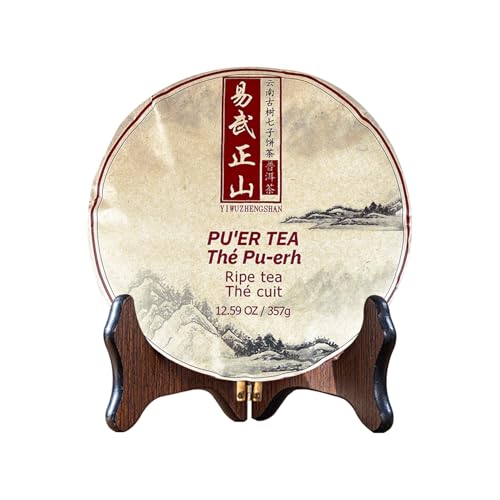
YiwuZhengshan Ancient Tree Pu'er Tea

✅ Fresh, never-bitter cup for the reviewers it lands with
FullChea Menghai Puerh Tea Cakes (2008/2018)
✅ Collectible premium tin and packaging