
Available Alternatives

✅ Long-lasting flavor across repeated steepings
Oriarmcha 2010 Lao Cha Tou Ripe Pu-erh Tea

✅ smoother, richer, sweeter than its price suggests
YiwuZhengshan Ancient Tree Pu'er Tea

✅ Fresh, never-bitter cup for the reviewers it lands with
FullChea Menghai Puerh Tea Cakes (2008/2018)

✅ Collectible premium tin and packaging
TWG Emperor Pu-Erh Tea


We analyze real customer reviews to surface what matters: key strengths, ideal use cases, and honest considerations — so you can make an informed choice.
Imperial Organic Pu-Erh Tea Bags
Three reviews isn't a pattern — these are initial signals on an organic pu-erh tea-bag offering whose label, not its drinkers, is doing most of the talking.
🎯 Best for: organic-conscious daytime drinkers exploring pu-erh in bag form, a balanced introduction between black and green tea character
🍃 Strength: Medium

🍃 Flavor Profile
Strength: Medium
At N=3, much of the picture comes from the label rather than the cup. One reviewer reportedly calls it the best tasting pu-erh in a bag they've found, with a balanced character described as neither bitter like stronger black teas nor mild like greens. A separate early note flags a fishy aroma — a known shou pu-erh quirk that often eases with a quick rinse.
✅ What Customers Love
- USDA Organic certification
- individually foil-wrapped bags reportedly seal flavor well
- balanced character between bold black and mild green
🎯 Best For
organic-conscious daytime drinkers exploring pu-erh in bag form • a balanced introduction between black and green tea character
Brand: Imperial Organic Tea
Category: Pu-erh Tea
As an Amazon Associate we earn from qualifying purchases.
About This Pu-erh Tea
This is a USDA Organic pu-erh sold in individually foil-wrapped tea bags — 18 bags per box, four boxes per pack. With only three eligible reviews on file, much of the picture comes from the label rather than the cup. One reviewer reportedly calls it the best-tasting pu-erh in a bag they've found, with a balanced character described as neither bitter like stronger black teas nor mild like greens. A separate early note flags a fishy aroma — a known shou pu-erh quirk that often eases with a quick rinse before the first proper steep.
We have limited data so far on when reviewers reach for this; no morning, evening, or iced contexts surface in the three eligible reviews. Based on the moderate-to-high caffeine level typical of pu-erh, treat this as a daytime cup rather than an evening one. The bagged format makes it a fit for organic-conscious daytime drinkers exploring pu-erh without committing to gongfu technique, and a workable bridge between bolder black teas and milder greens.
For brewing, one reviewer reports a 4–5 minute steep producing a fully developed cup. Standard bag-brewing parameters apply: hot water just off the boil, one bag per mug, lid on if you have one. Multi-infusion gongfu sessions aren't the format here.
On the honest side, two of the three eligible reviewers raised packaging issues — bags arriving loose or disheveled inside the outer carton — though the individual foil wrappers themselves are reportedly well-sealed, so freshness shouldn't be affected. Drinkers sensitive to early-infusion fishy notes in shou pu-erh may want to rinse the bag with hot water for ten seconds, discard the rinse, then steep again.
At three reviews, none of these signals are settled. The product is positioned as an organic, accessible entry point into pu-erh in bag form; whether it holds up across a wider audience is still an open question.
Is Imperial Organic Pu-Erh Tea Bags Right for You?
Is this pu-erh certified organic?
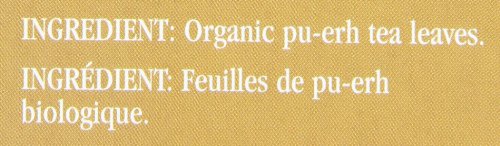
Yes — the listing is positioned as 'Imperial Organic Tea, Pu-Erh,' and one of the small handful of early reviewers specifically calls out the organic, simple-ingredients angle as a reason they reached for it.
What does this Imperial pu-erh taste like?
Based on a handful of early reports, it lands in the middle — one reviewer describes it as neither as bitter as a strong black tea nor as mild as a green, calling it a balanced cup. At this review count, treat that as an initial impression rather than a settled flavor profile.
Why does pu-erh sometimes smell fishy on the first brew?
One early reviewer of this tea flagged a fishy aroma, which is a known quirk of shou (ripe) pu-erh tied to the post-fermentation process. A quick rinse — pouring hot water over the bag for a few seconds and discarding — typically settles it before the real steep.
How long should I steep these tea bags?
One reviewer reports a 4–5 minute steep in hot water produces a fully developed cup, which lines up with standard bag-brewing for pu-erh. These are tea bags, so this isn't a tea you'd approach with gongfu-style short infusions.
Is this a reasonable pu-erh to start with as a beginner?
Initial impressions suggest yes — the bag format removes any preparation barrier, and the one taste note that surfaced positions the cup between the boldness of black tea and the mildness of green, which is an approachable middle for someone new to pu-erh.
Can I drink this in the evening or before bed?
Pu-erh carries moderate-to-high caffeine, so this is better treated as a daytime cup than an evening one. None of the early reviewers describe reaching for it as a wind-down tea, and the synthesis explicitly steers it away from bedtime drinking.
As an Amazon Associate we earn from qualifying purchases.
Are the tea bags individually wrapped to keep them fresh?
Reportedly yes — one of the three eligible reviewers notes the individual foil wrappers seal flavor well, which is consistent with how the listing presents the bags. Treat this as an initial signal rather than a broad pattern at this sample size.
Can I do multiple infusions gongfu-style with these bags?
Not really — tea bags are formatted for a single full steep, and the synthesis specifically flags gongfu-style multi-infusion sessions as a use case this product isn't built for. If you want to re-steep pu-erh several times, loose-leaf ripe pu-erh is the format to look at.
How much tea do you actually get in this pack?
The listing is 18 tea bags per box across a 4-box pack — 72 bags total — with a combined net weight of roughly 36 grams of tea. That's a daytime-cup-a-day supply for a couple of months for one drinker.
What makes this pu-erh different from other bagged pu-erhs?
The two distinguishing signals from the listing and the early reviews are the USDA Organic positioning and the balanced character — one reviewer calls it the best-tasting pu-erh in a bag they've tried. With only three eligible reviewers, that's an initial vote of confidence, not a settled verdict.
Category: What is the difference between sheng (raw) and shou (ripe) pu-erh?
Sheng is the traditional form: leaves are processed, compressed, and left to age slowly — typically 10 to 30 years — to reach a mellow profile. Shou was developed in 1973 at the Kunming and Menghai tea factories, where wet-piling under canvas drives a rapid microbial fermentation that produces a dark, smooth tea in weeks rather than decades. Young sheng tastes robust, floral, and bitter — similar in character to a strong green tea — while shou is immediately dark, earthy, and low in astringency from day one.
Category: Who should be cautious about drinking pu-erh tea?
Because pu-erh is high in caffeine, people sensitive to stimulants, those with cardiac arrhythmia, and pregnant individuals should moderate intake or favor later steeps that extract less caffeine. Immunocompromised drinkers — transplant recipients, those on immunosuppressants, severe asthmatics — should avoid handling visibly moldy compressed cakes, since species like Aspergillus fumigatus that occur in pu-erh can be opportunistic pathogens, although the brewed tea itself is generally low-risk. Drinkers who are highly tannin-sensitive may find young raw pu-erh harsh on an empty stomach.
As an Amazon Associate we earn from qualifying purchases.
Category: Can I drink pu-erh tea before bed?
Pu-erh — particularly young raw sheng — contains substantial caffeine and a complex stimulant profile that many drinkers describe as energizing for several hours. Aged sheng and ripe shou are often gentler subjectively because their catechins have largely polymerized into theabrownins, but the underlying caffeine load can still be high. Drinkers sensitive to caffeine typically find evening pu-erh disrupts sleep; favoring a later steep — which extracts less caffeine than the first — is one common workaround.
What Customers Love
⚠️ Limited sample based on limited customer feedback (3 reviews) • Our methodology
- USDA Organic certification
- individually foil-wrapped bags reportedly seal flavor well
- balanced character between bold black and mild green
Taste Profile
At N=3, much of the picture comes from the label rather than the cup. One reviewer reportedly calls it the best tasting pu-erh in a bag they've found, with a balanced character described as neither bitter like stronger black teas nor mild like greens. A separate early note flags a fishy aroma — a known shou pu-erh quirk that often eases with a quick rinse.
Brewing: One reviewer reports a 4–5 minute steep producing a fully developed cup; bag-brewing parameters apply here, not gongfu technique.
Best Use Cases
🎯 Best For
- organic-conscious daytime drinkers exploring pu-erh in bag form
- a balanced introduction between black and green tea character
⚠️ Not Ideal For
- evening, bedtime, or wind-down drinking
- gongfu-style multi-infusion sessions
- drinkers sensitive to early-infusion fishy notes in shou pu-erh
How People Use It
We have limited data so far on when reviewers reach for this — no morning, evening, or iced contexts surface in the three eligible reviews. Based on the moderate-high caffeine level, we'd treat this as a daytime cup rather than an evening one.
Good for Beginners
✅ Yes
- bag format removes preparation barrier
- balanced character described as between bold black and mild green
What to Consider
Two of three eligible reviewers raised packaging issues — bags arriving loose or disheveled inside the outer carton — though the individual foil wrappers themselves are reportedly well-sealed.
- outer-carton packaging arrives disheveled with bags loose
- early-infusion fishy aroma reported
⚠️ Important: This analysis is based on limited customer feedback (3 reviews). We've shared what we found, but there may be additional considerations we haven't captured.
About This Analysis
This analysis is based on 3 customer reviews. We're showing you everything we found, but with a small sample, there's a lot we likely haven't captured yet.
✅ What we're confident about: What customers love and best use cases
⚠️ What may be incomplete: Potential issues and considerations
For more perspectives, check customer reviews on Amazon.
Product Selection
In short: We only feature high-rated products.
Products on TeaDelight.net are selected based on strong Amazon customer ratings, sufficient review volume, and market presence. We focus on well-regarded products that tea enthusiasts are actively considering and purchasing.
As an Amazon Associate we earn from qualifying purchases.