



We analyze real customer reviews to surface what matters: key strengths, ideal use cases, and honest considerations — so you can make an informed choice.
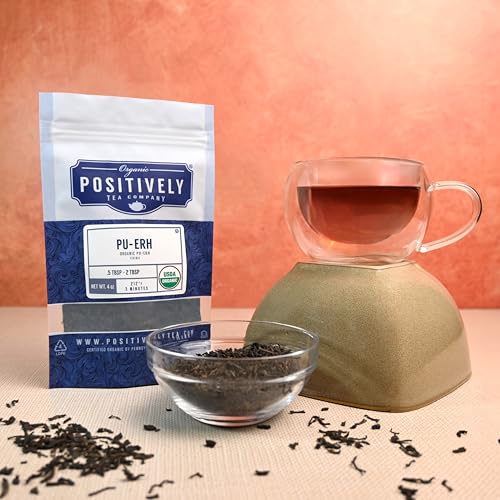
Organic Positively Tea Company Pu-Erh Tea
An organic loose-leaf pu-erh that doesn't pretend to be a ten-year vintage — and at this price, doesn't need to.
🎯 Best for: morning brewing or as a coffee alternative, Tibetan butter tea preparation
🍃 Strength: Light

What Stands Out
🍃 Flavor Profile
Strength: Light
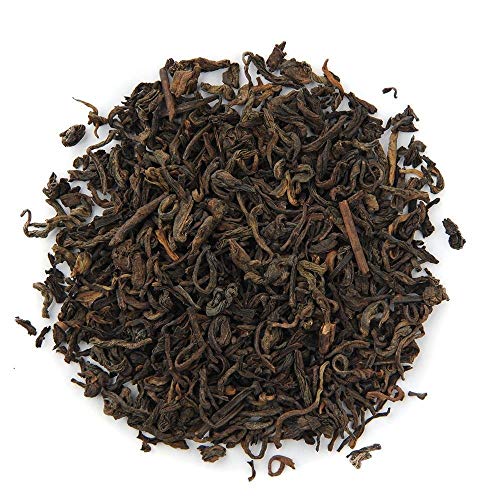
Most who weigh in describe a smooth, lightly earthy cup with pleasant aroma and good body. We'd call it drinkable but not deep. A handful find it bland, mild, or one-note compared to richer pu-erhs.
✅ What Customers Love
- Versatile across morning brewing, coffee replacement, and Tibetan butter tea preparation
- Strong value for an organic loose-leaf pu-erh
- Smooth, mellow drinkability
🎯 Best For
morning brewing or as a coffee alternative • Tibetan butter tea preparation • multi-infusion gongfu-style steeping • blending with milk, honey, or other teas
Brand: Organic Positively Tea Company
Category: Pu-erh Tea
As an Amazon Associate we earn from qualifying purchases.
About This Pu-erh Tea
An organic loose-leaf pu-erh that doesn't pretend to be a ten-year vintage — and at this price, doesn't need to. Most reviewers who weigh in describe a smooth, lightly earthy cup with pleasant aroma and good body. It's drinkable but not deep, and a handful find it bland, mild, or one-note compared to richer pu-erhs.
Reviewers reach for it in the morning and as a coffee alternative. Several add milk, honey, or salted butter to make Tibetan butter tea, and the leaves hold up across multiple infusions — making it a flexible everyday pu-erh rather than a sipping-ceremony tea.
For brewing, reviewers report good results with 7 grams in 6 ounces of boiling water for about four minutes, then re-steeping the same leaves several times. It also takes well to pairings: honey, almond or whole milk, organic butter and sea salt for Tibetan butter tea, or cassia chips and cinnamon sticks for a spiced cup.
The honest caveat: if you're after the depth of properly aged sheng (raw) or shou (ripe) pu-erh, this isn't it. The flavor reads light or one-note next to richer pu-erhs, the aroma underwhelms a few drinkers, and one reviewer noted physical discomfort suggesting some sensitivity to acidic teas.
If you want an everyday organic pu-erh for morning cups, coffee replacement, or butter-tea experiments — and you're comfortable with a mellow rather than complex profile — this earns its keep.
Is Organic Positively Tea Company Pu-Erh Tea Right for You?
What does this pu-erh actually taste like?
Across nine eligible reviewers, most describe a smooth, lightly earthy cup with pleasant aroma and good body. A handful call it mild or one-note compared to richer pu-erhs, so think drinkable rather than deep.
Is this a good pu-erh for someone new to the style?
Some reviewers describe it as smooth and forgiving rather than aggressively bitter, which makes it a gentler way to start exploring loose-leaf pu-erh. Just don't expect the depth that pulls drinkers further into the category.
How does it compare to aged sheng or shou pu-erh?
Reviewers who've tried aged or shop-bought pu-erh find the depth and complexity lacking here. If you want the character of properly aged sheng (raw) or shou (ripe), the synthesis is direct: this isn't it.
How should I brew it?
One reviewer's documented parameters were 7 grams in 6 ounces of boiling water for about four minutes, and the synthesis carries that forward as the cited starting point. Adjust steep time from there to taste.
Can I get multiple infusions from the same leaves?
Yes — reviewers note it holds up across multiple steeps, with one specifically suggesting the same leaves work for at least three rounds. The synthesis lists multi-infusion gongfu-style steeping among its named use cases.
Does it work as a morning brew or coffee alternative?
A few drinkers reach for it as a morning ritual or coffee replacement, and the synthesis flags both as named use cases. The body holds up to milk and honey if that's how you tend to drink coffee.
As an Amazon Associate we earn from qualifying purchases.
Can I use this for Tibetan butter tea?
Some reviewers blend it with organic butter, sea salt, and milk for Tibetan butter tea, and the synthesis lists this as one of the cited use cases. The straightforward earthy profile takes mix-ins without disappearing.
What pairs well with it?
Reviewer mentions include honey, almond or whole milk, organic butter and sea salt for butter tea, and cassia chips or cinnamon. The mellow body absorbs add-ins without turning thin.
Do some drinkers find the flavor too mild?
Yes — roughly half of the eligible reviewers describe it as bland, flavorless, mild, or one-note. It's the most consistent weakness raised, and the synthesis frames it honestly: drinkable but not deep.
Category: What is pu-erh tea?
Pu-erh is a post-fermented tea from Yunnan Province in southwest China, made from the large-leaf Camellia sinensis var. assamica plant. Unlike green or black teas, it is defined by its capacity for ongoing microbial fermentation — the leaf continues to chemically evolve for years or decades after processing. It exists in two forms: raw (sheng), which ages slowly through natural oxidation and microbial activity, and ripe (shou), which is rapidly fermented in piles to mimic decades of aging in about 45–60 days.
Category: Who should be cautious about drinking pu-erh tea?
Because pu-erh is high in caffeine, people sensitive to stimulants, those with cardiac arrhythmia, and pregnant individuals should moderate intake or favor later steeps that extract less caffeine. Immunocompromised drinkers — transplant recipients, those on immunosuppressants, severe asthmatics — should avoid handling visibly moldy compressed cakes, since species like Aspergillus fumigatus that occur in pu-erh can be opportunistic pathogens, although the brewed tea itself is generally low-risk. Drinkers who are highly tannin-sensitive may find young raw pu-erh harsh on an empty stomach.
Category: What is the difference between ancient-tree (gushu) and plantation pu-erh?
Gushu refers to tea harvested from trees typically over 100 years old (often hundreds), growing semi-wild in biodiverse forests with deep taproots reaching mineral subsoils. Taidi (terrace or plantation) tea comes from densely planted young bushes — usually under 50 years, often cloned for uniformity — with shallow surface roots. Gushu leaves grow slowly under shade, concentrating sugars, minerals, and aromatic compounds, which translates to a heavier mouthfeel, deeper throat-sweetness (hui gan), and slower-developing bitterness. Plantation tea is sharper, thinner-bodied, and shows immediate bitterness that may not resolve as gracefully.
What Customers Love
⚠️ Limited sample based on limited customer feedback (10 reviews) • Our methodology
- Versatile across morning brewing, coffee replacement, and Tibetan butter tea preparation
- Strong value for an organic loose-leaf pu-erh
- Smooth, mellow drinkability
- Holds up across multiple infusions
Taste Profile
Most who weigh in describe a smooth, lightly earthy cup with pleasant aroma and good body. We'd call it drinkable but not deep. A handful find it bland, mild, or one-note compared to richer pu-erhs.
- honey
- almond milk or whole milk
- organic butter and sea salt for Tibetan butter tea
- cassia chips or cinnamon sticks
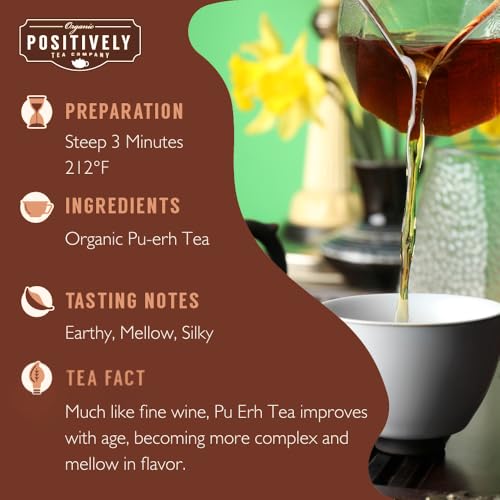
Brewing: Reviewer parameters: 7 grams in 6 ounces of boiling water, four minutes — multiple infusions per measure.
Best Use Cases
🎯 Best For
- morning brewing or as a coffee alternative
- Tibetan butter tea preparation
- multi-infusion gongfu-style steeping
- blending with milk, honey, or other teas
⚠️ Not Ideal For
- drinkers seeking the depth of aged sheng or shou
- drinkers sensitive to acidic teas
How People Use It
Reviewers reach for it in the morning and as a coffee alternative; several add milk, honey, or salted butter for Tibetan butter tea.
Good for Beginners
✅ Yes
- Smooth and forgiving rather than aggressively bitter
- Low-cost entry into loose-leaf pu-erh exploration
For Experienced Users
Has Some Depth
- Reviewers comparing to aged or shop-purchased pu-erh find depth and complexity lacking
What to Consider
If you want the depth of properly aged sheng (raw) or shou (ripe pu-erh), this isn't it.
- Flavor reads light or one-note compared to richer pu-erhs
- Aroma underwhelms a few drinkers
⚠️ Important: This analysis is based on limited customer feedback (10 reviews). We've shared what we found, but there may be additional considerations we haven't captured.
About This Analysis
This analysis is based on 10 customer reviews. We're showing you everything we found, but with a small sample, there's a lot we likely haven't captured yet.
✅ What we're confident about: What customers love and best use cases
⚠️ What may be incomplete: Potential issues and considerations
For more perspectives, check customer reviews on Amazon.
Product Selection
In short: We only feature high-rated products.
Products on TeaDelight.net are selected based on strong Amazon customer ratings, sufficient review volume, and market presence. We focus on well-regarded products that tea enthusiasts are actively considering and purchasing.
As an Amazon Associate we earn from qualifying purchases.
You Might Also Like

✅ Long-lasting flavor across repeated steepings
Oriarmcha 2010 Lao Cha Tou Ripe Pu-erh Tea
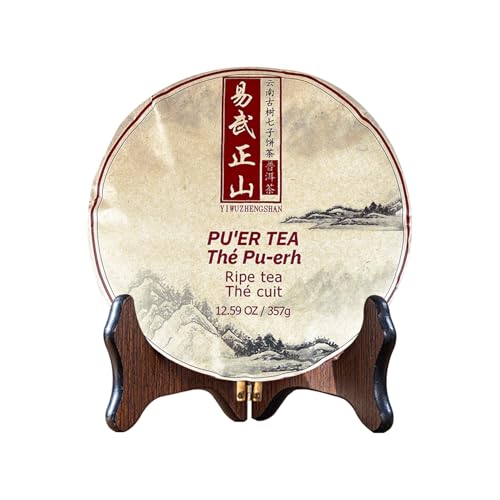
✅ smoother, richer, sweeter than its price suggests
YiwuZhengshan Ancient Tree Pu'er Tea

✅ Fresh, never-bitter cup for the reviewers it lands with
FullChea Menghai Puerh Tea Cakes (2008/2018)
✅ Collectible premium tin and packaging