
Available Alternatives

✅ Smooth, fresh, umami-forward sencha profile
Kyo Hayashiya Uji Sencha Loose Leaf Green Tea
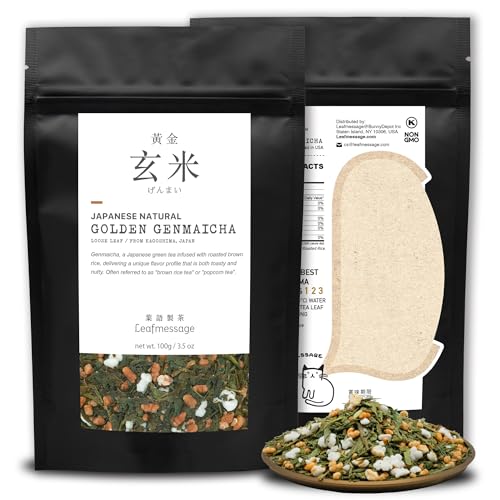
✅ Authentic genmaicha with visible toasted rice and popcorn
Leafmessage Golden Genmaicha Tea

✅ High repeat-purchase rate
Whole Foods Market Organic Decaf Green Tea

✅ fresh leaves with whole-leaf presentation and golden liquor
Xihu Dragonwell Longjing Tea (Yu Qian)



We analyze real customer reviews to surface what matters: key strengths, ideal use cases, and honest considerations — so you can make an informed choice.
Valley of Tea Longjing Dragon Well Green Tea
A single-origin Ming Qian pre-Qingming Longjing from West Lake's Hangzhou terroir — traditional vocabulary for the earliest spring Dragon Well harvest. Four early reviews make this an initial read, not a verdict.
🎯 Best for: After-meal drinking with a digestion-aid framing, Exploring a named-origin traditional Chinese green tea
🍃 Strength: Light

🍃 Flavor Profile
Strength: Light
Early reviewers cite pear and lychee notes alongside nutty and herbal aromatics. At N=4, much of the profile still comes from the label rather than the drinkers.
✅ What Customers Love
- Title-backed Ming Qian / pre-Qingming single-origin Longjing positioning
- Early reviewers note pear, lychee, and nutty/herbal character with positive quality and value sentiment
🎯 Best For
After-meal drinking with a digestion-aid framing • Exploring a named-origin traditional Chinese green tea
Brand: Valley of Tea
Category: Green Tea
As an Amazon Associate we earn from qualifying purchases.
About This Green Tea
This is a single-origin Ming Qian pre-Qingming Longjing from West Lake's Hangzhou terroir — traditional vocabulary for the earliest spring Dragon Well harvest. The listing positions it within a named-origin Chinese green tea tradition, and early reviewers cite pear and lychee notes alongside nutty and herbal aromatics. With only four reviews on file, much of that profile still comes from the label rather than the drinkers.
Two of those four reviewers reach for it after meals, citing digestion as the reason. That after-lunch, after-dinner framing is the clearest use cue the evidence supports so far, and it sits naturally alongside the broader appeal of exploring a traditional, named-origin Chinese green tea.
Caffeine level is moderate, so late-evening drinking is worth approaching with some caution depending on your sensitivity. Beyond that, the listing leans on its Ming Qian / pre-Qingming / West Lake Longjing positioning rather than on prescriptive brewing guidance, and the small review base hasn't yet converged on a shared method.
One reviewer described it as "not the best" — a single dissent on a very thin evidence base, worth noting but hard to weigh against the positive quality and value sentiment from the other early voices. At four reviews total, both the praise and the criticism should be read as preliminary signals rather than a settled picture.
For drinkers curious about traditional Longjing and willing to form their own view on a relatively new listing, this is an initial read on an early-season Dragon Well — best approached as an exploration rather than a known quantity.
Is Valley of Tea Longjing Dragon Well Green Tea Right for You?
What does this Longjing actually taste like?
Based on a small handful of early reports, drinkers note pear and lychee on the nose alongside nutty and herbal aromatics — a light-bodied profile in line with how the listing positions a Ming Qian Dragon Well. With only four reviewers in, much of the flavor framing still leans on the label rather than the cup.
What is this Dragon Well tea good for?
Two of four early reviewers reach for it after meals, citing digestion — a traditional pairing for green tea that the thin review base supports rather than proves. It also reads as a way to explore a named-origin Chinese green from West Lake's Hangzhou terroir.
Is this really a pre-Qingming Ming Qian harvest?
The listing positions it as a Ming Qian / pre-Qingming single-origin Longjing — the traditional vocabulary for the earliest spring Dragon Well picking before the Qingming festival. That framing comes from the title and brand label; the four-review base is too thin to independently corroborate the grade.
Is this a good Longjing for beginners?
Not really — the synthesis flags it as leaning toward experienced drinkers, with the named-origin Ming Qian positioning more rewarding for aspiring connoisseurs and cultural enthusiasts familiar with traditional Chinese greens. A first-time green tea drinker may not pick up the cues the listing emphasizes.
Can I drink this in the evening?
Probably best to avoid late at night — like most green teas, Dragon Well carries a moderate caffeine load, and the synthesis explicitly steers buyers away from late-evening drinking. After lunch or mid-afternoon is the use context early reviewers actually mention.
How strong is the flavor?
The synthesis characterizes it as light — consistent with a delicate early-spring Longjing rather than a robust or roasty green. Drinkers used to bolder teas may find it understated, which is the intended character of a Ming Qian picking.
As an Amazon Associate we earn from qualifying purchases.
Are there any complaints worth knowing about?
One of four early reviewers described it as 'not the best' in the category — a single dissent on a very thin evidence base, so it's hard to read as a pattern rather than one buyer's preference. With more reviews in, a clearer signal may emerge either way.
How does this differ from a generic supermarket green tea?
The listing distinguishes it on origin and harvest timing — a single-origin Dragon Well from West Lake, picked pre-Qingming — rather than a blended green from unspecified sources. Whether the cup lives up to that positioning at scale is something the four-review base can't yet settle.
Who is this tea aimed at?
The Ming Qian / pre-Qingming framing speaks most directly to aspiring connoisseurs and cultural enthusiasts drawn to named-origin Chinese greens with traditional vocabulary on the label. Casual green-tea drinkers may not connect with the cues the title leans on.
Category: Why does my green tea taste bitter?
Bitterness and astringency in green tea come mainly from catechins (especially EGCG) being over-extracted. The two biggest causes are water that is too hot — boiling water pulls catechins aggressively — and steeping for too long. Catechins also extract faster than the sweet, savory amino acids, so a shorter steep at lower temperature gives you the sweetness without the harshness.
Category: How can I tell good-quality green tea from low-quality?
Look at the leaf first — high-grade green tea has uniform color (vivid deep green for shaded, glossy emerald for sencha), tight needle or flake shape with minimal stems and dust, and a fresh, marine or grassy aroma rather than a dusty or hay-like smell. On the label, harvest date matters (April-May ichibancha beats summer harvests), and specificity in region or cultivar (Uji, Shizuoka, Yabukita, Saemidori) generally signals a producer targeting quality over volume.
Category: What is the difference between sencha, gyokuro, and matcha?
Sencha is sun-grown Japanese green tea, rolled into needles and steamed — bright, vegetal, balanced. Gyokuro is shaded for at least 20 days before harvest, which raises L-theanine and lowers catechins, producing a viscous, intensely umami brew. Matcha comes from tencha (shaded leaf that is dried flat rather than rolled) and is stone-ground into powder that you whisk into water, so you consume the whole leaf.
What Customers Love
⚠️ Limited sample based on limited customer feedback (4 reviews) • Our methodology
- Title-backed Ming Qian / pre-Qingming single-origin Longjing positioning
- Early reviewers note pear, lychee, and nutty/herbal character with positive quality and value sentiment
Taste Profile
Early reviewers cite pear and lychee notes alongside nutty and herbal aromatics. At N=4, much of the profile still comes from the label rather than the drinkers.
Best Use Cases
🎯 Best For
- After-meal drinking with a digestion-aid framing
- Exploring a named-origin traditional Chinese green tea
⚠️ Not Ideal For
- Late-evening drinking — moderate caffeine level
How People Use It
Two of four reviewers reach for it after meals, citing digestion.
For Experienced Users
✅ Worth Exploring
- Title-encoded single-origin Ming Qian / pre-Qingming Longjing positioning appeals to aspiring connoisseurs and cultural enthusiasts
What to Consider
One reviewer called it "not the best" — a single dissent on a thin evidence base.
- One reviewer describes it as 'not the best' on a very thin evidence base
⚠️ Important: This analysis is based on limited customer feedback (4 reviews). We've shared what we found, but there may be additional considerations we haven't captured.
About This Analysis
This analysis is based on 4 customer reviews. We're showing you everything we found, but with a small sample, there's a lot we likely haven't captured yet.
✅ What we're confident about: What customers love and best use cases
⚠️ What may be incomplete: Potential issues and considerations
For more perspectives, check customer reviews on Amazon.
Product Selection
In short: We only feature high-rated products.
Products on TeaDelight.net are selected based on strong Amazon customer ratings, sufficient review volume, and market presence. We focus on well-regarded products that tea enthusiasts are actively considering and purchasing.
As an Amazon Associate we earn from qualifying purchases.