



We analyze real customer reviews to surface what matters: key strengths, ideal use cases, and honest considerations — so you can make an informed choice.
Valley of Tea Longjing Dragon Well Green Tea
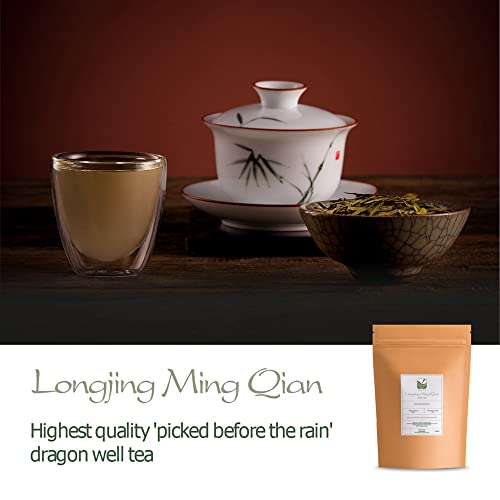
A delicate Ming Qian Dragon Well with distinctive pear and lychee notes layered over a nutty, herbal base — harvested before Qingming for peak early-season character.
🎯 Best for: After meals for digestion, Health-focused daily routine
🍃 Tastes like: pear, lychee

What Stands Out
🍃 Flavor Profile
Strength: Delicate
Notes: pear, lychee
✅ What Customers Love
- High quality dragon well tea (3 mentions)
- Complex aromatic profile (nutty, herbal, pear, lychee) (1 mentions)
- Premium pre-Qingming picking (1 mentions)
🎯 Best For
After meals for digestion • Health-focused daily routine • Appreciating fine tea quality
Brand: Valley of Tea
Category: Green Tea
As an Amazon Associate we earn from qualifying purchases.
About This Green Tea
This Longjing arrives from a pre-Qingming harvest, a picking window that produces the lightest, most nuanced expression of the variety. The flavor profile is quietly complex — pear and lychee sweetness sitting atop a roasted, herbal foundation that rewards slow sipping. Reviewers find it particularly well-suited after meals, where its gentle nature supports digestion without heaviness. Quality can vary between batches, and some find the flavor more subtle than the grade suggests. Best for enthusiasts who appreciate restraint and authenticity in green tea over boldness.
Is Valley of Tea Longjing Dragon Well Green Tea Right for You?
What does Valley of Tea Dragon Well taste like?
This is a delicate tea with a surprisingly complex flavor profile. Expect nutty and herbal notes as the backbone, with lighter pear and lychee fruit notes weaving through. It's not a bold, punch-you-in-the-face tea — it rewards attention and slower sipping. Multiple reviewers praise the quality and aromatic complexity, though a few note the flavor can be inconsistent between batches. If you're used to stronger teas, this might initially seem subtle, but that delicacy is part of what makes quality Longjing special.
What makes this a Ming Qian (pre-Qingming) Dragon Well?
Ming Qian literally means 'before Qingming' — the Qingming Festival falls in early April. Tea leaves picked before this date are the first harvest of the year, when the buds are smallest, most tender, and packed with flavor from the plant's winter dormancy. It's considered the most premium grade of Longjing. Valley of Tea markets this as a Ming Qian picking, which should mean younger leaves, more concentrated flavor, and a sweeter, less astringent cup. That said, some reviewers feel this isn't the highest grade available, so expectations should be calibrated accordingly.
Who is this Dragon Well tea best for?
This tea is best suited for tea enthusiasts who appreciate premium Chinese greens and want to explore or enjoy Dragon Well's distinctive flavor. The Ming Qian grade and complex flavor profile reward a discerning palate. It also works well for health-conscious drinkers who want a quality daily tea — reviewers particularly value it for after-meal digestion. It's probably not the best pick if you're looking for a bold, strong tea or if you're very price-sensitive and comparing carefully across Dragon Well options.
Is this the best grade of Dragon Well available?
Honestly, no — and some reviewers make this point directly. While it's marketed as Ming Qian (pre-Qingming) which is a premium harvest window, reviewers note it's not the absolute highest grade. Dragon Well has several quality tiers, and the very best (Superior or Imperial grade from West Lake) commands significantly higher prices. This Valley of Tea version is a respectable mid-to-upper tier Longjing that delivers an enjoyable experience with genuine complexity, but serious connoisseurs may find it doesn't quite reach the top shelf.
What brand of green tea is the best?
There's no single 'best' brand — it depends entirely on what you're looking for. Valley of Tea positions itself in the premium, specialty space with teas like this Ming Qian Dragon Well. Multiple reviewers confirm it's a high-quality Dragon Well with genuine aromatic complexity. However, for this specific tea, some customers feel better value exists at similar price points from other specialty vendors. If you're specifically interested in Dragon Well, it's worth trying a few sources to find your preference, since quality can vary between harvests and suppliers.
What is Dragon Well green tea good for?
Dragon Well (Longjing) green tea is traditionally valued for its health benefits, and reviewers of Valley of Tea's version specifically highlight digestive support — some noting very fast improvement after meals. Customers also drink it for cholesterol reduction and as part of a health-focused daily routine. Beyond the health angle, it's a tea you drink for the experience itself: a delicate, nuanced flavor with pear, lychee, nutty, and herbal notes that reward slow, mindful sipping.
As an Amazon Associate we earn from qualifying purchases.
What is Dragon Well tea vs regular green tea?
Dragon Well (Longjing) is a specific variety of green tea from Hangzhou, China — one of China's most famous teas. What sets it apart from everyday green tea is the pan-firing process, which gives it a distinctive flat leaf shape and a toasty, nutty character you won't find in steamed Japanese greens or basic grocery-store bags. Valley of Tea's version is a Ming Qian (pre-Qingming) picking, meaning the leaves were harvested before the Qingming Festival in early April — the most prized harvest window when leaves are youngest and most delicate.
What happens if I drink a cup of Dragon Well green tea every day?
Based on what reviewers report, daily drinking of this Dragon Well tea has supported digestive health — some noticed improvements quite quickly — and several drink it as part of a cholesterol-management routine. Green tea in general provides a steady supply of antioxidants, L-theanine for calm focus, and a moderate caffeine boost. It's a gentle daily habit rather than a dramatic intervention, and the delicate flavor of this tea makes it pleasant enough to look forward to every day.
Is it beneficial to drink Dragon Well green tea daily?
Reviewers of this Valley of Tea Longjing certainly think so. The most commonly mentioned benefits are digestive support (especially after meals), cholesterol management, and general health maintenance. Green tea's antioxidants, particularly EGCG, have well-documented health benefits when consumed regularly. The main consideration is caffeine — at 2-3 cups a day, most people are well within safe limits. Just be mindful if you're also drinking coffee or other caffeinated beverages.
What happens when you drink green tea every day?
Based on what Valley of Tea Longjing reviewers report, the most noticeable daily benefit is improved digestion — some people noticed this surprisingly quickly. Over time, regular green tea drinkers in the reviews also mention better cholesterol numbers and an overall sense of wellness. From a general health perspective, daily green tea consumption is associated with better heart health, improved metabolism, and cognitive benefits. It's a gentle, cumulative effect rather than something dramatic you'll notice overnight.
What are the 5 benefits of green tea?
For this Valley of Tea Dragon Well specifically, reviewers highlight: (1) Digestive support — especially effective after meals, with some noting fast improvement. (2) Cholesterol management — several customers drink it for this purpose. (3) Antioxidant intake — green tea is one of the richest natural sources of catechins. (4) Calm, focused energy — the caffeine plus L-theanine combination gives alertness without jitters. (5) A genuinely enjoyable ritual — this Longjing's delicate pear, lychee, and nutty flavors make the health habit something to actually look forward to.
How do you brew Dragon Well green tea properly?
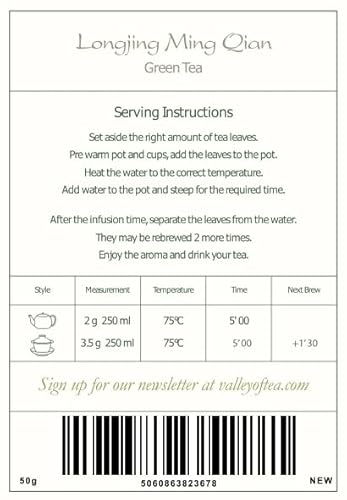
Dragon Well is a delicate green tea, so water temperature matters a lot. Use water around 175°F (80°C) — not boiling, which will scorch the leaves and turn them bitter. Steep for 1-2 minutes on the first infusion. A good ratio is about 2-3 grams of leaf per 6 oz of water. One of the nice things about quality Longjing is that you can re-steep the leaves 2-3 times, with each infusion revealing slightly different character. The first steep tends to be the most aromatic, while later steeps bring out more of the nutty, herbal base notes.
As an Amazon Associate we earn from qualifying purchases.
When is the best time to drink Dragon Well green tea?
Reviewers of this tea particularly recommend it after meals for digestive support — that's the most commonly mentioned use case. Morning or early afternoon also works well for a gentle caffeine boost with focused calm. Avoid drinking it on an empty stomach if you have a sensitive stomach, and steer clear of late evening if you're caffeine-sensitive. Many health-focused drinkers make it part of a post-lunch ritual, which aligns with how Longjing is traditionally enjoyed in China.
How many times can I re-steep these Dragon Well leaves?
Quality Longjing leaves like these can typically handle 2-3 re-steeps, sometimes more. The first infusion gives you the most aromatic, complex cup with those pear and lychee top notes. The second steep often brings out more of the nutty, herbal base character. By the third steep, the flavor becomes milder and sweeter. This is one of the advantages of loose-leaf over tea bags — you get multiple cups from the same leaves, which actually improves the value proposition.
How should I store this Dragon Well tea?
Dragon Well is a delicate green tea that loses freshness faster than darker teas. Store it in an airtight container away from light, heat, moisture, and strong odors. A sealed tin or resealable foil bag works well. For longer storage, the refrigerator is ideal — just make sure the container is truly airtight so the tea doesn't absorb fridge odors. Let it come to room temperature before opening to avoid condensation on the leaves. Properly stored, it should stay fresh for several months, but green tea is best enjoyed relatively soon after purchase.
Can I cold brew Dragon Well green tea?
Absolutely, and cold brewing actually brings out a sweeter, smoother side of this tea. Use about 3-4 grams of leaf per 8 oz of cold water, put it in the fridge, and let it steep for 6-8 hours (or overnight). Cold brewing reduces bitterness and caffeine extraction while highlighting the delicate pear and lychee notes in this Valley of Tea Longjing. It makes a beautifully refreshing summer drink. The downside is you lose some of the toasty, nutty warmth that comes through in a hot brew.
Is Longjing tea a green tea?
Yes, Longjing (Dragon Well) is absolutely a green tea — and one of the most celebrated ones in Chinese tea culture. It's pan-fired rather than steamed, which gives it that characteristic flat, sword-shaped leaf and a smooth, nutty flavor. Valley of Tea's version delivers the classic Longjing profile with delicate pear and lychee notes layered over a nutty, herbal base.
What are common mistakes when brewing green tea?
The biggest mistake is using boiling water — that's the fastest way to ruin a delicate tea like this Dragon Well. Boiling water extracts too many tannins and makes the tea bitter and astringent, masking the subtle pear, lychee, and nutty flavors that make Longjing special. Other common mistakes: steeping too long (keep it under 2 minutes for the first infusion), using too much leaf, and throwing away leaves after one steep. Quality Longjing like this is meant for multiple infusions.
As an Amazon Associate we earn from qualifying purchases.
How to brew Dragon Well green tea leaves
Use about 2-3 grams of these Valley of Tea Longjing leaves per 6 oz cup. Heat your water to 175°F (80°C) — if you don't have a thermometer, bring water to a boil and let it cool for about 3 minutes. Pour the water over the leaves and steep for 1-2 minutes. You can watch the flat, sword-shaped leaves unfurl — it's one of the pleasures of drinking quality Longjing. Don't discard the leaves after one cup; re-steep them 2-3 times. Each infusion will shift in character, bringing out different aspects of the nutty, herbal, and fruity profile.
What is the healthiest way to make green tea?
For maximum health benefits from this Dragon Well tea, brew with water around 175°F (80°C) and steep for 1-2 minutes. Water that's too hot actually degrades some of the beneficial catechins and antioxidants. Loose-leaf tea like this Valley of Tea Longjing is generally better than tea bags because the whole leaves have more surface area and retain more of the good stuff. Drink it without milk — dairy proteins can bind to the antioxidants and reduce their effectiveness. A splash of lemon, on the other hand, can actually help your body absorb more of the catechins.
What's the healthiest green tea in the world?
There's no single 'healthiest' green tea — most high-quality green teas share similar antioxidant and health benefits. That said, Dragon Well green tea like this Valley of Tea version is a solid choice for a health-focused routine. Reviewers specifically mention digestive support after meals, cholesterol reduction, and general wellness benefits. The key is drinking quality loose-leaf tea consistently rather than chasing a specific variety, and brewing it properly to preserve the beneficial compounds.
Is green tea very high in caffeine?
Green tea has moderate caffeine — roughly 25-50mg per cup compared to 95-200mg in coffee. Dragon Well green tea like this falls on the moderate end of that range. It's enough to give you a gentle lift without the jitters. The L-theanine naturally present in green tea also smooths out the caffeine effect, giving you focused alertness rather than a sharp spike and crash. If you're sensitive to caffeine, stick to shorter steep times or try cold brewing, which extracts less caffeine.
Is the caffeine in green tea enough to keep you awake?
It depends on your sensitivity. Dragon Well green tea has moderate caffeine — less than coffee but enough that most people notice a gentle alertness. The L-theanine in green tea creates a calm, focused energy rather than the wired feeling coffee can give. Most people can drink it in the morning and early afternoon without sleep issues, but if you're very caffeine-sensitive, you might want to avoid it within 4-6 hours of bedtime. Some people specifically drink Longjing for that smooth, productive alertness without the coffee jitters.
Is green tea a stimulant or depressant?
Green tea is technically a mild stimulant because of its caffeine content, but it doesn't feel like a typical stimulant. The L-theanine amino acid in green tea promotes alpha brain waves associated with calm focus, which balances the caffeine's stimulating effect. This is why many tea drinkers describe the feeling as 'alert but relaxed' — very different from coffee's sharper edge. A delicate tea like this Valley of Tea Longjing is particularly gentle in its effect.
As an Amazon Associate we earn from qualifying purchases.
What are the side effects of drinking green tea?
For most people, green tea is very well-tolerated. Potential side effects are mainly caffeine-related: insomnia if you drink it too late, or stomach upset if you drink it on an empty stomach (the tannins can be irritating). Drinking excessive amounts — think 5+ cups daily — could affect iron absorption. With a delicate Dragon Well like this, the tannin content is lower than heavily oxidized teas, so stomach sensitivity is less of a concern. Start with one cup and see how you feel.
Is green tea good for your skin?
Green tea's antioxidants — particularly EGCG — have shown promising effects on skin health in research, including reducing inflammation and protecting against UV damage. Drinking green tea like this Valley of Tea Longjing regularly provides those antioxidants from the inside out. It's not a miracle cure, but as part of a healthy routine, quality green tea is one of the better beverages you can choose for skin health. The polyphenols are best preserved when you brew at the right temperature (around 175°F), which you should be doing anyway for proper Longjing flavor.
What Customers Love
⚠️ Limited sample based on limited customer feedback (9 reviews) • Our methodology
- High quality dragon well tea (3 mentions)
- Complex aromatic profile (nutty, herbal, pear, lychee) (1 mentions)
- Premium pre-Qingming picking (1 mentions)
Taste Profile
- nutty
- herbal
Best Use Cases
🎯 Best For
- After meals for digestion
- Health-focused daily routine
- Appreciating fine tea quality
What to Consider
- Inconsistent quality or not meeting expectations (3 mentions)
- Not the best grade available (1 mentions)
- Taste doesn't justify the price point (1 mentions)
⚠️ Important: This analysis is based on limited customer feedback (9 reviews). We've shared what we found, but there may be additional considerations we haven't captured.
About This Analysis
This analysis is based on 9 customer reviews. We're showing you everything we found, but with a small sample, there's a lot we likely haven't captured yet.
✅ What we're confident about: What customers love and best use cases
⚠️ What may be incomplete: Potential issues and considerations
For more perspectives, check customer reviews on Amazon.
Product Selection
In short: We only feature high-rated products.
Products on TeaDelight.net are selected based on strong Amazon customer ratings, sufficient review volume, and market presence. We focus on well-regarded products that tea enthusiasts are actively considering and purchasing.
As an Amazon Associate we earn from qualifying purchases.
You Might Also Like

✅ Strong, delicious peach flavor
Stash Ginger Peach Green Tea with Matcha

✅ Light, clean taste
Teas' Tea Jasmine Green Tea Unsweetened

✅ High caffeine content / potent energy boost
Tekola Organic Gunpowder Green Tea

✅ Good taste/flavor quality