
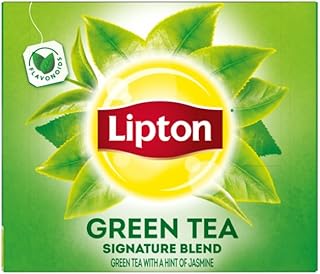



We analyze real customer reviews to surface what matters: key strengths, ideal use cases, and honest considerations — so you can make an informed choice.
Lipton Green Tea with Jasmine
A Lipton green tea bag with an added jasmine note — reviewers use it as a daily, mostly cold-brewed habit rather than a sit-down tasting tea.
🎯 Best for: cold-brewed pitcher drinking, daily morning cup
🍃 Strength: Light

🍃 Flavor Profile
Strength: Light
Jasmine is the flavor reviewers pick up most (mentioned in 2 of 12 reviews). A few describe the cup as smooth and refreshing, light-bodied rather than bold, with very little tannic bite when cold-brewed.
✅ What Customers Love
- pleasant jasmine aromatic note
- smooth, refreshing, light-bodied character
- holds up to cold brewing with little bitterness
🎯 Best For
cold-brewed pitcher drinking • daily morning cup • everyday repeat-purchase drinker • warm-weather iced drinking
Brand: Lipton
Category: Green Tea
As an Amazon Associate we earn from qualifying purchases.
About This Green Tea
Lipton's Signature Blend is a bagged green tea with an added hint of jasmine — reviewers use it as a daily, mostly cold-brewed habit rather than a sit-down tasting tea. Jasmine is the flavor they pick up most (mentioned in 2 of 12 reviews), and a few describe the cup as smooth and refreshing: light-bodied rather than bold, with very little tannic bite when cold-brewed. It's a workday tea more than a contemplative one — bagged convenience over loose-leaf depth.
Morning cups lead the 'when' picture (mentioned in 2 of 12 reviewers), and five of twelve come back to this as a repeat-purchase daily drinker. It earns its keep as the workhorse pitcher in the fridge — something to pour over ice in warmer months rather than slow-steep for tasting. If you want a green tea that tolerates being made ahead and forgotten about, this slots in easily.
Cold brew works best here: two bags per quart of chilled water, 1–2 hours in the fridge. For hot, cool the water off the boil to roughly 175–185°F and steep 3–5 minutes.
Three of twelve reviewers push back on the reformulation — the added jasmine, less tea per bag, or the retirement of the plain green-tea line. If you knew the prior version, that's a real consideration; if you're coming to it fresh, it reads as a light jasmine green rather than a straight one. Either way, expect a hint of floral rather than a clean grassy cup.
Caffeine sits in the moderate-to-high range, so it's a morning-and-afternoon tea rather than an evening wind-down.
Is Lipton Green Tea with Jasmine Right for You?
What does this Lipton green tea actually taste like?
Across a sparse review pool, jasmine is the flavor note reviewers pick up most often (2 of 12), with a few describing the cup as smooth, refreshing, and light-bodied rather than bold. A small number push back and find it muddy or clay-like, so impressions skew light but aren't unanimous.
Is it healthy to drink this Lipton green tea every day?
Five of twelve reviewers treat this as a daily repeat-purchase drinker, and several reference green tea's antioxidants as part of their routine. We can't make clinical claims from a handful of reports, but the bag format and low tannic bite make it an easy candidate for an everyday cup.
Does the jasmine flavor dominate, or is it just a hint?
Reviewers describe it as a noticeable aromatic note rather than an overpowering one — jasmine surfaces as the top flavor mention (2 of 12), with the underlying cup still reading as light-bodied green tea. A subset of reviewers actively dislike that jasmine was added at all, so 'hint' is in the eye of the drinker.
How is this different from the old plain Lipton green tea?
This is the reformulated Signature Blend — three of twelve reviewers explicitly flag the change, citing added jasmine, less tea per bag, and the retirement of the plain green-tea line. If you came back expecting the prior formulation, the cup you remember isn't what's in the box now.
What's the best way to brew these bags?
Cold brew is where reviewers say it shines: two bags per quart of chilled water for one to two hours in the fridge produces a smooth cup with very little bitterness. For hot, cool the kettle off the boil to roughly 175–185°F and steep 3–5 minutes — boiling water tends to push the tannins forward.
Does it cold brew well in a pitcher?
Yes — cold brewing is the standout use case in this small review set, with reviewers describing the pitcher method as smoother and less bitter than hot steeping. The light body and low tannic bite are exactly what makes the format work for warm-weather iced drinking.
As an Amazon Associate we earn from qualifying purchases.
Is this a good green tea for beginners?
It fits the beginner brief well: a familiar mass-market brand in a forgiving bag format, with a low tannic bite that's hard to over-steep into bitterness when cold-brewed. It's not a tasting tea for someone chasing single-origin nuance — it's a daily drinker that's easy to get right.
Should I drink this before bed?
Probably not — this is a true green tea with normal caffeine levels, and one reviewer specifically flagged jitteriness from it. Reviewers cluster their cups around morning and daytime use rather than evening wind-down.
Any complaints about the tea bags themselves?
A small handful of reviewers report bags that opened up and released loose tea into the cup, and one flagged the stapled thread as an attachment they'd rather not steep with. These are isolated mentions in a sparse review pool, not a dominant pattern.
How does it compare to other grocery-aisle green teas?
Reviewers describe it as comparable in quality to other mainstream brands, with one saying they can't tell the difference from costlier options and another preferring it over no-name brands they worried might carry pesticides. It's positioned as a reliable everyday cup rather than a step up in tasting register.
Category: Why does my green tea taste bitter?
Bitterness and astringency in green tea come mainly from catechins (especially EGCG) being over-extracted. The two biggest causes are water that is too hot — boiling water pulls catechins aggressively — and steeping for too long. Catechins also extract faster than the sweet, savory amino acids, so a shorter steep at lower temperature gives you the sweetness without the harshness.
Category: How much caffeine is in green tea?
A typical cup of green tea contains roughly 20-45 mg of caffeine, depending on the leaf, water temperature, and steep time. That is less than coffee but not low — high-grade shaded teas like gyokuro and matcha can rival or exceed a cup of brewed coffee because the youngest buds and shaded leaves carry the highest caffeine concentration in the plant.
As an Amazon Associate we earn from qualifying purchases.
Category: What water temperature should I use to brew green tea?
Most green teas brew best between 70C and 80C (160-175F). Boiling water aggressively extracts catechins and produces bitterness and astringency, while cooler water preserves the amino acids responsible for sweetness and umami. Shaded teas like gyokuro are typically brewed even lower, around 50-60C, specifically to draw out L-theanine without pulling harsh catechins.
What Customers Love
⚠️ Limited sample based on limited customer feedback (10 reviews) • Our methodology
- pleasant jasmine aromatic note
- smooth, refreshing, light-bodied character
- holds up to cold brewing with little bitterness
- versatile across morning, iced, and daily use
Taste Profile
Jasmine is the flavor reviewers pick up most (mentioned in 2 of 12 reviews). A few describe the cup as smooth and refreshing, light-bodied rather than bold, with very little tannic bite when cold-brewed.
Brewing: Cold brew works best here: two bags per quart of chilled water, 1–2 hours in the fridge; for hot, cool water off the boil to roughly 175–185°F and steep 3–5 minutes.
Best Use Cases
🎯 Best For
- cold-brewed pitcher drinking
- daily morning cup
- everyday repeat-purchase drinker
- warm-weather iced drinking
⚠️ Not Ideal For
- evening or bedtime wind-down
- drinkers seeking the old plain (non-jasmine) Lipton green
- single-origin or connoisseur-register tasting
How People Use It
Morning cups lead the 'when' picture (mentioned in 2 of 12), and five of twelve reviewers treat this as a repeat-purchase daily drinker. We'd reach for it in pitcher cold-brew form ourselves.
Good for Beginners
✅ Yes
- forgiving bag format
- low tannic bite when cold-brewed
- familiar mass-market brand
What to Consider
Three of twelve reviewers push back on the reformulation — the added jasmine, less tea per bag, or the retirement of the plain green-tea line — a real consideration if you knew the prior version.
- reformulation (added jasmine, less tea per bag, retired plain line)
⚠️ Important: This analysis is based on limited customer feedback (10 reviews). We've shared what we found, but there may be additional considerations we haven't captured.
About This Analysis
This analysis is based on 10 customer reviews. We're showing you everything we found, but with a small sample, there's a lot we likely haven't captured yet.
✅ What we're confident about: What customers love and best use cases
⚠️ What may be incomplete: Potential issues and considerations
For more perspectives, check customer reviews on Amazon.
Product Selection
In short: We only feature high-rated products.
Products on TeaDelight.net are selected based on strong Amazon customer ratings, sufficient review volume, and market presence. We focus on well-regarded products that tea enthusiasts are actively considering and purchasing.
As an Amazon Associate we earn from qualifying purchases.
You Might Also Like

✅ familiar Twinings character that drinkers return to
Twinings Green Tea with Jasmine

✅ Versatile organic everyday green
Bigelow Steep Pure Organic Green Tea

✅ Versatile across morning, daily, iced, and evening use
VAHDAM Organic Himalayan Green Tea
✅ Resteeps well on a second infusion