
ℹ️ Read carefully — this product has caveats
The sharpest weakness cluster concerns leaf integrity — five of thirty-two reviewers describe broken bits and large stem pieces rather than whole-leaf rolled pearls, and several frame the current pellets as visibly browner than the whole-leaf gunpowder-style green tea they had reordered for years.


We analyze real customer reviews to surface what matters: key strengths, ideal use cases, and honest considerations — so you can make an informed choice.
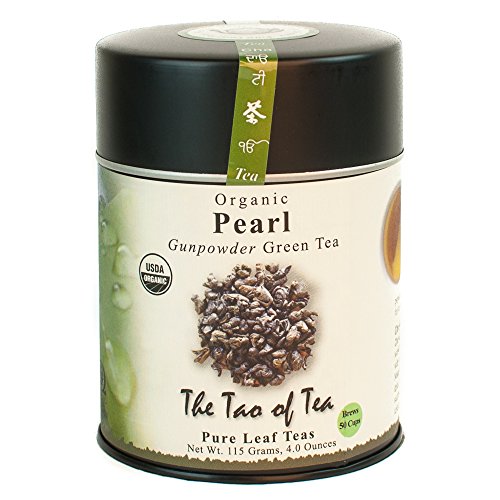
Tao of Tea Pearl Green Tea Loose Leaf
This is really two products sharing one ASIN — the original metal-tin pearl green tea earlier buyers remember fondly, and a cardboard-packaged iteration that now draws sharper critique on leaf integrity and flavor.
🎯 Best for: a second infusion from the same leaf, a base for kombucha or cooking applications
🍃 Strength: Light

🍃 Flavor Profile
Strength: Light
We read the taste descriptors as two camps: bitterness leads the critical side (mentioned by 3 of 32 reviewers), followed by a mild-to-weak character (2 mild, 1 weak). A minority reach for rich or flavorful to describe their cup. Aroma complaints skew sharply negative — single reviewers cite musty, composted-grass-clipping, even kimchi-adjacent smells, with only one balancing mention of a lovely aroma.
✅ What Customers Love
- Resteeps well on a second infusion
- Original-batch buyers remember strong quality and a well-made metal tin
🎯 Best For
a second infusion from the same leaf • a base for kombucha or cooking applications
Brand: The Tao of Tea
Category: Green Tea
As an Amazon Associate we earn from qualifying purchases.
About This Green Tea
This is really two products sharing one ASIN — the original metal-tin pearl green tea earlier buyers remember fondly, and a cardboard-packaged iteration that now draws sharper critique on leaf integrity and flavor. The taste descriptors split into two camps: bitterness leads the critical side (mentioned by 3 of 32 reviewers), followed by a mild-to-weak character (2 mild, 1 weak), while a minority reach for rich or flavorful to describe their cup. Aroma feedback skews sharply negative — single reviewers cite musty, composted-grass-clipping, even kimchi-adjacent smells, with only one balancing mention of a lovely aroma.
Use-context signal stays thin across this sample. Individual reviewers mention brewing it iced, brewing it hot, drinking it every day, or repurposing it for kombucha and jello recipes, with no single context dominating the way steadier repeat-purchase green teas tend to show. That makes it easier to recommend as a base for kombucha or cooking applications, or a casual daily cup, than as a flavor-forward sipper.
A few reviewers report the leaves resteep well and respond to a longer steep at lower-temperature water — consistent with general green-tea technique and worth trying before writing the tin off. If the first cup reads thin, a second infusion from the same leaf is where one reviewer specifically noted the flavor held up.
The sharpest weakness cluster concerns leaf integrity — five of thirty-two reviewers describe broken bits and large stem pieces rather than whole-leaf rolled pearls, and several frame the current pellets as visibly browner than the whole-leaf gunpowder-style green tea they had reordered for years. Alongside that, a non-trivial share of recent drinkers find the flavor mild or weak regardless of steep time, and seven reviewers flag the product as having changed since the original release. Shoppers expecting whole-leaf rolled pearls, a pronounced robust green flavor, or batch-to-batch consistency are the least well-served here.
One reviewer experimented with a pinch of lavender or mint in the cup, which may be a useful nudge if the base flavor lands too mild on its own.
Is Tao of Tea Pearl Green Tea Loose Leaf Right for You?
What does this pearl green tea actually taste like?
The taste reads in two camps across 25 eligible reviewers: a critical side that calls it bitter, mild, or weak, and a minority who reach for rich or flavorful. Aroma is the sharper complaint — single reviewers cite musty, composted-grass, even kimchi-adjacent smells, balanced by one mention of a lovely aroma.
Are these really whole rolled pearls?
This is the sharpest weakness reviewers flag — five of 32 describe broken bits and large stem pieces rather than whole-leaf rolled pearls, and several note the pellets look visibly browner than the whole-leaf gunpowder-style green they had reordered for years. If pearl-shape presentation matters to you, the current batch tends to disappoint.
Is this the same product longtime buyers remember?
Reviewers say no. Seven reviews flag a product change, and the original metal-tin version that earlier buyers remember fondly has shifted to a cardboard-packaged iteration that draws sharper critique on leaf integrity and consistency. Four of 32 reviewers reference the earlier version positively while critiquing the current one.
Is The Tao of Tea a good brand for green tea?
Reviewer signal on this specific tin is mixed — buyers who got the original metal-tin version praise the quality, while several recent buyers report the current iteration falls short on leaf integrity and flavor strength. Six reviewers still signal repurchase intent, so the brand retains a base of loyal drinkers despite the version drift.
How should I brew this to get the best cup?
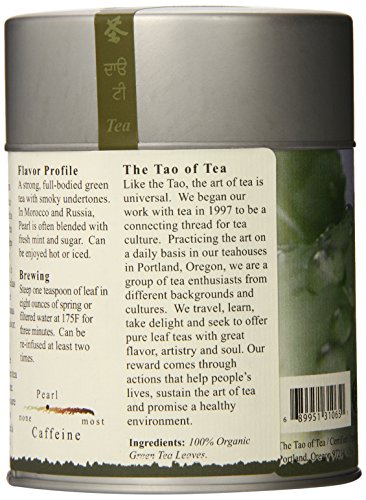
A few reviewers report the leaves respond to a longer steep at lower-temperature purified water — consistent with general green-tea technique and worth trying before writing the tin off. Two reviewers also note it resteeps well, so a second infusion from the same leaf is part of the value here.
Does it hold up to a second steeping?
Yes — two of 32 reviewers specifically call out that the leaves resteep well and the flavor holds on a second infusion. That's the clearest strength to come out of the current batch and one of the use cases the synthesis recommends leaning into.
As an Amazon Associate we earn from qualifying purchases.
Is the flavor strong enough for someone who likes a bold green tea?
Probably not. Four of 32 reviewers describe the cup as mild, weak, or bland, and the synthesis reads the overall flavor strength as light. Drinkers wanting a pronounced, robust green-tea flavor are one of the groups the data explicitly flags as a poor match.
Can I use this for kombucha or cooking?
Yes — individual reviewers mention brewing it for kombucha, dropping it into a jello recipe, and other cooking applications, and the synthesis lists kombucha and cooking as one of the use cases the leaf is well-suited to. That's a reasonable backup plan if the cup itself underwhelms.
Does it pair well with other flavors?
One reviewer experimented with a pinch of lavender and mint added to the tea bag, and the synthesis surfaces that as a suggested direction. Other pairing mentions across the reviews include jasmine flowers, ginger, and citrus, though each is a single-reviewer note rather than a pattern.
Is this a good pick for someone new to green tea?
The synthesis reads this as leaning toward experienced drinkers rather than beginners, and the current batch's inconsistency works against a first-time-buyer recommendation. A newer drinker is better served by a tea with steadier batch-to-batch character — one of the fits the data explicitly flags this product against.
How does it compare to other gunpowder-style green teas?
Comparisons skew unfavorable in the current batch — one reviewer says it looks more like a low-quality oolong than a proper green tea, and another points to Stash gunpowder organic pinhead as the better-made alternative. Earlier-tin buyers report the original was much closer to a standard whole-leaf gunpowder presentation.
How much tea comes in the tin?
The listing is a 4.0 ounce tin, which works out to roughly 113 grams of loose-leaf tea. Earlier buyers describe the original as a well-made metal tin, though several recent reviewers report the current iteration ships in cardboard rather than the metal tin pictured.
As an Amazon Associate we earn from qualifying purchases.
Category: How much caffeine is in green tea?
A typical cup of green tea contains roughly 20-45 mg of caffeine, depending on the leaf, water temperature, and steep time. That is less than coffee but not low — high-grade shaded teas like gyokuro and matcha can rival or exceed a cup of brewed coffee because the youngest buds and shaded leaves carry the highest caffeine concentration in the plant.
Category: What water temperature should I use to brew green tea?
Most green teas brew best between 70C and 80C (160-175F). Boiling water aggressively extracts catechins and produces bitterness and astringency, while cooler water preserves the amino acids responsible for sweetness and umami. Shaded teas like gyokuro are typically brewed even lower, around 50-60C, specifically to draw out L-theanine without pulling harsh catechins.
Category: What is the difference between sencha, gyokuro, and matcha?
Sencha is sun-grown Japanese green tea, rolled into needles and steamed — bright, vegetal, balanced. Gyokuro is shaded for at least 20 days before harvest, which raises L-theanine and lowers catechins, producing a viscous, intensely umami brew. Matcha comes from tencha (shaded leaf that is dried flat rather than rolled) and is stone-ground into powder that you whisk into water, so you consume the whole leaf.
Customer-Validated Strengths
based on 32-review analysis • Our methodology
- Resteeps well on a second infusion
- Original-batch buyers remember strong quality and a well-made metal tin
Taste Profile
We read the taste descriptors as two camps: bitterness leads the critical side (mentioned by 3 of 32 reviewers), followed by a mild-to-weak character (2 mild, 1 weak). A minority reach for rich or flavorful to describe their cup. Aroma complaints skew sharply negative — single reviewers cite musty, composted-grass-clipping, even kimchi-adjacent smells, with only one balancing mention of a lovely aroma.
- A pinch of lavender or mint, as one reviewer experimented with
Brewing: A few reviewers report the leaves resteep well and respond to a longer steep at lower-temperature water — consistent with general green-tea technique and worth trying before writing the tin off.
Best Use Cases
🎯 Best For
- a second infusion from the same leaf
- a base for kombucha or cooking applications
⚠️ Not Ideal For
- shoppers expecting whole-leaf rolled-pearl presentation
- a consistent batch-to-batch experience
- drinkers wanting a pronounced, robust green-tea flavor
How People Use It
Use-context signal stays thin across this sample — individual reviewers mention brewing it iced, brewing it hot, drinking it every day, or repurposing it for kombucha and jello recipes, with no single context dominating the way steadier repeat-purchase green teas tend to show.
What to Consider
- Leaf integrity falls short of whole-leaf rolled-pearl expectation
- Version change since original release — reviewers report the current cardboard-packaged product differs from the metal-tin original
- Flavor intensity reads mild or weak to a non-trivial share of recent drinkers
- Off-aromas reported on current batches
based on 32-review sample.
About This Analysis
This analysis is based on 32 customer reviews. We're showing you everything we found, but with our analysis, there's always more to discover.
✅ What we're confident about: What customers love and best use cases
⚠️ What may be incomplete: Potential issues and considerations
For more perspectives, check customer reviews on Amazon.
Product Selection
In short: We only feature high-rated products.
Products on TeaDelight.net are selected based on strong Amazon customer ratings, sufficient review volume, and market presence. We focus on well-regarded products that tea enthusiasts are actively considering and purchasing.
As an Amazon Associate we earn from qualifying purchases.
You Might Also Like

✅ familiar Twinings character that drinkers return to
Twinings Green Tea with Jasmine

✅ Versatile organic everyday green
Bigelow Steep Pure Organic Green Tea

✅ Versatile across morning, daily, iced, and evening use
VAHDAM Organic Himalayan Green Tea

✅ Named Ureshino origin and gyokuro grade