

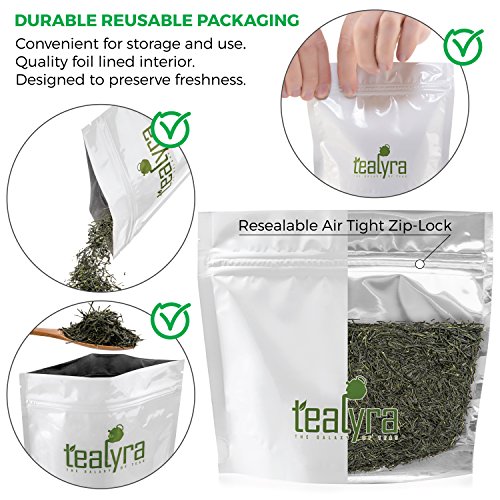


We analyze real customer reviews to surface what matters: key strengths, ideal use cases, and honest considerations — so you can make an informed choice.
Tealyra Gyokuro Green Tea from Yame Japan
A shade-grown Gyokuro from Japan's Yame region, offering soft grassiness, hay sweetness, and gentle umami — brews well across multiple steeps with patient, low-temperature technique.
🎯 Best for: Daily green tea ritual for enthusiasts, Immunity support when feeling under the weather
🍃 Tastes like: hay, grass, sweetness

What Stands Out
🍃 Flavor Profile
Strength: Delicate
Notes: hay, grass, sweetness
✅ What Customers Love
- Authentic Gyokuro taste with sweetness and umami (4 mentions)
- Affordable price compared to similar quality (3 mentions)
- Good for multiple steeps (up to 3) (2 mentions)
🎯 Best For
Daily green tea ritual for enthusiasts • Immunity support when feeling under the weather • Cold brew preparation (6+ hours) • Morning or afternoon tea
Brand: Tealyra
Category: Green Tea
As an Amazon Associate we earn from qualifying purchases.
About This Green Tea
This Yame Gyokuro delivers the quiet complexity the style is known for — a layered sweetness undercut by fresh grass, hay, and a faint smoky note that emerges on the finish. Brewed at 140–165°F, the leaves hold up through two or three infusions without turning harsh or astringent. Cold brewing for six or more hours draws out a particularly clean, sweet expression. The leaf grade runs toward powder and broken pieces rather than whole slender needles, so a paper filter or very fine-mesh brewing vessel is worth using. Best suited to green tea enthusiasts who know Gyokuro and want a dependable daily option, and curious beginners willing to dial in their technique.
Is Tealyra Gyokuro Green Tea from Yame Japan Right for You?
What does this Tealyra Gyokuro actually taste like?
Expect a delicate, layered cup with natural sweetness and rich umami — that savory, brothy quality that sets Gyokuro apart from other green teas. Reviewers pick up notes of hay, fresh grass, and a subtle smoky undertone. It's not bold or assertive; it's nuanced and gentle, the kind of tea you slow down to appreciate. Multiple reviewers confirm the authentic Gyokuro taste, particularly praising the sweetness and umami depth. When cold brewed, the sweetness becomes even more pronounced.
Is the leaf quality good for the price?
This is where opinions split. The tea tastes genuinely good — authentic Gyokuro sweetness and umami that multiple reviewers confirm. But the leaf quality is a sore point: many reviewers report excessive dust and broken, pulverized pieces rather than the long, slender needles you'd expect from premium Gyokuro. About a third of reviews mention this issue. The price is roughly 30% less than comparable Gyokuro brands, so there's a clear trade-off. If you care most about flavor in the cup, it delivers. If whole-leaf presentation matters to you, you may be disappointed.
Who is this tea best for — and who should skip it?
Best for: daily green tea drinkers who want authentic Gyokuro flavor without the premium price tag, beginners curious about Japanese green tea, cold brew enthusiasts, and anyone who prioritizes taste over leaf appearance. Skip it if: you expect pristine whole-leaf presentation, you only have standard tea balls or coarse strainers, or you're a Gyokuro purist who won't tolerate broken leaves. It's a tea that rewards good brewing technique but doesn't demand a huge financial commitment.
Can I use a regular tea ball with this Gyokuro?
Honestly, no — a standard mesh tea ball is not ideal for this tea. The leaves are broken into fine pieces with a fair amount of dust, and reviewers consistently report that particles pass right through conventional tea balls and mesh strainers. You'll want a fine-mesh basket infuser, a paper filter, a French press, or ideally a Japanese kyusu teapot. If you only have a tea ball, you can line it with a paper filter as a workaround.
What are common mistakes when brewing this Gyokuro?
The biggest mistake is using boiling or near-boiling water. Gyokuro needs cool water — 140–165°F — or you'll scald the leaves and get a bitter, astringent cup instead of the sweet, umami-rich flavor this tea is known for. The second mistake, specific to this Tealyra product, is using a standard mesh tea ball. The leaves are finely broken with a fair amount of dust, so particles will pass right through a coarse strainer. Use a fine-mesh infuser, a paper filter, or a kyusu-style teapot instead. Finally, don't rush the steep — Gyokuro rewards patience and precise timing.
How do you brew Gyokuro green tea properly?
Gyokuro is fussier than most green teas, and this Tealyra version is no exception. You'll want water between 140–165°F — significantly cooler than what you'd use for sencha or a basic green tea. Steep for about 1–2 minutes on the first infusion. The good news is this tea handles multiple steeps well, with reviewers getting up to 3 solid infusions from a single serving. One tip specific to this tea: because the leaves are on the finer side, use a fine-mesh strainer or a teapot with a built-in filter rather than a standard tea ball, which will let too many particles through.
As an Amazon Associate we earn from qualifying purchases.
How does this compare to other Gyokuro teas?
In terms of flavor, this Tealyra Gyokuro holds its own — reviewers confirm authentic sweetness and umami that's characteristic of good Gyokuro. It's sourced from Yame, one of Japan's most respected Gyokuro-producing regions. Where it falls short compared to pricier alternatives is leaf quality: expect broken pieces and dust rather than the pristine whole-leaf needles you'd get from premium brands. Think of it as a value Gyokuro — genuine taste at a lower price, with appearance being the trade-off.
How many times can you steep this tea?
Reviewers report getting up to 3 good steeps from a single serving, which is solid value for the price. Increase your steep time slightly with each infusion — start at about 1–2 minutes, then add 30 seconds to a minute for subsequent steeps. The flavor evolves across steeps: the first infusion tends to be the richest in umami, while later steeps bring out more of the grassy, sweet notes.
Is this good for someone new to Japanese green tea?
It's actually a great starting point. The price is forgiving — roughly a third less than comparable Gyokuro — so you're not investing heavily in something you might not enjoy. The tea comes with clear brewing instructions, which matters because Gyokuro requires lower water temperatures and more precise technique than basic green tea. Reviewers note it's a good introduction to authentic Gyokuro taste. Just be prepared for the finer leaf quality, and use a proper fine-mesh strainer to get a clean cup.
How do you cold brew this Gyokuro green tea?
Cold brewing is one of the best ways to enjoy this tea. Add about 2 teaspoons of leaves to a pitcher or bottle of cold water, place it in the fridge, and let it steep for 6 or more hours — overnight works perfectly. The result is a smooth, naturally sweet cup with almost no bitterness. Reviewers specifically call out cold brew as a rewarding method for this Tealyra Gyokuro. The finer leaf particles actually work in your favor here since they extract more flavor during the long, slow steep. Just strain well before drinking.
How much tea does the 200g bag make?
With 200 grams and using roughly 3–5 grams per serving (typical for Gyokuro), you'll get about 40–65 cups from the bag. Factor in that reviewers get up to 3 steeps per serving, and you're looking at potentially 120–195 cups total. For a daily tea drinker having one or two sessions a day, this bag should last 2–3 months, making it solid value at its price point.
What brand of green tea is the best for trying Gyokuro?
If you're curious about Gyokuro — one of Japan's most prized green teas — Tealyra's Yame Gyokuro is a solid entry point. It delivers authentic Gyokuro sweetness and umami at a price point that's roughly a third less than comparable brands. Several reviewers note it's a forgiving option for first-timers who want to experience real Gyokuro without committing to a premium price tag. Just know that the leaf quality leans toward broken pieces and dust rather than the long, slender needles you'd find in top-shelf Gyokuro.
As an Amazon Associate we earn from qualifying purchases.
What makes Gyokuro different from regular green tea?
Gyokuro is shade-grown for several weeks before harvest, which fundamentally changes the tea's chemistry. The shade forces the plants to produce more chlorophyll and L-theanine while reducing catechins, resulting in a sweeter, more umami-rich flavor with less bitterness than sun-grown green teas like sencha. This Tealyra version captures that classic Gyokuro character — reviewers highlight the sweetness and savory depth. It also requires cooler brewing temperatures (140–165°F) than regular green tea, so it takes a bit more attention to prepare.
Is this green tea very high in caffeine?
This Tealyra Gyokuro is listed as medium caffeine, which is typical for Gyokuro. Gyokuro is actually one of the higher-caffeine green teas because the plants are shade-grown before harvest, which increases caffeine content. It's still considerably less than coffee — roughly 30–50mg per cup versus 95mg+ for coffee. It's enough to give you a gentle lift for morning or afternoon tea without the jitters.
What is Yame and why does it matter for this tea?
Yame is a region in Fukuoka Prefecture, Japan, renowned for producing some of the country's finest Gyokuro. The area's misty mountain climate and traditional cultivation techniques create ideal conditions for shade-grown green tea. When you see 'Grown in Yame' on a Gyokuro label, it's a mark of regional pedigree — similar to how Champagne indicates origin for sparkling wine. This Tealyra Gyokuro being sourced from Yame lends it credibility, and reviewers confirm the authentic Gyokuro character you'd expect from this region.
How do you brew this green tea with loose leaves?
Use about 1–2 teaspoons of leaves per cup. Heat your water to 140–165°F — well below boiling. Steep for 1–2 minutes for the first infusion, then you can re-steep the same leaves up to 2 more times, slightly increasing the time each round. The key thing with this particular Tealyra Gyokuro: invest in a fine-mesh strainer. The leaf pieces are on the smaller side with some dust mixed in, so a standard tea ball won't contain them well. A gaiwan, kyusu, or even a paper filter works great.
How do you brew this green tea for iced tea?
You have two routes. The quick method: brew a concentrated hot cup at 150°F with double the usual leaves, steep for 2 minutes, then pour over ice. The better method for this tea: cold brew it overnight in the fridge for 6+ hours. Cold brewing brings out the natural sweetness and delicate grassy notes without any bitterness, and reviewers praise the cold brew results with this Gyokuro. Either way, strain carefully through a fine-mesh filter since the leaves are on the dusty side.
What are the 5 benefits of green tea?
For this Tealyra Gyokuro specifically: (1) Antioxidant support from shade-grown leaves, which concentrate beneficial compounds like EGCG. (2) Calm, focused energy — the medium caffeine combined with L-theanine gives you alertness without jitters. (3) Immunity support — reviewers mention reaching for this tea when feeling under the weather. (4) Versatile brewing — works hot, cold brewed, or iced, with up to 3 steeps per serving. (5) Affordable Gyokuro experience — it's about a third cheaper than comparable brands, making it accessible for daily drinking.
As an Amazon Associate we earn from qualifying purchases.
What happens if I drink a cup of green tea like this every day?
Drinking a cup of quality green tea daily is generally associated with antioxidant support, improved focus, and overall wellness. Interestingly, some reviewers of this Tealyra Gyokuro specifically mention brewing a cup when they feel under the weather — one noted it helped them recover from grogginess and early sickness symptoms overnight. With medium caffeine levels, it's gentle enough for a daily ritual without the jolt of coffee.
Is it beneficial to drink this green tea daily?
Daily consumption of quality green tea is widely regarded as beneficial, and this Tealyra Gyokuro brings some specific advantages. Reviewers note using it as part of a daily tea ritual, and some mention immunity support — one reviewer reported it helped them bounce back from early illness symptoms overnight. Gyokuro in particular is rich in L-theanine and catechins due to the shade-growing process. With its medium caffeine level, it's gentle enough for everyday drinking without overstimulation.
What is the healthiest way to make this green tea?
For maximum health benefits, brew this Tealyra Gyokuro at lower temperatures (around 140–160°F) to preserve the catechins and L-theanine that make green tea so beneficial. Avoid adding sugar, which undercuts the natural sweetness this tea already has. Cold brewing is another excellent option — steep the leaves in cold water for 6+ hours in the fridge. Cold brewing extracts less caffeine and less bitterness while retaining the delicate, sweet flavor profile. Several reviewers highlight the cold brew method as particularly rewarding with this tea.
What are the side effects of drinking green tea?
Green tea is safe for most people in moderate amounts. Potential side effects typically come from overconsumption — drinking many cups a day may cause stomach irritation, restlessness, or sleep issues due to caffeine. This Tealyra Gyokuro has medium caffeine, so 1–2 cups per day shouldn't cause problems for most people. One thing to note: if you're sensitive to fine tea particles, use a very fine strainer with this product since it has more dust and small pieces than some other teas, which could affect the mouthfeel if not filtered properly.
Does this tea really help with immunity?
Some reviewers specifically mention reaching for this Gyokuro when feeling under the weather, with one noting it helped them recover from grogginess and early sickness symptoms overnight. Green tea in general contains antioxidants and catechins that support immune function, and Gyokuro's shade-growing process tends to concentrate these compounds. It's not medicine, but as a comforting, antioxidant-rich drink when you feel a cold coming on, reviewers find it genuinely helpful.
What Customers Love
⚠️ Limited sample based on limited customer feedback (11 reviews) • Our methodology
- Authentic Gyokuro taste with sweetness and umami (4 mentions)
- Affordable price compared to similar quality (3 mentions)
- Good for multiple steeps (up to 3) (2 mentions)
- From reputable Yame region in Japan (1 mentions)
Taste Profile
- grassy
- sweet
- delicate
- fresh
- subtle smoky note
Best Use Cases
🎯 Best For
- Daily green tea ritual for enthusiasts
- Immunity support when feeling under the weather
- Cold brew preparation (6+ hours)
- Morning or afternoon tea
⚠️ Not Ideal For
- Use with standard mesh tea balls (too much passes through)
- Those seeking whole-leaf presentation
What to Consider
- Excessive dust and powder instead of whole leaves (8 mentions)
- Broken/pulverized leaf pieces rather than long slender leaves (6 mentions)
- Fine particles pass through mesh strainers/tea balls (4 mentions)
⚠️ Important: This analysis is based on limited customer feedback (11 reviews). We've shared what we found, but there may be additional considerations we haven't captured.
About This Analysis
This analysis is based on 11 customer reviews. We're showing you everything we found, but with a small sample, there's a lot we likely haven't captured yet.
✅ What we're confident about: What customers love and best use cases
⚠️ What may be incomplete: Potential issues and considerations
For more perspectives, check customer reviews on Amazon.
Product Selection
In short: We only feature high-rated products.
Products on TeaDelight.net are selected based on strong Amazon customer ratings, sufficient review volume, and market presence. We focus on well-regarded products that tea enthusiasts are actively considering and purchasing.
As an Amazon Associate we earn from qualifying purchases.
You Might Also Like

✅ Strong, delicious peach flavor
Stash Ginger Peach Green Tea with Matcha

✅ Light, clean taste
Teas' Tea Jasmine Green Tea Unsweetened

✅ High caffeine content / potent energy boost
Tekola Organic Gunpowder Green Tea

✅ Great taste and flavor