



We analyze real customer reviews to surface what matters: key strengths, ideal use cases, and honest considerations — so you can make an informed choice.
YGDZ Tea Filter Bags for Loose Tea
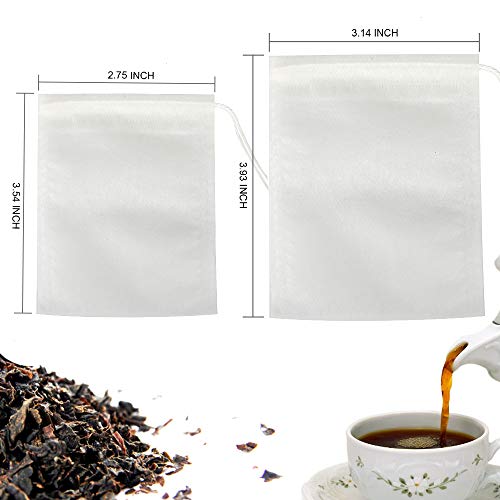
Two hundred disposable filter bags in two sizes (2.76 × 3.54 in and 3.15 × 3.94 in) — a commodity loose-leaf accessory priced for daily restocking.
🎯 Best for: Brewing loose-leaf or herbal blends at home, DIY tea blending and small-batch infusions

✅ What Customers Love
- Versatile across home brewing and DIY blending uses
- Holds up under use without tearing
- Mess-free brewing at low per-bag cost
🎯 Best For
Brewing loose-leaf or herbal blends at home • DIY tea blending and small-batch infusions
Brand: YGDZ
Category: Tea Filter Bags
As an Amazon Associate we earn from qualifying purchases.
About This Product
Two hundred disposable filter bags in two sizes — 2.76 × 3.54 in and 3.15 × 3.94 in — make this a commodity loose-leaf accessory priced for daily restocking. At 200 bags across the two sizes, the per-bag cost lands well under a cent, so the value case rests on volume rather than any premium feature.
Reviewers reach for these to make their own herbal teas and brew loose leaf at home, with a handful finding adjacent uses such as DIY moisture absorbers. The two-size pack covers single mugs through small teapots, which makes them a reasonable pick for home blenders running small-batch infusions or experimenting with their own combinations.
In use, the bags do the basic job of containing loose leaf without spilling. We have limited data so far — eight eligible reviews — but the sentiment in that small sample is consistent: one drinker notes no tears even with chicory root grinds, and another flags the bags feeling secure after several brews. Fill through the wide opening, pull the drawstring closed, and drape the string over the cup or pot.
One caveat worth knowing: a reviewer notes that the drawstrings can absorb brewing liquid and drip onto the table. It's a minor cosmetic annoyance rather than a functional failure, but if you brew on a wood surface it's worth setting the bag down on a saucer.
For straightforward home brewing of loose leaf or herbal blends at a low per-bag cost, this pack does what it sets out to do. It isn't the right tool for matcha preparation or any kind of display-tier presentation — it's a working consumable, sold by the bundle.
Is YGDZ Tea Filter Bags for Loose Tea Right for You?
How many filter bags come in the pack and what sizes are included?
The pack contains 200 disposable bags split across two sizes — 2.76 × 3.54 inches and 3.15 × 3.94 inches — sized for single mugs through small teapots.
Do these bags hold up to loose leaf without tearing?
Across a small sample of 8 reviewers, the bags appear to hold up in use — one drinker reports no tears even with chicory root grinds, and another flags the construction feeling secure after several brews. The data is limited but consistently positive on durability.
Can I use these bags for DIY herbal tea blends?
Yes — reviewers reach for these specifically to make their own herbal teas and small-batch infusions at home. DIY blending is one of the two main use contexts that comes through in the reviews.
Are these suitable for preparing matcha?
No — matcha preparation calls for whisking the powder directly into water rather than steeping through a filter, so these disposable bags aren't the right tool for that ritual.
Is there anything annoying about how the bags brew?
One reviewer flagged that the drawstrings can absorb brewing liquid and drip onto the table — a minor cosmetic issue worth knowing if you brew on a wood surface or finished countertop.
Will these work as a substitute for pre-bagged tea?
Yes — that's their core purpose. You fill them with loose leaf or herbal blends, pull the drawstring closed, and steep as you would a commercial tea bag. Reviewers use them for everything from daily brewing to small-batch herbal infusions.
As an Amazon Associate we earn from qualifying purchases.
Which size should I pick for a single mug versus a small teapot?
The smaller 2.76 × 3.54 inch bags suit single mugs, while the larger 3.15 × 3.94 inch size gives more room for the bigger leaf doses a small teapot calls for. Having both sizes in one pack lets you match the bag to the vessel.
Are these reusable or one-use only?
The listing positions these as disposable — designed for single-brew use and then composted or discarded. One reviewer did note the bags felt secure after several brews, but they're sold as a one-use product rather than a washable infuser.
Do these leak fine particles like rooibos or ground herbs?
Reviewer reports appear positive on containment — one drinker specifically calls out no tears with chicory root grinds, and the broader sentiment across 7 of 8 reviewers reflects mess-free brewing. Sample size is small, so results with very fine powders may vary.
Can these be used for anything besides brewing tea?
A handful of reviewers report adjacent uses such as DIY moisture absorbers — filling the bags with desiccant or aromatics rather than tea leaves. It's a minor pattern in the reviews, not the main use case.
How does the drawstring closure work in practice?
You fill the bag with loose leaf, pull the drawstring to cinch it closed, and drop it in hot water. One caveat from the reviews — the strings themselves can wick liquid during steeping, so rest the loose end on the rim of your mug rather than letting it dangle onto the table.
Are these a fit if I want a display-worthy brewing setup?
Not really — these are a functional commodity accessory, not a collector or presentation piece. The synthesis explicitly flags them as not suited for display-tier brewing, so pair them with a teapot or strainer you find visually pleasing if aesthetics matter.
As an Amazon Associate we earn from qualifying purchases.
Category: What is an empty tea filter bag for?
Empty filter bags exist to bridge the gap between loose-leaf quality and tea-bag convenience. Pre-filled commercial bags overwhelmingly contain CTC (crush-tear-curl) fannings and dust, while loose-leaf tea sold by weight is mostly broken-leaf or whole-leaf that benefits from room to expand. A fill-your-own bag lets you brew quality whole-leaf in the same single-cup-and-toss workflow as a commodity bag — useful for travel, office, hospital trays, and gifting contexts.
Category: Should I worry about PFAS in tea filter bags?
PFAS concerns are emerging but not yet definitive for empty filter bags. A 2023 Food Control study detected PFOS, PFHxS, and PFNA in some Indian tea-bag samples, and a 2024 USC Keck School study (Hampson et al., Environment International) found higher tea consumption correlated with elevated serum PFAS in young adults — packaging is the suspected vector. The conservative response is to avoid grease-resistant or heat-sealable papers and choose unbleached drawstring bags from vendors that disclose chemistry.
Category: Which empty tea filter bags do not leach microplastics?
Unbleached cellulose/abaca paper bags and reusable organic cotton or hemp muslin are the materials without documented microplastic shedding into hot water. Nylon and PET 'silken pyramid' sachets release roughly 11.6 billion microplastic and 3.1 billion nanoplastic particles per cup at 95°C, per Hernandez et al. (2019, McGill, Environmental Science & Technology). PLA 'biodegradable' pyramids shed about 1 million nanoplastics per bag (Banaei et al., 2023), so 'plant-based' is not the same as plastic-free.
Customer-Validated Strengths
based on 8-review analysis • Our methodology
- Versatile across home brewing and DIY blending uses
- Holds up under use without tearing
- Mess-free brewing at low per-bag cost
Quality & Care
At 200 bags across two sizes, the per-bag cost lands well under a cent — the value case rests on volume rather than any premium feature. Across a small sample, reviewers report the bags hold up in use: one drinker notes no tears even with chicory root grinds, and another flags the bags feeling secure after several brews. We have limited data so far (8 eligible reviews), but the consistent positive sentiment in this sample suggests the bags do the basic job of containing loose leaf without spilling.
Best Use Cases
🎯 Best For
- Brewing loose-leaf or herbal blends at home
- DIY tea blending and small-batch infusions
⚠️ Not Ideal For
- Matcha preparation
- Display or collector-tier presentation
How People Use It
Reviewers reach for these to make their own herbal teas and brew loose leaf at home, with a handful finding adjacent uses such as DIY moisture absorbers. The two-size pack is positioned for single mugs through small teapots.
What to Consider
One reviewer notes the drawstrings can absorb brewing liquid and drip onto the table — a minor cosmetic annoyance worth knowing if you brew on a wood surface.
- Drawstrings can wick brewing liquid
based on 8-review sample.
About This Analysis
This analysis is based on 8 customer reviews. We're showing you everything we found, but with our analysis, there's always more to discover.
✅ What we're confident about: What customers love and best use cases
⚠️ What may be incomplete: Potential issues and considerations
For more perspectives, check customer reviews on Amazon.
Product Selection
In short: We only feature high-rated products.
Products on TeaDelight.net are selected based on strong Amazon customer ratings, sufficient review volume, and market presence. We focus on well-regarded products that tea enthusiasts are actively considering and purchasing.
As an Amazon Associate we earn from qualifying purchases.
You Might Also Like

✅ Sturdy construction with no tearing in use
Yzurbu Cold Brew Coffee Filter Bags

✅ Solid build at commodity price
YQL Reusable Cotton Spice Bags with Drawstring

✅ Solid build for a disposable bag
Insiswiner Disposable Tea Filter Bags

✅ Sturdy build that holds up in boiling water