





We analyze real customer reviews to surface what matters: key strengths, ideal use cases, and honest considerations — so you can make an informed choice.
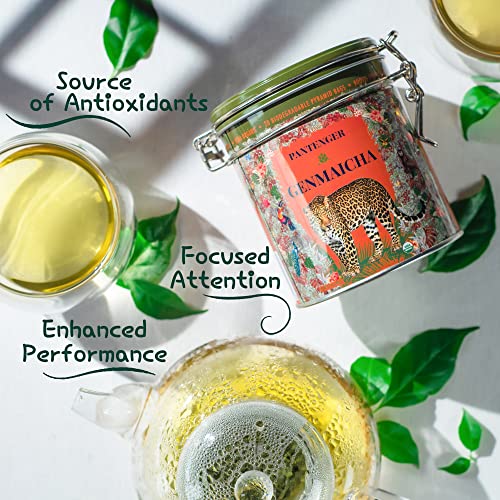
Pantenger Organic Genmaicha Japanese Green Tea
A loose-leaf organic genmaicha — sencha blended with toasted rice — that two of seven reviewers reach for as a morning pick-me-up or coffee alternative.
🎯 Best for: Morning pick-me-up, Coffee alternative
🍃 Strength: Medium

What Stands Out
🍃 Flavor Profile
Strength: Medium
Roasted rice leads the profile (two reviewers name it explicitly), backed by savory umami and nutty notes from the rice. Most of the seven describe the cup as refreshing when brewed correctly.
✅ What Customers Love
- Roasted-rice character is the defining note
- Savory umami base
- Organic certification
🎯 Best For
Morning pick-me-up • Coffee alternative • Everyday loose-leaf green tea
Brand: Pantenger
Category: Green Tea
As an Amazon Associate we earn from qualifying purchases.
About This Green Tea
Pantenger Organic Genmaicha is a loose-leaf Japanese green tea — sencha blended with toasted brown rice. Across seven reviewers, the roasted rice leads the profile (two name it explicitly), backed by a savory umami base and the nutty character the rice brings to the cup. Brewed correctly, most of the seven describe the result as refreshing.
Two reviewers reach for it specifically as a morning pick-me-up or a coffee alternative — the kind of green tea that earns a place in a regular rotation rather than a special-occasion shelf. Five of the seven mention buying again, though one of those is a refusal rather than an endorsement, so the repeat-purchase signal isn't unanimous. It sits as an everyday loose-leaf green rather than a functional wellness tea.
Genmaicha is brewing-sensitive, and this one is no exception. Keep the steep under 30 seconds with water around 170–180°F — Japanese green tea releases its soluble components quickly, and the lone harshly-bitter review appears to track with over-steeping. Two minutes is the outer limit. The resealable tin helps protect the leaf from oxidation between sessions.
Two reviewers said the roasted rice ran light compared with other genmaicha brands they'd tried, so if rice-forward intensity is what you're after, this one may read subtler. Bitterness also emerges quickly with longer steeps, which is worth flagging if you tend to forget the timer.
Treated as an everyday cup with a short steep window, the toasty, savory profile holds up well — and the tin keeps it workable across many sittings.
Is Pantenger Organic Genmaicha Japanese Green Tea Right for You?
What does Pantenger's genmaicha actually taste like?
Roasted rice leads the cup, with a savory umami base underneath — two of seven reviewers name roasted or toasted rice explicitly, and two describe umami or savory notes. Most call the cup refreshing when brewed correctly.
When do people reach for this tea?
Two of seven reviewers frame it as a morning pick-me-up or coffee alternative, and we'd reach for it the same way. It's positioned more as an everyday loose-leaf green than a functional or wellness tea.
How should I brew it so it doesn't turn bitter?
Keep the steep under 30 seconds — the one harshly-bitter review in the small sample tracks with over-steeping. A couple of reviewers also suggest pouring hot water through an infuser without fully submerging the leaves to keep the cup clean.
Does it have enough roasted rice compared to other genmaicha?
This is the main caveat — two of seven reviewers said the roasted rice runs light versus competing genmaicha brands. If you want a rice-forward cup, the toasted note appears present but lighter than some buyers expect.
Is this a good genmaicha for someone new to loose-leaf tea?
Probably not the easiest starting point. It's loose-leaf so you'll need a strainer or infuser, and it's brewing-sensitive — bitterness emerges quickly past a 30-second steep. Drinkers comfortable measuring leaf and timing steeps will get more out of it.
How does it compare to other genmaicha brands reviewers have tried?
Mixed signals from a small sample. One reviewer said it matches the genmaicha served at Asian restaurants, while another said other brands deliver more rice character or use different rice altogether. The organic loose-leaf format is one differentiator buyers cite.
As an Amazon Associate we earn from qualifying purchases.
Is the tin actually resealable and does it keep the tea fresh?
Reviewers speak well of the packaging — the resealable tin plus an inner foil bag drew positive freshness mentions across the small review pool. It reads as a sturdy, airtight setup rather than the weak point of the product.
Do reviewers come back and buy this one again?
Five of seven mention returning for more, though one of those references is a refusal rather than an endorsement — so call it strong repeat intent from a small pool, not a clean five-out-of-seven endorsement.
What is this Pantenger genmaicha good for day-to-day?
Based on a handful of reviews, it appears to work best as a morning cup or coffee alternative and as an everyday organic loose-leaf green — the sencha-plus-roasted-rice profile is approachable rather than ceremonial. It's not positioned for wellness or adaptogen use.
Category: What actually makes green tea 'green'?
Green tea is leaf from Camellia sinensis that has been heated immediately after harvest to deactivate the polyphenol oxidase enzyme before oxidation can occur. That single step (called 'kill-green' or sassei) is what preserves the chlorophyll, the catechins like EGCG, and the fresh vegetal character. Without it, the same leaf would slowly turn into oolong or black tea instead.
Category: What water temperature should I use to brew green tea?
Most green teas brew best between 70C and 80C (160-175F). Boiling water aggressively extracts catechins and produces bitterness and astringency, while cooler water preserves the amino acids responsible for sweetness and umami. Shaded teas like gyokuro are typically brewed even lower, around 50-60C, specifically to draw out L-theanine without pulling harsh catechins.
Category: How can I tell good-quality green tea from low-quality?
Look at the leaf first — high-grade green tea has uniform color (vivid deep green for shaded, glossy emerald for sencha), tight needle or flake shape with minimal stems and dust, and a fresh, marine or grassy aroma rather than a dusty or hay-like smell. On the label, harvest date matters (April-May ichibancha beats summer harvests), and specificity in region or cultivar (Uji, Shizuoka, Yabukita, Saemidori) generally signals a producer targeting quality over volume.
What Customers Love
⚠️ Limited sample based on limited customer feedback (7 reviews) • Our methodology
- Roasted-rice character is the defining note
- Savory umami base
- Organic certification
- Resealable tin packaging keeps leaf fresh
- Strong repeat-purchase intent
Taste Profile
Roasted rice leads the profile (two reviewers name it explicitly), backed by savory umami and nutty notes from the rice. Most of the seven describe the cup as refreshing when brewed correctly.
Brewing: Keep the steep under 30 seconds — the lone harshly-bitter review appears to track with over-steeping.
Best Use Cases
🎯 Best For
- Morning pick-me-up
- Coffee alternative
- Everyday loose-leaf green tea
⚠️ Not Ideal For
- Functional wellness or adaptogen use
How People Use It
Reviewers frame it as a morning cup or coffee alternative — two mentions. We'd reach for it that way, and five of seven mention buying again (though one of those is a refusal rather than an endorsement).
Good for Beginners
⚠️ Considerations
- Loose-leaf format requires a strainer or infuser and some measuring
- Brewing-sensitive — bitterness emerges past a 30-second steep
For Experienced Users
✅ Worth Exploring
- Source-based sensory descriptors (umami, roasted rice) beyond generic evaluative terms
- Organic loose-leaf in a traditional Japanese preparation (sencha blended with roasted brown rice)
What to Consider
Two reviewers said the roasted rice ran light compared with other genmaicha brands.
- Roasted-rice quantity runs light versus competing genmaicha
- Brewing-sensitive — bitterness emerges with longer steeps
⚠️ Important: This analysis is based on limited customer feedback (7 reviews). We've shared what we found, but there may be additional considerations we haven't captured.
About This Analysis
This analysis is based on 7 customer reviews. We're showing you everything we found, but with a small sample, there's a lot we likely haven't captured yet.
✅ What we're confident about: What customers love and best use cases
⚠️ What may be incomplete: Potential issues and considerations
For more perspectives, check customer reviews on Amazon.
Product Selection
In short: We only feature high-rated products.
Products on TeaDelight.net are selected based on strong Amazon customer ratings, sufficient review volume, and market presence. We focus on well-regarded products that tea enthusiasts are actively considering and purchasing.
As an Amazon Associate we earn from qualifying purchases.
You Might Also Like

✅ familiar Twinings character that drinkers return to
Twinings Green Tea with Jasmine

✅ Versatile organic everyday green
Bigelow Steep Pure Organic Green Tea

✅ Versatile across morning, daily, iced, and evening use
VAHDAM Organic Himalayan Green Tea
✅ Resteeps well on a second infusion