



We analyze real customer reviews to surface what matters: key strengths, ideal use cases, and honest considerations — so you can make an informed choice.
HAJIME Organic Japanese Sencha Green Tea
A Kagoshima-grown organic sencha with a clean melon-floral character and smooth, grassy finish — bright and balanced when brewed at the right temperature.
🎯 Best for: Daily morning routine, Afternoon refreshment
🍃 Tastes like: melon, grassy, floral

What Stands Out
🍃 Flavor Profile
Strength: Moderate
Notes: melon, grassy, floral
✅ What Customers Love
- Fresh, aromatic quality with vibrant green color (15 mentions)
- Smooth taste without bitterness when properly brewed (12 mentions)
- High quality organic JAS certified tea from Kagoshima (10 mentions)
🎯 Best For
Daily morning routine • Afternoon refreshment • Health-conscious drinking • Cold brew iced tea
Brand: BJDesign
Category: Green Tea
As an Amazon Associate we earn from qualifying purchases.
About This Green Tea
This JAS-certified organic sencha from Kagoshima uses fukamushi (deep-steaming) processing, producing a vibrant green liquor with characteristic smoothness. Reviewers describe the flavor as lightly sweet and grassy, with melon and floral notes that stay clean across multiple steeps. It adapts well to cold brewing for iced tea. One caveat: water that's too hot or an extended steep draws bitterness out quickly, so temperature control matters. Best suited to health-conscious drinkers building a daily tea habit, and enthusiasts who enjoy coaxing nuance through careful brewing and resteeping.
Is HAJIME Organic Japanese Sencha Green Tea Right for You?
What does this HAJIME sencha taste like?
Reviewers describe it as smooth and fresh with a moderate flavor strength. The dominant notes are melon and grassy sweetness, with subtle floral undertones and a light earthy quality. It's balanced and slightly sweet when brewed correctly — not the harsh, bitter green tea that puts many people off. The key word reviewers use most is 'smooth.' The vibrant green color in the cup matches the fresh, aromatic quality. It's a well-rounded sencha that's approachable without being bland.
How do you brew this HAJIME sencha properly?
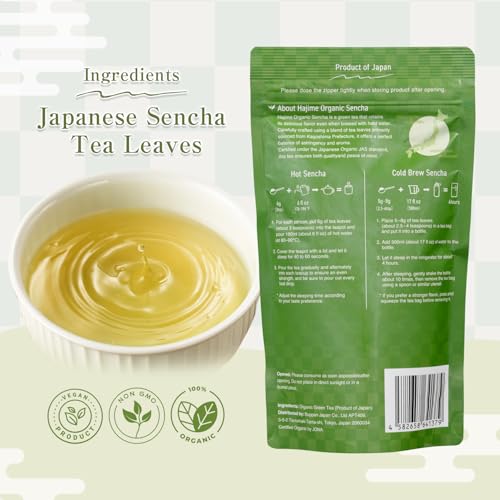
Here's where a little care pays off big. Use water around 160–175°F (70–80°C) — never boiling, which is the number one mistake that makes this tea bitter. Steep for 60–90 seconds for the first infusion. One important note: the package suggests about 3 teaspoons per serving, which many reviewers find excessive and too strong. Start with 1.5 to 2 teaspoons and adjust from there. Also be aware that these leaves absorb quite a bit of water, so use a bit more water than you think you'll need. The good news? You can re-steep the leaves multiple times, and each infusion reveals slightly different flavor notes.
Why does my HAJIME sencha taste bitter?
This is the most common issue reviewers mention, and it's almost always caused by one of two things: water that's too hot or steeping too long. Never use boiling water — aim for 160–175°F (70–80°C). Keep steep time to 60–90 seconds for the first infusion. The third possibility is using too much leaf; the package directions suggest about 3 teaspoons, which many reviewers find makes an overly strong cup. Cut back to 1.5–2 teaspoons. Once you dial in these variables, reviewers consistently describe the taste as smooth and free of bitterness.
What are common mistakes when brewing green tea?
The biggest mistake with this HAJIME sencha — and the one reviewers mention most — is using water that's too hot. Boiling water will make it bitter almost instantly. Aim for 160–175°F. The second common mistake is oversteeping; keep it to 60–90 seconds for the first steep. Third, the package directions call for about 3 teaspoons per cup, which several reviewers found way too much, resulting in an overly strong and bold brew. Start with less and work up. Finally, if you're using a mesh infuser, note that some of the finer leaf fragments can pass through — a fine-mesh strainer or a kyusu teapot works better.
How do you brew this sencha as loose leaf tea?
Use about 1.5–2 teaspoons of leaves per cup (less than the package suggests). Heat water to 160–175°F — if you don't have a thermometer, boil water and let it cool for about 3–4 minutes. Steep for 60–90 seconds. One thing to know: these leaves are somewhat finely fragmented, so a very fine mesh infuser or a Japanese kyusu teapot with a built-in strainer works best. A standard basket infuser with larger holes may let small leaf bits through. Don't toss the leaves after the first cup — re-steep them 2–3 times. Each steep brings out slightly different flavors.
Can I re-steep this sencha, and how many times?
Absolutely — re-steeping is one of the highlights reviewers mention. You can typically get 2–3 good infusions from the same leaves. Each steep brings out slightly different characteristics: the first tends to be the most aromatic and sweet, the second is often considered the most balanced, and the third is lighter and more subtle. This is actually a feature of quality loose leaf tea and a significant value advantage over tea bags. Just increase the steep time slightly with each re-infusion — add about 15–30 seconds each time.
As an Amazon Associate we earn from qualifying purchases.
How do you cold brew this sencha for iced tea?
Cold brewing is a great way to enjoy this HAJIME sencha, and reviewers confirm it works well. Add about 2 teaspoons of leaves to a pitcher with cold water, place it in the fridge, and let it steep for 4–8 hours (or overnight). Cold brewing naturally suppresses bitterness, so even if you're the type who finds hot-brewed green tea too strong, you'll likely enjoy this version. The result brings out the sweet, melon-like notes in this sencha while keeping the grassy freshness. It's a forgiving method — you really can't oversteep it cold.
Is this tea good for beginners who are new to Japanese green tea?
Yes, this is actually an excellent entry point. It comes with clear brewing instructions, and it's forgiving if you use cooler water and shorter steep times — two things that make learning easier. The flavor is smooth and approachable rather than intensely grassy or marine like some higher-end senchas. Reviewers also note it works well in typical American hard water, which is a real plus since many Japanese teas can taste off in hard water. At a mid-range price, it lets you learn your preferences without a huge investment. Just use less tea than the package suggests — start with 1.5 teaspoons.
Will experienced tea drinkers enjoy this sencha?
Yes, but in a different way than beginners. Enthusiasts appreciate the authentic fukamushi-style processing, which rewards careful temperature and timing control. Re-steeping reveals different flavor nuances with each infusion, which is the kind of exploration tea enthusiasts enjoy. The JAS organic certification from Kagoshima adds credibility. It's not a competition-grade tea, but it's genuine quality that stands up to an experienced palate. Several knowledgeable reviewers specifically call out the authentic Japanese sencha taste.
What kind of infuser or teapot works best with this tea?
This is worth knowing before you brew: some of the leaf fragments in this sencha are finely cut (a characteristic of fukamushi-style processing), and a few reviewers mention that pieces can pass through standard mesh infusers with larger holes. A fine-mesh basket infuser, a Japanese kyusu teapot with a built-in ceramic strainer, or even a simple fine-mesh tea strainer over your cup will all work well. Avoid novelty infusers with large holes — you'll end up with bits in your cup.
Is this sencha good for making iced tea?
It's excellent for iced tea, and reviewers confirm it works well both hot and cold brewed. For cold brew, add about 2 teaspoons to a pitcher of cold water and refrigerate for 4–8 hours. The cold method naturally eliminates any bitterness risk and brings out the sweet melon and floral notes beautifully. You can also brew it hot with a bit less water, then pour over ice for a quick flash-chill method. Either way, the smooth, slightly sweet character of this sencha makes it a natural fit for iced tea.
Is this tea really organic? What does JAS certified mean?
Yes, it's certified organic under Japan's JAS (Japanese Agricultural Standards) system, which is Japan's equivalent of USDA Organic. JAS certification requires the tea to be grown without synthetic pesticides or fertilizers, with regular third-party inspections of the farm. This tea is sourced from Kagoshima, a major tea-growing region on the southern tip of Japan's Kyushu island, known for its volcanic soil and clean growing conditions. Reviewers specifically cite the organic certification and Kagoshima origin as quality markers they value.
As an Amazon Associate we earn from qualifying purchases.
How does this compare to Lipton green tea?
They're in different leagues. Lipton green tea uses lower-grade tea dust in bags, while this HAJIME sencha is organic loose leaf from Kagoshima, Japan, with authentic fukamushi processing. The difference is immediately apparent — reviewers describe vibrant green color, fresh aroma, and complex flavor notes of melon, grass, and floral sweetness. Lipton tends to taste flat and one-dimensional by comparison. You will need to invest a bit more time in brewing (temperature matters), but the flavor payoff is dramatic. If you've only had bagged green tea and thought you didn't like green tea, this might change your mind.
Who should NOT buy this tea?
This tea isn't ideal if you want a grab-and-go brewing experience. It genuinely does require attention to water temperature and steep time — rush it with boiling water and you'll get a bitter cup. It's also not great if you prefer tea bags for convenience, since the loose leaf format requires an infuser or strainer. Daily heavy drinkers might find the 80g bag runs out quickly (13–14 servings at full package directions) and wish for a larger size. And if you like very mild, light tea, you'll want to use significantly less leaf than the package recommends.
What is the difference between sencha green tea and regular green tea?
Sencha is a specific style of Japanese green tea where the leaves are steamed rather than pan-fired (like most Chinese green teas). This HAJIME sencha uses fukamushi-style processing, meaning the leaves are deep-steamed, which gives it a richer, smoother flavor compared to lighter steamed varieties. You'll notice melon, grassy, and floral notes with a slightly sweet finish — quite different from the toasty or vegetal flavors in other green teas. It's a more refined, aromatic experience than what you'd get from a generic green tea bag.
What is the highest quality Japanese green tea?
The highest quality Japanese green teas are typically competition-grade gyokuro or ceremonial matcha, which can run hundreds of dollars. This HAJIME sencha sits in a sweet spot — it's JAS organic certified tea from Kagoshima (one of Japan's premier tea-growing regions) with authentic fukamushi processing. Reviewers describe it as delivering genuine Japanese sencha taste with vibrant green color and fresh aroma. It's not the absolute top shelf, but it's real quality at a mid-range price, which makes it a smart choice for daily drinking or for learning what good Japanese green tea actually tastes like.
What is organic sencha green tea good for?
This HAJIME organic sencha is particularly good for daily health-conscious drinking. Reviewers consistently report health improvements, a calm sense of relaxation, and clean energy without the jitters you'd get from coffee. It's also versatile — people use it for their morning routine, afternoon pick-me-up, or as a cold brew iced tea. One unexpected use reviewers discovered: the spent leaves can actually be added to fried rice and salads, so nothing goes to waste.
Is green tea very high in caffeine?
Green tea has moderate caffeine — roughly 25–50mg per cup, compared to coffee's 95–200mg. This HAJIME sencha falls in that moderate range. What reviewers specifically appreciate is the energy without jitters — the L-theanine naturally present in sencha works with the caffeine to provide calm, focused alertness rather than a spike and crash. It's enough to give you a gentle lift in the morning or afternoon but unlikely to keep most people awake at night if you drink it earlier in the day.
As an Amazon Associate we earn from qualifying purchases.
What brand of green tea is the best?
It depends on what you're looking for. For authentic Japanese sencha at a reasonable price, HAJIME by BJDesign earns strong marks from reviewers — they highlight its fresh aroma, vibrant green color, and smooth taste that's genuinely representative of quality Japanese sencha. It's JAS organic certified and sourced from Kagoshima. If you're comparing it to mass-market brands like Lipton or Bigelow, this is a significant step up in flavor and quality. For daily sencha drinking specifically, reviewers consistently call it good value for the quality you're getting.
What are the side effects of drinking green tea?
Most people tolerate green tea well, but drinking it on an empty stomach can cause nausea due to the tannins. The moderate caffeine in this sencha could cause restlessness or sleep issues if consumed late in the day, especially for sensitive individuals. With this HAJIME sencha specifically, the main practical 'side effect' reviewers mention is that it becomes bitter if brewed with water that's too hot or steeped too long — which isn't a health concern, but it does affect your enjoyment. Brewing it properly at lower temperatures avoids this entirely.
What is the healthiest way to make green tea?
For maximum health benefits from this sencha, brew with water around 160–175°F and steep for about 60–90 seconds. Lower temperatures and shorter steep times preserve more of the delicate catechins and L-theanine. Drink it plain without milk, since dairy proteins can bind to some of the beneficial compounds. This HAJIME sencha is smooth enough to enjoy without sweetener when brewed correctly, so you're not adding empty calories. And since you can re-steep the leaves 2–3 times, you're extracting different beneficial compounds with each infusion.
What happens if I drink green tea every day?
Reviewers who drink this HAJIME sencha daily report noticeable health improvements, sustained relaxation, and consistent energy without the crash or jitters associated with coffee. Green tea in general provides antioxidants, L-theanine for calm focus, and moderate caffeine. Since this tea is organic and free from pesticides, daily drinking is a clean habit. Many reviewers use it as their go-to for both morning routines and afternoon refreshment — some getting multiple cups from the same leaves by re-steeping.
What are the 5 benefits of green tea?
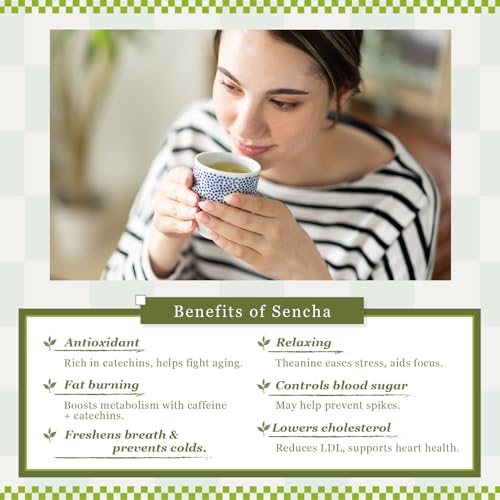
Based on what reviewers of this HAJIME sencha actually report, plus what we know about green tea generally: (1) Clean energy without jitters — the caffeine plus L-theanine combo provides calm focus. (2) Relaxation — reviewers consistently mention feeling more relaxed. (3) Overall health improvement — a frequently cited benefit among daily drinkers. (4) Versatility — works hot, cold brewed, re-steeped multiple times, and the leaves can even be eaten in salads or fried rice. (5) A satisfying zero-calorie ritual — the melon, grassy, and floral flavor notes make it genuinely enjoyable to drink plain, supporting healthier beverage habits.
Does sencha tea burn belly fat?
Green tea catechins, particularly EGCG, have been studied for their role in supporting metabolism, and sencha tends to be rich in these compounds due to the steaming process that preserves them. However, no single tea is a magic bullet for belly fat. What reviewers of this HAJIME sencha do report is that it fits well into a health-conscious routine — it provides gentle energy without jitters and works as a satisfying zero-calorie drink throughout the day. That consistency is probably more helpful for weight management than any one cup.
As an Amazon Associate we earn from qualifying purchases.
Is the caffeine in green tea enough to keep you awake?
It depends on your sensitivity. This sencha provides moderate caffeine along with L-theanine, which reviewers say gives them clean energy without jitters — more of a calm alertness than a coffee buzz. Most people can drink it in the morning and early afternoon without sleep issues. If you're highly caffeine-sensitive, you might want to avoid it after 2–3 PM. The cold brew method extracts slightly less caffeine if you want an evening cup with less stimulation.
Is green tea a stimulant or depressant?
Green tea is technically a mild stimulant because of its caffeine content, but it's unique because it also contains L-theanine, an amino acid that promotes relaxation without drowsiness. Reviewers of this HAJIME sencha specifically mention both energy and relaxation as benefits — which sounds contradictory but is actually the hallmark of good green tea. The L-theanine smooths out the caffeine so you get focused calm rather than nervous energy. It's why many people describe the effect as 'alert relaxation.'
Customer-Validated Strengths
based on 25-review analysis • Our methodology
- Fresh, aromatic quality with vibrant green color (15 mentions)
- Smooth taste without bitterness when properly brewed (12 mentions)
- High quality organic JAS certified tea from Kagoshima (10 mentions)
- Good value for price and quality (9 mentions)
- Authentic Japanese sencha taste (8 mentions)
- Can be re-steeped multiple times (6 mentions)
- Resealable packaging maintains freshness (5 mentions)
Taste Profile
- smooth
- fresh
- grassy
- earthy
- light
- balanced
- slightly sweet
Best Use Cases
🎯 Best For
- Daily morning routine
- Afternoon refreshment
- Health-conscious drinking
- Cold brew iced tea
- Multiple daily cups
⚠️ Not Ideal For
- Quick/rushed brewing without attention to temperature and timing
What to Consider
- Becomes bitter if oversteeped or water too hot (8 mentions)
- Package instructions use too much tea (3 tsp seems excessive) (5 mentions)
- Small/finely fragmented leaves pass through some infusers (3 mentions)
- Tea leaves absorb significant water reducing final liquid (2 mentions)
- Too strong/bold for some preferences when following instructions (4 mentions)
based on 25-review sample.
About This Analysis
This analysis is based on 25 customer reviews. We're showing you everything we found, but with our analysis, there's always more to discover.
✅ What we're confident about: What customers love and best use cases
⚠️ What may be incomplete: Potential issues and considerations
For more perspectives, check customer reviews on Amazon.
Product Selection
In short: We only feature high-rated products.
Products on TeaDelight.net are selected based on strong Amazon customer ratings, sufficient review volume, and market presence. We focus on well-regarded products that tea enthusiasts are actively considering and purchasing.
As an Amazon Associate we earn from qualifying purchases.
You Might Also Like

✅ Strong, noticeable jasmine flavor
Mighty Leaf Organic Spring Jasmine Tea

✅ High caffeine content / potent energy boost
Tekola Organic Gunpowder Green Tea

✅ Smooth, non-bitter taste
Luzianne Green Tea Bags Family Size

✅ Strong, delicious peach flavor