



We analyze real customer reviews to surface what matters: key strengths, ideal use cases, and honest considerations — so you can make an informed choice.
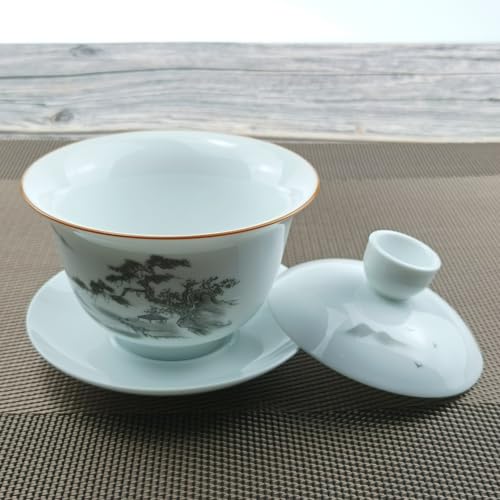
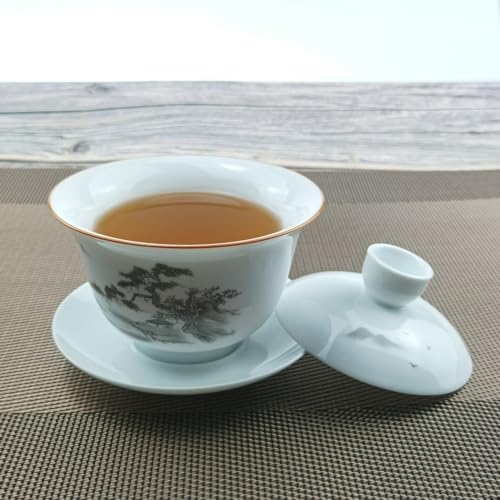
Jingdezhen Porcelain Gaiwan with Scenery Design
A 200ml Jingdezhen-style porcelain gaiwan built for shared gongfu pours, with a flared rim reviewers say keeps the cup manageable when filled with boiling water.
🎯 Best for: 2-to-4 person gongfu sessions, managing freshly-boiled water without scalding

✅ What Customers Love
- Heat-managed lip-cup design
- Clean pour through the lid gap
- Solid construction
🎯 Best For
2-to-4 person gongfu sessions • managing freshly-boiled water without scalding
Brand: Woonsoon
Category: Gaiwan
As an Amazon Associate we earn from qualifying purchases.
About This Product
A 200ml Jingdezhen-style porcelain gaiwan built for shared gongfu pours, with a flared rim that reviewers say keeps the cup manageable when filled with boiling water. Across a small sample of eight reviewers, three credit the lip-cup design specifically for handling freshly-boiled water without scalding fingers, and two report that the gap between lid and bowl strains leaves cleanly during the pour. Construction reads solid across that sample, and three reviewers also call out the painted scenery as a visual draw.
We'd reach for this on 2-to-4 person sessions where a wider bowl makes leaf inspection easy and pours can keep pace with multiple cups. Tight solo gongfu drinkers who prefer 100-150ml formats may find this size oversized for single-cup work, and the form isn't suited to matcha preparation.
Hand-wash with warm water and a soft cloth to protect the painted scenery — that's the part most likely to wear with abrasive cleaning. The porcelain itself is dishwasher-safe on the top rack, but avoid sudden temperature swings that could stress the glaze. Used the traditional way, the lid is tilted slightly during the pour so leaves stay in the bowl while the brew flows through the narrow gap.
Two of eight reviewers found the 200ml capacity larger than expected, so single-handed pouring takes some practice, particularly if you've trained on smaller gaiwans. The listed 7oz / 200ml is accurate, so plan accordingly if you're optimizing for solo brewing.
A reasonable starter set or gift option for someone moving into Chinese-style brewing, especially where shared pours rather than solo sessions are the goal. The painted scenery, called out by three reviewers, gives it more visual presence than a plain training gaiwan.
Is Jingdezhen Porcelain Gaiwan with Scenery Design Right for You?
What size is this gaiwan and who is it sized for?
It's a 200ml (7oz) porcelain bowl built for 2-to-4 person gongfu sessions, where the wider format makes leaf inspection easier. Solo drinkers who prefer 100–150ml will find this on the larger end.
Does the flared lip rim actually help with boiling water?
Two of eight reviewers credit the outward-flared lip-cup design with keeping the bowl manageable when filled with freshly-boiled water. At this review count it reads as a real design strength rather than a marketing claim.
Can I pour through the lid gap without using a separate strainer?
Two of eight reviewers report it strains leaves cleanly through the lid gap during the pour, so a separate strainer isn't strictly required for most leaf grades. A handful of buyers is a thin signal, so practice the pour before relying on it for fine-leaf teas.
Is the painted scenery decorative quality or just a print?
Three of eight reviewers call out the painted scenery as a visual draw — a small but consistent signal that the artwork lands as the listing intends. The listing positions it as Sancai-style hand-finished decoration.
Is this gaiwan a good pick for tight solo gongfu brewing?
Probably not — at 200ml it's sized for shared pours, and the synthesis explicitly flags that tight solo gongfu drinkers tend to prefer 100–150ml formats. A smaller bowl will give you more session control if you're brewing for one.
Can I prepare matcha in this bowl?
No — the synthesis explicitly lists matcha preparation as outside this gaiwan's design intent. Gaiwans steep and decant; matcha needs a flat-bottomed chawan with room for a chasen whisk.
As an Amazon Associate we earn from qualifying purchases.
How should I clean a hand-painted porcelain gaiwan like this?
Hand-wash with warm water and a soft cloth to protect the painted scenery. The porcelain itself is dishwasher-safe on the top rack, but avoid sudden temperature changes that can stress the glaze.
Does the 200ml size make one-handed gongfu pouring tricky?
Two of eight reviewers describe the bowl as bigger than expected, and the synthesis notes that single-handed pouring takes some practice at this capacity. Plan on a short break-in period before you're confident pouring without your second hand.
How solid does the construction feel in hand?
Construction reads solid across the small sample, with two of eight reviewers explicitly describing a solid build. That's a moderate signal at this review count rather than a heavily-validated claim.
What does the Jingdezhen origin signal about this gaiwan?
Jingdezhen is the historic Chinese porcelain capital, and the listing positions this set within that tradition with Sancai-style hand decoration. Within the small reviewer pool, the painted scenery and solid feel suggest the origin claim translates into the cup itself, though deeper authenticity verification isn't possible from review data alone.
Is this set sized right for hosting tea with two or three guests?
Yes — the synthesis specifically names 2-to-4 person gongfu sessions as the sweet spot, where the wider 200ml bowl makes leaf inspection easy for everyone at the table. The included saucer-and-lid setup is built around that shared-pour use case.
Category: How do I clean and care for a gaiwan?
Rinse with hot water after each session and let it air-dry — porcelain doesn't need soap, and any residual scent can transfer to delicate teas later. Light staining on the interior can be lifted with a soft cloth and a little baking soda. Because porcelain is non-porous, a single gaiwan can brew any tea type without flavor crossover, unlike clay pots that get dedicated to one tea. Avoid sudden extreme temperature changes (cold pot, boiling water poured straight in) to prevent thermal-shock cracks.
As an Amazon Associate we earn from qualifying purchases.
Category: What is a gaiwan used for?
A gaiwan is a lidded porcelain brewing vessel used primarily for gongfu-style Chinese tea, where a high leaf-to-water ratio and multiple short infusions reveal a tea's flavor in layers. The lid lets you hold leaves back while pouring, trap and smell the accumulated aroma, and brew oolong, white, green, or pu'er across many short steepings. Porcelain gaiwans are favored because they are flavor-neutral and non-reactive, making them ideal for tasting a tea honestly without the vessel adding character of its own.
Category: Where does the gaiwan come from culturally?
The gaiwan rose to prominence during the Ming Dynasty when loose-leaf brewing replaced powdered tea, and it became central to gongfu cha — the Chinese practice of brewing tea with high skill across many short infusions. In Chaozhou, the cradle of gongfu, the gaiwan and small clay pot are equally traditional; in the modern Taiwanese tea revival the gaiwan often pairs with a fairness pitcher and aroma cups to refine the sensory progression. It is a vessel as much about presence and process as about the leaf itself.
What Makes This Product Special
⚠️ Preliminary analysis based on 8-review sample • Our methodology
- Heat-managed lip-cup design
- Clean pour through the lid gap
- Solid construction
Quality & Care
Three of eight reviewers credit the lip-cup design for heat handling, and two report it strains leaves cleanly through the lid gap during the pour. Construction reads solid across the small sample, and three reviewers also call out the painted scenery as a visual draw.
Care
Hand-wash with warm water and a soft cloth to protect the painted scenery; the porcelain itself is dishwasher-safe on the top rack, but avoid sudden temperature changes.
Best Use Cases
🎯 Best For
- 2-to-4 person gongfu sessions
- managing freshly-boiled water without scalding
⚠️ Not Ideal For
- matcha preparation
- tight solo gongfu where 100–150ml is preferred
How People Use It
We'd reach for this on 2-to-4 person sessions where a wider bowl makes leaf inspection easy; tight solo gongfu drinkers may prefer a 100–150ml format.
What to Consider
Two reviewers found the 200ml capacity larger than expected, so single-handed pouring takes some practice.
- Capacity larger than some expect
⚠️ based on 8-review sample. Some issues may not be captured.
About This Analysis
This analysis is based on 8 customer reviews. We're showing you everything we found, but with a moderate sample, there's a lot we likely haven't captured yet.
✅ What we're confident about: What customers love and best use cases
⚠️ What may be incomplete: Potential issues and considerations
For more perspectives, check customer reviews on Amazon.
Product Selection
In short: We only feature high-rated products.
Products on TeaDelight.net are selected based on strong Amazon customer ratings, sufficient review volume, and market presence. We focus on well-regarded products that tea enthusiasts are actively considering and purchasing.
As an Amazon Associate we earn from qualifying purchases.
You Might Also Like

✅ Pattern and glaze suit blue-and-white decor
vv8oo Blue and White Butterfly Porcelain Gaiwan

✅ Solid construction at this price tier
vv8oo Dragon Phoenix Porcelain Gaiwan

✅ Beautiful glaze
YBK Tech Large Gaiwan with Lotus Pattern
✅ Well-fitting lid for controlled pours