



We analyze real customer reviews to surface what matters: key strengths, ideal use cases, and honest considerations — so you can make an informed choice.
Tealyra White Peony Bai Mu Tan White Tea
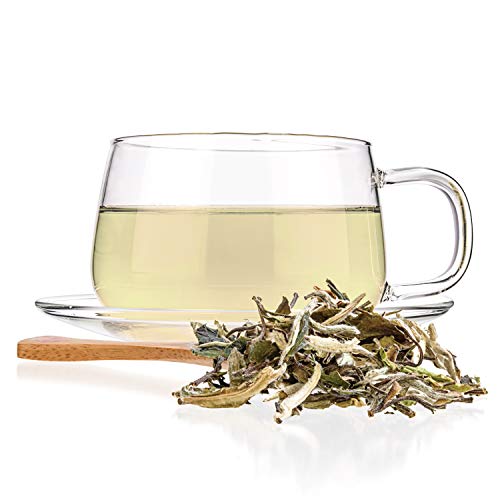
A floral, lightly tart white tea with a smooth, bitterness-free character that reveals quiet complexity across four to seven steepings.
🎯 Best for: Gong-Fu tea ceremony, Multiple steeping sessions
🍃 Tastes like: floral, fruity, tart

What Stands Out
🍃 Flavor Profile
Strength: Delicate
Notes: floral, fruity, tart
✅ What Customers Love
- Light, delicate flavor profile (4 mentions)
- Smooth with no bitterness (2 mentions)
- Complex flavor that evolves through multiple steepings (2 mentions)
🎯 Best For
Gong-Fu tea ceremony • Multiple steeping sessions • Gentle daytime refreshment • Introduction to white tea category
Brand: Tealyra
Category: White Tea
As an Amazon Associate we earn from qualifying purchases.
About This White Tea
Bai Mu Dan (White Peony) is a traditional Chinese white tea with floral-fruity notes and a smooth, non-bitter finish. The flavor is delicate and light, with a mild tartness that adds interest — and it deepens through multiple steepings, holding character for four to seven rounds. Some batches skew stem-heavy with broken leaf pieces rather than whole leaves. Best suited to gentle daytime sipping, Gong-Fu brewing sessions, or anyone taking their first steps into white tea.
Is Tealyra White Peony Bai Mu Tan White Tea Right for You?
What does Tealyra Bai Mu Dan taste like?
Reviewers describe this tea as light and delicate with floral, fruity, and subtly tart notes. It's smooth with absolutely no bitterness — which multiple reviewers highlight as a standout quality. There's a natural sweetness to it that means you don't need any added sweetener. The flavor profile is complex enough that it changes and evolves across multiple steepings, especially when brewed Gong Fu style. If you're used to bold teas, this will feel very different — think 'whisper' rather than 'shout.'
Is this Tealyra white tea good for beginners?
Yes — reviewers consistently point to this as a good starting point for anyone new to white tea. The flavor is approachable and forgiving: it's light, smooth, and won't go bitter even if you accidentally over-steep it a bit. Compared to jumping straight into a pricier Silver Needle, this Bai Mu Dan offers more complexity at a friendlier price point, making it a low-risk way to explore the white tea category.
How many times can you steep this Tealyra white peony tea?
This is actually one of the tea's highlights — reviewers report getting 4 to 7 quality steepings from the same leaves, especially with Gong Fu brewing. The flavor evolves with each steeping, shifting from lighter and more floral to sweeter and more nuanced. That re-steepability also improves the value proposition significantly: you're getting multiple cups from each serving of leaves.
Are there quality issues with this Tealyra Bai Mu Dan?
In the interest of honesty: some reviewers have noted inconsistency between batches. Specific concerns include a higher proportion of stems instead of whole leaves, mostly broken leaves rather than intact ones, and brown or green leaves with fewer silver tips than expected. The product appearance doesn't always match promotional images. That said, many reviewers still find the flavor excellent despite the visual appearance, so it depends on whether leaf aesthetics matter to you.
What is the highest grade of white tea?
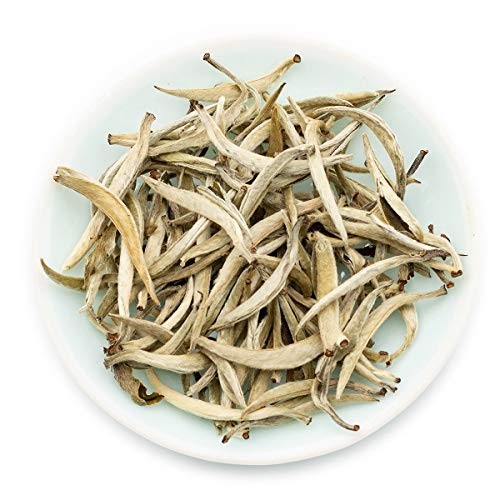
Silver Needle (Bai Hao Yin Zhen) is generally considered the highest grade of white tea, made exclusively from unopened buds covered in fine white hairs. This Tealyra Bai Mu Dan is one grade below that — it includes both buds and leaves, which gives it a more complex, fuller flavor. That said, some reviewers have noted this particular product has fewer silver tips and more stems than expected, which suggests it may sit at the lower end of the Bai Mu Dan quality spectrum.
What is the best way to brew white tea?
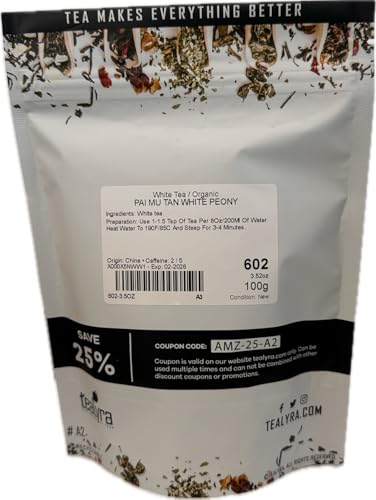
For this Tealyra Bai Mu Dan, you have two great options. For Western-style brewing, use water around 175-185°F (80-85°C) — never boiling — and steep for 3-5 minutes. For Gong Fu style, use a higher leaf-to-water ratio in a small vessel with shorter steeps of 15-30 seconds. Reviewers specifically mention that this tea shines in Gong Fu brewing, where its complex flavor evolves beautifully through 4-7 steepings. One practical tip: because the leaves are loosely packed, a kitchen scale helps with consistent measuring.
As an Amazon Associate we earn from qualifying purchases.
How to make perfect white tea?
The key to getting the best out of this Tealyra white peony is temperature control — use water between 175-185°F, well below boiling. The leaves are delicate and will turn bitter or flat with water that's too hot. Start with about 2 teaspoons per 8 oz of water and steep for 3-4 minutes. The real magic, though, is in re-steeping: reviewers report this tea holds up for 4 to 7 steepings, with the flavor shifting from light and floral to sweeter and more complex in later rounds.
What temperature do you boil water at for white tea?
You actually don't want to use boiling water for this tea — that's one of the most common mistakes with white tea. Aim for 175-185°F (80-85°C). If you don't have a temperature-controlled kettle, bring water to a boil and then let it cool for about 3-5 minutes before pouring. This Tealyra Bai Mu Dan is particularly forgiving according to reviewers (no bitterness even with slightly longer steeps), but getting the temperature right will bring out the best floral and fruity notes.
What is the ratio of white tea to water for tea?
For Western-style brewing of this Tealyra Bai Mu Dan, use about 2 teaspoons (roughly 2-3 grams) per 8 oz of water. For Gong Fu brewing, bump that up to about 5-6 grams per 100ml. One thing reviewers mention: this tea is loosely packed with a mix of leaves and stems, so volume measurements can be inconsistent. If you're serious about getting repeatable results, a small kitchen scale is worth using.
How do you brew white tea Gong Fu style?
This Tealyra Bai Mu Dan is specifically praised by reviewers for Gong Fu brewing. Use a gaiwan or small teapot, about 5-6 grams of leaf per 100ml of water at 175-185°F. Do a quick 5-second rinse, then steep starting at 15-20 seconds, adding 5-10 seconds per subsequent infusion. Reviewers report getting 4-7 excellent steepings this way, with the flavor evolving from light and floral to sweeter and more complex in the later rounds. It's one of this tea's genuine strengths.
Does white tea have much caffeine?
White tea is generally lower in caffeine than black or green tea, and this Tealyra Bai Mu Dan is specifically listed as low caffeine. Reviewers appreciate the gentle energy lift it provides — enough to be refreshing without the jitteriness of coffee or the heaviness of black tea. If you're sensitive to caffeine or looking for an afternoon tea that won't keep you up at night, this is a solid choice.
Can you blend this white peony tea with other flavors?
Yes, and reviewers specifically mention that this tea works beautifully as a base for blending with jasmine flowers. The light, delicate flavor holds up well when mixed with jasmine, creating a naturally fragrant cup. Its subtle character means it won't compete with added flavors — it supports them. That said, it's also wonderful on its own if you want to appreciate the pure white tea experience.
As an Amazon Associate we earn from qualifying purchases.
Who is this Tealyra Bai Mu Dan best for?
This tea fits two audiences particularly well. First, beginners exploring white tea — the forgiving flavor, approachable price, and no-bitterness character make it a low-risk entry point. Second, experienced tea drinkers who enjoy Gong Fu ceremony or multiple-steeping sessions will appreciate how the flavor evolves across infusions. It's also ideal as a gentle daytime tea for anyone looking for low caffeine without going caffeine-free.
Who should avoid this Tealyra white peony tea?
If you need a strong caffeine kick to start your morning, this isn't your tea — it's genuinely low in caffeine. Also, if you don't have a kitchen scale and prefer precise measuring, the loose, airy packing of this tea can make scooping inconsistent. And if you're the type who judges tea heavily on leaf appearance, the stem content and broken leaves might disappoint you, even though the flavor is generally well-regarded.
Does this Tealyra white tea have a sweet taste without sugar?
Yes — this is one of the pleasant surprises reviewers mention. The tea has a natural sweet aftertaste without any added sweetener. Combined with the complete absence of bitterness, it's a naturally pleasant cup that doesn't need sugar, honey, or anything else to be enjoyable. That natural sweetness becomes even more noticeable in the later steepings.
What does white peony tea do for you?
White peony (Bai Mu Dan) is one of the gentlest teas you can drink. This Tealyra version offers a light, delicate flavor with floral and subtly fruity notes, and it's naturally low in caffeine — so it gives you a gentle energy lift without the heaviness of black tea or coffee. Reviewers appreciate that it provides a smooth, calming tea experience that works well as a daytime refreshment without keeping you wired.
Is white tea the same as white peony tea?
White peony (Bai Mu Dan) is a specific type of white tea — one of the most popular ones, actually. White tea is the broader category, which includes varieties like Silver Needle (just buds), White Peony (buds plus the top two leaves), and others. This Tealyra Bai Mu Dan falls in the middle of the white tea spectrum: more complex and fuller-bodied than Silver Needle, but still delicate and light compared to green or black teas.
Is it okay to drink white tea every day?
Absolutely. This Tealyra white peony is actually a great candidate for daily drinking because of its low caffeine content. It gives you a gentle lift without overstimulating, and the flavor is smooth and light enough that it doesn't become overwhelming with repeated cups. Several reviewers use it as a regular daytime tea for exactly this reason.
As an Amazon Associate we earn from qualifying purchases.
What is the most famous white tea?
The two most famous white teas are Silver Needle (Bai Hao Yin Zhen) and White Peony (Bai Mu Dan) — and this Tealyra tea is the latter. White Peony is arguably the more popular choice for everyday drinking because it offers more complexity than Silver Needle at a lower price point. Reviewers note it has a complex flavor profile with floral, fruity, and slightly tart notes that evolve through multiple steepings.
Is white tea better than green tea?
It's not better or worse — they're different experiences. This Tealyra white peony is lighter and more delicate than most green teas, with floral and fruity notes instead of the grassy, vegetal character of green tea. White tea also tends to be lower in caffeine and virtually impossible to over-steep into bitterness (reviewers specifically praise this tea's smoothness). If you find green tea too grassy or bitter, white peony could be your thing.
Is white tea good for your stomach?
White tea is generally considered one of the most stomach-friendly teas because of its low tannin content and minimal processing. This Tealyra Bai Mu Dan is particularly smooth and non-bitter according to reviewers, which suggests it's unlikely to cause stomach irritation. If stronger teas like black or green tea bother your stomach, white peony is worth trying.
What kind of tea is considered white tea?
White tea is the least processed type of tea from the Camellia sinensis plant. The leaves are simply withered and dried, with minimal oxidation — which is what gives white tea its delicate, subtle character. This Tealyra Bai Mu Dan is a classic example: it's made from young tea buds and leaves that are gently dried, resulting in a light, floral cup with none of the grassiness of green tea or robustness of black tea.
Does White Peony tea help with weight loss?
White tea in general contains catechins and antioxidants that some studies have linked to supporting metabolism, but this Tealyra Bai Mu Dan isn't marketed as a weight loss tea, and reviewers don't mention it for that purpose. What they do appreciate is that it's naturally sweet with no bitterness — so you can enjoy it without adding sugar or sweetener, which could indirectly support healthier drinking habits.
What does White Peony do for hormones?
White peony root (Paeonia lactiflora) is used in traditional Chinese medicine for hormonal balance, but that's a completely different plant from white peony tea. This Tealyra Bai Mu Dan is made from the Camellia sinensis tea plant — it's called 'white peony' because of the appearance of the tea buds and leaves, not because it comes from the peony flower. So while it's a lovely, gentle tea, don't confuse it with the herbal supplement.
As an Amazon Associate we earn from qualifying purchases.
Is white tea a stimulant?
Technically yes — white tea does contain caffeine, which is a stimulant. But this Tealyra Bai Mu Dan is on the low end of the caffeine spectrum. Reviewers describe it as providing a 'gentle energy lift without the heaviness of black tea,' making it more of a subtle pick-me-up than a serious stimulant. It's a good option if you want something calming rather than energizing.
Which teas have the lowest caffeine?
Among true teas (from the Camellia sinensis plant), white tea is generally at the lower end of the caffeine range, and this Tealyra Bai Mu Dan is labeled as low caffeine. Only herbal teas (which aren't technically 'tea') are completely caffeine-free. If you're specifically seeking a real tea experience with minimal caffeine impact, white peony is one of your best options.
Does white tea keep you awake?
It's unlikely with this particular tea. The Tealyra Bai Mu Dan is low in caffeine and reviewers describe the energy it provides as gentle rather than stimulating. Most people can comfortably enjoy it in the afternoon without sleep issues, though everyone's caffeine sensitivity is different. If you're highly sensitive, you might still want to avoid it within a few hours of bedtime.
Is white tea healthier than green tea?
Both are excellent choices. White tea like this Tealyra Bai Mu Dan is minimally processed, which means it retains a high level of natural antioxidants. Green tea has a different antioxidant profile and has been more extensively studied. Rather than thinking of one as 'healthier,' consider which you'll actually enjoy drinking consistently — the healthiest tea is the one you drink regularly. This white peony's smooth, no-bitterness character makes it easy to drink daily.
How to brew white tea with milk?
Honestly, this probably isn't the best tea for milk. The Tealyra Bai Mu Dan has a very delicate, subtle flavor — light floral and fruity notes that would get completely buried by milk. If you want a milky tea experience, you're better off with a robust black tea or a strong Assam. This white peony is best enjoyed on its own, where you can appreciate its natural sweetness and complexity.
What are the side effects of white tea?
White tea is one of the mildest teas available, and this Tealyra Bai Mu Dan is low in caffeine, so side effects are minimal for most people. The main consideration is that it does contain some caffeine, so those who are extremely caffeine-sensitive should be mindful of their intake. Otherwise, white tea is generally well-tolerated and considered one of the gentlest options in the tea world.
As an Amazon Associate we earn from qualifying purchases.
Is white tea good for your skin?
White tea is rich in antioxidants — in fact, because it's minimally processed, it retains more of its natural polyphenols than more heavily processed teas. These antioxidants may support skin health by fighting free radicals. That said, reviewers of this specific Tealyra product don't mention skin benefits, so we can't make claims beyond general white tea properties.
What is the healthiest tea in the world?
There's no definitive answer — it depends on what health benefits you're looking for. White tea, like this Tealyra Bai Mu Dan, is often cited as one of the healthiest because minimal processing preserves its natural antioxidants. Green tea (especially matcha) is the most studied for health benefits. The honest answer is: drink whichever tea you enjoy enough to have consistently. This white peony's light, smooth character makes it very easy to incorporate daily.
Does white tea promote collagen?
Some research suggests that white tea's antioxidants may help protect existing collagen from breakdown by inhibiting certain enzymes. However, this is based on general white tea research, not on this specific Tealyra product. If collagen support is your primary goal, white tea might be a helpful part of your routine, but don't expect it to be a miracle solution.
What Customers Love
⚠️ Limited sample based on limited customer feedback (9 reviews) • Our methodology
- Light, delicate flavor profile (4 mentions)
- Smooth with no bitterness (2 mentions)
- Complex flavor that evolves through multiple steepings (2 mentions)
- Good price point for white tea (2 mentions)
- Can be steeped multiple times (4-7 steepings) (2 mentions)
Taste Profile
- light
- delicate
- smooth
- sweet
- complex
- floral
Best Use Cases
🎯 Best For
- Gong-Fu tea ceremony
- Multiple steeping sessions
- Gentle daytime refreshment
- Introduction to white tea category
⚠️ Not Ideal For
- Those needing significant caffeine boost
- Situations requiring precise measurement without a scale
What to Consider
- High proportion of stems instead of leaves (3 mentions)
- Mostly broken leaves rather than whole (2 mentions)
- Quality inconsistency between batches (2 mentions)
- Brown/green leaves with few silver tips (2 mentions)
- Difficult to measure without scale due to loose packing (1 mentions)
⚠️ Important: This analysis is based on limited customer feedback (9 reviews). We've shared what we found, but there may be additional considerations we haven't captured.
About This Analysis
This analysis is based on 9 customer reviews. We're showing you everything we found, but with a small sample, there's a lot we likely haven't captured yet.
✅ What we're confident about: What customers love and best use cases
⚠️ What may be incomplete: Potential issues and considerations
For more perspectives, check customer reviews on Amazon.
Product Selection
In short: We only feature high-rated products.
Products on TeaDelight.net are selected based on strong Amazon customer ratings, sufficient review volume, and market presence. We focus on well-regarded products that tea enthusiasts are actively considering and purchasing.
As an Amazon Associate we earn from qualifying purchases.
You Might Also Like

✅ Smooth, light flavor without bitterness
Uncle Lee's Organic White Tea (2-Pack, 200 Count)

✅ Works excellently for iced tea
Organic Positively Tea White Tea Sampler
✅ Excellent packaging - protective, intact buds
Oriarm Yunnan Silver Needle White Tea

✅ High quality whole leaf buds - fat, even-sized, young silver needles with white furs