



We analyze real customer reviews to surface what matters: key strengths, ideal use cases, and honest considerations — so you can make an informed choice.
MOLIGOU Cast Iron Teapot Warmer with Candle Holders
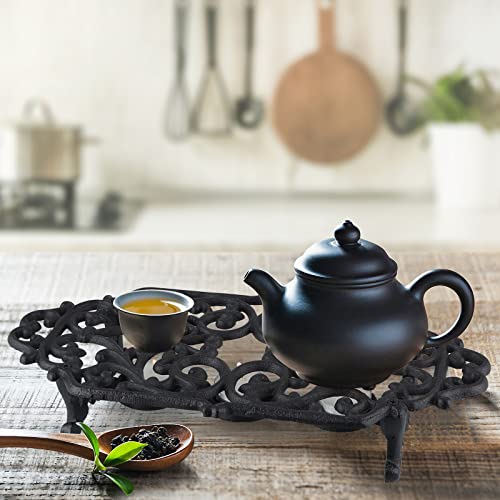
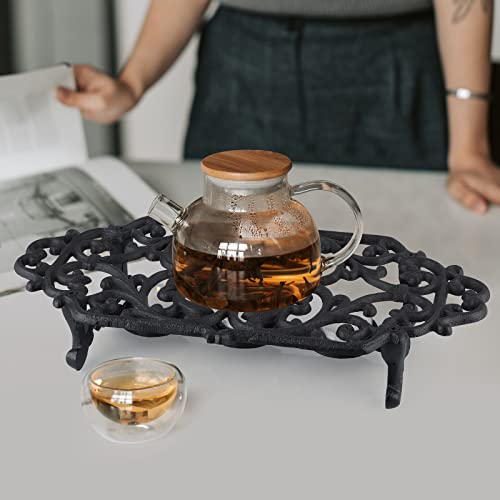
A cast-iron teapot warmer built to cradle three tealight candles under a teapot — a tabletop heat source for keeping brewed tea hot through an unhurried sit-down service.
🎯 Best for: Keeping a teapot warm during a sit-down tea or dinner service, Tabletop ambiance where the warmer doubles as a decorative piece

✅ What Customers Love
- Solid cast-iron build
- Decorative lace-cut pattern
- Easy to handle in use
🎯 Best For
Keeping a teapot warm during a sit-down tea or dinner service • Tabletop ambiance where the warmer doubles as a decorative piece
Brand: MOLIGOU
Category: Tea Warmers
As an Amazon Associate we earn from qualifying purchases.
About This Product
A cast-iron teapot warmer built to cradle three tealight candles under a teapot — a tabletop heat source for keeping brewed tea hot through an unhurried sit-down service. Reviewers consistently note solid construction, with 6 of 9 citing well-made or heavy-duty build, and most describe the lace-cut cast-iron pattern as good-looking. A couple call it easy to use. The aggregation carries no direct functional-performance group, so the heat-output picture rests largely on structural and aesthetic signal rather than on quantified warming claims.
We'd reach for this on a dinner table or tea tray during a leisurely sit-down service — not at a desk where open flame and seated use don't fit. The warmer doubles as a decorative piece on the table, which is part of its appeal alongside the warming function, and it suits tabletop ambiance as much as it suits the practical job of holding temperature.
In use, place three tealight candles (not included) into the holders and set the teapot on top. Wipe the cast iron dry after use and keep it away from prolonged moisture; cast iron rusts when left damp.
One reviewer reports that the tealight wicks line up directly with the openings in the cast-iron pattern, slowing transfer to the iron itself and pushing warm-up time to roughly six to eight hours — a real consideration if quick warming matters to you. It's a single voice out of nine, but a specific enough observation to weigh against your use case.
Best suited to slow tea or dinner service and tabletop ambiance, less so to quick reheats or workplace settings.
Is MOLIGOU Cast Iron Teapot Warmer with Candle Holders Right for You?
How do you use this cast iron teapot warmer?
You place three tealight candles in the holders inside the cast-iron base, light them, and set your teapot on top — the candle flames warm the iron, which holds heat under the pot during a sit-down service. It's designed as a tabletop heat source, not for hands-on heating control.
How long does it take to warm the teapot?
One reviewer reports that the tealight wicks line up directly with the openings in the cast-iron pattern, slowing transfer to the iron and pushing warm-up to roughly six to eight hours — based on a single account, so treat it as one data point rather than a verified spec. If quick warming matters to you, this is worth weighing.
Is the cast iron build solid?
Six of nine reviewers cite well-made or heavy-duty construction, so the build appears solid at this small sample size. The structural signal is the strongest thing the reviews tell us about this warmer.
What does the warmer look like on a tea tray?
Six of nine reviewers describe the lace-cut cast-iron pattern as good-looking, and the synthesis notes it doubles as a decorative piece on a tabletop. Appearance is one of the two consistent positives across the small reviewer pool.
Is it easy to use day to day?
Two of nine reviewers note it's easy to handle in use — a light positive signal at this review count rather than a strong consensus. Lighting tealights and placing the pot is the whole interaction, so there isn't much to get wrong.
Is this a good choice for a desk or office?
No — the synthesis flags office and desk use as a poor fit because the open-flame tealight design isn't compatible with seated workplace settings. It's built for a dinner table or tea tray during a leisurely service, not a workstation.
As an Amazon Associate we earn from qualifying purchases.
How should I care for the cast iron?
Wipe the cast iron dry after use and keep it away from prolonged moisture — cast iron rusts when left damp. Any condensation from the teapot above or spilled wax from the tealights below is worth drying off before storage.
When would I actually reach for this warmer?
The synthesis frames it for keeping a teapot warm during a sit-down tea or dinner service — an unhurried tabletop setting where the warmer can also serve as a decorative piece. Quick reheating or single-cup brewing isn't what it's built for.
Does it fit any size teapot?
The listing positions it as a teapot warmer stand with three tealight holders, but the reviews and synthesis don't quantify the platform diameter or weight capacity. Worth checking your teapot's base footprint against the listing's product images before ordering.
What's the main thing to watch out for before buying?
The one substantive concern in the reviews is wick-to-cutout alignment slowing heat transfer — a single reviewer reported six-to-eight-hour warm-up times, which is a real consideration if you want fast warming. Otherwise the small reviewer pool points to a solid, decorative warmer for unhurried table use.
Category: Should I leave the tea leaves in the pot when it's on a warmer?
No, and this is the single most important rule across every warmer type. Catechin extraction climbs sharply above 70°C and tannins keep extracting for 30-80 minutes at warmer-plate temperatures, so leaves left in a 70-75°C pot deliver maximum bitterness right when you're sipping your second cup. Strain or decant the entire brew before the pot goes on the warmer — this is the classic ruin of British afternoon tea when skipped.
Category: How do I clean and care for a tea warmer?
For cast-iron warmers, empty completely after use, wipe dry without soap, and air-dry fully before storage; a monthly light brushing of food-grade mineral oil preserves the exterior finish. Wipe electric plates while still warm (not hot) with a damp cloth and never submerge the electric base in water; vinegar-and-water lifts stubborn tea drips. Solidified wax peels off cool stainless or glass with a plastic scraper, and soot deposits respond to a baking-soda paste. Avoid sudden temperature changes on ceramic — don't pour cold water onto a hot warmer.
As an Amazon Associate we earn from qualifying purchases.
Category: What styles of tea warmer are there?
The category spans six families: tealight candle warmers (~30-40W, classic aesthetic, open flame), USB coasters (2.5-5W, office desk use), mains-electric plates (25-55W with thermostats, the modern workhorse), induction warmers (100-300W, requires a ferromagnetic vessel), traditional charcoal braziers (samovar konforka, Moroccan majmar), and passive ceramic tile heat sinks. The right choice is determined by which teapot you own and which serving tradition you participate in, not by aesthetics alone.
What Customers Love
⚠️ Limited sample based on limited customer feedback (9 reviews) • Our methodology
- Solid cast-iron build
- Decorative lace-cut pattern
- Easy to handle in use
Quality & Care
Reviewers consistently note solid construction (6 of 9 cite well-made or heavy-duty build), and most describe the lace-cut cast-iron pattern as good-looking, with a couple calling the warmer easy to use. The aggregation carries no direct functional-performance group, so the heat-output picture rests largely on structural and aesthetic signal rather than on quantified warming claims.
Care
Wipe the cast iron dry after use and keep it away from prolonged moisture; cast iron rusts when left damp.
Best Use Cases
🎯 Best For
- Keeping a teapot warm during a sit-down tea or dinner service
- Tabletop ambiance where the warmer doubles as a decorative piece
⚠️ Not Ideal For
- Office or desk use — the open-flame tealight design is incompatible with workplace settings
- Quick warm-up — the wick/cutout alignment slows heat transfer
How People Use It
We'd reach for this on a dinner table or tea tray during a leisurely sit-down service — not at a desk where open flame and seated use don't fit.
What to Consider
One reviewer reports that the tealight wicks line up directly with the openings in the cast-iron pattern, slowing transfer to the iron itself and pushing warm-up time to roughly six to eight hours — a real consideration if quick warming matters to you.
- Tealight wick alignment slows warming
⚠️ Important: This analysis is based on limited customer feedback (9 reviews). We've shared what we found, but there may be additional considerations we haven't captured.
About This Analysis
This analysis is based on 9 customer reviews. We're showing you everything we found, but with a small sample, there's a lot we likely haven't captured yet.
✅ What we're confident about: What customers love and best use cases
⚠️ What may be incomplete: Potential issues and considerations
For more perspectives, check customer reviews on Amazon.
Product Selection
In short: We only feature high-rated products.
Products on TeaDelight.net are selected based on strong Amazon customer ratings, sufficient review volume, and market presence. We focus on well-regarded products that tea enthusiasts are actively considering and purchasing.
As an Amazon Associate we earn from qualifying purchases.
You Might Also Like

✅ Solid build
Teabloom Silhouette Stainless Steel Tea Warmer with Tealight

✅ Holds beverage temperature reliably
CEROBEAR Coffee Mug Warmer with 3 Temperature Settings

✅ Strong heat retention
Wenvinda Coffee Mug Warmer with 3-Temp Settings

✅ Strong, consistent heat retention