






We analyze real customer reviews to surface what matters: key strengths, ideal use cases, and honest considerations — so you can make an informed choice.
Tiesta Tea Loose Leaf Filters
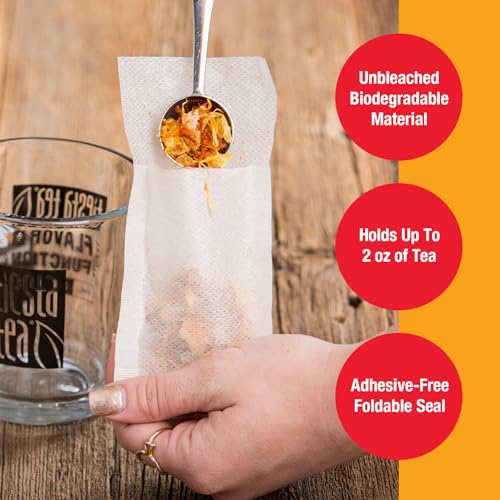
Unbleached paper filters with a fine mesh weave and rim-hanging flap — designed for single-cup loose leaf brewing without leaks, paper taste, or sediment.
🎯 Best for: Single cup loose leaf tea brewing, Office/travel tea making

✅ What Customers Love
- Thin, fine mesh that doesn't leak or tear (8 mentions)
- Flap stays dry and hangs on cup rim securely (6 mentions)
- Large capacity - enough room for tea to expand (5 mentions)
🎯 Best For
Single cup loose leaf tea brewing • Office/travel tea making • Loose leaf tea without infuser on hand • Cold brewing tea or coffee
Brand: Tiesta Tea
Category: Tea Filter Bags
As an Amazon Associate we earn from qualifying purchases.
About This Product
Made from unbleached paper with a fine mesh weave, these filters deliver clean cups without paper taste or sediment. The open-top design holds enough leaf for full expansion, with a dry flap that stays secure on the cup rim during steeping. Reviewers note the filters hold up to a second steeping and work equally well for cold brewing. One caveat: keep the flap close to the cup edge — it can wick liquid if it hangs too far over. Best suited for home brewers, office use, and small-batch tea blenders wanting straightforward single-cup convenience.
Is Tiesta Tea Loose Leaf Filters Right for You?
Do these Tiesta Tea filters leave a paper taste in your tea?
No — this is one of the most consistently praised things about these filters. Multiple reviewers specifically mention there's no paper taste and no chemical taste. The unbleached paper seems to be the key here; bleached filters from some other brands can leave a papery or chemical flavor, but the natural unbleached material in these Tiesta filters stays neutral. Your tea tastes like tea, not like the bag.
Are tea filter bags good for loose leaf tea?
These Tiesta filters work really well for loose leaf tea specifically. The bags are large enough to give tea leaves room to expand and unfurl, which is important for getting full flavor extraction. The fine mesh keeps even small particles out of your cup — reviewers consistently mention getting a clean cup with no sediment. The one caveat: one reviewer noted that for very delicate, premium teas, the paper can strip some subtle flavors. For everyday loose leaf brewing though, they're excellent.
How do you use a tea filter bag?
With these Tiesta filters, it's straightforward: open the bag, scoop in your loose leaf tea (they can hold up to about 6 scoops for a really robust cup), fold the top over the rim of your mug, and pour hot water over it. The flap hangs on the cup rim to keep it in place — reviewers say it stays put securely. Steep for the recommended time for your tea type, then just lift the bag out and toss it. No cleanup beyond rinsing your mug.
Do Tiesta Tea filters have a drawstring closure?
No, these don't have a drawstring or any built-in closure mechanism. Instead, they have a flap design — you fold the top of the bag and hang the flap over the rim of your cup. Reviewers say the flap stays dry and holds on securely, so it works well in practice. If a drawstring closure is important to you, you'd need to look at a different brand, but most users find the flap system works just fine.
What should you look for when buying tea filter bags?
A few things matter: material (unbleached paper avoids chemical tastes and bleach residue), mesh fineness (too coarse and you get sediment, too fine and it can mute flavor), and bag size (tea leaves need room to expand). These Tiesta filters check all three — unbleached German-made paper, fine mesh that reviewers say keeps cups clean, and a generous size for leaf expansion. Also look for a good closure design: these have a flap that hangs over the cup rim, though they don't have a drawstring, so you fold the top to close them.
Is Tiesta Tea high quality?
The filters themselves are well-made — they're manufactured in Germany from unbleached paper, and reviewers consistently praise the build quality. The paper is thin but strong, with a fine mesh that doesn't leak or tear during steeping. Multiple reviewers specifically call out that there's no paper taste or chemical taste affecting their tea, which is a common complaint with cheaper filter bags. The 100-count box also makes them a solid value.
As an Amazon Associate we earn from qualifying purchases.
How many scoops of tea can you fit in these filters?
Reviewers report fitting up to 6 scoops for a really strong, robust cup. For normal single-cup brewing, 1-2 teaspoons is typical. The bags are generously sized — one of their strengths is giving tea leaves enough room to expand and unfurl, which is important for flavor extraction. So even with a moderate amount of tea, you're not cramming leaves into a tiny space like you would with a tea ball.
Are Tiesta Tea filters biodegradable?
Yes. They're made from unbleached paper with no staples or plastic components, so they're fully biodegradable. You can compost them along with the spent tea leaves — just toss the whole thing in your compost bin. The eco-friendly materials are a selling point that several reviewers specifically mention appreciating.
Why do the Tiesta Tea filters come stuck together?
Some users notice the filters come paired up — stuck together head to bottom. It's a packaging quirk, not a defect. They pull apart easily, but it can be a little confusing the first time you open the box. Just separate them and you're good to go. Once you know to expect it, it's a non-issue.
Do Tiesta Tea filters contain microplastics?
No, Tiesta Tea loose leaf filters are made from unbleached paper — not plastic or nylon. They're the light brown, natural-looking paper type, and they're biodegradable. Since there's no plastic mesh, heat-sealed edges, or synthetic materials involved, microplastic leaching isn't a concern with these filters.
Can you reuse Tiesta Tea filter bags?
Some reviewers do reuse them for a second steeping if the tea is strong enough to handle it. The paper holds up for at least one re-steep — the mesh is thin but doesn't tear easily. That said, they're designed as disposable single-use filters, so the paper will start to weaken after multiple uses. For a second steep of the same tea, you're fine. For a completely fresh cup, use a new bag.
Where are Tiesta Tea filters manufactured?
They're made in Germany. Several reviewers mention this as a quality indicator, and the German manufacturing shows in the build quality — the paper is consistent, the mesh doesn't tear, and the sizing is uniform across the box. It's a detail that matters if you care about manufacturing standards for something that's going in your hot drinks.
As an Amazon Associate we earn from qualifying purchases.
Are these filters good for making DIY tea bags?
Yes, and this is actually a surprisingly popular use case. Reviewers have figured out that you can cut the bags smaller and heat-seal them with a FoodSaver or even a clothes iron to make pre-portioned tea bags from your own loose leaf blends. Small business owners use them for blending custom teas, and home tea drinkers use them to pre-make travel-friendly tea bags from bulk herbs. The unbleached paper and no-staple design make them ideal for this kind of customization.
Can you use these Tiesta filters for cold brew tea?
Absolutely — reviewers confirm they work well for both hot and cold brewing. For cold brew, fill the filter with your loose leaf tea, fold the top, and drop it into a jar or pitcher of cold water. Refrigerate for several hours (anywhere from 4-12 hours depending on your tea and desired strength). The fine mesh keeps everything contained, and since cold brewing naturally produces a smoother, less bitter cup, the gentle filtration of the paper is a nice match.
Will these Tiesta filters work with very fine or powdery tea?
The mesh is fine enough to contain most loose leaf teas without leaking, and reviewers praise it for keeping cups clean of sediment. However, for extremely fine powders like matcha or very finely ground rooibos dust, some particles could potentially pass through any paper filter. For standard loose leaf cuts — including small-leaf teas and herbals — these work great. The fine mesh is actually one of the most frequently praised features.
How to choose tea filter bags for coffee?
These Tiesta filters actually work for cold brew coffee too — reviewers have confirmed it. The fine mesh keeps grounds out of your cup, and the bags are large enough to hold a good amount of coffee. For cold brew, you'd fill the filter with coarse-ground coffee, fold the top closed, and steep in cold water for 12-24 hours. The unbleached paper won't add any off-flavors to your brew. Just note these are designed for single-cup portions, so for a large batch of cold brew you'd need multiple bags.
Are these better than a metal tea infuser?
It depends on what you value. Metal infusers are reusable and more eco-friendly long-term, but they require cleaning after every use and many have mesh that's not fine enough — you end up with leaf bits in your cup. These paper filters give you a cleaner cup with zero cleanup (just toss), and reviewers specifically say they're easier to use than tea balls or metal infusers. The tradeoff is they're disposable. For home daily brewing, a good infuser basket might make more sense. For office use, travel, or convenience, these paper filters win.
Are these filters good for beginners who are new to loose leaf tea?
These are arguably one of the best entry points into loose leaf tea. You don't need any special equipment — no infuser basket, no teapot with a built-in strainer, no French press. Just open a bag, add tea, pour water, steep, and toss. The flap design keeps the bag in place without any learning curve, and the fine mesh means you won't get the off-putting loose leaf bits floating in your cup that can discourage beginners. It's the simplicity of a tea bag with the freedom to explore any loose leaf tea you want.
As an Amazon Associate we earn from qualifying purchases.
Which tea bags do not leach microplastics?
Paper-based filter bags like these Tiesta Tea filters are your safest bet for avoiding microplastics. They're made from unbleached paper with no synthetic materials, so there's nothing to leach. The filters to watch out for are the silky, pyramid-shaped bags made from nylon or PET plastic — those are the ones studies have flagged for microplastic release at brewing temperatures. These Tiesta filters are straightforward paper, biodegradable, and made in Germany.
What are the best tea strainers for loose leaf tea?
It depends on your setup. Metal infuser baskets are great if you brew at home and don't mind the cleanup. But for convenience — especially at the office, while traveling, or when you just want zero cleanup — disposable paper filters like these Tiesta bags are hard to beat. Reviewers specifically say they're easier to use than tea balls or metal infusers, and cleanup is literally just tossing the bag. The tradeoff is they're single-use (though some people reuse them for a second steep if the tea is strong enough).
Are tea strainers worth buying?
If you drink loose leaf tea, absolutely. The alternative is dealing with loose leaves floating in your cup or buying pre-bagged tea (which limits your options). These Tiesta filters specifically give you the convenience of tea bags with the freedom to use any loose leaf tea you want. At 100 bags per box, the per-cup cost is minimal, and reviewers say the convenience factor — fill, steep, toss — makes loose leaf tea practical for daily use, even at the office.
Why are you not supposed to squeeze tea bags?
Squeezing tea bags pushes out tannins and fine particles that can make your tea bitter and cloudy. With these Tiesta paper filters, the same principle applies — just lift the bag out and let it drip naturally. The fine mesh does a good job containing the leaves, so you'll get a clean cup without needing to squeeze. If you want stronger tea, it's better to add more leaves or steep longer than to wring out the bag.
How do you use tea bags correctly for the best flavor?
For these fill-your-own filters, the main tip is don't overstuff them — tea leaves need room to expand and circulate for proper extraction. Fill about halfway to two-thirds, fold the top, and let it steep in freshly heated water for the time your tea type calls for (typically 2-3 minutes for green, 3-5 for black, 5-7 for herbal). One thing to watch: if the flap hangs too far over the outside of your cup, it can wick tea out through the paper. Keep the flap mostly inside the rim and you're good.
Is Tiesta Tea organic?
The filters themselves aren't marketed as certified organic, but they are unbleached and biodegradable, which appeals to eco-conscious tea drinkers. The natural brown color comes from leaving the paper in its unprocessed state — no chlorine bleaching. If you're specifically looking for certified organic filter bags, you'd want to check the packaging details, but the unbleached, no-chemical-taste design aligns well with organic tea practices.
As an Amazon Associate we earn from qualifying purchases.
Do you put the tea filter in before or after the water boils?
Place the Tiesta filter bag in your cup first, then pour the hot water over it. You don't want to put the filter into already-boiling water in a kettle — that defeats the purpose of single-cup brewing. For most teas, you'll want to let the water cool slightly after boiling anyway (green tea does best around 175°F, black tea at a full 212°F). Pour over the filter, let it steep, and lift it out when done.
Customer-Validated Strengths
based on 30-review analysis • Our methodology
- Thin, fine mesh that doesn't leak or tear (8 mentions)
- Flap stays dry and hangs on cup rim securely (6 mentions)
- Large capacity - enough room for tea to expand (5 mentions)
- No paper taste or chemical taste in tea (4 mentions)
- Unbleached paper (light brown color) (3 mentions)
- Biodegradable and eco-friendly (3 mentions)
- No staples (2 mentions)
- Made in Germany (2 mentions)
Best Use Cases
🎯 Best For
- Single cup loose leaf tea brewing
- Office/travel tea making
- Loose leaf tea without infuser on hand
- Cold brewing tea or coffee
- Small business owners blending teas
- Making DIY tea bags from bulk herbs
⚠️ Not Ideal For
- Very expensive/delicate premium teas (may strip subtle flavors per one reviewer)
- Users who prefer drawstring closure
- Large batch brewing (designed for single cup)
What to Consider
- Box arrives damaged/opened during shipping (15 mentions)
- Filters come stuck together in pairs (head to bottom) (2 mentions)
- No drawstring or closure mechanism (2 mentions)
- Can wick tea through filter if flap hangs too far over cup edge (1 mentions)
- Filters too well, stripping delicate flavors (for premium teas) (1 mentions)
- Bag could be longer for easier folding/sealing (1 mentions)
based on 30-review sample.
About This Analysis
This analysis is based on 30 customer reviews. We're showing you everything we found, but with our analysis, there's always more to discover.
✅ What we're confident about: What customers love and best use cases
⚠️ What may be incomplete: Potential issues and considerations
For more perspectives, check customer reviews on Amazon.
Product Selection
In short: We only feature high-rated products.
Products on TeaDelight.net are selected based on strong Amazon customer ratings, sufficient review volume, and market presence. We focus on well-regarded products that tea enthusiasts are actively considering and purchasing.
As an Amazon Associate we earn from qualifying purchases.
You Might Also Like

✅ Durable, thick cotton/fabric material (not flimsy paper)
Lannso Disposable Tea Bags for Loose Leaf Tea (200 Count)

✅ Strong, durable material that doesn't tear or leak grounds
Yzurbu Cold Brew Coffee Filter Bags

✅ Sturdy and durable, holds up through multiple uses
Cuopru Tea Filter Bags with Drawstring

✅ Sturdy construction, doesn't tear easily during normal use