


We analyze real customer reviews to surface what matters: key strengths, ideal use cases, and honest considerations — so you can make an informed choice.
Finum Large Disposable Tea Filter Bags
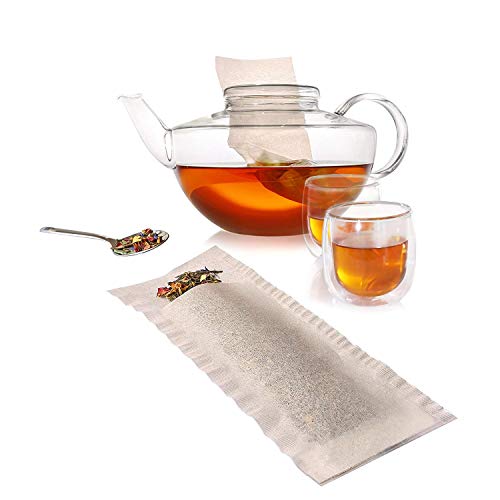
Unbleached disposable filter bags sized for large mugs that leave no metallic or glue taste — compostable and suited for loose leaf, cold brew, or herb steeping.
🎯 Best for: Large mugs (23-40 oz capacity), Loose leaf tea daily use

✅ What Customers Love
- Easy cleanup and disposal (5 mentions)
- Large size accommodates generous tea portions (4 mentions)
- Compostable and biodegradable (4 mentions)
🎯 Best For
Large mugs (23-40 oz capacity) • Loose leaf tea daily use • Cold brew tea preparation • Travel/portable tea making
Brand: finum
Category: Tea Filter Bags
As an Amazon Associate we earn from qualifying purchases.
About This Product
Sized for mugs in the 23–40 oz range, these unbleached filter bags give loose leaf tea room to expand fully without the metallic off-notes that metal infusers can introduce. Reviewers note the seal holds cleanly — no leaf escape, no lingering flavors from glue or material. They're biodegradable and compostable, so cleanup means lifting and tossing rather than scrubbing. The generous format works equally well for cold brew prep, adaptogen steeping, or batching homemade tea bags in advance. Best for daily loose leaf drinkers who want clean taste and easy cleanup — though the large size may overwhelm smaller teacups or delicate teaware.
Is Finum Large Disposable Tea Filter Bags Right for You?
Do Finum tea filter bags have microplastics?
This is one of the top reasons people choose Finum filters. They're made from unbleached, biodegradable paper — no plastic, no glue, no metal staples. Reviewers specifically praise the clean taste with no chemical or material flavor transfer. Since there's no plastic component in the construction, microplastic leaching isn't a concern the way it is with nylon mesh bags or heat-sealed plastic tea bags.
Are Finum filters better than reusable metal tea infusers?
Reviewers who've used both consistently prefer these for two reasons: cleaner cups and zero cleanup. Metal infuser balls and baskets — especially the cheaper ones — let fine tea particles escape through the mesh, leaving grit in your cup. These paper filters don't. And when you're done, you just throw the filter away instead of scrubbing tea residue out of a metal basket. The downside is they're single-use, but at this price point for 400 bags, most daily drinkers consider it a worthwhile trade-off.
What are the best tea strainers?
It depends on what you value. Metal infuser balls and baskets are reusable but need cleaning after every use, and reviewers of these Finum filters actually say they switched from metal infusers because fine tea leaves kept escaping through the mesh. Finum disposable filters give you a clean cup every time — no leaf escape, no cleanup, just toss and done. The trade-off is they're single-use, but at 400 bags in this pack, the per-bag cost is very low. If convenience and a clean cup matter more than reusability, these are hard to beat.
Who are these Finum large tea filters best for?
They're ideal for daily loose leaf drinkers who value convenience over reusability — people who want great tea without scrubbing infusers. They work especially well for big-mug drinkers, cold brew makers, travel tea enthusiasts, and composting households. Beginners love them too: just fill, steep, and toss, no special equipment or technique needed. The forgiving large size means you don't have to measure tea precisely. They're not the best fit for small-cup drinkers or anyone who strongly prioritizes zero-waste over convenience.
How do Finum filters compare to T-Sac tea filters?
Reviewers who've tried both say Finum offers comparable quality at a better price point. Both are unbleached paper filters without glue or staples, but this 400-count Finum pack tends to come in cheaper per filter than equivalent T-Sac quantities. Performance-wise, reviewers don't report significant differences in filtration or taste between the two brands — so if value matters, Finum has the edge here.
Are these Finum filter bags good for cold brew tea?
Yes — cold brew is actually one of the standout use cases reviewers mention. The large size is perfect for pitchers: fill a filter with tea, drop it in a pitcher of cold water, refrigerate overnight, and pull the bag out in the morning. No straining, no loose leaves floating around. Since the filter is big enough to let leaves expand even in cold water (which takes longer than hot steeping), you get good extraction without any mess.
As an Amazon Associate we earn from qualifying purchases.
Are Finum tea filters compostable?
Yes, fully compostable and biodegradable. There's no plastic, no glue, and no metal staples — just unbleached natural fiber paper. You can toss the whole used filter, tea leaves and all, straight into your compost bin. For composting households, this is a real advantage over conventional tea bags that often contain polypropylene to heat-seal the edges, which you'd need to tear open and separate before composting.
Do the Finum filter bags affect the taste of tea?
No — and this is one of the most praised features in reviews. Multiple reviewers specifically mention there's no paper taste, no glue flavor, and no metallic notes. The unbleached paper is essentially flavor-neutral, so your tea tastes like tea. This is a notable improvement over some cheaper filter bags that can impart a papery taste, and even over metal infusers that some drinkers say add a slight metallic quality.
How long does a 400-count pack of Finum filters last?
For a daily tea drinker having one cup a day, 400 filters is over a year's supply. Two cups a day gets you about seven months. Reviewers who drink loose leaf daily specifically call out the value of buying this 4-pack (4 boxes × 100 filters) — it means not having to reorder for a long time, and the per-filter cost works out lower than buying single boxes or comparable brands like T-Sac.
Can you use Finum tea filters for things other than tea?
Absolutely, and this is something reviewers get creative with. People use them for steeping adaptogens and mushroom powders (as an alternative to a French press), infusing herbs and spices into soups and broths, and even making homemade spice sachets. The large size and strong paper construction make them versatile — anything you'd want to steep and then remove cleanly, these work for.
What to look for when buying tea bags?
For fill-your-own filter bags like these, the key things are: material quality (no plastic, no glue taste), size match for your mug, and leaf containment. Finum checks all three — reviewers highlight the clean taste with no flavor transfer, the large size that fits big mugs and travel cups, and no leaf escape even with fine-cut teas. Also consider quantity and value: this pack of 400 bags is priced favorably compared to similar brands like T-Sac, which matters if you're a daily drinker.
How to choose tea filter bags?
Three things matter most: size, material, and value. Size needs to match your mug — these Finum large filters are designed for 23–40 oz vessels, so they're great for big mugs, travel tumblers, and pitchers, but too big for a dainty teacup. Material matters for taste and health — Finum uses unbleached, biodegradable paper with no glue or staples, so there's zero flavor transfer. And for value, this 400-count pack is priced well compared to competitors like T-Sac, making it practical for daily use.
As an Amazon Associate we earn from qualifying purchases.
How to use a tea filter bag?
Simple: open the filter bag, scoop in your loose leaf tea (about 1–2 teaspoons per cup, though these large Finum filters are forgiving with amounts), fold the top over, and place it in your mug. Pour hot water over it and steep for the recommended time for your tea type. When it's ready, just lift the bag out — this is one of the big perks reviewers mention, since easy removal prevents over-steeping. Toss the used filter in the compost or trash. No cleanup, no strainer to scrub.
Will these Finum filters work in a small teacup?
Honestly, probably not well. These are the large size, designed for mugs and vessels in the 23–40 oz range. In a small teacup or delicate teaware, the filter bag will likely be too big — it may hang over the rim or take up too much space in the cup. If you primarily use small cups, look for Finum's smaller filter size instead. These large ones are best suited for big mugs, travel tumblers, and pitchers.
How can a tea bag work as a filter?
Tea filter bags work on a simple principle: the paper is porous enough to let water flow freely through it (so your tea brews properly) but fine enough to trap tea leaves and particles. Finum filters use unbleached natural fiber paper that handles this balance well — reviewers note that even fine-cut teas and herb particles don't escape through the material, which is something cheaper filter bags and even some metal mesh strainers struggle with.
What is a tea filter bag?
A tea filter bag is basically an empty, fill-your-own tea bag. You scoop in your loose leaf tea, fold or seal the top, and steep it just like a regular tea bag — but with whatever tea you choose. The Finum large filters are designed for generous portions of loose leaf in bigger mugs (23–40 oz), so the leaves have room to expand and brew properly. When you're done, you just toss the whole thing — no infuser to clean, no leaves stuck in a strainer.
Can I use a coffee filter as a tea filter?
You can in a pinch, but it's not great. Coffee filters are designed for drip flow, not steeping — they're thicker, restrict water circulation around the leaves, and make it hard to remove your tea at the right time to prevent over-steeping. Finum tea filters are specifically designed to let water flow freely through the bag while keeping leaves contained, so your tea actually brews properly. Plus, you can pull the filter out easily when the steep is done, which is the whole point of controlled brewing.
Why are you not supposed to squeeze tea bags?
Squeezing tea bags pushes out extra tannins and bitter compounds that would normally stay trapped in the leaves. This makes your tea more astringent and less balanced. With Finum filters, this is less of an issue than with pre-filled tea bags because you control how much tea goes in and how long it steeps. The big advantage of these filters is easy removal — when your tea hits the right strength, you just pull the bag out. No squeezing needed, no over-steeping, and you get a cleaner flavor profile.
As an Amazon Associate we earn from qualifying purchases.
Do you put tea bags in the water before or after it boils?
After. Let the water come to a boil, then let it cool to the right temperature for your tea type — boiling water for black tea and herbal, around 175°F for green tea, 185°F for oolong. Then place your Finum filter bag in the mug and pour the water over it. Putting a filter bag in before the water boils can scorch delicate teas and cause a bitter taste. These Finum filters hold up well to hot water without breaking down or releasing any off-flavors, which reviewers specifically appreciate.
How to use tea bags correctly?
With these Finum filters, the key steps are: don't overfill (leave room for leaves to expand), use the right water temperature for your tea type, and most importantly — remove the bag when steeping is done. Reviewers love that these make removal easy, which prevents the bitter over-steeped taste you get from forgetting a bag in your mug. For the large size, they work best in mugs 23 oz and up. In a standard small cup, the bag may be too big and flop over the rim.
Which tea bags do not leach microplastics?
Finum disposable tea filters are a solid choice if you're trying to avoid microplastics. They're paper-based, compostable, and biodegradable — no nylon, no polypropylene, no plastic seal. Reviewers consistently note there's no off-taste or flavor transfer, which is a good sign that the material is clean and inert. If avoiding microplastics is your priority, unbleached paper filters like these are your safest bet compared to silky pyramid bags or heat-sealed sachets.
Why should you never throw away tea bags?
The usual advice is about composting — used tea bags (and the leaves inside) make excellent compost material. That's actually one of the selling points of these Finum filters: they're compostable and biodegradable, so you can toss them straight into your compost bin, leaves and all. No need to tear open a plastic-sealed sachet to separate the leaves. If you're in a composting household, these are a much better option than conventional tea bags with plastic seals or staples.
What sizes do tea bags come in?
Tea filter bags typically come in small, medium, and large. The Finum filters in this pack are the large size, which is ideal for big mugs and travel tumblers in the 23–40 oz range. One thing to note: Finum's smaller sizes have had shipping restrictions to California in the past, which has caused some customer confusion — but the large size doesn't have that issue. If you're brewing in a standard 8–12 oz cup, these large filters may be oversized and flop over the edges, so you'd want to look at a smaller size for delicate teaware.
What's the best type of tea strainer?
For daily convenience, disposable paper filters like these Finum bags are tough to beat. Metal basket infusers work well for single cups but need cleaning and can let fine leaves through. Teapot-style strainers are great for sharing but overkill for one cup. These Finum large filters give you the cleanest cup — multiple reviewers say they switched from metal infusers specifically because these contain leaves better and don't transfer any metallic taste. The large size also lets leaves expand fully, which is something small infuser balls restrict.
As an Amazon Associate we earn from qualifying purchases.
Are tea strainers worth buying?
If you drink loose leaf tea regularly, absolutely — but the question is whether to go reusable or disposable. Reusable strainers save waste but need scrubbing after each use, and cheaper mesh ones let fine leaves through. These Finum disposable filters hit a sweet spot: reviewers say they actually produce a cleaner cup than metal infusers, and the cleanup is literally just throwing the bag away. At 400 bags in this pack, daily tea drinkers get over a year's supply, which makes the per-use cost pretty minimal.
What Customers Love
⚠️ Limited sample based on limited customer feedback (12 reviews) • Our methodology
- Easy cleanup and disposal (5 mentions)
- Large size accommodates generous tea portions (4 mentions)
- Compostable and biodegradable (4 mentions)
- Clean taste, no glue or metal flavor transfer (2 mentions)
- Better quality than metal infusers (no leaf escape) (2 mentions)
- Good value compared to similar brands (T-Sac) (1 mentions)
Best Use Cases
🎯 Best For
- Large mugs (23-40 oz capacity)
- Loose leaf tea daily use
- Cold brew tea preparation
- Travel/portable tea making
- Composting households
- Steeping adaptogens or herbs
⚠️ Not Ideal For
- Small cups or delicate teaware (size may be too large)
What to Consider
- Small size unavailable for California shipping (customer confusion) (1 mentions)
⚠️ Important: This analysis is based on limited customer feedback (12 reviews). We've shared what we found, but there may be additional considerations we haven't captured.
About This Analysis
This analysis is based on 12 customer reviews. We're showing you everything we found, but with a small sample, there's a lot we likely haven't captured yet.
✅ What we're confident about: What customers love and best use cases
⚠️ What may be incomplete: Potential issues and considerations
For more perspectives, check customer reviews on Amazon.
Product Selection
In short: We only feature high-rated products.
Products on TeaDelight.net are selected based on strong Amazon customer ratings, sufficient review volume, and market presence. We focus on well-regarded products that tea enthusiasts are actively considering and purchasing.
As an Amazon Associate we earn from qualifying purchases.
You Might Also Like

✅ Durable, thick cotton/fabric material (not flimsy paper)
Lannso Disposable Tea Bags for Loose Leaf Tea (200 Count)

✅ Strong, durable material that doesn't tear or leak grounds
Yzurbu Cold Brew Coffee Filter Bags

✅ Sturdy and durable, holds up through multiple uses
Cuopru Tea Filter Bags with Drawstring

✅ Sturdy construction, doesn't tear easily during normal use