
Available Alternatives

✅ High-quality stainless steel construction
Korkmaz Bella Turkish Azure Teapot Set

✅ Effectively boils water with minimal effort
Hakan Portable Turkish Samovar Tea Kettle

✅ Authentic double teapot design for traditional Turkish tea brewing
DESTALYA Turkish Teapot Set
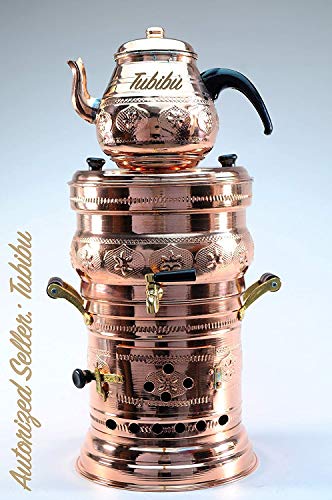
✅ Handmade copper construction with attractive appearance
Tubibu Handmade Copper Charcoal Samovar Tea Pot Set




We analyze real customer reviews to surface what matters: key strengths, ideal use cases, and honest considerations — so you can make an informed choice.
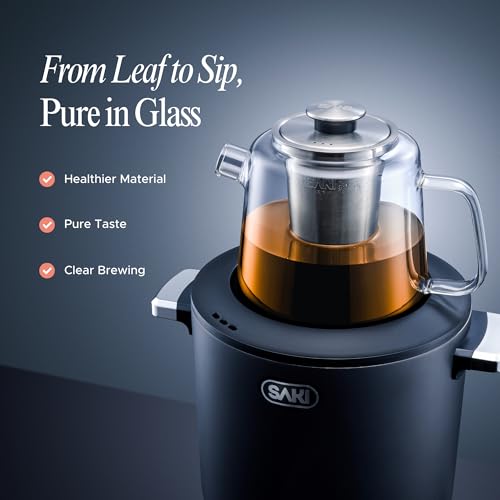
SAKI Chaiovar Electric Samovar 4L Tea Maker
A 4-liter electric samovar that boils water then holds it at 95°C indefinitely — built for traditional Persian, Turkish, and Russian tea service with an LCD display and included strainer.
🎯 Best for: Persian, Turkish, and Russian tea preparation, Daily heavy tea consumption (multiple pots per day)

✅ What Customers Love
- Heats water quickly and maintains temperature (15 mentions)
- Excellent customer service and warranty support (8 mentions)
- Elegant, sleek design with modern appearance (7 mentions)
🎯 Best For
Persian, Turkish, and Russian tea preparation • Daily heavy tea consumption (multiple pots per day) • Office or workplace shared tea service • Entertaining guests and gatherings
Brand: SAKI
Category: Samovars
As an Amazon Associate we earn from qualifying purchases.
About This Product
Designed around traditional samovar brewing, it heats water quickly then locks temperature at 95°C, eliminating the need to reheat between cups throughout the day. The 4-liter reservoir and included loose-leaf strainer suit concentrated brew-and-dilute preparation as practiced in Persian and Russian tea culture. Its LCD display and audible alert make operation straightforward with a single switch. Some units have shown interior rusting or electrical faults, so build consistency can vary. Best suited to heavy daily tea drinkers, multi-person households, and anyone serving guests who want authentic samovar-style tea on standard US 110V power.
Is SAKI Chaiovar Electric Samovar 4L Tea Maker Right for You?
How to use an electric samovar?
The SAKI Chaiovar is designed to be very simple — it has just one switch (on/off) with no complicated settings. Fill the base with water, put the glass teapot with your loose tea on top, flip the switch, and you're done. The LCD display shows the water temperature as it climbs, and it beeps when it's boiling. It automatically settles to a keep-warm temperature around 95°C. One thing reviewers note: the switch is located behind the pot, so be careful when reaching for it to avoid burns from steam. Pour from the spigot on the front.
How to boil water in a samovar?
With the SAKI Chaiovar, you simply fill the stainless steel base through the top opening, flip the single on/off switch, and wait. It heats water quickly — reviewers frequently mention being impressed by how fast it reaches boiling. The LCD temperature display shows you the current water temperature in real time (in Celsius), and the unit beeps when it hits boiling point. After boiling, it automatically drops to about 95°C and holds that temperature, so you don't need to do anything else. There's also boil-dry protection that shuts the unit off if the water level gets too low.
Does the SAKI samovar keep tea hot all day?
Yes — this is one of its strongest features according to reviewers. Once the water reaches boiling, the SAKI Chaiovar automatically drops to a keep-warm temperature of about 95°C and maintains it for hours. Multiple reviewers specifically mention keeping tea at ideal drinking temperature throughout the day without having to reboil. This makes it perfect for heavy tea drinkers or offices where people want cups at different times. Just keep in mind it stays on and uses electricity the whole time — there's no timer to auto-shut off after a set period.
Is the SAKI samovar safe to use?
The SAKI Chaiovar includes several safety features — auto shut-off, boil-dry protection, and clear visual indicators. However, it's worth being transparent: a small number of reviewers have reported serious concerns including electrical wiring failures and, in rare cases, melting or burning. These appear to be quality control issues rather than design flaws, as the majority of users report no problems. The manufacturer's customer service has been responsive to these issues according to many reviewers. If you notice any unusual smells, sounds, or visible damage to the cord or base, stop using it immediately and contact SAKI. Also note: the on/off switch is behind the pot, so be careful reaching around steam to turn it off.
Can I adjust the temperature on the SAKI samovar?
No — the SAKI Chaiovar has a single on/off switch with no adjustable temperature settings. It heats water to boiling (100°C) and then maintains it at approximately 95°C. The LCD display shows the current temperature in Celsius only (no Fahrenheit option). This is perfectly fine for black tea preparation in the traditional samovar style, but if you need lower temperatures for green tea (around 75-80°C) or white tea (around 70°C), this isn't the right tool. For those teas, you'd want a variable-temperature kettle.
Is the SAKI Chaiovar good for Persian tea?
Yes — this is one of its primary use cases and reviewers who make Persian tea with it are among the most positive. The samovar method is exactly how Persian tea is traditionally prepared: a strong concentrate of black tea in the top pot, diluted with hot water from the base. The 4-liter capacity means you can keep tea flowing through long family gatherings or afternoons of chai-drinking. The keep-warm function is especially valued for Persian tea culture, where the samovar traditionally stays on all day.
As an Amazon Associate we earn from qualifying purchases.
Does the SAKI Chaiovar rust?
Some reviewers have reported rusting on the interior stainless steel surfaces, which suggests inconsistent material quality across production runs. About 6 reviewers specifically mentioned this issue. It's not universal — many users report no rust at all — but it is a known concern. If you do encounter rusting, SAKI's customer service has a good track record of providing warranty replacements. To minimize the risk, avoid leaving water sitting in the base for extended periods when not in use, and dry the interior after cleaning.
How to choose a samovar for use in the USA?
The biggest issue with buying a samovar in the US is voltage compatibility. Many samovars sold online are designed for 220V power (standard in Europe, Russia, and the Middle East), which means they'll heat slowly or not at all on US 110V outlets. The SAKI Chaiovar is specifically designed for 110V US power — reviewers confirm it heats water quickly without being underpowered. Beyond voltage, consider capacity (the SAKI holds 4 liters, good for families or groups), safety features (this one has auto shut-off and boil-dry protection), and whether you want a glass or ceramic teapot. The SAKI comes with a glass teapot.
How big is the SAKI Chaiovar and how many cups does it make?
The SAKI Chaiovar is marketed as a 4-liter unit, though some reviewers note the actual usable capacity is closer to 3.5 liters. That's still enough for roughly 14-16 standard cups of tea, making it ideal for families, gatherings, or all-day drinking. The unit is sizable — it's a countertop appliance with a stainless steel base topped by a glass teapot. Reviewers do note it can be somewhat top-heavy when the teapot is in place, so give it a stable spot on your counter away from edges.
Does the SAKI Chaiovar make bitter tea?
No — reviewers consistently report that the samovar method produces non-bitter tea. The secret is in how a samovar works: you brew a strong concentrate in the top teapot and then dilute it to your preferred strength. Because you control the ratio of concentrate to hot water in each cup, you can avoid the bitterness that comes from over-steeping. If your concentrate gets a bit strong, just add more hot water. Multiple reviewers specifically mention getting consistent, smooth tea from this brewer.
How long does the SAKI samovar last?
This is an area of concern. While many users report months or years of trouble-free use, some reviewers have experienced failures within 3 to 7 months — including electrical issues and rusting. The durability seems inconsistent across units, suggesting quality control variation. On the positive side, SAKI's customer service receives strong praise from many reviewers for handling warranty claims, including sending replacement units. If you do purchase, keep your receipt and register the warranty.
Is the SAKI samovar easy to clean?
Reviewers report that the SAKI Chaiovar is easy to clean. The glass teapot is removable and transparent, so you can see when it's clean. The stainless steel base can be wiped down, and the spigot is accessible. The tea strainer that comes with the teapot helps keep loose leaves contained, which makes cleanup simpler. Just make sure the unit is fully cooled and unplugged before cleaning, and dry the interior of the base to help prevent any potential rusting issues.
As an Amazon Associate we earn from qualifying purchases.
Who is the SAKI Chaiovar best for?
This samovar is best suited for daily tea drinkers who follow Persian, Russian, or Turkish tea traditions — people who want a concentrated brew on hand all day that they can dilute cup by cup. It's also great for families or households with multiple tea drinkers, offices, or anyone who entertains guests regularly. The simple one-switch operation makes it beginner-friendly, while the authentic samovar brewing method satisfies tea enthusiasts. It's not the best fit for people who drink mainly green or white tea (no temperature control), need portability, or live at high altitudes.
Does the SAKI samovar work at high altitude?
This is worth noting if you live in a mountain area: one reviewer reported that the SAKI Chaiovar continues heating beyond the boiling point at high altitude, since water boils at a lower temperature at elevation but the unit is calibrated for sea-level boiling (100°C). This means it may keep trying to heat past the actual local boiling point, which could cause excessive steam and potentially boil the water too aggressively. If you live above about 5,000 feet, you might want to monitor the first few uses carefully.
What does the red light on the SAKI samovar do?
The SAKI Chaiovar has a red ring light at the base that glows when the unit is on. It's primarily a visual status indicator — you can see from across the room that the samovar is heating or keeping warm. Reviewers actually mention it as a nice aesthetic touch, adding an elegant ambient glow to the tabletop. Combined with the LCD temperature display, you always know at a glance what the samovar is doing without having to walk over and check.
Can I use the SAKI samovar for an office or workplace?
Absolutely — the SAKI Chaiovar is well-suited for an office tea setup. The 4-liter capacity means it can serve a team throughout the day, and the keep-warm function means it stays at temperature without anyone needing to manage it. The simple one-switch operation means there's no learning curve for coworkers. Just be aware that it does take up counter space, and the switch placement behind the pot means you'll want to post a quick note about being careful to avoid steam burns when turning it off.
Is a samovar just for tea?
Primarily yes, but not exclusively. The SAKI Chaiovar's main job is brewing and serving tea samovar-style, but reviewers have found it useful as a general hot water dispenser too. Some mention using it to provide boiling water for large groups during trips and activities (as long as you have AC power). The 4-liter capacity means plenty of hot water for instant soups, coffee, oatmeal, or anything else. That said, you're paying a premium for the samovar functionality — if you just need hot water, a basic electric kettle would be cheaper.
What is a samovar tea maker?
A samovar is a traditional tea-brewing device originating from Russia, Persia, and Turkey. It works by heating a large reservoir of water in the base while a smaller teapot sits on top brewing a concentrated tea. You pour a small amount of the strong concentrate into your cup, then dilute it with hot water from the reservoir to your preferred strength. The SAKI Chaiovar is an electric version of this concept — it holds 4 liters of water, heats it quickly, and keeps it at around 95°C so you can pour cups throughout the day without reheating.
As an Amazon Associate we earn from qualifying purchases.
What is the point of a samovar?
The main advantage of a samovar is having hot water and fresh tea available all day long without constant reheating. The SAKI Chaiovar heats water quickly and then maintains it at serving temperature for hours using its keep-warm function. Reviewers consistently highlight this as the biggest benefit — you brew a concentrated pot in the morning and pour cups whenever you want. It's also ideal for serving groups, since everyone can adjust their own cup strength by choosing how much concentrate versus hot water they add.
Is a samovar Russian or Persian?
Both, actually. The samovar has deep roots in Russian, Persian, and Turkish tea culture — all three traditions embraced it as a centerpiece of hospitality and daily tea drinking. The SAKI Chaiovar is specifically designed for all three traditions, and reviewers who use it for Persian tea, Russian tea, and Turkish tea all report authentic results. The concentrated-brew-and-dilute method works the same way across these cultures, though the tea blends and serving styles vary.
What are the different types of samovars?
Traditionally, samovars were charcoal-heated brass or copper vessels — these are the ornate antique ones you see in museums and collectors' homes. Modern samovars come in two main types: stovetop (heated on a burner) and electric (like the SAKI Chaiovar). Electric samovars are the most practical for daily use since they heat themselves, maintain temperature automatically, and have safety features like auto shut-off and boil-dry protection. The SAKI is a contemporary electric design in stainless steel with a glass teapot — a far cry from the traditional brass look, but much more practical for a kitchen counter.
How does a samovar work?
The SAKI Chaiovar has two main parts: a large stainless steel base that heats and holds about 4 liters of water, and a glass teapot that sits on top where you brew concentrated tea with loose leaves. You fill the base with water, turn it on with the single switch, and it heats to boiling — it'll beep to let you know when it's ready. Then it drops to about 95°C and holds that temperature. You steep your loose leaf tea in the top teapot using the included strainer, pour a small amount of the strong concentrate into your cup, and top it off with hot water from the base spigot. Everyone at the table can make their tea as strong or mild as they like.
How do you make tea with a samovar?
With the SAKI Chaiovar, it's straightforward: Fill the base with water up to the marked level, add loose tea leaves to the glass teapot's built-in strainer, and place the teapot on top. Flip the switch and wait for the beep — the water will reach boiling in just a few minutes. Once boiled, you can pour some hot water into the teapot to steep your concentrate. When it's ready (usually 5-15 minutes depending on how strong you like it), pour a couple of fingers of concentrate into your cup and fill the rest with hot water from the spigot. The beauty is the tea stays hot for hours, so you keep pouring cups all day.
What is the healthiest type of teapot to use?
Glass, ceramic, and porcelain are generally considered the healthiest and most inert materials for teapots — they don't leach chemicals or affect flavor. The SAKI Chaiovar comes with a glass teapot for the actual tea brewing, which is a good choice from a health standpoint. The base water reservoir is stainless steel, which is also safe for boiling water. One concern raised by some reviewers, though: a small number reported rusting on interior stainless steel surfaces, which suggests inconsistent steel quality in some units. If you notice any rust, the manufacturer has been responsive about warranty replacements according to multiple reviews.
As an Amazon Associate we earn from qualifying purchases.
How does a Turkish samovar work?
A Turkish samovar works the same way as the general samovar concept — the SAKI Chaiovar follows this tradition closely. The base boils and maintains hot water while you brew a dark, concentrated Turkish tea (çay) in the glass teapot on top. For Turkish-style preparation, you'd typically use fine-cut Turkish black tea, let it steep until quite strong, then pour a small amount into a tulip glass and dilute with hot water from the spigot. The keep-warm function is especially useful for Turkish tea culture, where tea is sipped throughout the entire day.
What is the best tea machine for home use?
That depends on what kind of tea drinker you are. If you drink tea in the traditional samovar style — Persian, Russian, or Turkish — the SAKI Chaiovar is purpose-built for that. Its 4-liter capacity and all-day keep-warm function make it great for heavy daily tea drinkers or households where multiple people drink tea. However, if you're looking for precise temperature control for different tea types like green, white, or oolong, this isn't the best fit — it only heats to boiling with no adjustable temperature settings. For that, a variable-temperature electric kettle would serve you better.
Customer-Validated Strengths
based on 30-review analysis • Our methodology
- Heats water quickly and maintains temperature (15 mentions)
- Excellent customer service and warranty support (8 mentions)
- Elegant, sleek design with modern appearance (7 mentions)
- LCD temperature display (6 mentions)
- Large 4L capacity suitable for groups (5 mentions)
- Keep-warm function maintains temperature for hours (5 mentions)
- High-quality glass/ceramic teapot (4 mentions)
- Auto shut-off and boil-dry protection (4 mentions)
- Easy to clean (3 mentions)
- Red ring light at base adds elegant visual (3 mentions)
- Designed for 110V US power (not underpowered import) (2 mentions)
Best Use Cases
🎯 Best For
- Persian, Turkish, and Russian tea preparation
- Daily heavy tea consumption (multiple pots per day)
- Office or workplace shared tea service
- Entertaining guests and gatherings
- Making concentrated tea with loose leaves for dilution
- Group activities like ski vacations (with AC power)
⚠️ Not Ideal For
- High altitude locations (overboils)
- Users needing precise temperature control for different tea types
- Situations requiring portability with teapot attached
- Long-term durability expectations (based on electrical failures)
What to Consider
- Rusting on interior surfaces (stainless steel quality issues) (6 mentions)
- Electrical wiring failures - burning, melting, fire hazard (5 mentions)
- Leaking issues (1 mentions)
- Switch placement behind pot causes burns when turning off (1 mentions)
- Switch can be displaced if force applied (1 mentions)
- Top-heavy when teapot is in place (1 mentions)
- Temperature display only in Celsius (1 mentions)
- No adjustable temperature settings (single 100C preset) (2 mentions)
- Continues heating beyond boiling at high altitudes (1 mentions)
- Display screen can malfunction/quit (1 mentions)
- Glass teapot instead of stainless steel or porcelain (1 mentions)
- Plastic top cover instead of metal (1 mentions)
- Durability issues - failures at 3-7 months (3 mentions)
based on 30-review sample.
About This Analysis
This analysis is based on 30 customer reviews. We're showing you everything we found, but with our analysis, there's always more to discover.
✅ What we're confident about: What customers love and best use cases
⚠️ What may be incomplete: Potential issues and considerations
For more perspectives, check customer reviews on Amazon.
Product Selection
In short: We only feature high-rated products.
Products on TeaDelight.net are selected based on strong Amazon customer ratings, sufficient review volume, and market presence. We focus on well-regarded products that tea enthusiasts are actively considering and purchasing.
As an Amazon Associate we earn from qualifying purchases.