


We analyze real customer reviews to surface what matters: key strengths, ideal use cases, and honest considerations — so you can make an informed choice.
Chefcaptain Stainless Steel Turkish Tea Maker Samovar
A heavy-gauge stainless steel double-pot samovar that delivers authentic Persian and Turkish-style tea through traditional steam infusion on any stovetop.
🎯 Best for: Persian/Turkish style tea preparation, Steaming loose leaf tea

✅ What Customers Love
- Good build quality and appearance (4 mentions)
- Effective for traditional tea preparation (Persian/Turkish style) (3 mentions)
- Heavy-duty construction with thick metal and base (1 mentions)
🎯 Best For
Persian/Turkish style tea preparation • Steaming loose leaf tea • Traditional chai making • All stovetop types
Brand: Chefcaptain
Category: Samovars
As an Amazon Associate we earn from qualifying purchases.
About This Product
The double-pot design steams loose leaf tea in the upper vessel using heat from the lower boiling pot — the traditional Persian and Turkish method for deep, unhurried extraction. Construction is thick-gauge stainless steel with a solid, heavy base that stays stable on the stovetop. The polished exterior has an attractive sheen suited to serving directly at the table. Handles heat up considerably over open flame, so gas stovetop users should handle with care. Best suited to households wanting to brew traditional Persian or Turkish chai with loose leaf tea.
Is Chefcaptain Stainless Steel Turkish Tea Maker Samovar Right for You?
Does the inside of the Chefcaptain samovar rust?
Unfortunately, this is a recurring concern. Multiple reviewers (at least 3) have reported rust issues inside the small upper pot, especially at the spout junction and where there are scratches in the interior surface. While 18/10 stainless steel should theoretically resist rust, the quality control seems inconsistent — some units are fine while others develop problems. To minimize the risk, always dry both pots thoroughly after washing, and avoid leaving water sitting in the small pot between uses.
Do the wooden handles get hot on this teapot?
The wooden handles are designed to stay cool, and they do — as long as you keep the flame reasonable. One reviewer reported that when placed directly over open flames on a gas stove, the handles got very hot. The fix is simple: use a moderate flame that stays under the pot's base rather than flaring up around the sides. On electric, ceramic, or induction stovetops this isn't an issue at all.
Is this samovar good quality for the price?
It's a mixed picture. On the positive side, reviewers describe the construction as heavy-duty with thick metal and a solid base, and multiple people praise how good it looks — shiny and attractive on the stovetop. However, there are real durability concerns. Several reviewers have found rust developing inside the small pot, particularly around the spout junction, and some have noticed scratches inside the small kettle that may lead to further rusting. For an 18/10 stainless steel product, rust is unexpected and has left some buyers feeling the price is high for the quality level delivered.
Does the Chefcaptain samovar have a whistle?
No, this model doesn't include a whistle feature — one reviewer specifically noted this as something they wished it had. However, the steam vents on the pot provide a visual indication when the water is boiling, which reviewers say works as an adequate substitute. You just need to be near the kitchen rather than relying on an audible alert from another room.
How do you clean a stainless steel samovar?
Hand wash both pots with warm water and mild dish soap after each use — avoid abrasive scrubbers that could scratch the interior surface, since reviewers have noted that scratches inside the small kettle can lead to rust over time. The most important step is drying both pots thoroughly, especially the small upper pot around the spout junction where moisture tends to collect. For tea stains that build up over time, a paste of baking soda and water works well. Don't put it in the dishwasher — the wooden handles won't hold up.
Does this samovar work on induction stovetops?
Yes — the Chefcaptain is listed as suitable for all stovetop types, including induction. The thick stainless steel base provides good contact with induction surfaces. And as a bonus, induction is actually the ideal pairing with this samovar since there are no open flames to overheat the wooden handles.
As an Amazon Associate we earn from qualifying purchases.
How many cups of tea can this samovar make?
With the 1500ml bottom pot and 750ml top pot, you can comfortably serve about 6-8 small traditional Turkish tea glasses per batch, or roughly 4-5 standard Western-sized mugs. The beauty of the concentrate system is that you can stretch it further by using less concentrate per cup for a lighter brew, or make it richer for fewer, stronger servings. If you're hosting a tea session for a group, you can keep the bottom pot on low heat and refill with water as needed while the concentrate in the top pot lasts.
Who is this samovar best for?
This Chefcaptain is ideal for anyone who wants to brew tea the traditional Persian or Turkish way at home — especially if you're already familiar with the double-pot method and want something attractive on your stovetop. Reviewers who appreciate cultural authenticity and the hands-on ritual of tea making tend to be the happiest with it. It's also a solid choice for beginners curious about samovar brewing, thanks to its straightforward design. Where it's less ideal: if you need a whistle alert, if you're prone to leaving water in pots (rust risk), or if you exclusively brew on high-flame gas burners.
Is this a good samovar for someone who's never used one before?
Actually, yes — it's quite beginner-friendly. The double-pot steaming method is straightforward: water on the bottom, tea on top, heat, and serve. There's no complicated setup or special technique required. The steam vents give you a visual cue when the water boils, so you don't need to guess. If you're an American who's curious about traditional Persian or Turkish tea but has never brewed this way before, this is a reasonable introduction to the method. Just keep in mind the care tips — dry it well after use to avoid the rust issues some owners have experienced.
What is the healthiest type of teapot to use?
Stainless steel is widely considered one of the safest materials for tea preparation — it doesn't leach chemicals, is non-reactive, and doesn't absorb flavors between brews. This Chefcaptain is made from 18/10 stainless steel, which is a food-grade alloy (18% chromium, 10% nickel) commonly used in quality cookware. That said, a few reviewers have reported rust spots appearing inside the smaller pot over time, particularly around the spout junction, so you'll want to dry it thoroughly after each use to keep it in good shape.
How do you make tea with this samovar?
Here's the step-by-step: Fill the large bottom pot (1500ml) with cold water. Add 3-4 tablespoons of loose black tea to the small top pot (750ml) and add just enough water to cover the leaves. Stack them up and place on your stovetop over medium heat. Once you see steam coming through the vents — that's your signal the water's boiling. Let it brew for another 10-15 minutes so the concentrate develops fully. To serve, pour about a finger's width of concentrate into a tea glass and fill the rest with hot water from the bottom pot. The longer you let the top pot brew, the stronger and darker your concentrate will be.
How to use a samovar for the first time?
Before your first brew, wash both pots thoroughly with warm soapy water and rinse well. Then do a 'blank boil' — fill the bottom pot with water, boil it, and discard. This removes any manufacturing residues. After that, you're ready to go: water in the bottom, tea leaves in the top, onto the stovetop. One tip from reviewers — dry both pots completely after every use, especially the inside of the small pot around the spout area. Several owners have reported rust developing in that spot if moisture sits there, so a quick towel-dry goes a long way.
As an Amazon Associate we earn from qualifying purchases.
What kind of tea works best in this samovar?
This samovar really shines with loose leaf black teas — traditional Turkish çay or Persian black tea are the classics it was designed for. The slow steam extraction method pulls a rich, full-bodied concentrate that you won't get from a standard teapot. Reviewers confirm it enhances the loose leaf tea experience with good heat retention and distribution. One reviewer even found it excellent for Mediterranean mint-honey tea, so herbal blends work too. Tea bags aren't ideal here — the whole point of the double pot is the slow, gentle extraction of loose leaves.
Can you use this Turkish teapot on any stovetop?
Yes, the Chefcaptain samovar is designed to work on all stovetop types — gas, electric, ceramic, and induction. That said, if you're using a gas stovetop, you'll want to keep the flame moderate and not let it lick up around the sides, because reviewers note that the wooden handles can get very hot when exposed to direct flames. An electric or ceramic stovetop avoids that issue entirely.
What is the point of a samovar?
The whole idea behind a samovar is keeping tea available for hours and letting everyone serve themselves at their preferred strength. With this Chefcaptain double pot, the bottom kettle keeps hot water ready while the top pot holds a strong concentrate. Pour a splash of concentrate, top it off with hot water, and you've got a fresh cup without re-brewing. Reviewers who use it for traditional Persian and Turkish tea preparation say it really does enhance the tea drinking experience compared to just dunking a bag in a mug — the slow steam extraction pulls more nuanced flavor from loose leaves.
How does this compare to an electric samovar?
A stovetop samovar like this Chefcaptain is simpler — no cords, no electrical components, and it works anywhere you have a burner. Electric samovars offer convenience features like automatic temperature control and sometimes a keep-warm function. The trade-off with this Chefcaptain is that you need to monitor the heat yourself and there's no whistle to alert you. On the plus side, the heavy-duty construction and thick metal mean excellent heat distribution, and there are fewer parts to break. If you value the traditional ritual of stovetop tea making and want something that'll look great in your kitchen, the stovetop style has real appeal.
What is a çaydanlık?
A çaydanlık is the traditional Turkish double teapot system — exactly what this Chefcaptain is. It's two stacked pots: the larger bottom pot (1500ml here) boils water, while the smaller top pot (750ml) holds a concentrated tea brew that steeps gently from the rising steam. When you're ready to serve, you pour a little concentrate from the top pot into your glass and dilute it with hot water from the bottom. It's a beautifully simple method that lets everyone customize their tea strength.
What is the correct water ratio for Turkish tea?
With this Chefcaptain double teapot, the traditional approach is to fill the bottom 1500ml pot about three-quarters full with water and add 3-4 tablespoons of loose black tea (Turkish çay) to the smaller 750ml top pot with just enough water to cover the leaves. As the bottom pot boils, steam rises and gently brews the concentrate above. When serving, pour about one-third concentrate and two-thirds hot water — adjust to taste. The beauty of the double pot system is that everyone at the table can choose their own strength.
As an Amazon Associate we earn from qualifying purchases.
Is a samovar just for tea?
Primarily yes, but not exclusively. This Chefcaptain is designed for tea — the double-pot system is specifically built for the concentrate-and-dilute method. However, one reviewer actually uses it for Mediterranean mint-honey tea preparation, which shows it's versatile enough for herbal infusions too. The bottom kettle also works perfectly fine as a standalone hot water kettle. That said, you probably wouldn't use the top pot for coffee — the slow steaming extraction is really optimized for tea leaves.
How to boil water in this samovar?
Just fill the larger 1500ml bottom kettle with water, place the smaller pot on top (whether empty or loaded with tea), and set it on your stovetop at medium to medium-high heat. The steam vents on the Chefcaptain will let you know when the water reaches a boil — you'll see steam escaping. There's no whistle feature on this model, so keep an eye on it rather than walking away. On a gas stove, keep the flame low enough that it doesn't reach the wooden handles.
What is a samovar teapot?
A samovar is a traditional tea-making device used across Persian, Turkish, and Russian cultures for centuries. This Chefcaptain version is a stovetop samovar — a double-stacked teapot where the bottom kettle boils water and the top pot uses that steam and heat to slowly brew a strong tea concentrate. It's different from an electric samovar or the large urn-style antique samovars. The result is a rich, full-bodied brew that you dilute to your preferred strength when serving.
What are the different types of samovars?
There are three main types you'll encounter. Traditional charcoal samovars are the original — large urns heated by burning charcoal in a central tube. Electric samovars plug in and work like a combined kettle and teapot. And then there are stovetop samovars like this Chefcaptain, which are double-stacked teapots that sit on your existing burner. The stovetop style is the most practical for everyday home use since it doesn't need special fuel or a dedicated appliance, and the Chefcaptain's 750ml/1500ml size is well-suited for serving 4-6 people.
Is samovar Russian or Persian?
Both, really — the samovar has deep roots in Russian, Persian, and Turkish tea cultures, each with their own traditions. The word 'samovar' is Russian, but the double-pot brewing method this Chefcaptain uses is especially characteristic of Turkish (çaydanlık) and Persian tea culture. Reviewers who bought this specifically mention using it for both Persian and Turkish style tea preparation, so it's authentic to those traditions. If you grew up with a samovar in the house, this will feel familiar.
How does a Turkish samovar work?
It's a simple and elegant two-tier system. You fill the bottom 1500ml kettle with water and place it on your stovetop. The smaller 750ml pot sits on top, loaded with loose tea leaves and a little water. As the water below boils, steam and heat rise to gently brew a strong concentrate in the upper pot. The Chefcaptain has steam vents that give you a visual cue when the water is boiling — handy since there's no whistle. When it's time to serve, you pour concentrate from the small pot and dilute with hot water from the big pot. Stronger or weaker — entirely your call.
What Customers Love
⚠️ Limited sample based on limited customer feedback (9 reviews) • Our methodology
- Good build quality and appearance (4 mentions)
- Effective for traditional tea preparation (Persian/Turkish style) (3 mentions)
- Heavy-duty construction with thick metal and base (1 mentions)
- Works well on stovetops (1 mentions)
Best Use Cases
🎯 Best For
- Persian/Turkish style tea preparation
- Steaming loose leaf tea
- Traditional chai making
- All stovetop types
⚠️ Not Ideal For
- Direct flame placement (handles overheat)
- Users expecting whistle notification
- Long-term use if rust-prone (quality concerns)
What to Consider
- Interior rust issues in small pot (spout/pot junction) (3 mentions)
- Handles get very hot when placed directly over flames (1 mentions)
- No whistle feature (1 mentions)
- Scratches inside small kettle that may lead to rusting (2 mentions)
⚠️ Important: This analysis is based on limited customer feedback (9 reviews). We've shared what we found, but there may be additional considerations we haven't captured.
About This Analysis
This analysis is based on 9 customer reviews. We're showing you everything we found, but with a small sample, there's a lot we likely haven't captured yet.
✅ What we're confident about: What customers love and best use cases
⚠️ What may be incomplete: Potential issues and considerations
For more perspectives, check customer reviews on Amazon.
Product Selection
In short: We only feature high-rated products.
Products on TeaDelight.net are selected based on strong Amazon customer ratings, sufficient review volume, and market presence. We focus on well-regarded products that tea enthusiasts are actively considering and purchasing.
As an Amazon Associate we earn from qualifying purchases.
You Might Also Like

✅ High-quality stainless steel construction
Korkmaz Bella Turkish Azure Teapot Set

✅ Effectively boils water with minimal effort
Hakan Portable Turkish Samovar Tea Kettle

✅ Authentic double teapot design for traditional Turkish tea brewing
DESTALYA Turkish Teapot Set
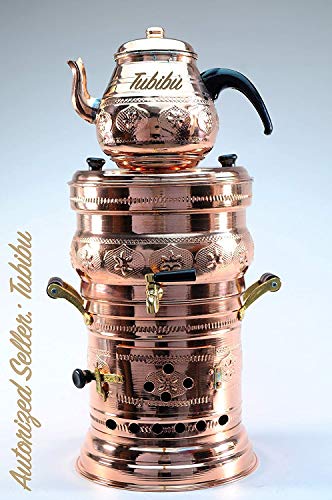
✅ Handmade copper construction with attractive appearance