


We analyze real customer reviews to surface what matters: key strengths, ideal use cases, and honest considerations — so you can make an informed choice.
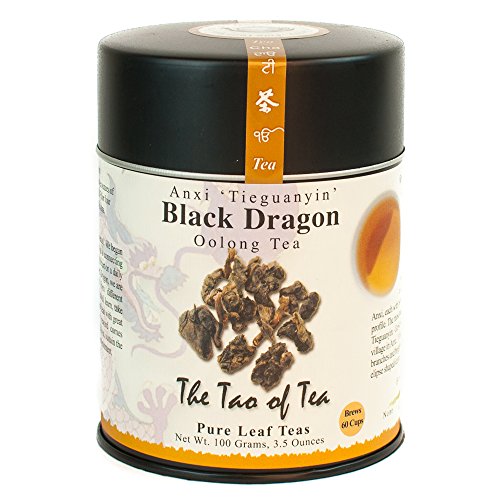
The Tao of Tea Black Dragon Oolong
A heavily roasted oolong with a bold, coffee-like character — dark red liquor, whole-leaf curls, and a flavor that evolves through successive steeps.
🎯 Best for: Change of pace from regular tea, Coffee alternative with unique flavor
🍃 Tastes like: dark roast coffee, roasted, earthy

What Stands Out
🍃 Flavor Profile
Strength: Bold
Notes: dark roast coffee, roasted, earthy
✅ What Customers Love
- Strong, bold flavor (3 mentions)
- Whole leaf quality (curled and rolled, not dust/stems) (2 mentions)
- Can be steeped multiple times (economical) (2 mentions)
🎯 Best For
Change of pace from regular tea • Coffee alternative with unique flavor • Multiple steeping sessions (gongfu style)
Brand: The Tao of Tea
Category: Oolong Tea
As an Amazon Associate we earn from qualifying purchases.
About This Oolong Tea
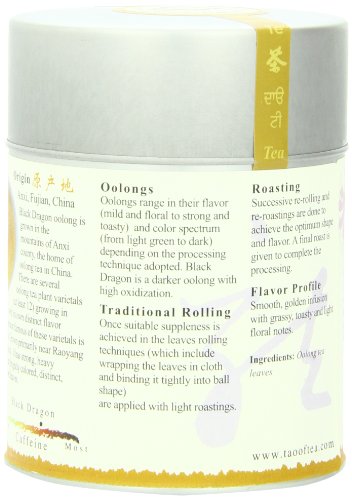
This heavily roasted oolong steeps to a deep red liquor with earthy, dark-roast coffee notes rarely found in lighter styles. Whole-leaf curls respond well to gongfu brewing, where multiple short infusions reveal how the roast gradually softens across the session. Washing the leaves first and keeping steeps brief helps tame the intensity. Some batches arrive in a paper tube rather than the tin, which preserves freshness less effectively. Best suited to coffee drinkers curious about bold tea and gongfu enthusiasts who enjoy a strong, evolving session.
Is The Tao of Tea Black Dragon Oolong Right for You?
Does this taste like traditional oolong tea?
Honestly, not really — and that's important to know before buying. If you're expecting the light, floral, buttery character of a Tie Guan Yin or high-mountain oolong, this will surprise you. The Black Dragon is heavily roasted with bold, earthy, coffee-like flavors and brews a deep dark red. Some reviewers love it precisely because it's nothing like typical oolong. Others are disappointed for the same reason. It's best to think of it as its own thing rather than comparing it to lighter oolongs.
Is this a good oolong for coffee drinkers switching to tea?
This might actually be one of the best oolongs for that transition. The flavor profile — dark roast coffee notes, earthy boldness, strong body — reads like it was designed for coffee lovers. Multiple reviewers specifically call it out as a coffee alternative. The key is to brew it strong enough; some people find it weak on the first try, so use generous leaf amounts and don't over-dilute. Once you dial in the brewing, it delivers a satisfying richness that won't leave coffee drinkers feeling shortchanged.
What is black dragon oolong tea good for?
Black Dragon oolong is a heavily roasted oolong that works especially well as a coffee alternative — reviewers consistently describe its flavor as dark roast coffee-like, earthy, and bold. It's also good for multiple steeping sessions in the gongfu style, where each steep reveals slightly different flavor nuances. If you're looking for a tea that gives you that rich, roasted depth without actually drinking coffee, this is a solid pick.
How does the Tao of Tea Black Dragon compare to Tie Guan Yin oolong?
They're essentially opposite ends of the oolong spectrum. Tie Guan Yin is typically light, floral, and smooth with a greener character. This Black Dragon is heavily roasted, bold, earthy, and coffee-like with a dark red liquor. Price-wise, some reviewers note this carries about a 50% premium compared to similar Tie Guan Yin options, which may factor into your decision. If you like one, you might not like the other — they appeal to very different palates.
Who is Tao of Tea Black Dragon oolong best for?
This tea is ideal for tea enthusiasts who enjoy the gongfu tradition and want a bold, roasted oolong to explore across multiple steeps. It's also a great pick for coffee drinkers looking for a tea that doesn't feel like a downgrade in flavor intensity. It's not the right choice if you want a light, floral, traditional oolong experience — this is firmly in bold, dark, earthy territory. Think of it as a tea for people who like their flavors strong and unapologetic.
Can you steep Tao of Tea Black Dragon oolong multiple times?
Absolutely — and you should. The whole, curled and rolled leaves are built for multiple steeps, which is part of what makes this tea economical despite the initial price. Reviewers confirm getting good flavor across several infusions, with each one bringing out slightly different notes. The gongfu approach works especially well: short steeps of 30-60 seconds in a small teapot, working through 4-6 infusions from one serving of leaves.
As an Amazon Associate we earn from qualifying purchases.
Is oolong stronger than coffee?
In terms of caffeine, no — coffee typically has about twice the caffeine of oolong tea. But in terms of flavor? This particular Black Dragon oolong punches above its weight. Reviewers repeatedly compare its taste to dark roast coffee, describing it as bold, roasted, and earthy. So you get that deep, satisfying intensity without the jittery caffeine load. It's one reason people gravitate toward this tea as a coffee alternative.
What's so special about oolong tea?
Oolong sits between green and black tea in terms of oxidation, which gives it a wider range of flavors than almost any other tea type. This Black Dragon version from Tao of Tea showcases the darker, more roasted end of that range — think earthy, bold, coffee-like flavors with a dark red brew color. The whole, curled leaves are designed to be steeped multiple times, with each infusion revealing different flavor layers. It's basically a tea that rewards patience and exploration.
What is dragon oolong tea?
Dragon oolong — sometimes called Black Dragon — refers to a heavily roasted, dark oolong tea. The Tao of Tea's version uses whole curled and rolled leaves that produce a dark red liquor when steeped. It sits on the darker end of the oolong spectrum, closer to black tea territory, with bold, earthy, roasted flavors rather than the light floral notes you'd find in a greener oolong like Tie Guan Yin.
Are the leaves in Tao of Tea Black Dragon whole leaf quality?
The leaves are whole, curled and rolled — not the broken dust or fannings you'd find in tea bags. That's a genuine mark of quality that you can see for yourself when you open the tin. A couple of reviewers noted some sticks and stems mixed in, and the leaves may not unfurl as dramatically as some premium oolongs, but overall the leaf quality is solid for this price point and supports the multiple re-steeping that makes whole leaf tea worthwhile.
What is the best way to prepare oolong tea?
For this Black Dragon oolong specifically, reviewers recommend giving the leaves a quick rinse first — pour hot water over the leaves, swirl briefly, and discard that first water. This washes off any dust and 'wakes up' the tightly rolled leaves. Then steep with water around 195-205°F. Many fans of this tea use the gongfu method: small teapot, more leaves, shorter steep times (30-60 seconds), and multiple infusions. Each steep brings out slightly different flavor notes.
How long are you supposed to steep oolong tea?
For the Tao of Tea Black Dragon, it depends on your method. Western-style brewing: 3-5 minutes with about a teaspoon per cup. Gongfu style: 30-60 seconds per steep with more leaf. Some reviewers note you may need to use more leaves than expected to get a strong flavor, so don't be shy with the amount. The beauty of this whole-leaf tea is that you can steep it multiple times — the flavor evolves with each infusion.
As an Amazon Associate we earn from qualifying purchases.
Do you need to wash the leaves before brewing this oolong?
It's a good practice with this tea, yes. Some reviewers mention the leaves can be a bit dusty, which is normal for tightly rolled whole-leaf oolongs. A quick rinse — just pour hot water over the leaves, swirl for 5-10 seconds, and pour it off — removes any dust and also helps the tightly curled leaves start opening up, which actually improves flavor extraction on your first real steep.
Should you add milk to oolong?
It's not traditional, but there are no rules here. This Black Dragon oolong has such a bold, roasted, coffee-like character that a splash of milk wouldn't be out of place — think of it like adding milk to a dark roast coffee. That said, most oolong enthusiasts drink it straight to appreciate the complex flavor changes across multiple steeps. Try it plain first, especially on the second and third steeps where the flavor mellows and shifts.
How much oolong tea leaves per cup?
For this Black Dragon oolong, start with about one teaspoon of leaves per 8 oz cup for Western-style brewing. However, some reviewers found they needed to use more than the typical amount to get a bold flavor, so don't hesitate to go to 1.5 teaspoons if your first cup feels weak. For gongfu brewing, use about 5-7 grams per small teapot (100-150ml) with shorter steep times.
Is 3.5 ounces of loose leaf oolong tea a lot?
It's more than it sounds. Loose leaf tea is lightweight, and because these whole leaves can be steeped multiple times, a 3.5-ounce tin stretches further than you'd expect. Using roughly a teaspoon per cup and getting 3-4 steeps from each serving, you could realistically get 60-80+ cups from a single tin. That brings the per-cup cost down significantly, even if the upfront price feels steep compared to bagged tea.
Does oolong tea have caffeine?
Yes, all true teas from the Camellia sinensis plant contain caffeine, and oolong is no exception. This Black Dragon oolong typically has around 30-50mg of caffeine per cup, which is roughly half of what you'd get from a cup of coffee. The bold, roasted flavor might make it feel like a strong coffee alternative, but the caffeine content is more moderate. And because you can steep the leaves multiple times, later infusions will have progressively less caffeine.
What is the queen of oolong tea?
The title 'queen of oolong' typically refers to Oriental Beauty (Dong Fang Mei Ren), a Taiwanese oolong with a honey-like sweetness and natural fruity notes. It's almost the opposite of this Black Dragon oolong — where Oriental Beauty is delicate and sweet, the Tao of Tea Black Dragon is bold, roasted, and earthy with coffee-like intensity. They represent two very different ends of the oolong spectrum.
As an Amazon Associate we earn from qualifying purchases.
Why do Chinese people drink oolong tea?
Oolong tea has deep roots in Chinese tea culture, especially in Fujian and Guangdong provinces. The gongfu tea ceremony — which many reviewers recommend for this Black Dragon oolong — originated in these regions as a way to fully appreciate the tea's evolving flavors across multiple steeps. It's as much a meditative practice as it is about the drink itself. This particular tea, with its whole rolled leaves designed for multiple infusions, connects directly to that tradition.
What is considered the best oolong tea?
That depends entirely on what you're looking for. If you want a light, floral oolong, you'd look at high-mountain Taiwanese oolongs or light Tie Guan Yin. This Tao of Tea Black Dragon is a completely different animal — it's a heavily roasted, bold, coffee-like oolong. Reviewers who love strong, dark flavors rate it highly, while those expecting a traditional lighter oolong are often surprised. It's a great oolong for people who don't think they like oolong.
Is oolong tea better for you than black tea?
Both offer similar health benefits — antioxidants, polyphenols, and moderate caffeine. The main difference is in processing. Oolong is partially oxidized, which gives it a unique polyphenol profile between green and black tea. This Black Dragon oolong from Tao of Tea is on the heavily roasted side, so its flavor profile actually overlaps quite a bit with black tea, but it retains some of oolong's distinctive characteristics since the leaves are whole and can be re-steeped multiple times.
Which is better, green tea or oolong tea?
They're completely different experiences. Green tea is lighter, grassier, and more delicate. This Black Dragon oolong is bold, roasted, and earthy — closer to coffee than to green tea. Health-wise, both offer antioxidants and polyphenols, just in different proportions. If you already drink green tea and want something with more body and depth, this oolong is a natural next step up the intensity ladder.
Is oolong tea good for your stomach?
Heavily roasted oolongs like this Black Dragon are generally considered gentler on the stomach than green tea, since the roasting process reduces some of the compounds that cause stomach sensitivity. That said, it's still a bold, strong tea — if you have a very sensitive stomach, brew it lighter on the first cup to see how you respond. The multiple-steep approach naturally produces milder later infusions.
What happens if I drink oolong tea every day?
Daily oolong consumption is common across Asia and generally considered safe for most adults. You'll get a regular dose of antioxidants and moderate caffeine. With this Tao of Tea Black Dragon specifically, the 3.5-ounce tin goes further than you might think because of the multiple-steep capability — one portion of leaves can give you 3-4 cups over the course of a day, making daily drinking quite economical.
As an Amazon Associate we earn from qualifying purchases.
Who should not take oolong tea?
Oolong tea contains caffeine, so people sensitive to caffeine, pregnant or nursing women, and those on medications that interact with caffeine should consult their doctor first. For this particular Black Dragon oolong, it's a bold, heavily roasted tea — people expecting a light, floral oolong will likely be disappointed. Reviewers who wanted a traditional oolong flavor found it too roasted and coffee-like, so know what you're getting into.
What Makes This Product Special
⚠️ Preliminary analysis based on 18-review sample • Our methodology
- Strong, bold flavor (3 mentions)
- Whole leaf quality (curled and rolled, not dust/stems) (2 mentions)
- Can be steeped multiple times (economical) (2 mentions)
- Tin packaging maintains freshness (2 mentions)
- Dark red color when steeped (1 mentions)
Taste Profile
- strong
- roasted
- coffee-like
- bold
- unique
Best Use Cases
🎯 Best For
- Change of pace from regular tea
- Coffee alternative with unique flavor
- Multiple steeping sessions (gongfu style)
⚠️ Not Ideal For
- Those expecting traditional light oolong flavor
- Humid climates without proper storage (if paper tube packaging received)
What to Consider
- Inconsistent packaging (paper tube instead of tin) (2 mentions)
- Short expiration dates (less than 10 months) (1 mentions)
- Contains sticks/stems (1 mentions)
- Dusty leaves require washing (1 mentions)
- Weak/no flavor for some reviewers (2 mentions)
- Doesn't taste like traditional oolong (too roasted) (2 mentions)
- Leaves don't unfurl beautifully (1 mentions)
- Dented/damaged tins upon arrival (2 mentions)
⚠️ based on 18-review sample. Some issues may not be captured.
About This Analysis
This analysis is based on 18 customer reviews. We're showing you everything we found, but with a moderate sample, there's a lot we likely haven't captured yet.
✅ What we're confident about: What customers love and best use cases
⚠️ What may be incomplete: Potential issues and considerations
For more perspectives, check customer reviews on Amazon.
Product Selection
In short: We only feature high-rated products.
Products on TeaDelight.net are selected based on strong Amazon customer ratings, sufficient review volume, and market presence. We focus on well-regarded products that tea enthusiasts are actively considering and purchasing.
As an Amazon Associate we earn from qualifying purchases.
You Might Also Like

✅ Fresh aroma when properly packaged
Twinings Pure Oolong Tea (20 Count, Original)
✅ taste quality
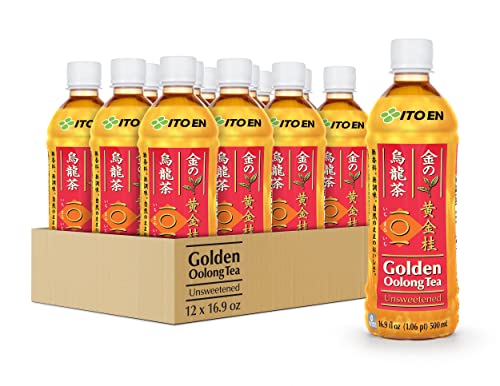
Ito En Golden Oolong Tea

✅ Light, mild flavor that's not bitter
Prince of Peace Organic Oolong Tea (100 Bags)

✅ Taste quality - described as delicious, yummy, tasty