
Available Alternatives

✅ Fresh aroma when properly packaged
Twinings Pure Oolong Tea (20 Count, Original)

✅ Good flavor quality
Twinings Pure Oolong Tea (20 Count)
✅ taste quality
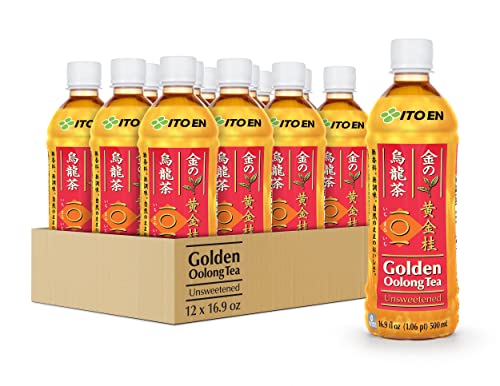
Ito En Golden Oolong Tea

✅ Light, mild flavor that's not bitter
Prince of Peace Organic Oolong Tea (100 Bags)


We analyze real customer reviews to surface what matters: key strengths, ideal use cases, and honest considerations — so you can make an informed choice.
Bigelow Chinese Oolong Tea
A teabag oolong that captures the aromatic, medium-bodied character of Chinese restaurant tea — positioned squarely between black and green, with no unpleasant bitterness.
🎯 Best for: Daily sipping, Plain tea drinking without additions
🍃 Tastes like: authentic Chinese restaurant style, aromatic

What Stands Out
🍃 Flavor Profile
Strength: Moderate
Notes: authentic Chinese restaurant style, aromatic
✅ What Customers Love
- Great flavor with pleasant aroma (4 mentions)
- Authentic Chinese restaurant oolong flavor (3 mentions)
- Good value for money (1 mentions)
🎯 Best For
Daily sipping • Plain tea drinking without additions • Alternative to Chinese restaurant tea • Those seeking middle ground between black and green tea
Brand: Bigelow Tea
Category: Oolong Tea
As an Amazon Associate we earn from qualifying purchases.
About This Oolong Tea
Bigelow's Chinese Oolong delivers the familiar aromatic profile that oolong drinkers associate with traditional Chinese dining — a moderate-strength cup with pleasant fragrance and a smooth, non-bitter finish. It occupies the middle ground between black and green tea, making it approachable without sacrificing character. Reviewers note it holds up well on its own, needing no milk or sweetener to feel complete. Those who prefer a bolder, stronger brew may find it slightly light. Best suited for daily sipping and for anyone who wants an easy-drinking oolong in convenient teabag form.
Is Bigelow Chinese Oolong Tea Right for You?
Does Bigelow Chinese Oolong taste like the tea you get at Chinese restaurants?
Yes — this is actually one of the most praised aspects of this tea. Multiple reviewers specifically call out the authentic Chinese restaurant oolong flavor. One reviewer loves it so much they actually bring Bigelow oolong tea bags to Chinese restaurants instead of drinking what's served there. If you've enjoyed oolong at your favorite Chinese restaurant, this tea will feel very familiar.
Can you drink Bigelow Chinese Oolong without sugar or milk?
Absolutely, and that's actually how most reviewers prefer it. This oolong is specifically praised for being a pleasant sipping drink that's good plain without any additions. It has no unpleasant bitterness, so you don't need sweetener to mask harsh flavors. The natural aroma and smooth, authentic oolong taste carry the cup on their own.
What does Bigelow Chinese Oolong tea taste like?
Expect a moderate-strength tea with an aromatic, authentic Chinese restaurant-style oolong flavor. It sits between black and green tea in character — not as grassy as green tea, not as malty as black. Reviewers highlight the pleasant aroma and smooth taste with no unpleasant bitterness. It's a clean, straightforward oolong that's easy to enjoy cup after cup.
Who is Bigelow Chinese Oolong best for?
This tea is ideal for daily sippers who want a reliable, no-fuss oolong. It's perfect if you love the oolong from Chinese restaurants and want that flavor at home. It also works well for tea beginners looking to explore beyond basic green or black tea, and for anyone who prefers their tea plain without additions. If you need an extremely bold or complex oolong, though, you might want to explore loose-leaf options.
Is Bigelow Chinese Oolong strong enough for serious tea drinkers?
It has a moderate strength that most reviewers find pleasant and aromatic. However, one reviewer noted it can be a bit weaker than some prefer. If you like a bold, punch-you-in-the-face tea, you might want to use two bags per cup or steep longer. But for most drinkers — including New York Chinese restaurant tea enthusiasts — the strength hits a comfortable sweet spot.
Why do Chinese people drink oolong tea?
Oolong tea has deep roots in Chinese tea culture, particularly in the Fujian and Guangdong provinces. It's valued for its complex flavor, pleasant aroma, and the social tradition of sharing tea. That same authentic flavor is what Bigelow captures in their Chinese Oolong — multiple reviewers specifically compare it to the oolong served in Chinese restaurants, and one reviewer even brings these tea bags to restaurants because they prefer it to what's served there.
As an Amazon Associate we earn from qualifying purchases.
Should you add milk to oolong tea?
Traditionally, oolong is enjoyed plain — and reviewers of Bigelow Chinese Oolong specifically mention it's great plain without any additions. The delicate, aromatic flavor profile is best appreciated on its own. That said, there are no rules — if you enjoy milk in your tea, go for it. But you might want to try it black first to experience the authentic Chinese oolong flavor.
What is the best way to prepare oolong tea?
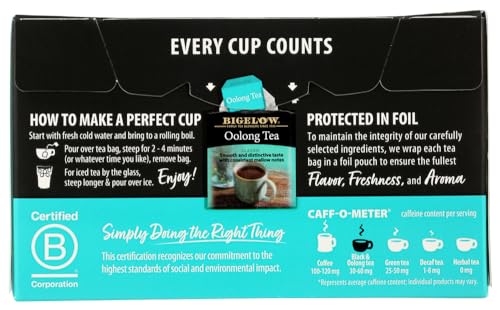
For Bigelow Chinese Oolong tea bags, use water that's just below boiling — around 195°F (90°C) is ideal. Pour the hot water over the tea bag and steep for 3–5 minutes depending on how strong you like it. Reviewers note this tea has a moderate strength, so if you prefer a bolder cup, lean toward the longer steep time. Most reviewers enjoy it plain without milk or sugar.
How long are you supposed to steep oolong tea?
For Bigelow Chinese Oolong tea bags, 3–5 minutes works well. Start at 3 minutes for a lighter, more delicate cup. If you find it too mild — one reviewer mentioned it can be a touch weaker than some prefer — go the full 5 minutes or even try using two tea bags for a stronger brew. The nice thing about this oolong is it doesn't get unpleasantly bitter even with a longer steep.
Is Bigelow Chinese Oolong good for someone new to oolong tea?
It's actually an excellent starting point. The convenient teabag format means no fussing with loose leaves, the flavor is approachable and not overly complex, and it's the same style of oolong many people have already tasted at Chinese restaurants without knowing it. Several product characteristics — moderate strength, no bitterness, pleasant aroma — make it very beginner-friendly.
How many oolong tea leaves should you use per cup?
With Bigelow Chinese Oolong, it's simple — one tea bag per cup of water (about 8 oz). If you find the flavor too mild, which one reviewer mentioned, try using two bags per cup or reducing the water slightly. For loose-leaf oolong in general, the standard is about 2 grams (roughly 1 teaspoon) per 8 oz cup, but the convenience of Bigelow's pre-portioned bags takes the guesswork out.
What is Chinese oolong tea good for?
Chinese oolong tea like Bigelow's is great for daily sipping — it sits right in the middle between black and green tea, so you get a balanced flavor that's not too strong and not too light. Reviewers say it's pleasant to drink plain without any additions, making it an easy go-to for throughout the day. It's also a nice option if you want to cut back on coffee but still enjoy something flavorful and aromatic.
As an Amazon Associate we earn from qualifying purchases.
What's so special about oolong tea?
Oolong is unique because it's partially oxidized — somewhere between a green tea and a black tea. That gives it this wonderfully complex, aromatic character that you don't get from other types. Bigelow's version captures that classic Chinese restaurant oolong flavor that many people love, with a pleasant aroma and no unpleasant bitterness. It's that perfect middle-ground tea.
Which is better, green tea or oolong tea?
Neither is objectively 'better' — it comes down to taste preference. Green tea is lighter and grassier, while oolong like Bigelow's Chinese Oolong has a richer, more aromatic flavor with moderate strength. If you find green tea too grassy or black tea too heavy, oolong is the perfect middle ground. Reviewers appreciate Bigelow's oolong specifically because it offers that balanced, pleasant flavor without bitterness.
What is considered the best oolong tea?
That depends on what you're looking for. For loose-leaf connoisseurs, Taiwanese high-mountain oolongs and Wuyi rock teas are highly prized. But if you want a convenient, affordable oolong in teabag form that delivers authentic Chinese restaurant-style flavor, Bigelow Chinese Oolong is a solid choice. Several reviewers specifically praise it for capturing that familiar restaurant oolong taste at a good price point.
Is it okay to drink oolong tea every day?
Absolutely. Multiple reviewers of Bigelow Chinese Oolong drink it as their daily sipping tea, and that's actually one of its strengths — it has a moderate flavor that doesn't wear on you. The caffeine is moderate enough for daily use, though if you're sensitive to caffeine, you might want to avoid it close to bedtime.
Does Bigelow oolong tea have caffeine in it?
Yes, Bigelow Chinese Oolong does contain caffeine. Oolong tea generally has moderate caffeine — typically around 30–50 mg per cup, which puts it between green tea and black tea. It's enough to give you a gentle lift without the jitters you might get from coffee.
Is oolong tea a stimulant?
Oolong tea does contain caffeine, which is a natural stimulant. Bigelow Chinese Oolong has moderate caffeine — less than coffee but more than most herbal teas. It provides a gentle, sustained energy boost without the sharp spike and crash that coffee can cause. It's a popular choice for afternoon sipping when you want alertness without overdoing the caffeine.
As an Amazon Associate we earn from qualifying purchases.
Is oolong stronger than coffee?
No — coffee typically has significantly more caffeine than oolong tea. A cup of coffee averages 95 mg of caffeine, while oolong tea like Bigelow's runs around 30–50 mg per cup. So you get a gentler energy boost without the intensity of coffee. If you're looking to reduce your coffee intake, Bigelow Chinese Oolong is a flavorful alternative that still gives you a moderate caffeine lift.
What happens if I drink oolong tea every day?
Drinking oolong tea daily is perfectly normal and is how many reviewers enjoy Bigelow Chinese Oolong. You'll get a regular intake of antioxidants and a moderate caffeine boost. The main thing to watch is your total daily caffeine — sticking to 3–4 cups keeps you in a comfortable range. Reviewers who drink this daily highlight it as a pleasant, reliable sipping tea.
Is oolong tea good for your stomach?
Oolong tea is generally considered gentle on the stomach compared to green tea, because the partial oxidation process reduces some of the compounds that can cause stomach sensitivity. Bigelow's Chinese Oolong has no unpleasant bitterness according to reviewers, which is a good sign for stomach comfort. It's best enjoyed after meals rather than on a completely empty stomach.
Is oolong tea the same as Chinese tea?
Not exactly. 'Chinese tea' is a broad term that covers many types — green, black, white, pu-erh, and oolong. Oolong is one specific category of Chinese tea that's partially oxidized, giving it characteristics somewhere between green and black tea. Bigelow's Chinese Oolong specifically aims to capture that classic oolong flavor you'd recognize from Chinese restaurants.
Is oolong healthier than green tea?
Both oolong and green tea are healthy choices with overlapping benefits — antioxidants, polyphenols, and moderate caffeine. Oolong may have a slight edge for metabolism support due to its unique oxidation level, while green tea is often cited for higher catechin content. The 'healthiest' tea is really the one you'll actually drink consistently, and if you enjoy Bigelow's aromatic oolong flavor, that consistency is worth a lot.
Is oolong tea the healthiest tea?
All true teas — green, black, white, and oolong — offer health benefits from antioxidants and polyphenols. Oolong sits in a unique middle ground because it's partially oxidized, which gives it a distinct antioxidant profile compared to green or black tea. Whether it's 'the healthiest' depends on what specific benefits you're after, but it's certainly a healthy choice for daily drinking.
As an Amazon Associate we earn from qualifying purchases.
How much oolong tea per day is safe to drink?
Most people can comfortably enjoy 3–4 cups of oolong tea per day. With Bigelow Chinese Oolong's moderate caffeine content, that keeps you well within reasonable daily caffeine limits. Reviewers who drink this as their daily sipping tea don't report any issues with regular consumption. Just be mindful of your overall caffeine intake from all sources.
When should you not drink oolong tea?
Since Bigelow Chinese Oolong contains moderate caffeine, it's best to avoid it close to bedtime if you're caffeine-sensitive — stop 4–6 hours before sleep. You might also want to avoid it on a completely empty stomach first thing in the morning, as tea can sometimes cause mild nausea on an empty stomach. Otherwise, it's a versatile daily tea with no unusual restrictions.
What is the queen of oolong tea?
The 'queen of oolong' typically refers to Oriental Beauty (Dong Fang Mei Ren), a heavily oxidized Taiwanese oolong with a distinctive honey-like sweetness. It's quite different from Bigelow's Chinese Oolong, which is a more traditional, moderately oxidized style. Both are enjoyable but offer very different flavor experiences — Oriental Beauty is a specialty tea, while Bigelow's is an accessible everyday oolong.
Which tea is highest in caffeine?
Among true teas, black tea and matcha generally have the highest caffeine content. Oolong like Bigelow's Chinese Oolong falls in the moderate range — higher than most green teas but lower than strong black teas. For context, a cup of this oolong likely contains roughly 30–50 mg of caffeine, compared to about 50–90 mg for black tea and 95 mg for coffee.
What Customers Love
⚠️ Limited sample based on limited customer feedback (9 reviews) • Our methodology
- Great flavor with pleasant aroma (4 mentions)
- Authentic Chinese restaurant oolong flavor (3 mentions)
- Good value for money (1 mentions)
- No unpleasant bitterness (1 mentions)
Taste Profile
- strong
- pleasant
- medium between black and green
- no unpleasant bitterness
Best Use Cases
🎯 Best For
- Daily sipping
- Plain tea drinking without additions
- Alternative to Chinese restaurant tea
- Those seeking middle ground between black and green tea
What to Consider
- May be weaker than some prefer (1 mentions)
⚠️ Important: This analysis is based on limited customer feedback (9 reviews). We've shared what we found, but there may be additional considerations we haven't captured.
About This Analysis
This analysis is based on 9 customer reviews. We're showing you everything we found, but with a small sample, there's a lot we likely haven't captured yet.
✅ What we're confident about: What customers love and best use cases
⚠️ What may be incomplete: Potential issues and considerations
For more perspectives, check customer reviews on Amazon.
Product Selection
In short: We only feature high-rated products.
Products on TeaDelight.net are selected based on strong Amazon customer ratings, sufficient review volume, and market presence. We focus on well-regarded products that tea enthusiasts are actively considering and purchasing.
As an Amazon Associate we earn from qualifying purchases.