





We analyze real customer reviews to surface what matters: key strengths, ideal use cases, and honest considerations — so you can make an informed choice.
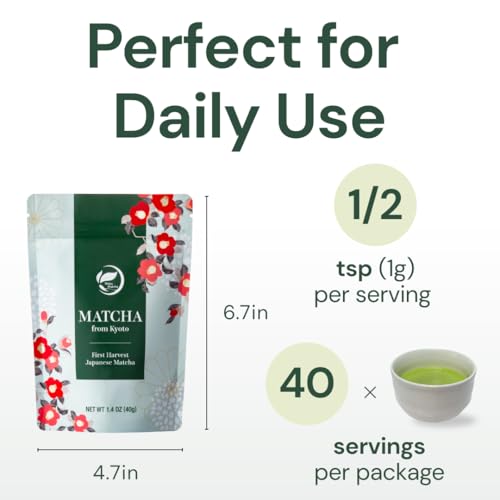
Wako Matcha First Harvest Premium Uji Ceremonial Grade
A first-harvest matcha from Uji, the named heartland of Japanese tea ceremony, that lands as a smooth and accessible daily ritual rather than a concentrated-umami showcase.
🎯 Best for: Cafe-quality matcha lattes with oat, almond, or dairy milk, Daily matcha drinking
🍃 Strength: Medium

What Stands Out
🍃 Flavor Profile
Strength: Medium
Smooth is the descriptor reviewers consistently reach for (10 of 26 reviews), backed by bold body and gentle natural sweetness. The aroma reads vegetal with nutty undertones and subtle umami threading through; the powder whisks up to a creamy foam without grittiness or chalkiness. Reviewers repeatedly praise the vibrant green color — a meaningful visual signal of fresh, well-handled matcha.
✅ What Customers Love
- Smooth, well-rounded flavor
- Vibrant green color signaling freshness
- Whisks cleanly into a creamy foam
🎯 Best For
Cafe-quality matcha lattes with oat, almond, or dairy milk • Daily matcha drinking • Stepping into traditional usucha or koicha at an accessible price
Brand: Wako Matcha
Category: Matcha
As an Amazon Associate we earn from qualifying purchases.
About This Matcha
Wako Matcha is a first-harvest matcha from Uji, the named heartland of Japanese tea ceremony, that lands as a smooth and accessible daily ritual rather than a concentrated-umami showcase. Smooth is the descriptor reviewers consistently reach for — ten of twenty-six — backed by bold body and a gentle natural sweetness. The aroma reads vegetal with nutty undertones and subtle umami threading through, and the powder whisks up to a creamy foam without grittiness or chalkiness. Reviewers repeatedly praise the vibrant green color, a meaningful visual signal of fresh, well-handled matcha.
Latte preparation dominates how this matcha actually gets used. Ten of twenty-six reviewers describe oat, almond, or dairy-milk drinks as their default approach, while a handful prepare it traditionally as usucha or koicha. Reach for this when you want cafe-quality lattes more than a meditative ceremonial bowl — it's also a sensible entry point for stepping into traditional preparations at an accessible price.
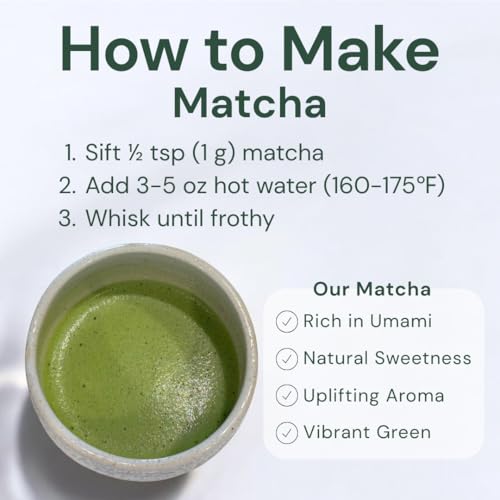
For usucha, whisk roughly 3 grams of powder into 50–60g of hot (not boiling) water, sifting first if you want the foam to come up smooth and even. For lattes, oat or almond milk are the most-mentioned pairings; a hazelnut creamer or a touch of agave works for a sweeter cafe-style cup, and blueberry shows up once for a fruit-forward iced preparation.
Four reviewers describe the flavor as lacking punch or strong umami compared to higher-end brackets. That's a fair trade-off at this price, and one the latte format tends to mask — but if you're chasing the dense, concentrated umami of premium ceremonial brackets, this isn't the bowl for it. Caffeine runs high, so keep it to morning and early-afternoon use.
A daily-driver matcha for the cafe-style latte habit, with enough ceremonial credentials to support an occasional usucha when you want to slow down.
Is Wako Matcha First Harvest Premium Uji Ceremonial Grade Right for You?
Is Wako matcha really ceremonial grade?
The listing positions it as first-harvest Uji ceremonial grade, and the review pattern supports that framing — drinkers prepare it as both usucha and koicha, and most reach for words like smooth, vibrant, and creamy foam rather than the harshness you'd hear about culinary-grade. Treat it as an accessible entry into the ceremonial bracket rather than a top-shelf showcase.
What does this matcha actually taste like?
Smooth is the descriptor reviewers reach for most often — 10 of 26 use that word — with bold body, gentle natural sweetness, and a vegetal-nutty aroma carrying subtle umami underneath. A few drinkers note light astringency, but bitterness is rarely flagged.
Does it have the deep umami of higher-end ceremonial matcha?
Honestly, no — and that's the most consistent caveat. Four of 26 reviewers describe the flavor as lacking punch or strong umami compared to higher brackets, which is a fair trade-off that the latte format tends to mask but a traditional usucha drinker chasing concentrated savoriness will notice.
Is this better for lattes or for traditional matcha bowls?
Latte use dominates — 10 of 26 reviewers describe oat, almond, or dairy-milk drinks as their default — though a handful do prepare it traditionally as usucha or koicha. Reach for this when cafe-quality lattes are the goal more than a meditative ceremonial bowl.
How should I prepare it as usucha?
Whisk roughly 3 grams of powder into 50–60g of hot (not boiling) water, sifting first if you want the foam to come up smooth and even. Reviewers who sift and use a proper whisk consistently report a creamy foam without grittiness.
Is the green color as vibrant as the photos suggest?
Yes — 7 of 26 reviewers specifically call out the vibrant green color, which is a meaningful visual cue for fresh, well-handled matcha. Reviewers tie the color directly to the freshness signal they associate with first-harvest leaf.
As an Amazon Associate we earn from qualifying purchases.
Does it whisk up cleanly or does it clump?
Reviewers report it whisks into a creamy foam without grittiness or chalkiness, with one describing froth 'like clouds.' A quick sift before whisking is the most common tip drinkers mention for getting the texture right.
How does it compare to higher-end ceremonial brands?
Reviewers who compare it directly to higher-end brands (and one mentions Marukyu-Koyamaen) generally place it a step below in raw umami concentration but ahead of typical grocery-aisle or lower-quality matcha powders. It reads as an accessible daily-ritual matcha rather than a top-shelf alternative.
Is this a good matcha for someone new to the category?
Yes — the smooth-dominant profile, low reported bitterness, and the fact that most reviewers drink it as a latte all lower the barrier to entry. Beginners get a forgiving introduction without the steep, grassy intensity that can put new drinkers off.
What milk or pairing works best in a latte?
Oat and almond milk come up most across reviewers building cafe-style drinks, with one reaching for hazelnut creamer for a flavored version and another using agave for gentle sweetening. For iced preparations, one reviewer pairs it with blueberry for a fruit-forward twist.
Category: How should I store matcha to keep it fresh?
Keep matcha in an opaque, airtight tin away from light, heat, and moisture — the refrigerator or freezer is ideal for unopened tins. Critically, let a cold tin warm to room temperature before opening, or condensation will form on the powder and destroy it. Once opened, keep it sealed, cool, and away from light.
Category: What counts as the highest quality matcha?
Ceremonial grade made from the first spring harvest (ichibancha), stone-ground from young buds of shade-grown leaves grown in Japan. Uji in Kyoto Prefecture is the historical benchmark, with Nishio, Shizuoka, and Kagoshima also producing respected matcha. The visual tells are an electric jade color, a silky texture, and a sweet, savory flavor with almost no bitterness when whisked with water alone.
As an Amazon Associate we earn from qualifying purchases.
Category: What does authentic matcha taste like?
High-grade matcha tastes savory and sweet with a distinct umami brothiness, a smooth creamy texture, and minimal bitterness or astringency. The aroma should read as fresh and vegetal — sea breeze, young vegetables, or sweet cream. Hay-like, dusty, harshly bitter, or metallic notes typically indicate older leaf, sun-grown material rather than shade-grown tencha, or stale powder past its prime.
What Makes This Product Special
⚠️ Preliminary analysis based on 26-review sample • Our methodology
- Smooth, well-rounded flavor
- Vibrant green color signaling freshness
- Whisks cleanly into a creamy foam
- Strong value at an accessible price
Taste Profile
Smooth is the descriptor reviewers consistently reach for (10 of 26 reviews), backed by bold body and gentle natural sweetness. The aroma reads vegetal with nutty undertones and subtle umami threading through; the powder whisks up to a creamy foam without grittiness or chalkiness. Reviewers repeatedly praise the vibrant green color — a meaningful visual signal of fresh, well-handled matcha.
- Oat or almond milk for a cafe-style latte
- Hazelnut creamer for a flavored latte
- Agave for gentle sweetening
- Blueberry for a fruit-forward iced preparation
Brewing: Whisk roughly 3 grams of powder into 50–60g of hot (not boiling) water for usucha, sifting first if you want the foam to come up smooth and even.
Best Use Cases
🎯 Best For
- Cafe-quality matcha lattes with oat, almond, or dairy milk
- Daily matcha drinking
- Stepping into traditional usucha or koicha at an accessible price
⚠️ Not Ideal For
- Evening or wind-down occasions
- Drinkers seeking concentrated, intense umami
How People Use It
Latte preparation dominates how this matcha gets used — ten of twenty-six reviewers describe oat, almond, or dairy-milk drinks as their default approach, while a handful prepare it traditionally as usucha or koicha. We'd reach for this when you want cafe-quality lattes more than a meditative ceremonial bowl.
Good for Beginners
✅ Yes
- Smooth-dominant profile with low bitterness reported
- Latte format absorbs astringency and is the most common preparation
- Whisks easily with minimal grittiness
For Experienced Users
✅ Worth Exploring
- Uji origin and ceremonial-grade positioning, validated by Phase 2.5 cultural-enthusiast fit
- Reviewers prepare traditional usucha and koicha, not just lattes
What to Consider
Four reviewers describe the flavor as lacking punch or strong umami compared to higher-end brackets — a fair trade-off at this price that the latte format tends to mask.
- Lighter potency than premium-tier ceremonial matcha
⚠️ based on 26-review sample. Some issues may not be captured.
About This Analysis
This analysis is based on 26 customer reviews. We're showing you everything we found, but with a moderate sample, there's a lot we likely haven't captured yet.
✅ What we're confident about: What customers love and best use cases
⚠️ What may be incomplete: Potential issues and considerations
For more perspectives, check customer reviews on Amazon.
Product Selection
In short: We only feature high-rated products.
Products on TeaDelight.net are selected based on strong Amazon customer ratings, sufficient review volume, and market presence. We focus on well-regarded products that tea enthusiasts are actively considering and purchasing.
As an Amazon Associate we earn from qualifying purchases.
You Might Also Like

✅ Café-register sweet matcha at home value
Jade Leaf Matcha Latte Mix Bundle

✅ Sweet, balanced flavor that softens matcha's natural edge
Ito En Matcha Green Tea Sweet Powder
✅ Umami-forward ceremonial profile
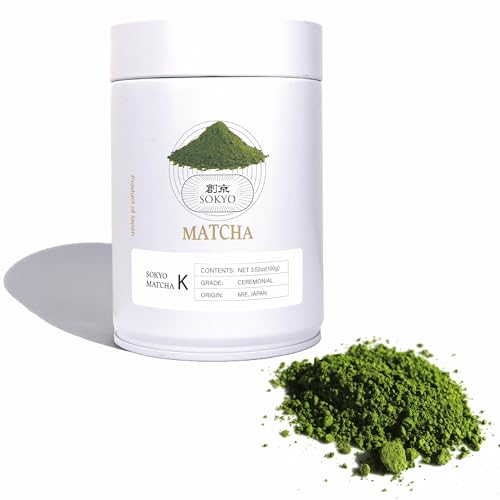
SOKYO Ceremonial Matcha Powder

✅ Smooth, mild profile with consistently noted absence of bitterness