





We analyze real customer reviews to surface what matters: key strengths, ideal use cases, and honest considerations — so you can make an informed choice.
Umami Leaf Organic Japanese Ceremonial Grade Matcha
Single-origin ceremonial-grade matcha from Uji, Kyoto — the historical heart of Japanese matcha — that whisks smooth and frothy whether reviewers hold to tradition or layer it into a latte.
🎯 Best for: morning matcha ritual at home, matcha lattes (hot or iced)
🍃 Strength: Medium

🍃 Flavor Profile
Strength: Medium
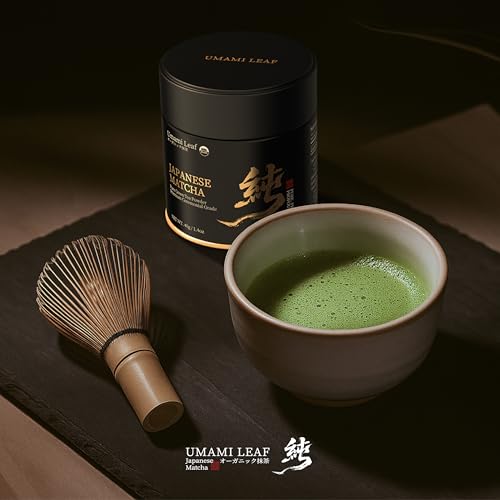
Smooth is the word reviewers reach for most — eighteen of twenty-eight name it directly — over a clean, gently sweet base anchored by a defining umami note. The texture whisks creamy and frothy, with a vibrant green color several reviewers single out as evidence of grade, and bitterness barely registers.
✅ What Customers Love
- smooth, low-bitterness profile
- umami-anchored flavor
- vibrant green color signaling grade
🎯 Best For
morning matcha ritual at home • matcha lattes (hot or iced) • traditional whisked usucha preparation • stepping up from culinary-grade matcha
Brand: Umami Leaf
Category: Matcha
As an Amazon Associate we earn from qualifying purchases.
About This Matcha
Single-origin ceremonial-grade matcha from Uji, Kyoto — the historical heart of Japanese matcha — that whisks smooth and frothy whether reviewers hold to tradition or layer it into a latte. Smooth is the word reviewers reach for most: eighteen of twenty-eight name it directly, over a clean, gently sweet base anchored by a defining umami note. The texture whisks creamy and frothy, with a vibrant green color several reviewers single out as evidence of grade, and bitterness barely registers.
Reviewers prepare it across the spectrum — five make lattes, three drink it hot in the traditional usucha style, two on ice — and several anchor it to a morning routine or a mindful cup at home. We'd reach for this when the goal is calm focus rather than coffee jitter, a frame one reviewer captures word-for-word. It also reads as a natural step up for anyone moving on from culinary-grade matcha.
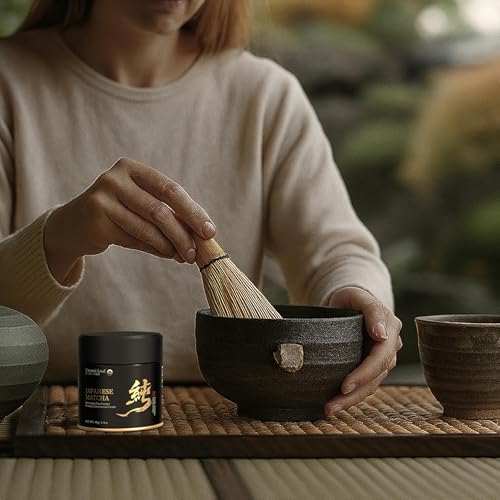
Sift the powder first, then whisk with water at 165–175°F; reviewers report it dissolves cleanly with no graininess. For lattes, milk or frothed almond milk are the pairings reviewers mention, and one reviewer pairs it alongside 70–100% dark chocolate.
A fair caveat: at 40 grams it's a small tin, and three reviewers note the price feels steep for how fast it goes — worth weighing if you plan to whisk daily. Because the caffeine sits on the high side for green tea, it's better suited to morning and midday than evening or wind-down drinking.
If you want a ceremonial matcha that performs both in a traditional bowl and in a morning latte without turning bitter or grainy, this one earns the reviewer consensus it has.
Is Umami Leaf Organic Japanese Ceremonial Grade Matcha Right for You?
What does this matcha taste like?
Smooth is the word reviewers reach for first — eighteen of twenty-eight name it directly — over a clean, gently sweet base anchored by a defining umami note. Bitterness barely registers, and the texture whisks creamy and frothy.
Is it bitter?
No — reviewers tend to call out its absence rather than its presence. Nine of twenty-eight use phrasings like 'not bitter,' 'no bitterness,' or 'no bitter,' and the profile leans on smoothness and umami rather than astringency.
What does the umami taste like in a matcha like this one?
Reviewers describe a savory, broth-like depth that anchors the flavor rather than dominating it — seven of twenty-eight name umami specifically as a defining flavor note. The synthesis pairs it with the smooth, gently sweet base typical of Uji-source matcha.
Does it work well in matcha lattes?
Yes — five of twenty-eight reviewers prepare it as a latte, and it dissolves and froths cleanly in both hot and cold milk. Frothed almond milk is one specific pairing reviewers call out.
What water temperature should I use?
Sift the powder first, then whisk with water at 165–175°F — that's the prep one reviewer documents and the synthesis carries forward. At that temperature reviewers report it dissolves cleanly with no graininess.
Is this a good ceremonial matcha for someone new to the category?
Generally yes — the synthesis flags three beginner-friendly traits: accessible umami without bitterness, a smooth and forgiving palate, and clean dissolution with a basic whisk. One reviewer specifically describes it as a step up from culinary-grade.
As an Amazon Associate we earn from qualifying purchases.
Where is this matcha from?
The listing positions it as single-origin from Uji, Kyoto — the historical heart of Japanese matcha — USDA-certified organic and first harvest. Reviewers frequently point to the vibrant green color as evidence of the grade.
How vibrant is the green color?
Strikingly vibrant by reviewer accounts — six of twenty-eight call out the color directly, and several treat it as a quality signal consistent with ceremonial-grade Uji matcha. The synthesis carries that read.
Does it whisk up frothy?
Reviewers say it whisks creamy and frothy with no graininess — two name frothy texture directly, two more note it dissolves well, and the synthesis confirms it works in both hot and cold liquids. A traditional bamboo whisk handles it cleanly.
Will it give me coffee-like jitters?
At least one reviewer describes 'calm, steady energy' and being 'focused but not jittery,' a frame the synthesis carries forward as the reason to reach for this in the morning rather than coffee. As with all matcha, individual caffeine sensitivity varies.
How long does the 40-gram tin last?
It depends on how often you whisk — three reviewers note the tin goes faster than they'd like with daily use. At roughly 1–2 grams per serving, a 40g / 1.4oz tin yields around 20–40 cups before refill.
Category: How should I store matcha to keep it fresh?
Keep matcha in an opaque, airtight tin away from light, heat, and moisture — the refrigerator or freezer is ideal for unopened tins. Critically, let a cold tin warm to room temperature before opening, or condensation will form on the powder and destroy it. Once opened, keep it sealed, cool, and away from light.
As an Amazon Associate we earn from qualifying purchases.
Category: What counts as the highest quality matcha?
Ceremonial grade made from the first spring harvest (ichibancha), stone-ground from young buds of shade-grown leaves grown in Japan. Uji in Kyoto Prefecture is the historical benchmark, with Nishio, Shizuoka, and Kagoshima also producing respected matcha. The visual tells are an electric jade color, a silky texture, and a sweet, savory flavor with almost no bitterness when whisked with water alone.
Category: What does authentic matcha taste like?
High-grade matcha tastes savory and sweet with a distinct umami brothiness, a smooth creamy texture, and minimal bitterness or astringency. The aroma should read as fresh and vegetal — sea breeze, young vegetables, or sweet cream. Hay-like, dusty, harshly bitter, or metallic notes typically indicate older leaf, sun-grown material rather than shade-grown tencha, or stale powder past its prime.
What Makes This Product Special
⚠️ Preliminary analysis based on 28-review sample • Our methodology
- smooth, low-bitterness profile
- umami-anchored flavor
- vibrant green color signaling grade
- value relative to ceremonial-grade peers
Taste Profile
Smooth is the word reviewers reach for most — eighteen of twenty-eight name it directly — over a clean, gently sweet base anchored by a defining umami note. The texture whisks creamy and frothy, with a vibrant green color several reviewers single out as evidence of grade, and bitterness barely registers.
- milk or frothed almond milk for lattes
- 70–100% dark chocolate alongside
Brewing: Sift the powder, then whisk with water at 165–175°F; reviewers report it dissolves cleanly with no graininess.
Best Use Cases
🎯 Best For
- morning matcha ritual at home
- matcha lattes (hot or iced)
- traditional whisked usucha preparation
- stepping up from culinary-grade matcha
⚠️ Not Ideal For
- evening or wind-down drinking
How People Use It
Reviewers prepare it across the spectrum — five make lattes, three drink it hot in the traditional usucha style, two on ice — and several anchor it to a morning routine or a mindful cup at home. We'd reach for this when the goal is calm focus rather than coffee jitter, a frame one reviewer captures word-for-word.
Good for Beginners
✅ Yes
- accessible umami without bitterness
- smooth and forgiving on the palate
- dissolves cleanly with a basic whisk
For Experienced Users
✅ Worth Exploring
- Uji-origin ceremonial-grade single source
- source-based umami register supports tasting depth
What to Consider
At 40 grams it's a small tin, and three reviewers note the price feels steep for how fast it goes — a fair flag if you whisk daily.
- small tin relative to price
⚠️ based on 28-review sample. Some issues may not be captured.
About This Analysis
This analysis is based on 28 customer reviews. We're showing you everything we found, but with a moderate sample, there's a lot we likely haven't captured yet.
✅ What we're confident about: What customers love and best use cases
⚠️ What may be incomplete: Potential issues and considerations
For more perspectives, check customer reviews on Amazon.
Product Selection
In short: We only feature high-rated products.
Products on TeaDelight.net are selected based on strong Amazon customer ratings, sufficient review volume, and market presence. We focus on well-regarded products that tea enthusiasts are actively considering and purchasing.
As an Amazon Associate we earn from qualifying purchases.
You Might Also Like

✅ latte performance — whisks frothy, blends cleanly with milk
Rishi Tea Everyday Matcha Organic Green Tea Powder
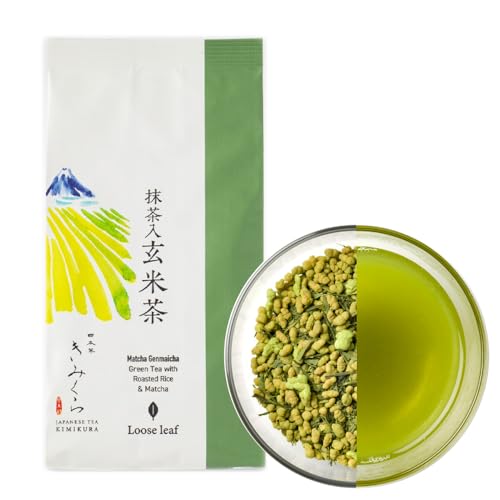
✅ Visibly vivid, deeply green brew from the matcha dusting
KIMIKURA Matcha Genmaicha Green Tea

✅ Smooth, not overpoweringly bitter
The Republic of Tea Double Green Matcha Tea Bags

✅ Smooth, low-bitterness flavor