



We analyze real customer reviews to surface what matters: key strengths, ideal use cases, and honest considerations — so you can make an informed choice.
Sencha Everyday Organic Matcha Green Tea Powder
An everyday-grade matcha powder with a smooth, earthy character and vibrant green color — blends cleanly into lattes and smoothies with a clean-energy lift and no jittery finish.
🎯 Best for: Daily morning smoothie routine, Matcha lattes at home
🍃 Tastes like: naturally bitter matcha

🍃 Flavor Profile
Strength: Moderate
Notes: naturally bitter matcha
✅ What Customers Love
- Good quality at fair/excellent price (5 mentions)
- Smooth flavor without bitterness (4 mentions)
- Vibrant, bright green color (2 mentions)
🎯 Best For
Daily morning smoothie routine • Matcha lattes at home • Daily health ritual • Morning energy
Brand: 21
Category: Matcha
As an Amazon Associate we earn from qualifying purchases.
About This Matcha
This culinary-grade matcha delivers a genuine earthy flavor that reviewers consistently describe as smooth and non-bitter — approachable for daily lattes yet strong enough to satisfy longtime matcha drinkers who prepare it with honey. It disperses readily without clumping, making home preparation forgiving whether whisked or blended into a morning smoothie. One meaningful caveat: some buyers report the product received does not appear to be certified organic despite the labeling, which is worth factoring in. Best suited to health-conscious daily drinkers who want reliable matcha flavor for morning routines without ceremonial-grade expectations.
Is Sencha Everyday Organic Matcha Green Tea Powder Right for You?
Is Sencha Everyday matcha really organic?
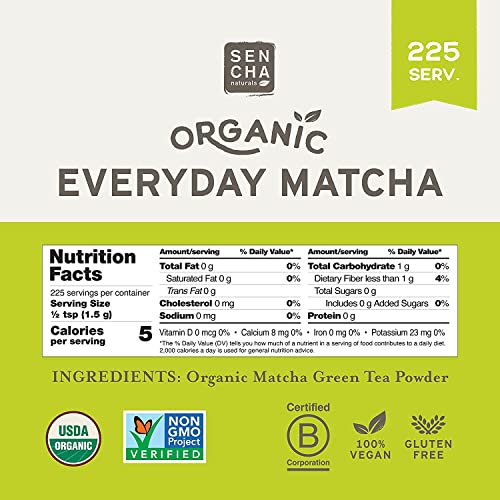
This is worth addressing honestly. While the product listing and packaging show USDA Organic certification, multiple reviewers report that the actual product they received was NOT labeled organic. This is the most common complaint in the reviews. If organic certification is a priority for you, examine the packaging carefully when it arrives and consider reaching out to the brand directly if it doesn't match what was advertised. The tea quality itself is still well-reviewed regardless of the organic question, but the labeling inconsistency is something to be aware of.
Is Sencha Everyday matcha green tea good for you?
Sencha Everyday matcha delivers several health benefits that customers consistently notice. Reviewers report clean energy without the jitters you'd get from coffee, and many use it as part of a daily health ritual. The powder is rich in antioxidants, and long-term users say they feel a noticeable "lifted feeling" compared to lower-quality matcha brands. That said, it's worth noting that some customers have received non-organic versions despite the listing showing USDA Organic, so if organic certification is important to you, double-check the label when it arrives.
Is Sencha Everyday matcha ceremonial grade?
No, Sencha Everyday is a culinary-grade matcha, not ceremonial grade. Ceremonial-grade matcha is made from the youngest tea leaves, stone-ground to an ultra-fine powder, and designed to be whisked with just water. Sencha Everyday is formulated for everyday use in lattes, smoothies, and baking — which is actually why many customers prefer it. It blends well without clumping and has a smooth flavor that works great with milk. If you're making matcha lattes at home rather than traditional Japanese tea ceremony preparation, culinary grade is typically the better (and more affordable) choice.
Is Sencha Everyday matcha good for making lattes at home?
This is actually one of the product's strongest use cases. Customers specifically praise how well it blends without clumping, which is a common frustration with other matcha powders when making lattes. The smooth, non-bitter flavor profile means you don't need to drown it in sweetener to make it palatable. Reviewers describe using it in their daily latte routine, and some compare the result favorably to matcha served in Japanese restaurants. For the price of a few café matcha lattes, you get a 12 oz bag that'll last weeks of daily home lattes.
Is Sencha Everyday good for matcha beginners?
It's one of the better beginner-friendly options out there. Reviewers confirm it has a forgiving flavor profile — meaning even if you use too much or too little, it still tastes good. The powder blends easily without clumping, so you won't struggle with preparation. The flavor is smooth and not bitter, which is important because harsh bitterness is what turns most first-timers off matcha. And the 12 oz bag at its price point means you're not making a big financial commitment to try it. Start with lattes using milk and a bit of honey, then work toward drinking it with just water as your palate adjusts.
How does Sencha Everyday matcha taste?
Reviewers consistently describe it as smooth and earthy without the bitterness you get from lower-quality matcha. The flavor strength is moderate — not so mild that it disappears in a latte, but not so intense that it's unpleasant straight with water. Multiple customers specifically praise the smooth flavor, and the vibrant bright green color suggests decent chlorophyll content. Some reviewers enjoy it with honey, which complements the natural earthiness nicely. If you've tried cheap matcha and been put off by the bitter, grassy taste, this one is notably smoother.
As an Amazon Associate we earn from qualifying purchases.
How much caffeine is in Sencha Everyday matcha?
Sencha Everyday doesn't prominently list an exact caffeine number, but as a culinary-grade matcha powder, you can expect roughly 50–70 mg of caffeine per serving (about 1 teaspoon). That's less than a typical cup of coffee but more than regular green tea. What customers specifically appreciate is that the energy feels clean — reviewers mention getting a boost without the jitters, which is characteristic of matcha's combination of caffeine and L-theanine.
What are the pros and cons of matcha?
Based on what Sencha Everyday customers actually experience — Pros: smooth energy without jitters, rich in antioxidants, versatile (lattes, smoothies, baking), vibrant green color, and this particular brand blends easily without clumping. The 12 oz size is generally considered excellent value. Cons: the earthy flavor isn't for everyone (though this brand is praised for being smooth without bitterness), it still has caffeine so evening use can disrupt sleep, and specifically with this product, there have been reports of receiving non-organic versions despite organic labeling. Overall, most reviewers find the pros significantly outweigh the cons.
What are the cons of matcha tea?
Being honest here — matcha isn't perfect for everyone. It still contains caffeine (50–70 mg per serving), so late-afternoon cups can affect sleep. The earthy, vegetal taste takes getting used to if you're coming from coffee. And specifically with Sencha Everyday, there's a notable concern: multiple reviewers report receiving a non-organic product despite the listing advertising USDA Organic certification, so check your label carefully if organic matters to you. Some reviewers also note the price has increased over time, though most still consider it good value for the 12 oz size.
Who is Sencha Everyday matcha best for?
Based on reviewer feedback, this matcha is best suited for: daily latte and smoothie makers who want an affordable, reliable matcha that blends easily; beginners who want a forgiving, smooth flavor to start their matcha journey; health-conscious drinkers looking for clean energy without coffee jitters; and budget-minded matcha enthusiasts who want decent quality without paying premium ceremonial-grade prices. It's less ideal for matcha purists who want top-tier ceremonial grade for traditional preparation, or for buyers who strictly require verified organic certification.
What do long-term users say about Sencha Everyday matcha?
Long-term reviewers are some of the product's strongest advocates. Several mention using it for years and continuing to repurchase, which says a lot about consistency. They describe a noticeable "lifted feeling" that they don't get from lesser quality matcha, and they recommend it with genuine enthusiasm. The main concern from long-time buyers is that the price has gradually increased over time, though most still consider it good value for what you get. The fact that people keep coming back after years of use suggests the quality has remained reliable enough to earn real loyalty.
How long does a 12 oz bag of Sencha Everyday matcha last?
At the typical serving size of 1–2 teaspoons per drink, a 12 oz (340g) bag gives you roughly 70–140 servings. If you're making one matcha latte per day, that's anywhere from 2 to 5 months of daily use. This is a big part of why reviewers consider it excellent value — the size-to-price ratio makes daily matcha drinking affordable. Just make sure to store it in a cool, dark place (ideally sealed and in the fridge after opening) to maintain the vibrant color and fresh flavor throughout.
As an Amazon Associate we earn from qualifying purchases.
Can I use Sencha Everyday matcha in smoothies and baking?
Absolutely — as a culinary-grade matcha, it's designed for exactly these uses. Reviewers mention daily morning smoothies as one of the top uses. The powder blends smoothly without clumping, which makes it easy to incorporate into smoothie recipes. For baking, you can add it to cookies, cakes, muffins, energy balls, and even pancakes. The moderate flavor strength and smooth taste profile means it adds genuine matcha flavor without the harshness that some ceremonial grades can bring when heated. The 12 oz size is especially practical if you're using it for baking, since recipes can call for several tablespoons at a time.
How to make matcha as a beginner?
Sencha Everyday is actually a popular choice for matcha beginners, and customers confirm it has a forgiving flavor profile. Start simple: add 1 teaspoon of powder to a mug, pour in a splash of hot water (not boiling), and stir or whisk until it's a smooth paste. Then add your milk of choice and sweeten with honey if you like. Reviewers recommend it for beginners specifically because it's smooth without bitterness and blends easily without clumping. You don't need any fancy equipment — a regular spoon or a small whisk works fine to get started.
How do you brew Sencha Everyday matcha?
The easiest way is to sift about 1 teaspoon of the powder into a cup, add a small amount of hot water (not boiling — aim for around 175°F), and whisk until smooth. Then top it off with more hot water for tea, or steamed milk for a latte. Customers specifically note that this matcha blends well without clumping, which makes preparation easier than many other brands. Several reviewers mention it works perfectly in a shaker bottle or blender for smoothies too — no traditional bamboo whisk required.
How to make matcha tea without a whisk?
Sencha Everyday actually makes this easy — customers note it blends well without clumping, so you have options beyond a traditional bamboo whisk. You can use a small regular whisk, a milk frother, or even just a fork with some vigorous stirring. For smoothies, just toss it in the blender with your other ingredients. Some reviewers use a shaker bottle — add the powder and liquid, shake hard for 20–30 seconds, and you're done. The key is adding a small amount of liquid first to make a paste before adding the rest.
How to make iced matcha with Sencha Everyday?
Start by dissolving 1–2 teaspoons of Sencha Everyday in a small amount of warm water (just enough to make a smooth paste). Then fill a glass with ice, pour in cold milk or water, and add your matcha paste. Stir well or shake it up in a bottle. The powder's smooth blending properties mean it dissolves well even in cold liquids, though starting with a warm paste ensures no lumps. Add a sweetener if you like — honey or simple syrup work well. It makes a refreshing alternative to iced coffee with cleaner energy and no jitters.
What happens if I drink matcha green tea every day?
Many Sencha Everyday customers do exactly this — it's right there in the name. Reviewers who drink it daily report sustained morning energy without jitters, and several mention it's become a core part of their morning smoothie or latte routine. The moderate caffeine content means you get a gentle, lasting boost rather than a spike and crash. Long-term users who've been drinking it for years say they stick with it because the quality stays consistent and the price makes daily use affordable.
As an Amazon Associate we earn from qualifying purchases.
Is matcha better for anxiety than coffee?
Many people find matcha more anxiety-friendly than coffee, and the reviews for Sencha Everyday support this. Customers specifically mention clean energy without jitters — that jittery, anxious feeling is one of coffee's most common complaints. Matcha contains L-theanine, which promotes calm alertness rather than the wired feeling coffee can produce. If coffee makes you anxious or shaky, switching to Sencha Everyday matcha for your morning routine could be worth trying. Just keep in mind it still contains caffeine, so if you're highly sensitive, start with a smaller serving.
Is matcha higher in caffeine than coffee?
Cup for cup, coffee typically has more caffeine — about 95 mg per cup compared to matcha's 50–70 mg. But the caffeine experience is very different. Sencha Everyday customers specifically mention getting clean energy without jitters, which is a hallmark of matcha. That's because matcha contains L-theanine, an amino acid that promotes calm focus and slows the release of caffeine. So while you're getting less caffeine overall, many people find the sustained, jitter-free energy from matcha more functional than coffee's sharper spike.
Is matcha latte good for you?
A matcha latte is a solid choice nutritionally — you get the antioxidants and L-theanine from the matcha plus calcium and protein from the milk. Sencha Everyday works particularly well for lattes because it blends smoothly without clumping. The main thing that affects how healthy your latte is comes down to what you add: using whole milk or a fortified plant milk keeps it nutritious, while loading up on sugar or flavored syrups starts to diminish the benefits. Many reviewers make daily lattes with this matcha and just a touch of honey, which keeps it both healthy and delicious.
What are the health benefits of matcha?
Matcha offers a concentrated package of benefits because you consume the entire tea leaf. The key benefits backed by research include: high antioxidant content (particularly EGCG catechins), sustained energy without jitters (which Sencha Everyday reviewers specifically confirm), improved focus thanks to L-theanine, metabolism support, and anti-inflammatory properties. Customers of this product highlight the daily energy boost and overall vitality as the benefits they notice most. Several reviewers describe a "lifted feeling" that they don't get from lower-quality matcha, suggesting the quality matters for experiencing these benefits.
What is the highest quality matcha?
The highest quality matcha is ceremonial-grade matcha sourced from Japan's premier tea regions like Uji (Kyoto) or Nishio (Aichi). These are stone-ground from shade-grown first-harvest leaves and have a vivid green color, sweet umami flavor, and ultra-fine texture. Sencha Everyday sits in the culinary-grade category, which is a tier below ceremonial but still a solid everyday option. Reviewers note its vibrant bright green color and smooth taste, with some comparing it favorably to matcha served in Japanese restaurants — impressive for its price point.
Is it safe to drink matcha every day?
For most people, yes — and many Sencha Everyday customers do exactly that. Reviewers describe using it in their daily morning smoothie or latte routine, and long-term users report drinking it for years without issues. Matcha is rich in antioxidants and provides gentle, sustained energy. The main thing to watch is your total caffeine intake if you're also drinking coffee or other caffeinated beverages. Pregnant women and those with caffeine sensitivity should consult their doctor. But for the average adult, a daily cup or two of matcha is generally considered safe and beneficial.
As an Amazon Associate we earn from qualifying purchases.
Is matcha good for weight loss?
Matcha can support weight management as part of a healthy routine. The EGCG catechins in matcha have been shown in studies to boost metabolism slightly, and the gentle caffeine provides energy for workouts without the crash. Sencha Everyday is calorie-free on its own, so swapping a sugary coffee drink for a matcha made with water or a splash of milk can reduce your daily calorie intake. Several reviewers use it in their daily morning smoothie routine, which suggests it fits well into health-focused lifestyles. Just don't expect it to work miracles on its own — it's a helpful addition to good habits, not a replacement for them.
Is matcha good for your skin?
Matcha is packed with antioxidants — particularly EGCG catechins — which help fight free radicals that contribute to skin aging and damage. The anti-inflammatory properties can also help with redness and irritation. Sencha Everyday reviewers mention the rich antioxidant content as a key reason they drink it daily. While no one's claiming matcha is a miracle skin cure, incorporating it into your daily routine as part of an overall healthy lifestyle can contribute to better skin over time. The fact that this matcha provides clean energy without jitters also means less stress hormones, which is another indirect skin benefit.
What is the 30/20/10 rule for matcha?
The 30/20/10 rule is a guideline for evaluating matcha quality based on color, aroma, and taste. The color should rate at least 30 (vibrant green), aroma at least 20 (fresh, vegetal), and taste at least 10 (smooth, umami). It's a shorthand way to judge matcha before committing to a full bag. For Sencha Everyday, reviewers specifically praise its vibrant, bright green color, which is a good sign on the color front. The taste is described as smooth and earthy without bitterness, which suggests it holds up reasonably well on the taste dimension too.
Do you mix matcha with water or milk?
Both work great with Sencha Everyday — it depends on your preference. Mixed with just hot water, you'll get the full earthy, smooth matcha flavor. Mixed with milk (dairy or plant-based), you get a creamy matcha latte, which is actually how most customers use this product. Reviewers specifically mention making daily home lattes with it, and the powder blends smoothly without clumping in both water and milk. If you're new to matcha, starting with milk and a touch of sweetener like honey is a forgiving way to ease into the flavor.
How to make a matcha latte with Sencha Everyday?
This is the most popular way customers use this matcha. Sift 1–2 teaspoons of Sencha Everyday powder into a mug. Add about 2 tablespoons of hot water (around 175°F) and whisk until smooth — the powder blends easily without clumping, which reviewers specifically appreciate. Then heat and froth your milk of choice, pour it over the matcha, and sweeten to taste. Many reviewers mention adding honey, which pairs well with the smooth, earthy flavor. The 12 oz bag gives you plenty of servings to make this a daily habit.
Is matcha actually healthier than coffee?
They're healthy in different ways, but matcha does have some advantages. Both are rich in antioxidants, but matcha's antioxidant concentration (particularly EGCG catechins) is significantly higher because you're consuming the whole leaf rather than just an extract. Sencha Everyday customers consistently highlight the clean energy without jitters as a practical health benefit over coffee. Matcha also contains L-theanine for calm focus. Coffee has its own benefits though — higher caffeine per cup and well-studied cardiovascular benefits. If you're switching from coffee to manage jitters or anxiety, this matcha is a strong candidate based on reviewer feedback.
What Customers Love
⚠️ Limited sample based on limited customer feedback (13 reviews) • Our methodology
- Good quality at fair/excellent price (5 mentions)
- Smooth flavor without bitterness (4 mentions)
- Vibrant, bright green color (2 mentions)
- Blends well with no clumps (1 mentions)
- Clean energy without jitters (1 mentions)
Taste Profile
- smooth
- earthy
- no bitterness
- vibrant
- strong taste
Best Use Cases
🎯 Best For
- Daily morning smoothie routine
- Matcha lattes at home
- Daily health ritual
- Morning energy
What to Consider
- Product received is NOT organic despite title/image showing organic (5 mentions)
- Appears dull/oxidized in color (1 mentions)
⚠️ Important: This analysis is based on limited customer feedback (13 reviews). We've shared what we found, but there may be additional considerations we haven't captured.
About This Analysis
This analysis is based on 13 customer reviews. We're showing you everything we found, but with a small sample, there's a lot we likely haven't captured yet.
✅ What we're confident about: What customers love and best use cases
⚠️ What may be incomplete: Potential issues and considerations
For more perspectives, check customer reviews on Amazon.
Product Selection
In short: We only feature high-rated products.
Products on TeaDelight.net are selected based on strong Amazon customer ratings, sufficient review volume, and market presence. We focus on well-regarded products that tea enthusiasts are actively considering and purchasing.
As an Amazon Associate we earn from qualifying purchases.
You Might Also Like

✅ Vibrant, bright green color indicating freshness and quality
35°N MATCHA Organic Ceremonial Grade Matcha Powder

✅ Starbucks taste similarity
Jade Leaf Matcha Latte Mix Bundle (500g)

✅ taste/flavor
Jade Leaf Matcha Latte Mix Bundle (1kg)

✅ Smooth, creamy texture that blends easily