




We analyze real customer reviews to surface what matters: key strengths, ideal use cases, and honest considerations — so you can make an informed choice.
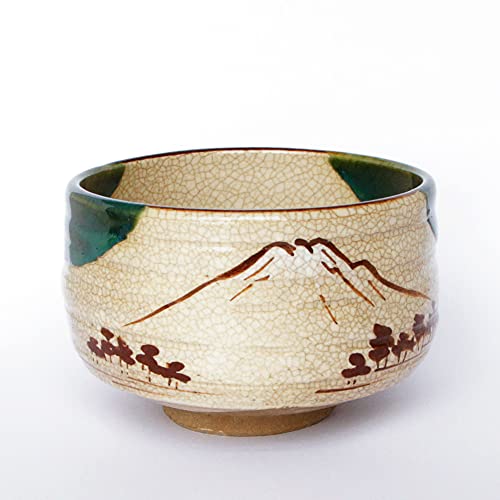
KIMIKURA Mt. Fuji Matcha Bowl Chawan
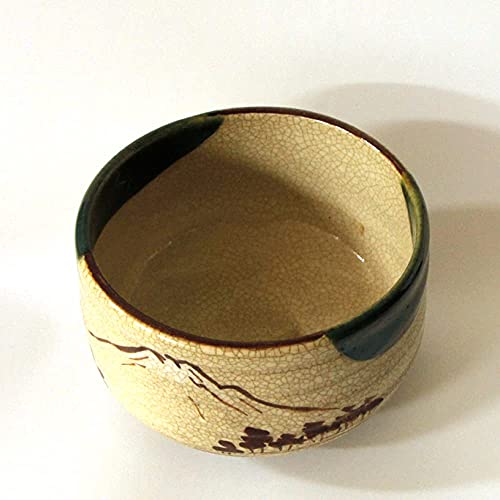
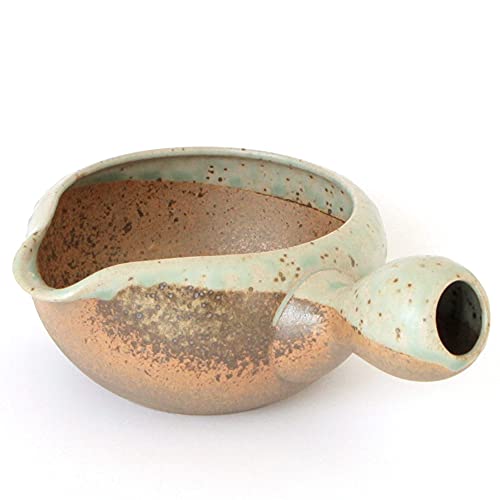
A KIMIKURA chawan featuring Mt. Fuji, made in Japan — a matcha bowl whose iconography does most of the visual lifting.
🎯 Best for: daily matcha preparation

✅ What Customers Love
- Mt. Fuji painted motif drives the visual character
- Intentional glaze irregularity reads as authentic
- Uniformly positive sentiment in the early sample
🎯 Best For
daily matcha preparation
Brand: KIMIKURA
Category: Matcha Bowls
As an Amazon Associate we earn from qualifying purchases.
About This Product
A KIMIKURA chawan featuring Mt. Fuji, made in Japan — a matcha bowl whose iconography does most of the visual lifting. Across an early sample of five reviewers the response is uniformly positive, with one calling out the 'cracked' glaze surface as an intentional irregularity that reads as authentic rather than flawed. Another describes the chawan as feeling and looking of decent quality. At this sample size the picture is provisional, but the signal so far is consistent.
We'd reach for this as a daily matcha bowl, particularly for buyers who connect with the Japanese provenance and Mt. Fuji iconography. One reviewer puts it plainly: 'it is what I need for matcha tea.' The appeal sits closer to aesthetics and daily ritual than to collector-grade craftsmanship, which suits a bowl meant to be used rather than displayed.
In use, treat the glaze irregularity as part of the object rather than a defect to work around. Because each bowl is hand-painted, the listing notes that glaze, texture, and painting will vary from piece to piece — worth knowing if you're matching a set or expecting a specific finish.
No material caveats have surfaced in the early reviewer sample, and there are no reported issues to flag. That said, with only five voices on record, the read is provisional rather than settled; buyers leaning on durability or finish consistency may want to revisit once a deeper review base accumulates.
As a daily-use chawan, it earns its place through the Mt. Fuji motif and the Mino-yaki provenance more than through any single performance claim — a bowl chosen for what it looks like across many mornings of matcha.
Is KIMIKURA Mt. Fuji Matcha Bowl Chawan Right for You?
What makes this KIMIKURA chawan visually distinctive?
The Mt. Fuji painted motif is the bowl's defining visual element — the iconography does most of the design work. One of five early reviewers explicitly calls out the artwork, and it matches the title-stated motif.
Is the 'cracked' glaze surface a defect or an intentional finish?
Based on a handful of early reviews, the irregular glaze appears to be an intentional aesthetic feature rather than a flaw — one reviewer describes the 'cracked' surface as reading authentic. With only five reviewers, this is provisional, but the signal aligns with traditional Japanese chawan finishing.
Is it actually made in Japan?
The listing positions it as Made in Japan, and KIMIKURA is the stated brand. The early reviewer set hasn't surfaced any contradiction on provenance, though at this review count that's more an absence of complaint than a confirmation.
Who is this chawan best suited for?
We'd reach for this as a daily matcha bowl, particularly for buyers who connect with the Japanese provenance and Mt. Fuji iconography. One reviewer frames it simply as 'it is what I need for matcha tea.'
Does it work for everyday matcha preparation?
Initial impressions suggest yes — early reviewers describe it as serving daily matcha needs rather than ceremonial-only use. With five reviewers in the sample, treat this as a workable signal rather than a settled verdict.
How well-made does the chawan feel in hand?
One of the five reviewers describes the bowl as feeling and looking of decent quality, and the broader sample registers uniformly positive sentiment with no negative aspects surfaced. At this sample size the quality picture is provisional rather than confirmed.
As an Amazon Associate we earn from qualifying purchases.
Are reviewers consistently positive about it?
All five early reviewers register positive sentiment, with zero negative aspects flagged in the data. That's a clean early signal, though five is a thin base — read it as encouraging rather than conclusive.
Would this make a thoughtful gift for a matcha drinker?
The Mt. Fuji motif and Japanese provenance give it a clear giftable angle for someone drawn to Japanese tea aesthetics. The early reviewer sample is uniformly positive, though with only five voices on record this remains an inference from limited data.
How should I care for a Japanese chawan like this?
General practice for a glazed Japanese matcha bowl is to hand-wash with warm water and a soft cloth, avoid detergent inside the bowl where matcha touches, and air-dry fully before storing. No reviewer in the early sample has flagged specific care issues for this piece.
What do we still not know about this chawan?
With five reviewers on record, several things stay open: exact diameter and capacity for whisking comfort, glaze durability over months of use, and how the painted motif holds up to repeated washing. Treat the picture as early-stage rather than settled.
Is the aesthetic appeal the main reason to choose this bowl?
Yes — the Mt. Fuji iconography is doing most of the visual lifting, and the one reviewer who praises the artwork reinforces that. Functional signals (whisking room, weight balance) aren't yet differentiated in the early review sample.
Category: How do you use a matcha bowl?
Warm the bowl with hot water first, then discard. Sift about 2 grams of matcha into the bowl, add roughly 60–70ml of water heated to 70–80°C (not boiling), and whisk briskly in a 'W' or 'M' motion with a bamboo chasen until a thick microfoam forms. Boiling water scalds the powder and pulls out bitter catechins, so water temperature and aerating motion are what separate a good bowl of matcha from a flat one.
As an Amazon Associate we earn from qualifying purchases.
Category: What signals quality in a matcha bowl?
Look for a wide, stable foot ring (kodai), a rim wide enough to whisk in (around 11–12 cm across), and evidence of handwork — slight asymmetry, visible throwing marks, or a hand-carved foot. The clay should feel substantial without being top-heavy, and the inside well (chadamari) should be smooth enough that powder doesn't catch. A signed tomobako (paulownia storage box) and an artist's seal are the strongest authenticity signals on higher-end Japanese bowls.
Category: Why are matcha bowls often asymmetrical or rough-looking?
In chawan tradition, irregularity, asymmetry, and rough texture are intentional aesthetic qualities, not defects. This reflects wabi-sabi — the appreciation for the imperfect, the impermanent, and the handmade — codified by tea master Sen no Rikyu in the 16th century. A perfectly symmetrical, machine-finished bowl is generally considered less interesting than one that reveals the potter's hand. The exception is real defects: sharp edges, instability, or a cracked (not crackled) wall, which are flaws regardless of style.
What Makes This Product Special
⚠️ Preliminary analysis based on 5-review sample • Our methodology
- Mt. Fuji painted motif drives the visual character
- Intentional glaze irregularity reads as authentic
- Uniformly positive sentiment in the early sample
Quality & Care
Five reviewers respond uniformly positively, with one calling out the 'cracked' glaze surface as an intentional irregularity that reads as authentic rather than flawed. Another describes the chawan as feeling and looking of decent quality — at this sample size the picture is provisional.
Best Use Cases
🎯 Best For
- daily matcha preparation
How People Use It
We'd reach for this as a daily matcha bowl, particularly for buyers who connect with the Japanese provenance and Mt. Fuji iconography. One reviewer simply notes 'it is what I need for matcha tea.'
About This Analysis
This analysis is based on 5 customer reviews. We're showing you everything we found, but with a moderate sample, there's a lot we likely haven't captured yet.
✅ What we're confident about: What customers love and best use cases
⚠️ What may be incomplete: Potential issues and considerations
For more perspectives, check customer reviews on Amazon.
Product Selection
In short: We only feature high-rated products.
Products on TeaDelight.net are selected based on strong Amazon customer ratings, sufficient review volume, and market presence. We focus on well-regarded products that tea enthusiasts are actively considering and purchasing.
As an Amazon Associate we earn from qualifying purchases.
You Might Also Like
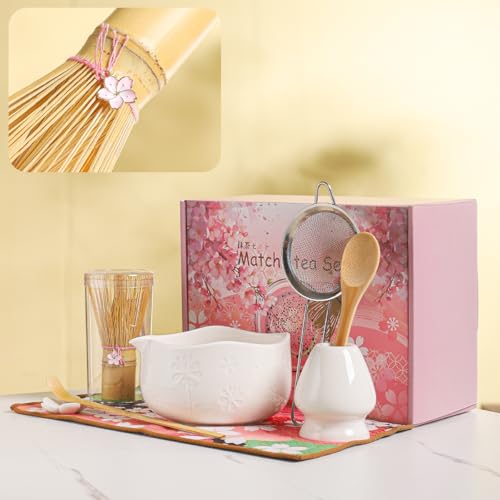
✅ Beautiful presentation
DWEHIXBUY Handcrafted Matcha Bowl Set

✅ Pastel design with cherry-blossom and heart-print detail
YumiPLUS Pink Matcha Bowl Set with Whisk Stand
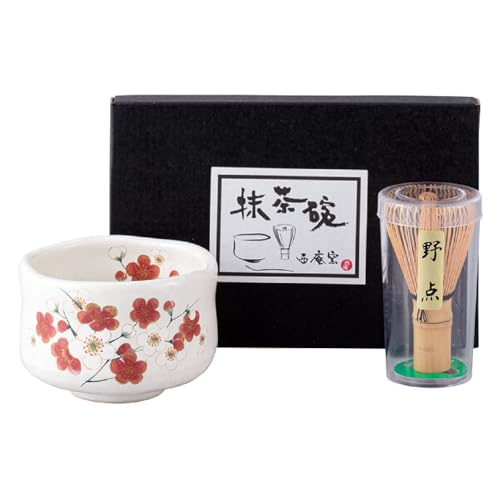
✅ Visual character is the dominant positive signal
Waraku Fuuka Mino Ware Matcha Bowl & Whisk Set
✅ Aesthetic appeal tied to Tokoname provenance