


We analyze real customer reviews to surface what matters: key strengths, ideal use cases, and honest considerations — so you can make an informed choice.
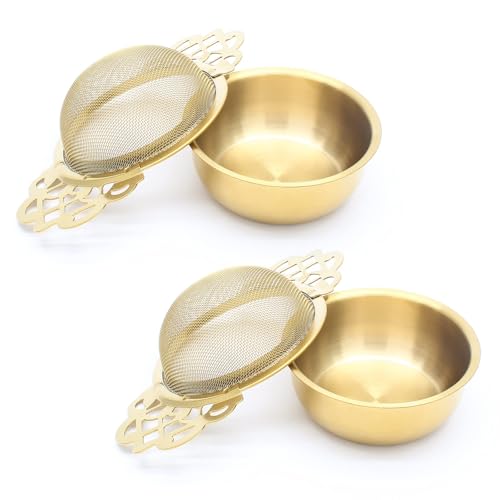
SOLSTICE TEA TRADERS Empress Tea Strainers with Drip Bowls
Stainless steel over-cup strainers paired with drip catcher bowls, designed for pouring loose leaf tea from teapot to cup with a clean, elegant presentation.
🎯 Best for: English-style tea service (pot to cup straining), Loose leaf tea drinkers who brew in teapots

✅ What Customers Love
- Elegant, attractive design enhances tea service (6 mentions)
- Fine mesh catches small tea leaf particles effectively (5 mentions)
- Drip bowl/catcher included prevents mess (5 mentions)
🎯 Best For
English-style tea service (pot to cup straining) • Loose leaf tea drinkers who brew in teapots • Traditional afternoon tea presentation • Small to medium mouth teacups
Brand: SOLSTICE TEA TRADERS
Category: Infusers & Strainers
As an Amazon Associate we earn from qualifying purchases.
About This Product
Fine mesh catches even small leaf particles when pouring from teapot to cup, and each strainer rests in its own drip bowl to prevent countertop mess between pours. Reviewers report the stainless steel holds up for years without rusting, and cleanup requires only a quick rinse. The shallow mesh design is built for pour-through straining, not for steeping directly in a cup — users who want an infuser will need a different tool. They fit standard teacup rims well, but wide-mouth mugs can cause them to slip in. Best suited to loose leaf drinkers who brew in a teapot and want a traditional, tidy table service.
Is SOLSTICE TEA TRADERS Empress Tea Strainers with Drip Bowls Right for You?
How do you use a tea strainer with a drip cup?
Place the Solstice Empress strainer over your teacup so the handles rest on the rim. Pour your brewed tea from the teapot through the strainer — it catches all the loose leaves and particles. When you're done pouring, lift the strainer and set it into the included drip bowl, which catches any remaining liquid so it doesn't drip onto your counter or table. That's the whole process — reviewers love how simple and mess-free it is compared to other methods.
Why does this come with a drip bowl?
The drip bowl is one of the most appreciated features. When you lift the strainer off your cup after pouring, it's still holding wet tea leaves that drip. The bowl gives you somewhere to set the strainer down without creating a puddle on your table or counter. It's a small detail, but reviewers specifically mention how much cleaner their tea service is because of it — no more hunting for a saucer or paper towel to catch drips.
Is the Solstice Empress tea strainer easy to clean?
Very easy, according to multiple reviewers. The simple design with no complex parts means you just rinse it under running water or give it a quick scrub. The stainless steel doesn't stain or hold onto tea residue the way silicone or plastic can. It's also dishwasher safe if you prefer hands-off cleaning. There are no hard-to-reach crevices where leaves get trapped, which is a common complaint with ball infusers and novelty-shaped infusers.
Does the fine mesh really catch small tea particles?
Yes, this is one of the most frequently praised features. Multiple reviewers specifically mention that the fine mesh catches small leaf particles that slip through other strainers. If you've been frustrated by bits of tea at the bottom of your cup with cheaper strainers, this is a meaningful upgrade. It works well even with finely cut teas and herbals that tend to produce smaller particles.
Will this tea strainer fit my mug?
The Solstice Empress strainers fit most standard teacups and mugs — reviewers confirm this across a variety of cup sizes. However, if you use extra-large or wide-mouth mugs, there's a chance the strainer could slip in rather than rest securely on the rim. For standard teacups, especially the kind you'd use for English-style tea service, the fit is good. If you're unsure, measure your cup's opening — anything up to a standard mug width should work fine.
Can I use this tea strainer as an infuser to steep tea in my cup?
That's not recommended. The Empress is designed as a pour-through strainer, not a steeping infuser. Reviewers who tried using it as an infuser found it too shallow — the leaves don't have enough depth to properly steep, and the mesh doesn't extend far enough into the cup. If you need to steep directly in a mug, look for a basket-style infuser instead. Use this the way it's intended — brew in a pot, strain into a cup — and it excels.
As an Amazon Associate we earn from qualifying purchases.
How long does the Solstice Empress tea strainer last?
Reviewers report using these strainers for years with no rusting or degradation of the stainless steel. The mesh holds up well to regular use and cleaning. The one durability concern some reviewers mention is that the handles appear to be glued rather than welded, so treating them gently when lifting them off the cup (rather than prying or twisting) will help them last longer.
How does the Solstice Empress strainer look on a tea table?
It's a looker. The elegant design is actually the most mentioned positive feature in reviews — six separate reviewers called out its attractive appearance. It adds a touch of classic sophistication to afternoon tea or everyday brewing. The stainless steel has a polished finish, and the drip bowl complements the strainer nicely. If presentation matters to your tea experience, this set delivers.
How do you use an infuser?
Since the Solstice Empress is actually a strainer rather than an infuser, the process is a bit different. You brew your loose leaf tea in a teapot first, letting the leaves steep freely. Then you place the strainer over your cup and pour the tea through it. The fine mesh catches the leaves, and when you're done, the drip bowl gives you a clean place to rest the strainer. Don't try to use it as an infuser by placing tea leaves inside and steeping — it's too shallow for that, and that's not what it's designed for.
Who is the Solstice Empress tea strainer best for?
It's ideal for anyone who brews loose leaf tea in a teapot and pours into cups — the classic English tea service method. Tea enthusiasts love the elegant presentation and the fine mesh quality for high-grade leaves. It also appeals to people who host afternoon tea or want their tea ritual to feel a bit more special. It's not the right choice if you want to steep tea directly in a mug — for that, you'd want a basket infuser instead.
Is this good for someone new to loose leaf tea?
It's a great entry point. The design is completely intuitive — place it on your cup, pour, done. There are no complicated parts, no measuring scoops to figure out, and cleaning is effortless. The set of two is nice for beginners because you can share one with a friend who's also learning, or keep a backup. The only thing to know is that you'll need a teapot to brew in, since this is a strainer (catches leaves when pouring) not an infuser (steeps leaves in your cup).
Can you use loose leaf tea infuser strainers for things other than tea?
Surprisingly, yes. Reviewers have found some creative uses for the Solstice Empress strainers beyond tea — straining oil infusions like lavender or hot pepper oil, filtering the film from apple cider vinegar, and straining small batch ingredients. The fine mesh and manageable size make them handy for any small-quantity straining job in the kitchen. That said, if you use them for strongly flavored infusions, you might want to dedicate one strainer to that purpose.
As an Amazon Associate we earn from qualifying purchases.
Can you use this strainer for cold brew tea?
Yes — reviewers have used the Solstice Empress for cold brew tea preparation. You'd steep your leaves in a pitcher of cold water in the fridge, then pour through the strainer into your glass or serving vessel. The fine mesh works just as well with cold liquid as hot. It's actually a nice method because cold brew tea produces very smooth, low-bitterness results, and the strainer gives you a clean pour every time.
Is the Solstice Empress tea strainer dishwasher safe?
Yes, it's dishwasher safe. That said, most reviewers find it so quick to rinse by hand that the dishwasher isn't even necessary. A quick rinse under running water after each use is usually all it takes. The stainless steel construction means you don't have to worry about rust or corrosion from either cleaning method.
What is the difference between a strainer and an infuser?
A strainer sits on top of your cup and catches tea leaves as you pour from a teapot — it's a passive filter. An infuser, on the other hand, holds the tea leaves inside it while they steep in the water. The Solstice Empress is a strainer, not an infuser, which means it's designed for the classic English tea service method: brew your tea in a pot, then pour through the strainer into your cup. If you're looking to steep leaves directly in a mug, you'd want an infuser instead.
What type of tea infuser is best?
It depends on how you brew. If you use a teapot and pour into cups, a traditional over-cup strainer like the Solstice Empress is ideal — the fine mesh catches even small leaf particles, and the drip bowl keeps things tidy between pours. If you brew single cups, a basket infuser or ball infuser gives leaves more room to expand. The Empress strainers are specifically best for teapot-to-cup service, and reviewers consistently praise how well the fine mesh catches particles that other strainers miss.
How to choose an infuser or strainer for tea?
Start with how you brew. If you make tea in a teapot and pour into cups, you want a strainer like the Solstice Empress. If you brew in a single mug, get a basket infuser. Key things to look for: fine mesh (so small leaf particles don't slip through), durable stainless steel construction, and a design that fits your cups. The Empress strainers fit most standard teacups and mugs, though reviewers note they may not span extra-wide mouth mugs. The included drip bowl is a nice bonus that many cheaper strainers skip.
How does an infuser work?
A strainer like the Solstice Empress works by passive filtration — you pour already-brewed tea through the fine stainless steel mesh, and it catches the leaves while letting the liquid pass into your cup. It's the same principle used in traditional English and Chinese tea service for centuries. The key is the mesh quality: the Empress uses a fine enough mesh that reviewers report it catches even small leaf particles, which cheaper strainers often miss.
As an Amazon Associate we earn from qualifying purchases.
How to make loose tea with an infuser?
With the Solstice Empress strainer, the method is traditional English-style: add your loose leaves directly to a teapot, pour in hot water, and let them steep for the recommended time (varies by tea type). Then place the strainer over your cup and pour. The fine mesh catches everything, even small particles from teas like rooibos or CTC black tea. This free-steeping method actually produces better flavor than most infusers because the leaves have room to fully expand and release their flavor in the pot.
What's the difference between an infuser and a diffuser?
In the tea world, an infuser holds loose leaves in water so they can steep and release flavor. A diffuser is essentially the same thing — the terms are often used interchangeably. A strainer like the Solstice Empress is different from both: it doesn't hold leaves during steeping. Instead, you brew tea in a teapot and pour through the strainer to catch the leaves. Think of it as the final filtering step rather than the steeping step.
What Makes This Product Special
⚠️ Preliminary analysis based on 22-review sample • Our methodology
- Elegant, attractive design enhances tea service (6 mentions)
- Fine mesh catches small tea leaf particles effectively (5 mentions)
- Drip bowl/catcher included prevents mess (5 mentions)
- Easy to clean (4 mentions)
- Durable stainless steel, no rusting (4 mentions)
- Fits most standard teacups and mugs (4 mentions)
- Good value - comes as set of 2 (3 mentions)
- Dishwasher safe (1 mentions)
Best Use Cases
🎯 Best For
- English-style tea service (pot to cup straining)
- Loose leaf tea drinkers who brew in teapots
- Traditional afternoon tea presentation
- Small to medium mouth teacups
- Cold brew tea straining
⚠️ Not Ideal For
- Use as tea infuser (too shallow, mesh too short)
- Steeping tea directly in cup (not designed for this)
- Extra-large wide-mouth mugs (may fall in)
What to Consider
- Handles can arrive broken or detached (glue failure) (3 mentions)
- Too shallow to use as tea infuser (2 mentions)
- Can fall into cup if used with wide-mouth mugs (1 mentions)
- Fragile - broke after minimal use (1 mentions)
- Short diameter may not fit all traditional teacups perfectly (1 mentions)
⚠️ based on 22-review sample. Some issues may not be captured.
About This Analysis
This analysis is based on 22 customer reviews. We're showing you everything we found, but with a moderate sample, there's a lot we likely haven't captured yet.
✅ What we're confident about: What customers love and best use cases
⚠️ What may be incomplete: Potential issues and considerations
For more perspectives, check customer reviews on Amazon.
Product Selection
In short: We only feature high-rated products.
Products on TeaDelight.net are selected based on strong Amazon customer ratings, sufficient review volume, and market presence. We focus on well-regarded products that tea enthusiasts are actively considering and purchasing.
As an Amazon Associate we earn from qualifying purchases.
You Might Also Like
✅ Fine mesh filters out particles effectively
Bonsicoky Tea Strainer Bowl with Drip Tray

✅ Fine mesh prevents leaves from escaping into cup
Teabloom Universal Loose Tea Infuser with Lid

✅ Extra-fine mesh filters extremely well, minimal tea particles
FORLIFE Brew-in-Mug Extra-Fine Tea Infuser

✅ Extra fine mesh prevents even tiny tea particles from escaping