


We analyze real customer reviews to surface what matters: key strengths, ideal use cases, and honest considerations — so you can make an informed choice.
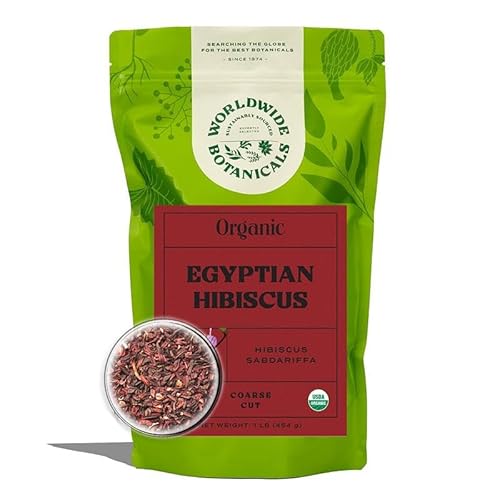
Worldwide Botanicals Organic Hibiscus Tea
Tart, floral, and brilliantly red — a concentrated Egyptian hibiscus where one teaspoon brews three to six cups.
🎯 Best for: iced preparation and pitcher service, hot infusion
🍃 Strength: Bold

🍃 Flavor Profile
Strength: Bold
Tart leads the profile, with a floral aroma backing it and dried-fruit notes appearing in a few cups. The brew steeps to a brilliant red — beet-juice deep when concentrated — with reviewers calling out the color as much as the flavor.
✅ What Customers Love
- Versatile across iced and hot service
- Concentrated leaf — small dose, large yield
- Organic and caffeine-free
🎯 Best For
iced preparation and pitcher service • hot infusion • all-day caffeine-free hydration • blending with other herbal teas
Brand: Worldwide Botanicals
Category: Herbal Tea
As an Amazon Associate we earn from qualifying purchases.
About This Herbal Tea
Tart, floral, and brilliantly red, this Egyptian hibiscus is a concentrated loose-leaf where one teaspoon brews three to six cups. Tart leads the profile, with a floral aroma backing it and dried-fruit notes appearing in a few cups. The brew steeps to a brilliant red — beet-juice deep when concentrated — and reviewers call out the color as much as the flavor.
We'd reach for it iced first, with hot service close behind. Five reviewers describe pitcher pours and all-day drinking, calling it an everyday favorite and a pantry staple. A few stir in honey or sugar to soften the tartness, and several reviewers prefer it to whole-flower hibiscus and supermarket loose-leaf alternatives. Caffeine-free, it suits hydration-focused drinkers and anyone looking for an everyday herbal pour rather than a morning lift.
A teaspoon goes a long way. Reviewers warn against overloading the cup, and the cut-and-sifted leaf brews concentrated, so start light and build up to your preferred strength. For iced service, brew strong and pour over ice; for hot, ease into the dose until the tartness lands where you want it. Honey or sugar will soften the edge, and a splash of sparkling water turns a chilled pour into an iced spritz. It also blends well with other herbal infusions if you want to round out the profile.
One reviewer notes it can cause slight stomach upset on a fully empty stomach, so sensitive drinkers may prefer it alongside food. Beyond that, feedback is consistently positive — versatile across iced and hot service, vibrant in the cup, and a repeat purchase for several reviewers.
Start with a light teaspoon, brew to your preferred strength, and keep a pitcher in the fridge for the week.
Is Worldwide Botanicals Organic Hibiscus Tea Right for You?
What does this hibiscus tea taste like?
Tart leads the profile, with a floral aroma backing it and dried-fruit notes appearing in a few cups. Across 12 eligible reviewers, tart is the most-cited descriptor, and the brew runs bold rather than mild.
How strong is the brew?
It's concentrated — a teaspoon of the cut-and-sifted leaf brews three to six cups, and reviewers warn against overloading the serving. Start light and build up to your preferred strength.
Is this better iced or hot?
We'd reach for it iced first, with hot service close behind — 5 of 12 eligible reviewers describe iced pours and 4 describe hot infusion. A few use it as a pitcher concentrate diluted throughout the day.
Does it contain caffeine?
No — hibiscus is naturally caffeine-free, and one reviewer specifically calls this out as a caffeine-free option for all-day hydration. Suitable any time of day, including evenings.
What color does it brew?
Brilliant red — beet-juice deep when concentrated. Six reviewers call out the color specifically, often alongside the flavor as a defining feature.
Is it too tart to drink plain?
Some reviewers find it sharp enough that they stir in honey or sugar to soften the tartness, while others prefer it plain. One reviewer notes it can be overwhelmingly tart if over-served, which loops back to the small-dose guidance.
As an Amazon Associate we earn from qualifying purchases.
Can I drink this on an empty stomach?
One reviewer notes slight stomach upset when drinking it before eating, so sensitive drinkers may want food first. Most reviewers don't flag this, but the signal is worth knowing if you're prone to acid sensitivity.
How does this compare to bagged or supermarket hibiscus?
Several reviewers favorably compare it to whole-flower hibiscus and grocery-aisle loose-leaf options, calling it more fragrant and brightly colored than dried hibiscus they'd bought elsewhere. One says they won't go back to non-loose-leaf hibiscus after trying this.
What does it pair well with?
Honey or sugar soften the tartness, and one reviewer mixes it with sparkling water for an iced spritz. It also blends well with other herbal teas if you want to round out the profile.
Is the 8 oz bag really enough to last?
Yes — because the leaf brews concentrated, one reviewer notes a single package makes a gallon or more depending on potency, and five reviewers signal repeat-purchase intent rather than running through it quickly. A little goes a long way at 226 g of cut-and-sifted leaf.
Is this single-origin or a blend?
It's single-origin Egyptian Hibiscus sabdariffa in cut-and-sifted loose form — the listing identifies it as 100% Egyptian hibiscus, also known as karkade, roselle, sorrel, zobo, or flor de Jamaica. No blending with other herbs in the bag itself.
Category: What exactly is herbal tea?
Herbal tea, more accurately called a tisane, is any infusion made from plant material other than Camellia sinensis (the true tea plant). It can be brewed from leaves, flowers, roots, barks, seeds, or fruits of thousands of species, from chamomile flowers to rooibos needles to ginger root. The word 'tea' is colloquial here; botanically, only Camellia sinensis produces real tea.
As an Amazon Associate we earn from qualifying purchases.
Category: Can herbal tea be cold-brewed?
Yes, and it works especially well for fruit tisanes and hibiscus. Place the herbs in cold water and refrigerate for 8-12 hours. Cold brewing produces a smoother, sweeter profile, avoids the 'cooked' notes that hot steeping can pull out of hibiscus, and preserves heat-sensitive nutrients like vitamin C. Mugicha (roasted barley tea) is also commonly cold-brewed in East Asia as a summer staple.
Category: How are herbal tea blends usually built?
A common formulation follows a 60-30-10 structure. The base (60%) is mild and bulky—rooibos, nettle, oatstraw, or lemon balm provide the foundation. The modifier or support (30%) drives the therapeutic effect or main flavor—peppermint, hibiscus, tulsi, cinnamon chips. The accent (10%) is potent and would overpower the cup at higher proportions—lavender, cloves, ginger, citrus peel, rose petals. This balance is why a well-blended tisane tastes layered rather than flat.
What Makes This Product Special
⚠️ Preliminary analysis based on 18-review sample • Our methodology
- Versatile across iced and hot service
- Concentrated leaf — small dose, large yield
- Organic and caffeine-free
- Vibrant red color noted across reviews
- Repeat-purchase intent and consistently positive sentiment
Taste Profile
Tart leads the profile, with a floral aroma backing it and dried-fruit notes appearing in a few cups. The brew steeps to a brilliant red — beet-juice deep when concentrated — with reviewers calling out the color as much as the flavor.
- Honey to soften tartness
- Sugar to balance sourness
- Sparkling water for an iced spritz
- Blended with other herbal infusions
Brewing: A teaspoon goes a long way — reviewers warn against overloading the cup, and the cut-and-sifted leaf brews concentrated, so start light and build up to your preferred strength.
Best Use Cases
🎯 Best For
- iced preparation and pitcher service
- hot infusion
- all-day caffeine-free hydration
- blending with other herbal teas
⚠️ Not Ideal For
- morning caffeine lift or energy boost
- drinking on a fully empty stomach for sensitive drinkers
How People Use It
We'd reach for it iced first, with hot service close behind — five reviewers describe pitcher pours and all-day drinking, calling it an everyday favorite and a pantry staple. A few stir in honey or sugar to soften the tartness, and several reviewers prefer it to whole-flower hibiscus and supermarket loose-leaf alternatives.
Good for Beginners
✅ Yes
- Forgiving dose: one teaspoon brews multiple cups
- Caffeine-free, suitable any time of day
- Uniformly positive sentiment across reviewers
For Experienced Users
✅ Worth Exploring
- Single-origin Egyptian sabdariffa in cut-and-sifted loose form rather than bagged
- Reviewers favorably compare it to whole-flower hibiscus and supermarket loose options
About This Analysis
This analysis is based on 18 customer reviews. We're showing you everything we found, but with a moderate sample, there's a lot we likely haven't captured yet.
✅ What we're confident about: What customers love and best use cases
⚠️ What may be incomplete: Potential issues and considerations
For more perspectives, check customer reviews on Amazon.
Product Selection
In short: We only feature high-rated products.
Products on TeaDelight.net are selected based on strong Amazon customer ratings, sufficient review volume, and market presence. We focus on well-regarded products that tea enthusiasts are actively considering and purchasing.
As an Amazon Associate we earn from qualifying purchases.
You Might Also Like
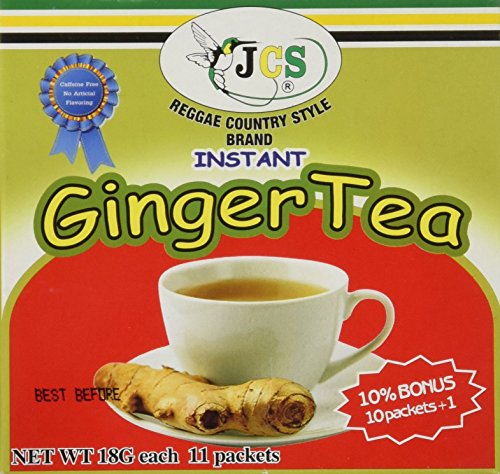
✅ Pronounced ginger character
JCS Instant Ginger Tea
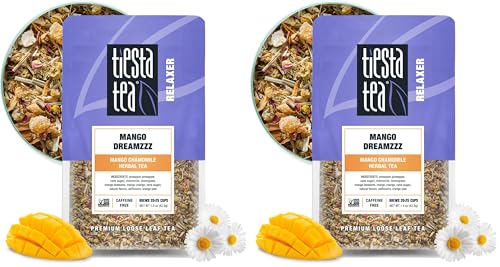
✅ Presentation and gift-readiness
Tiesta Tea Mango Chamomile Loose Leaf Herbal Tea
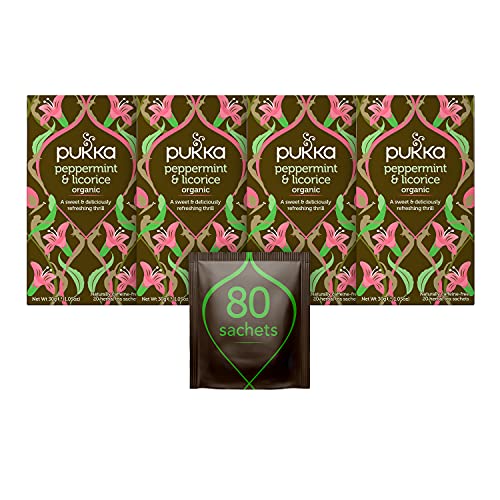
✅ Sweet, refreshing flavor that wins over licorice skeptics
Pukka Peppermint and Licorice Herbal Tea

✅ Versatile across morning and evening use