



We analyze real customer reviews to surface what matters: key strengths, ideal use cases, and honest considerations — so you can make an informed choice.
Starwest Botanicals Organic Hibiscus Heaven Tea
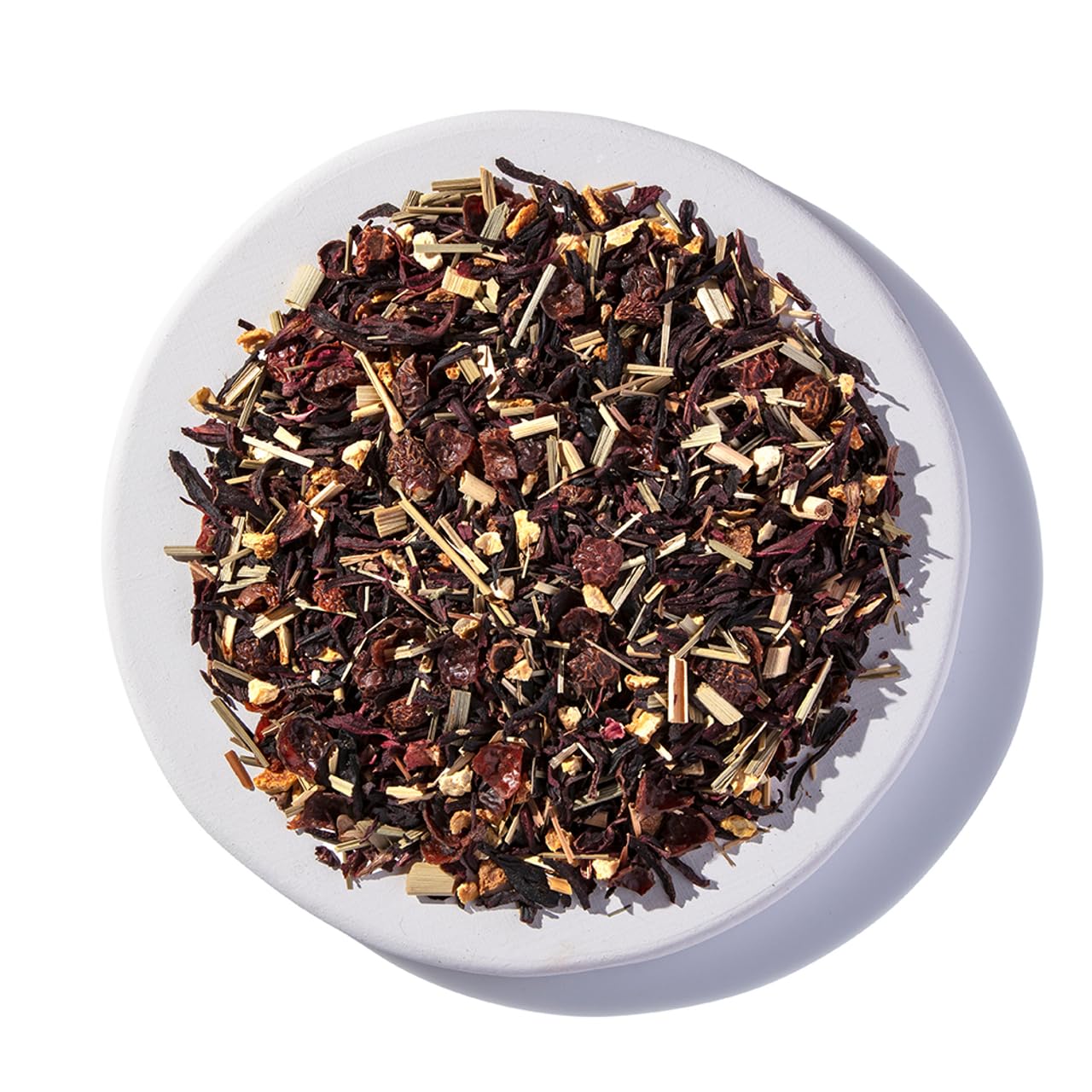
Tart, deep-crimson, and built for the pitcher — an organic hibiscus blend with cranberry-cherry brightness and a citrus lift.
🎯 Best for: iced tea and pitcher-batch preparation, summer hydration with natural tart-fruit character
🍃 Strength: Bold

🍃 Flavor Profile
Strength: Bold
Tart leads (three of nine reviewers), supported by citrus and lemon brightness with a cranberry-cherry character reviewers describe as more herbal and stronger than Celestial Seasonings Red Zinger. The finish reads tart-fruity rather than sweet, without the acidic edge cranberry juice can leave.
✅ What Customers Love
- Bold tart-fruity character with cranberry-cherry depth
- Holds up to boiling and extended steeps without off-flavors
- Versatile across hot and iced preparations
🎯 Best For
iced tea and pitcher-batch preparation • summer hydration with natural tart-fruit character • caffeine-free organic herbal infusion
Brand: Starwest Botanicals
Category: Herbal Tea
As an Amazon Associate we earn from qualifying purchases.
About This Herbal Tea
Tart, deep-crimson, and built for the pitcher — an organic hibiscus blend with cranberry-cherry brightness and a citrus lift. Three of nine reviewers lead with tart, supported by citrus and lemon notes and a cranberry-cherry character that reviewers describe as more herbal and stronger than Celestial Seasonings Red Zinger. The finish reads tart-fruity rather than sweet, without the acidic edge cranberry juice can leave.
Iced preparations lead the use cases, with four of nine reviewers reaching for sun tea, pitcher batches, and hot-day refreshment — though hot-brew shows up too. It's a caffeine-free organic infusion that fits evening drinking and summer hydration equally well, and the natural tart-fruit balance carries it without sweetening.
One reviewer brews a concentrate then dilutes 1:2 with water, noting no off-flavors from extended steeps — useful if you're batching ahead for a pitcher. Honey and agave are the most-mentioned sweeteners (three and two reviewers respectively), and a lemon or lime wedge is a common finish. If the mint already present reads prominent for your palate, one reviewer blends with peppermint tea to soften it.
Two of nine reviewers wished the lemon stood out more against the dominant hibiscus, and another two flagged the price as steep against buying plain hibiscus flowers. If you want a pronounced lemon presence or are optimizing for rock-bottom cost over blended convenience, this isn't the pick. It's also not a wake-up infusion — caffeine-free by design.
Reach for it unsweetened in a pitcher on a hot day, or steep long without worrying about off-flavors.
Is Starwest Botanicals Organic Hibiscus Heaven Tea Right for You?
What does this hibiscus tea actually taste like?
Tart leads — three of nine reviewers call it out — supported by citrus brightness and a cranberry-cherry character. The finish reads tart-fruity rather than sweet, without the acidic edge straight cranberry juice can leave.
Is it better iced or hot?
Iced is the dominant use case — four of nine reviewers brew it as sun tea, in pitchers, or for hot-day refreshment. Hot brewing shows up too, but the tart-fruit profile reads as built for the pitcher.
Can I drink this in the evening?
Yes — it's a caffeine-free organic herbal blend, which the synthesis flags as suitable for evening drinking. With nine reviews on the page, the call is grounded in product attributes rather than a heavy reviewer signal.
How prominent is the lemon?
Weak, for some palates. Two of nine reviewers wished the lemon stood out more against the dominant hibiscus, so don't expect a lemon-forward cup — the hibiscus carries the blend.
How does it compare to Celestial Seasonings Red Zinger?
Broadly similar but with more body. One reviewer describes it as more herbal and stronger than Red Zinger, and not as mild or simply fruity as other Celestial Seasonings blends — limited evidence, but consistent across the comparison mentions.
What sweeteners or pairings work with it?
Honey is the most-mentioned pairing (three of nine reviewers), followed by agave (two of nine), with the occasional lemon or lime wedge. The natural tart-fruit balance also holds up unsweetened.
As an Amazon Associate we earn from qualifying purchases.
Can I brew a concentrate and dilute it later?
Yes — one reviewer brews a concentrate then dilutes 1:2 with water and reports no off-flavors from the extended steep. Useful for pitcher prep, though the technique rests on a single reviewer's account.
Is this a good first hibiscus tea to try?
Yes. The cranberry-cherry profile is familiar, there's no acidic aftertaste, and the caffeine-free organic blend is low-stakes to try at any time of day — the synthesis explicitly flags it as beginner-friendly.
Is the mint noticeable in the blend?
For some palates, yes. One of nine reviewers found the minty notes quite prominent — limited signal, but worth flagging if you're mint-averse since the blend may read busier than expected.
Does it hold up to boiling water and long steeps?
It appears to. One reviewer reports no off-flavors from extended brewing and notes that a second long steep actually pulls more flavor — limited evidence at this review count, but consistent with the bold tart-fruit character.
Category: What exactly is herbal tea?
Herbal tea, more accurately called a tisane, is any infusion made from plant material other than Camellia sinensis (the true tea plant). It can be brewed from leaves, flowers, roots, barks, seeds, or fruits of thousands of species, from chamomile flowers to rooibos needles to ginger root. The word 'tea' is colloquial here; botanically, only Camellia sinensis produces real tea.
Category: Can herbal tea be cold-brewed?
Yes, and it works especially well for fruit tisanes and hibiscus. Place the herbs in cold water and refrigerate for 8-12 hours. Cold brewing produces a smoother, sweeter profile, avoids the 'cooked' notes that hot steeping can pull out of hibiscus, and preserves heat-sensitive nutrients like vitamin C. Mugicha (roasted barley tea) is also commonly cold-brewed in East Asia as a summer staple.
As an Amazon Associate we earn from qualifying purchases.
Category: How are herbal tea blends usually built?
A common formulation follows a 60-30-10 structure. The base (60%) is mild and bulky—rooibos, nettle, oatstraw, or lemon balm provide the foundation. The modifier or support (30%) drives the therapeutic effect or main flavor—peppermint, hibiscus, tulsi, cinnamon chips. The accent (10%) is potent and would overpower the cup at higher proportions—lavender, cloves, ginger, citrus peel, rose petals. This balance is why a well-blended tisane tastes layered rather than flat.
What Customers Love
⚠️ Limited sample based on limited customer feedback (9 reviews) • Our methodology
- Bold tart-fruity character with cranberry-cherry depth
- Holds up to boiling and extended steeps without off-flavors
- Versatile across hot and iced preparations
- Organic, caffeine-free, suitable for evening drinking
Taste Profile
Tart leads (three of nine reviewers), supported by citrus and lemon brightness with a cranberry-cherry character reviewers describe as more herbal and stronger than Celestial Seasonings Red Zinger. The finish reads tart-fruity rather than sweet, without the acidic edge cranberry juice can leave.
- honey
- agave
- lemon or lime wedge
- blended with peppermint tea to soften the mint already present
Brewing: One reviewer brews a concentrate then dilutes 1:2 with water, noting no off-flavors from extended steeps.
Best Use Cases
🎯 Best For
- iced tea and pitcher-batch preparation
- summer hydration with natural tart-fruit character
- caffeine-free organic herbal infusion
⚠️ Not Ideal For
- anyone seeking a caffeinated wake-up infusion
- drinkers wanting a pronounced lemon presence
- buyers prioritizing rock-bottom price over blended convenience
How People Use It
Iced preparations lead the use cases (four of nine reviewers) — sun tea, pitcher batches, hot-day refreshment — though hot-brew shows up too. Honey and agave are the most-mentioned sweeteners, and we'd reach for this unsweetened given the natural fruit-tart balance.
Good for Beginners
✅ Yes
- Familiar tart cranberry-cherry profile with no acidic aftertaste
- Caffeine-free and organic — low-stakes to try at any time of day
- Forgiving across boiling and extended steeps
What to Consider
Two of nine reviewers wished the lemon stood out more against the dominant hibiscus; another two flagged the price as steep against plain hibiscus flowers.
- Lemon presence reads weak against the dominant hibiscus
- Premium pricing relative to plain hibiscus flowers
- Mint can read as prominent for some palates
⚠️ Important: This analysis is based on limited customer feedback (9 reviews). We've shared what we found, but there may be additional considerations we haven't captured.
About This Analysis
This analysis is based on 9 customer reviews. We're showing you everything we found, but with a small sample, there's a lot we likely haven't captured yet.
✅ What we're confident about: What customers love and best use cases
⚠️ What may be incomplete: Potential issues and considerations
For more perspectives, check customer reviews on Amazon.
Product Selection
In short: We only feature high-rated products.
Products on TeaDelight.net are selected based on strong Amazon customer ratings, sufficient review volume, and market presence. We focus on well-regarded products that tea enthusiasts are actively considering and purchasing.
As an Amazon Associate we earn from qualifying purchases.
You Might Also Like

✅ Sweet, refreshing flavor that wins over licorice skeptics
Pukka Peppermint and Licorice Herbal Tea

✅ Pronounced ginger character
JCS Instant Ginger Tea

✅ Versatile across morning and evening use
Bigelow Cinnamon Apple Herbal Tea
✅ Strong efficacy signal for milk-supply increase