
Available Alternatives

✅ Strong repeat-purchase loyalty
Herbalife Herbal Tea Concentrate Lemon

✅ Versatile across morning and evening use
Bigelow Cinnamon Apple Herbal Tea

✅ lavender-chamomile pairing dominates the flavor impression
Elevate Lavender Chamomile Loose Leaf Herbal Tea

✅ Soothing, throat-coating character that pairs well with sore-throat relief
Traditional Medicinals Cold Care Seasonal Tea




We analyze real customer reviews to surface what matters: key strengths, ideal use cases, and honest considerations — so you can make an informed choice.
Starwest Botanicals Organic Hibiscus Flowers
An organic, caffeine-free hibiscus in loose-leaf bulk form — pitcher-friendly, refrigerator-bound, and refilled weekly by a clear circle of repeat buyers.
🎯 Best for: Cold-brewed pitchers for the fridge, Blending with other teas (sencha, oolong) for layered cups
🍃 Strength: Medium

🍃 Flavor Profile
Strength: Medium
The cup pours a deep, dark red. Tart leads — three of twenty-one reviewers reach for it, the most-cited taste descriptor — with floral, sweet, and brisk notes layered behind. We'd call this a hibiscus that wants a sweetener or a citrus lift to land at its best.
✅ What Customers Love
- Deep-red, vibrant cup with tart-forward character
- Repeat-buyer loyalty — a clear core of returning customers
- Strong value at bulk-pound scale
🎯 Best For
Cold-brewed pitchers for the fridge • Blending with other teas (sencha, oolong) for layered cups • Everyday caffeine-free hydration
Brand: Starwest Botanicals
Category: Herbal Tea
As an Amazon Associate we earn from qualifying purchases.
About This Herbal Tea
An organic, caffeine-free hibiscus in loose-leaf bulk form — pitcher-friendly, refrigerator-bound, and refilled weekly by a clear circle of repeat buyers. The cup pours a deep, dark red. Tart leads — three of twenty-one reviewers reach for it, the most-cited taste descriptor — with floral, sweet, and brisk notes layered behind. We'd call this a hibiscus that wants a sweetener or a citrus lift to land at its best.
Most reviewers brew this cold or iced, with overnight fridge-steeping the most-described technique. Pairings include agave or simple syrup, True Lemon, chia seeds for a fresca-style drink, and sometimes a splash of LaCroix or sparkling water; a few reviewers blend it with sencha or oolong for depth. We'd reach for this when planning a fridge pitcher to top up across the week. Seven of twenty-one reviewers signal repeat-purchase intent.
The technique reviewers most often describe is overnight cold brew in the fridge followed by a strain. For hot preparation, brewing 10–20 minutes draws out the full hibiscus character.
A few honest caveats worth knowing before brewing. Multiple reviewers describe the cut as finely chopped rather than whole petals, leaving sand and small fragments that benefit from extra filtering — manageable in a French press or fine strainer, but a real consideration if you were expecting whole flowers. The tartness is pronounced and reads as bitter to drinkers who skip a sweetener. One reviewer separately reported finding plastic in the tea, a single mention on a food product that we surface here for awareness.
Reach for this if you want a bulk, caffeine-free base for fridge pitchers, citrus spritzers, or blending with green and oolong teas — and you're happy to strain.
Is Starwest Botanicals Organic Hibiscus Flowers Right for You?
What does this hibiscus taste like brewed?
The cup pours a deep, dark red with a tart-forward character — tart is the most-cited taste descriptor across reviewers, layered with floral, sweet, and brisk notes behind it. Most drinkers reach for a sweetener or citrus lift to balance the tartness.
Is this hibiscus caffeine-free?
Yes — the listing positions this as caffeine-free, which fits hibiscus generally as a non-Camellia sinensis herbal infusion. That makes it a common pick for everyday hydration and evening drinking among reviewers.
Are these whole hibiscus petals or cut flowers?
This is a cut-and-sifted product per the label, and several reviewers describe it as finely chopped rather than whole flowers. The synthesis explicitly flags buyers expecting intact petals as the wrong fit for this listing.
What's the best way to brew this hibiscus?
Reviewers most often describe overnight cold brew in the fridge followed by a strain — cold brew is the leading use context, with a few drinkers running large weekly pitchers. For hot preparation, brewing 10 to 20 minutes draws out the full hibiscus character.
Will I need to strain or filter the tea?
Yes — because the cut is fine, a cluster of reviewers (roughly 4 in 21) describe sand and small fragments that benefit from extra filtering. A French press or fine strainer handles it, but it's worth knowing before brewing.
Does this hibiscus need a sweetener to taste good?
Most reviewers add something — a couple cite needing a sweetener or finding it too tart on its own. Common additions include agave, simple syrup, True Lemon, or fresh citrus to soften the tart edge.
As an Amazon Associate we earn from qualifying purchases.
What can I blend this hibiscus with?
Reviewers describe blending with Japanese sencha or oolong for layered cups, and a popular use is fresca-style drinks with chia seeds and citrus. The synthesis calls out 'versatile for blending' as one of the product's documented strengths.
Is Starwest Botanicals' hibiscus certified organic?
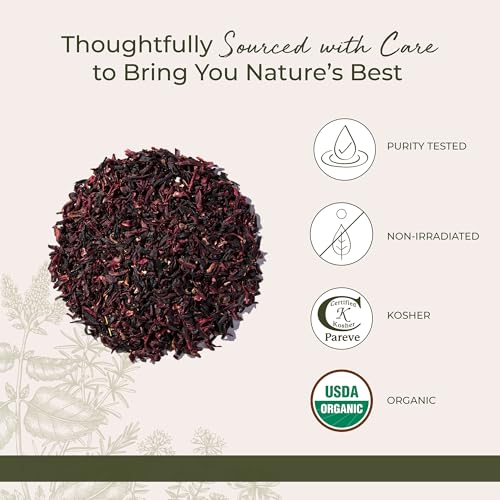
Yes — the listing names it certified organic, kosher, and non-GMO, and reviewers separately cite 'organically grown quality and purity' as a strength. The product is sold as bulk cut-and-sifted dried flowers in a 1 lb bag.
Who is this hibiscus best suited for?
Most reviewers reach for this when planning a cold-brew pitcher to top up across the week — caffeine-free everyday hydration is the central use case. Seven of twenty-one reviewers signal repeat-purchase intent, so there's a clear core of returning buyers.
Any food-safety concerns to know about?
One reviewer reported finding plastic in the tea — a single mention across the sample, but we surface it here because it concerns a consumable. Separately, the fine cut means sand fragments are common and call for filtering before drinking.
Category: What exactly is herbal tea?
Herbal tea, more accurately called a tisane, is any infusion made from plant material other than Camellia sinensis (the true tea plant). It can be brewed from leaves, flowers, roots, barks, seeds, or fruits of thousands of species, from chamomile flowers to rooibos needles to ginger root. The word 'tea' is colloquial here; botanically, only Camellia sinensis produces real tea.
Category: Can herbal tea be cold-brewed?
Yes, and it works especially well for fruit tisanes and hibiscus. Place the herbs in cold water and refrigerate for 8-12 hours. Cold brewing produces a smoother, sweeter profile, avoids the 'cooked' notes that hot steeping can pull out of hibiscus, and preserves heat-sensitive nutrients like vitamin C. Mugicha (roasted barley tea) is also commonly cold-brewed in East Asia as a summer staple.
As an Amazon Associate we earn from qualifying purchases.
Category: How are herbal tea blends usually built?
A common formulation follows a 60-30-10 structure. The base (60%) is mild and bulky—rooibos, nettle, oatstraw, or lemon balm provide the foundation. The modifier or support (30%) drives the therapeutic effect or main flavor—peppermint, hibiscus, tulsi, cinnamon chips. The accent (10%) is potent and would overpower the cup at higher proportions—lavender, cloves, ginger, citrus peel, rose petals. This balance is why a well-blended tisane tastes layered rather than flat.
What Makes This Product Special
⚠️ Preliminary analysis based on 21-review sample • Our methodology
- Deep-red, vibrant cup with tart-forward character
- Repeat-buyer loyalty — a clear core of returning customers
- Strong value at bulk-pound scale
- Versatile for blending and recipe work
Taste Profile
The cup pours a deep, dark red. Tart leads — three of twenty-one reviewers reach for it, the most-cited taste descriptor — with floral, sweet, and brisk notes layered behind. We'd call this a hibiscus that wants a sweetener or a citrus lift to land at its best.
- Agave nectar or simple syrup to soften the tartness
- True Lemon or fresh citrus
- Chia seeds for a fresca-style drink
- Sencha or oolong as a blending base
- LaCroix or sparkling water for a spritzer
Brewing: The technique reviewers most often describe is overnight cold brew in the fridge followed by a strain; for hot preparation, brewing 10–20 minutes draws out the full hibiscus character.
Best Use Cases
🎯 Best For
- Cold-brewed pitchers for the fridge
- Blending with other teas (sencha, oolong) for layered cups
- Everyday caffeine-free hydration
⚠️ Not Ideal For
- Buyers expecting whole hibiscus petals
- Drinkers unwilling to filter sediment
- Drinkers who dislike pronounced tartness unsweetened
How People Use It
Most reviewers brew this cold or iced — cold brew is the leading use context, with overnight fridge-steeping the most-described technique. Pairings include agave, True Lemon, chia seeds, and sometimes a splash of sparkling water; a few reviewers blend it with sencha or oolong for depth. We'd reach for this when planning a fridge pitcher to top up across the week. Seven of twenty-one reviewers signal repeat-purchase intent.
Good for Beginners
⚠️ Considerations
- Requires filtering/straining and a sweetener tweak to land for most palates
What to Consider
Multiple reviewers describe the cut as finely chopped rather than whole petals, leaving sand and small fragments that benefit from extra filtering — manageable in a French press or fine strainer, but worth knowing before brewing. One reviewer separately reported finding plastic in the tea, a single mention on a food product that we surface here for awareness.
- Fine cut with sand/debris that calls for extra filtering
- Tart and bitter without a sweetener
- Isolated food-safety report — plastic in tea
- Packaging arrival condition reports
⚠️ based on 21-review sample. Some issues may not be captured.
About This Analysis
This analysis is based on 21 customer reviews. We're showing you everything we found, but with a moderate sample, there's a lot we likely haven't captured yet.
✅ What we're confident about: What customers love and best use cases
⚠️ What may be incomplete: Potential issues and considerations
For more perspectives, check customer reviews on Amazon.
Product Selection
In short: We only feature high-rated products.
Products on TeaDelight.net are selected based on strong Amazon customer ratings, sufficient review volume, and market presence. We focus on well-regarded products that tea enthusiasts are actively considering and purchasing.
As an Amazon Associate we earn from qualifying purchases.