


We analyze real customer reviews to surface what matters: key strengths, ideal use cases, and honest considerations — so you can make an informed choice.
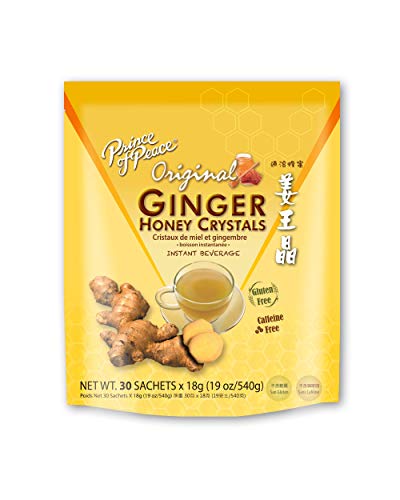
Prince of Peace Instant Ginger Honey Crystals
Instant ginger-honey sachets that dissolve in hot or cold water — a caffeine-free crystal mix that 37 of 92 reviewers reach for when they want ginger's warming bite without brewing fresh root.
🎯 Best for: quick warming drink when feeling under the weather, iced or hot ginger drink on the go
🍃 Strength: Bold

🍃 Flavor Profile
Strength: Bold
Ginger leads everything (37 of 92 reviewers), with honey close behind (22 of 92) — the two flavors are the product, and reviewers consistently describe a sweet, spicy character built around them. The taste reads sweet and gingery with a real spicy kick; a handful describe the ginger as authentic and warming rather than raw, more like powdered or stewed ginger than fresh root. A few drinkers find a comforting throat-warming sensation in the finish — what one reviewer called a comfortable burn — though we'd note the descriptor profile here is evaluative rather than detailed, which is what you'd expect from a functional infusion rather than a sipping tea.
✅ What Customers Love
- Strong, authentic ginger-honey character
- Dissolves easily in hot or cold water
- Soothing for throat and stomach
🎯 Best For
quick warming drink when feeling under the weather • iced or hot ginger drink on the go • caffeine-free morning or evening warmer • settling the stomach after meals
Brand: Prince of Peace
Category: Herbal Tea
As an Amazon Associate we earn from qualifying purchases.
About This Herbal Tea
Instant ginger-honey sachets that dissolve in hot or cold water — a caffeine-free crystal mix that 37 of 92 reviewers reach for when they want ginger's warming bite without brewing fresh root. Ginger leads everything, with honey close behind at 22 of 92 mentions; the two flavors are the product. Reviewers consistently describe a sweet, spicy character with a real kick, and a handful note that the ginger reads as authentic and warming — more like powdered or stewed ginger than fresh root. A few drinkers describe a comforting throat-warming finish, what one called a comfortable burn, though the descriptor profile here is evaluative rather than detailed — what you'd expect from a functional infusion rather than a sipping tea.
Reviewers reach for these across formats — iced and hot water both work, and the crystals dissolve cleanly in either (7 iced and 6 hot mentions). The convenience pattern is strong: five reviewers cite on-the-go use, two mention work, and the individual sachets travel well. We'd reach for one in the morning, when sick, or for a scratchy throat — three reviewers specifically describe it as a sick-day cup, and seven health mentions cluster around digestion, throat comfort, and feeling warmed and relaxed.
On brewing, skip boiling water — one reviewer specifically warns it changes the taste and creates an unpleasant foam, and several note that warm or hot (not boiling) water gives the cleanest dissolve. Half a sachet is often enough for one cup, especially if you want to soften the sweetness.
The sugar load is the one real trade-off — nine reviewers across multiple framings flag the 16–17g of added sugar per sachet (cane sugar is the first ingredient), which is roughly a third of the recommended daily intake. If you're watching sugar, half a sachet per cup is the common workaround, and a full sachet can taste too strong or too sweet for some.
Pairs naturally with extra honey if you want more sweetness, a squeeze of lemon to cut it back, or a splash of milk for a chai-style cup.
Is Prince of Peace Instant Ginger Honey Crystals Right for You?
What does Prince of Peace Instant Ginger Honey Crystals actually taste like?
Ginger leads everything across 37 of 40 reviewers, with honey close behind at 22 of 40 — the cup reads sweet and gingery with a real spicy kick. A handful describe the ginger as authentic and warming, more like powdered or stewed ginger than fresh raw root.
How do you use ginger honey crystals?
Stir one sachet into hot or cold water — the crystals dissolve cleanly in either, with iced and hot mentions roughly balanced across reviewers. Half a sachet is often enough for a single cup, especially if you find the full one too strong or too sweet.
Can I make it with boiling water?
Skip the boil — one reviewer specifically warns that boiling water changes the taste and creates an unpleasant foam, and the cleanest dissolve comes from warm or hot (not boiling) water. Let the kettle settle for a minute before pouring.
Is Prince of Peace Ginger Honey Crystals good for you?
Reviewers reach for it as a soothing, caffeine-free warmer — seven health mentions cluster around throat comfort, settling the stomach, and feeling warmed and relaxed. That said, cane sugar is the first ingredient at roughly 16–17g per sachet, so the sugar load is the real trade-off to weigh against the ginger-honey benefits.
How much sugar is in each sachet?
Nine reviewers across multiple framings flag the added-sugar load — roughly 16–17g per sachet, with cane sugar as the first ingredient. If you're watching sugar, the common workaround drinkers describe is using half a sachet per cup.
Is it caffeine-free?
Yes — it's a ginger-and-honey crystal mix with no tea leaf in it, so the cup is naturally caffeine-free. Reviewers reach for it as a morning or evening warmer specifically because there's no caffeine bump.
As an Amazon Associate we earn from qualifying purchases.
Does it work as an iced ginger drink?
Yes — seven reviewers specifically mention drinking it iced, and the crystals dissolve cleanly in cold water without clumping. Stir into cold water and it reads as a sweet-spicy ginger refresher rather than a hot infusion.
Is this a good choice when I'm feeling under the weather?
It's one of the most common use contexts reviewers describe — three call it a sick-day cup, with throat-soothing and stomach-settling mentions clustering across the corpus. A few specifically describe a comforting throat-warming sensation in the finish, what one reviewer called a comfortable burn.
What does it pair well with?
Honey is the top pairing reviewers reach for (9 of 40), with a squeeze of lemon close behind to cut the sweetness. A splash of milk turns it into a chai-style cup if you want something rounder.
How does the ginger flavor compare to fresh ginger root?
Reviewers describe the ginger character as more like powdered or stewed ginger than raw root — authentic and warming rather than sharply pungent. One reviewer specifically calls it comparable to homemade ginger-honey tea made from fresh root, so the gap is character rather than strength.
Is it suitable for someone watching their sugar intake or diabetic?
Probably not as a daily cup — cane sugar is the first ingredient at roughly 16–17g per sachet, which is a meaningful share of a recommended daily intake. The synthesis flags low-sugar and diabetic-friendly diets as a not-good-for case; half a sachet is the workaround reviewers reach for when they want to dial it back.
Are the individual sachets actually convenient for travel and work?
Yes — five reviewers cite on-the-go use and two mention work specifically, with the pre-portioned sachets travelling well in a bag or desk drawer. No brewing skill required, and the crystals dissolve in whatever water temperature you've got.
As an Amazon Associate we earn from qualifying purchases.
Category: Does herbal tea contain caffeine?
Most herbal teas are naturally caffeine-free because they don't come from the caffeinated Camellia sinensis plant. The notable exceptions are yerba mate and guayusa, both from the Ilex (holly) genus, which contain roughly 85-90mg of caffeine per 8oz serving. Standard tisanes like chamomile, rooibos, hibiscus, peppermint, and ginger contain no caffeine at all.
Category: How are herbal tea blends usually built?
A common formulation follows a 60-30-10 structure. The base (60%) is mild and bulky—rooibos, nettle, oatstraw, or lemon balm provide the foundation. The modifier or support (30%) drives the therapeutic effect or main flavor—peppermint, hibiscus, tulsi, cinnamon chips. The accent (10%) is potent and would overpower the cup at higher proportions—lavender, cloves, ginger, citrus peel, rose petals. This balance is why a well-blended tisane tastes layered rather than flat.
Category: What's the difference between an infusion and a decoction?
An infusion is for soft plant parts—leaves, flowers, soft stems—where boiling water is poured over the herb and steeped (typically 5-15 minutes, covered). A decoction is for tough parts like roots, barks, and dried berries: the herb goes into cold water, is brought to a boil, then simmered for 20-45 minutes. The sustained heat is necessary to break down cellulose and lignin in ginger, dandelion, or cinnamon to release their compounds.
Customer-Validated Strengths
based on 53-review analysis • Our methodology
- Strong, authentic ginger-honey character
- Dissolves easily in hot or cold water
- Soothing for throat and stomach
- Portable individual sachets suit work and travel
- Reliable repeat purchase
Taste Profile
Ginger leads everything (37 of 92 reviewers), with honey close behind (22 of 92) — the two flavors are the product, and reviewers consistently describe a sweet, spicy character built around them. The taste reads sweet and gingery with a real spicy kick; a handful describe the ginger as authentic and warming rather than raw, more like powdered or stewed ginger than fresh root. A few drinkers find a comforting throat-warming sensation in the finish — what one reviewer called a comfortable burn — though we'd note the descriptor profile here is evaluative rather than detailed, which is what you'd expect from a functional infusion rather than a sipping tea.
- extra honey to taste
- fresh lemon to cut the sweetness
- a splash of milk for a chai-style cup
Brewing: Skip boiling water — one reviewer specifically warns it changes the taste and creates an unpleasant foam, and several note that warm or hot (not boiling) water gives the cleanest dissolve; half a sachet is often enough for one cup.
Best Use Cases
🎯 Best For
- quick warming drink when feeling under the weather
- iced or hot ginger drink on the go
- caffeine-free morning or evening warmer
- settling the stomach after meals
⚠️ Not Ideal For
- low-sugar or diabetic-friendly diets
- drinkers seeking a complex multi-note tasting profile
- those wanting raw-ginger pungency
How People Use It
Reviewers reach for these across formats — iced and hot water both work, and the crystals dissolve cleanly in either (mentioned across 7 iced and 6 hot mentions). The convenience pattern is strong: five reviewers cite on-the-go use, two mention work, and the individual sachets travel well. We'd reach for one in the morning, when sick, or for a scratchy throat — three reviewers specifically describe it as a sick-day cup, and seven health mentions cluster around digestion, throat comfort, and feeling warmed and relaxed. Pairs naturally with extra honey or a squeeze of lemon if you want to round out the sweetness.
Good for Beginners
✅ Yes
- Pre-portioned sachets with no brewing skill required
- Dissolves cleanly in hot or cold water
- Approachable sweet-spicy profile with familiar honey-ginger pairing
What to Consider
The sugar load is the one real trade-off — nine reviewers across multiple framings flag the 16–17g of added sugar per sachet (cane sugar is the first ingredient), which is roughly a third of the recommended daily intake; if you're watching sugar, half a sachet per cup is the common workaround.
- High added-sugar content (cane sugar first ingredient)
- Full sachet can taste too strong or too sweet
- Boiling water degrades the drink
based on 53-review sample.
About This Analysis
This analysis is based on 53 customer reviews. We're showing you everything we found, but with our analysis, there's always more to discover.
✅ What we're confident about: What customers love and best use cases
⚠️ What may be incomplete: Potential issues and considerations
For more perspectives, check customer reviews on Amazon.
Product Selection
In short: We only feature high-rated products.
Products on TeaDelight.net are selected based on strong Amazon customer ratings, sufficient review volume, and market presence. We focus on well-regarded products that tea enthusiasts are actively considering and purchasing.
As an Amazon Associate we earn from qualifying purchases.
You Might Also Like

✅ Sweet, refreshing flavor that wins over licorice skeptics
Pukka Peppermint and Licorice Herbal Tea

✅ Pronounced ginger character
JCS Instant Ginger Tea

✅ Versatile across morning and evening use
Bigelow Cinnamon Apple Herbal Tea
✅ Strong efficacy signal for milk-supply increase