



We analyze real customer reviews to surface what matters: key strengths, ideal use cases, and honest considerations — so you can make an informed choice.
Kate Naturals Organic Dried Lavender Flowers
Intensely fragrant caffeine-free dried lavender with a bold, perfume-forward character — versatile across herbal tea blends, baking, simple syrups, and DIY body care.
🎯 Best for: Evening relaxation and stress relief, Blending with other herbs (chamomile, roses, lemon balm)
🍃 Tastes like: floral lavender, perfume-like when strong

🍃 Flavor Profile
Strength: Bold
Notes: floral lavender, perfume-like when strong
✅ What Customers Love
- Very fragrant and aromatic (18 mentions)
- Versatile for multiple uses (tea, baking, syrups, skincare, bath) (15 mentions)
- Large quantity/good value for 4oz (5 mentions)
🎯 Best For
Evening relaxation and stress relief • Blending with other herbs (chamomile, roses, lemon balm) • Culinary use (baking, simple syrup, lemonade, buttercream) • DIY skincare and bath products
Brand: Kate Naturals
Category: Herbal Tea
As an Amazon Associate we earn from qualifying purchases.
About This Herbal Tea
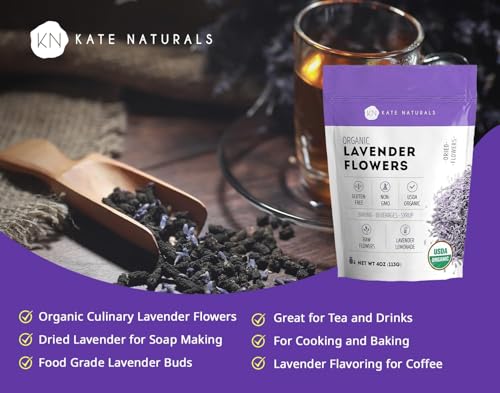
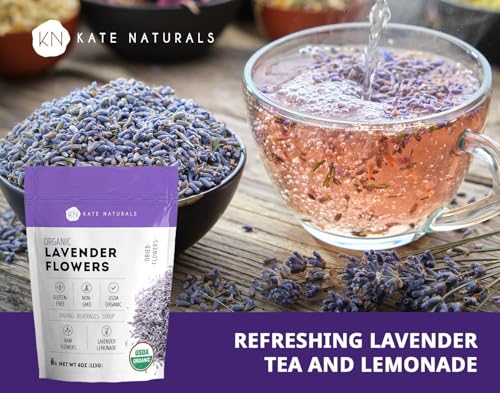
These USDA Certified Organic lavender flowers carry a powerful floral fragrance — reviewers note the intensity is best managed by blending with chamomile, lemon balm, or roses rather than steeping solo. On its own, the flavor can tip toward bitter or perfume-like if oversteeped. The flowers work equally well in culinary applications like simple syrups and baked goods, or in DIY oil infusions and bath products. Note that the dried flowers arrive gray-brown rather than the vibrant purple shown in product images. Best suited to herbal blenders, home bakers, and DIY makers who want high-potency organic lavender across multiple uses.
Is Kate Naturals Organic Dried Lavender Flowers Right for You?
Is Kate Naturals lavender good for making tea?
Yes, but with a caveat — it works much better blended than on its own. The lavender is very fragrant and potent, which is great for blends but can be overpowering solo. Customers report that straight lavender tea can taste like "strong perfume" or become bitter if oversteeped. The sweet spot is blending it with chamomile, lemon balm, roses, or other calming herbs. Used this way, reviewers love it for evening relaxation. Start with 1 teaspoon per cup, steep no more than 5 minutes, and pair it with a milder herb for balance.
Why does the lavender look gray-brown instead of purple?
This is the most common surprise with Kate Naturals' lavender — the actual flowers are a dull gray-brown color, not the vibrant purple shown on the package. Eight customers specifically mention this discrepancy. It's actually normal for dried culinary lavender to lose its purple hue during the drying process. The color doesn't affect the flavor or aroma at all, and reviewers confirm the lavender is still very fragrant despite its underwhelming appearance. Just don't buy it expecting Instagram-worthy purple buds. If visual presentation matters (like for a gift or decorative use), this may not be the best choice.
Does Kate Naturals lavender actually help with anxiety and stress?
According to customers, yes — stress relief and anxiety reduction are the most consistently reported benefits. Multiple reviewers specifically mention using it for evening relaxation and calming their nervous system. One interesting detail: several customers say that even just opening the bag and smelling the lavender provides instant anxiety relief before they even brew it. This tracks with research on lavender aromatherapy. The effect seems most pronounced when it's part of a regular routine — a nightly cup of lavender tea as a wind-down ritual rather than a one-time fix.
Are there stems and debris in Kate Naturals lavender?
Some customers do find stems and small debris mixed in with the flowers — about five reviewers mention this specifically. The flowers themselves are also quite small pieces rather than whole intact buds. For tea brewing, this isn't a major issue since you're straining everything out anyway. For baking or visible culinary applications where you want clean, whole buds, you might want to sift through the bag first. It's a trade-off for the price point — you're getting good-quality organic lavender at a reasonable price, but it's not hand-sorted premium grade.
What is the ratio for brewing herbal tea?
The general rule for herbal tea is 1-2 teaspoons of dried herbs per 8 ounces of water. For Kate Naturals' lavender specifically, start on the lower end — about 1 teaspoon per cup — because this lavender is described as bold and potent by reviewers. If you're blending it (which most customers recommend), try a ratio of about 1 part lavender to 2-3 parts of your companion herb, like chamomile or lemon balm. You can always add more lavender next time, but you can't undo a cup that tastes like a perfume counter.
How to brew herbal tea properly with dried lavender?
For lavender tea, use about 1-2 teaspoons of dried lavender buds per cup of water heated to around 200-210°F (just below boiling). Steep for 3-5 minutes — and this is important with Kate Naturals' lavender because it's quite potent. Oversteeped lavender turns bitter and tastes like drinking perfume, which some customers have learned the hard way. Start with less and a shorter steep time, then adjust. Most customers find this lavender works best blended with other herbs like chamomile, roses, or lemon balm rather than brewed on its own.
As an Amazon Associate we earn from qualifying purchases.
How to steep lavender tea so it doesn't taste bitter?
The trick is restraint. Kate Naturals' lavender is potent, so oversteeping is the number one reason people end up with bitter, perfume-like tea. Use water that's hot but not at a full rolling boil (around 200°F), use just 1 teaspoon per cup, and steep for 3-5 minutes maximum. Pull the lavender out as soon as it smells right — don't let it sit. Blending with chamomile or adding a touch of honey also mellows any bitterness. Several customers specifically warn that straight lavender steeped too long becomes unpleasant, so this is worth getting right from your first cup.
Is Kate Naturals lavender good for beginners?
Yes, it's quite beginner-friendly. It comes with a PDF guide on usage, which is helpful if you've never worked with culinary lavender before. The herb is forgiving when blended with other herbs, and customers report good customer service support if you have questions. The main beginner pitfall is using too much or steeping too long — the bold flavor can become bitter or perfume-like. Start with less than you think you need (about 1 teaspoon per cup), steep for just 3-4 minutes on your first try, and blend it with chamomile to ease into the flavor.
What herbs blend well with Kate Naturals lavender?
Customers report the best blends with chamomile (the most popular pairing for a double-calming effect), roses for a floral combination, and lemon balm for a brighter, citrusy balance. Experienced herbalists among the reviewers also blend it with nervine and adaptogen herbs for more complex wellness formulations. For a simple starter blend, try 1 part lavender to 2 parts chamomile with a touch of honey — it's a forgiving ratio that most people enjoy. The lavender's bold, floral character means it can hold its own against other strong herbs without getting lost.
Can I use Kate Naturals lavender for baking and cooking?
Absolutely — it's culinary grade and USDA Certified Organic, so it's specifically meant for food use. Customers use it for lavender simple syrup, lemonade, scones, buttercream frosting, infused honey, and more. The strong aroma translates well into baked goods and infusions. A little goes a long way since the flavor is bold. One tip: for baking, you may want to grind or crush the flowers first since they're quite small and can create an uneven texture if left whole.
Can I make lavender lemonade with Kate Naturals lavender?
Yes — lavender lemonade is one of the most popular uses customers mention. The typical method is to make a lavender simple syrup first: simmer equal parts sugar and water, add a tablespoon or two of lavender buds, let it steep for 15-20 minutes, then strain. Mix the syrup into fresh lemonade to taste. The strong aroma of Kate Naturals' lavender works really well here because the lemon and sugar balance out the boldness that can be too much in straight tea. It's also great for lavender-infused cocktails, though some customers note the small flower pieces can be tricky to strain out completely.
How much lavender tea can you make with a 4oz bag?
At about 1-2 teaspoons per cup (and a teaspoon of dried lavender weighs roughly 1-2 grams), a 4oz bag (113 grams) will give you approximately 55-110 cups of lavender tea. Customers generally find this a good value for the quantity. Since most people blend lavender with other herbs rather than using it straight, the bag stretches even further — if lavender is only a third of your blend, you could get 150+ cups of blended tea from one bag. Several reviewers specifically mention the generous quantity as a selling point.
As an Amazon Associate we earn from qualifying purchases.
What are the top 3 benefits of lavender tea?
Based on what Kate Naturals customers consistently report: (1) Stress relief and relaxation — this is the number one reason people buy it, and reviewers confirm it delivers. (2) Anxiety reduction — several customers mention that even the aroma alone helps with anxiety, and brewing a cup amplifies the effect. (3) Versatility — while not a health benefit per se, the fact that you can use the same product for tea, baking, bath soaks, and infused oils means you get real value from one purchase. The calming and soothing effects on the nervous system are the most consistently validated benefits across reviews.
Is Kate Naturals lavender good for bath and skincare?
Many customers buy it specifically for DIY skincare and bath products, and they're generally happy with the results. It's popular for infused bath soaks, homemade soap, and oil infusions for topical use. The strong fragrance is a plus for these applications. One practical warning: if you're using it in the bath, definitely put it in a muslin bag or strainer first. The small flower pieces create a real mess in the tub without containment, and several customers learned this the hard way. The gray-brown color also means it won't look as pretty floating in bath water as you might imagine.
How does Kate Naturals lavender compare to other brands?
Kate Naturals hits a solid middle ground: it's USDA Certified Organic, genuinely fragrant (the most praised quality across reviews), and reasonably priced for 4oz. Where it falls short compared to premium lavender is in appearance — the gray-brown color and inclusion of some stems and debris suggest it's not hand-sorted. The flower pieces are also smaller than what you'd get from a specialty herb shop. But for the price, customers generally feel they're getting good value. If you need picture-perfect whole buds for visual presentation, you'd need to spend more. If you want organic, aromatic lavender for tea blends, cooking, and DIY projects, this delivers.
Can I use Kate Naturals lavender to make infused honey or oil?
Yes, and customers specifically mention both of these as popular uses. For lavender honey, add a few tablespoons of buds to a jar of honey and let it infuse for 1-2 weeks, shaking occasionally. For lavender-infused oil, fill a jar with lavender and cover with a carrier oil like jojoba or sweet almond, then let it sit in a warm spot for 2-4 weeks. The strong fragrance of this lavender means it infuses well. Since it's certified organic and food-grade, it's safe for both culinary infusions (honey for toast and tea) and skincare infusions (oil for massage or moisturizing).
Who should NOT buy Kate Naturals lavender?
This lavender isn't the best fit if: you want vibrant purple buds for decoration or visual presentation (they're gray-brown), you want to drink straight lavender tea without blending (it's too potent and can taste like perfume), you need perfectly clean whole buds without any stems (there's some debris), or you're making cocktails where small floating pieces would be a problem. It's also not ideal if consistent batch-to-batch quality is critical for your application, as a couple of customers have noted variation between orders. For tea blends, cooking, infusions, and DIY projects where appearance isn't paramount, it's a solid choice.
Is Kate Naturals lavender good for making soap?
Soap making is one of the uses listed right on the product — and customers confirm it works well for this purpose. The strong fragrance is a plus for soap, since some scent survives the saponification process. The organic, food-grade quality also means you don't have to worry about additives or pesticides in a product that'll sit on your skin. The main consideration is that the gray-brown color won't give you pretty purple soap speckles like you might hope. And the small flower pieces can work for texture, but they may turn brownish in finished soap over time.
As an Amazon Associate we earn from qualifying purchases.
What herbal tea should I drink every day?
If relaxation and stress management are your goals, a lavender blend makes an excellent daily tea. Kate Naturals' lavender works particularly well blended with chamomile for a double-calming effect, or with lemon balm for a brighter, more citrusy relaxation tea. Customers who use it daily tend to blend it rather than drink it straight — pure lavender every day can get intense since this particular lavender is quite bold and potent. A gentle daily blend of lavender, chamomile, and a touch of honey is a popular approach among reviewers.
What are dried lavender flowers good for?
Kate Naturals dried lavender flowers are surprisingly versatile. Customers use them for brewing relaxation tea (especially blended with chamomile or lemon balm), making lavender simple syrup for lemonade and cocktails, baking into scones and buttercream, infusing oils and honey, and even DIY skincare and bath products. The flowers are culinary grade and USDA Certified Organic, so they're safe for both eating and topical use. The most popular uses based on customer feedback are evening tea blends for stress relief and culinary applications like lavender lemonade.
How long do dried lavender flowers last?
Properly stored dried lavender flowers typically retain their potency for 1-2 years. Kate Naturals' lavender is known for being very fragrant and aromatic — that's the most commonly praised quality in reviews — so freshness matters. Store them in an airtight container away from direct sunlight and heat. That said, a few customers have noted inconsistent freshness between batches, so give them a sniff when they arrive. If the aroma is strong and floral, you're in good shape.
Is herbal tea good for your skin?
Lavender has well-known skin benefits, and Kate Naturals customers actually use these flowers for skincare in multiple ways — not just drinking the tea. Reviewers report using the lavender to make infused oils for topical application, adding it to bath soaks, and incorporating it into homemade soap. Since these are USDA Certified Organic, food-grade flowers, they're a good choice for skin applications. Drinking lavender tea may also help indirectly by reducing stress, which is a known trigger for skin issues like breakouts and eczema flare-ups.
Does herbal tea contain any caffeine?
No — lavender tea is naturally caffeine-free, which is one reason it's so popular as an evening relaxation drink. Kate Naturals' dried lavender is pure lavender flowers with nothing added, so there's zero caffeine. This makes it a great choice for a calming bedtime ritual. Customers specifically mention using it for stress relief and anxiety reduction before sleep. If you blend it with other true teas (like green or black tea), those will add caffeine, but paired with other herbals like chamomile or lemon balm, it stays completely caffeine-free.
Do herbal teas actually benefit you?
Based on what Kate Naturals lavender customers report, yes — though the benefits are more about relaxation than nutrition. The most consistently validated benefits are stress relief, a calming effect on the nervous system, and anxiety reduction. Multiple reviewers mention that even just smelling the lavender provides instant anxiety relief. These aren't just placebo claims either — lavender (Lavandula angustifolia) has genuine research behind its calming properties. What you won't get from lavender tea is significant vitamins or minerals. Think of it as a functional relaxation tool rather than a health supplement.
As an Amazon Associate we earn from qualifying purchases.
Is it okay to drink herbal tea daily?
Most people can enjoy lavender tea daily without issues, and many Kate Naturals customers do exactly that as part of their evening wind-down routine. Reviewers consistently report benefits like stress relief, relaxation, and reduced anxiety with regular use. A cup or two a day is generally considered safe for most adults. At 4 ounces of dried lavender, this bag will last you quite a while with daily use — especially since you only need about a teaspoon per cup. Just be mindful if you're on sedative medications, as lavender's calming effects could compound.
How much caffeine is in lavender tea vs coffee?
Kate Naturals' dried lavender is completely caffeine-free — zero milligrams. For comparison, an 8oz cup of coffee has roughly 95mg of caffeine, black tea has about 47mg, and green tea around 28mg. This makes lavender tea an ideal evening drink or a good choice for anyone reducing caffeine intake. It's also why lavender pairs so well with other caffeine-free herbs like chamomile for a bedtime blend. If you're switching from coffee or caffeinated tea to something calming, lavender tea won't give you any jitters or interfere with sleep.
How to brew loose leaf tea without an infuser?
You can brew Kate Naturals' lavender without an infuser a few ways: use a fine-mesh kitchen strainer to catch the buds when pouring, brew in a French press, or simply steep loose in a mug and strain through a coffee filter. One thing to know — these lavender pieces are quite small, so a standard tea ball with large holes may let pieces through. A fine-mesh strainer or paper filter works better. Some customers also put the buds in a reusable muslin tea bag before steeping for easy cleanup.
How long should I boil herbs for tea?
For delicate herbs like lavender, you actually don't want to boil them directly. Bring your water to a boil, then let it cool for about 30 seconds before pouring over the lavender buds. Steep for 3-5 minutes. Kate Naturals' lavender is bold and potent, so boiling it or steeping too long will pull out bitter compounds and give you a perfume-like taste. If you're blending it with hardier herbs or roots, add the lavender in the last few minutes of steeping rather than at the start.
How to brew herbal tea bags vs loose dried lavender?
With Kate Naturals' loose dried lavender, you get more control over strength and freshness compared to pre-made tea bags. The trade-off is convenience — you'll need a strainer, infuser, or reusable tea bag. For loose lavender, use 1 teaspoon per cup and steep 3-5 minutes. For tea bags, you'd typically just steep per the bag's instructions. The advantage of loose lavender is you can adjust the amount precisely and blend it with other herbs. The small flower pieces can be messy, so a fine-mesh strainer works better than a tea ball with large holes.
Is it healthy to drink herbal tea every day?
For most people, a daily cup of lavender tea is perfectly healthy and may offer genuine benefits. Kate Naturals customers who drink it regularly report improved relaxation, better sleep quality, and reduced anxiety. Lavender is caffeine-free, calorie-free, and organic in this case, so there's very little downside. The main caution is if you're taking sedatives or blood pressure medication — lavender's calming properties could interact. Also, if you're pregnant, check with your doctor first. Otherwise, a daily lavender tea habit is one of the more benign daily rituals you could adopt.
As an Amazon Associate we earn from qualifying purchases.
Is lavender tea good for you when sick?
Lavender tea can be comforting when you're sick, though it's not a cold-and-flu powerhouse like ginger or echinacea. Its main benefit when ill is the calming and relaxation effect — it can help you rest better, which is what your body needs most when fighting something off. The soothing properties that Kate Naturals customers praise for daily stress relief also apply when you're feeling under the weather. For maximum sick-day benefit, blend it with other herbs: chamomile for additional calming, or add honey and lemon for throat-soothing properties.
Why do I feel weird after drinking herbal tea?
With lavender tea specifically, this can happen if you've used too much or steeped too long. Kate Naturals' lavender is bold and potent, and lavender has genuine sedative-like calming properties — so what feels "weird" might actually be a stronger relaxation response than you expected. Some people also react to the intense floral flavor, which a few customers describe as perfume-like when too concentrated. Try cutting your amount in half and steeping for less time. If you're on any medications (especially sedatives or blood pressure meds), the interaction could amplify effects, so check with your doctor.
Where is Kate Naturals made?
Kate Naturals is a US-based brand. Their products are packaged in the United States, though the raw lavender flowers are sourced from various growing regions. The brand emphasizes USDA Certified Organic and Non-GMO standards. For specific origin details about the lavender itself, you may want to contact Kate Naturals directly, as sourcing can vary by harvest season.
Customer-Validated Strengths
based on 30-review analysis • Our methodology
- Very fragrant and aromatic (18 mentions)
- Versatile for multiple uses (tea, baking, syrups, skincare, bath) (15 mentions)
- Large quantity/good value for 4oz (5 mentions)
- Works well blended with other herbs (4 mentions)
- USDA Certified Organic and Non-GMO (3 mentions)
Taste Profile
- fragrant
- potent
- can become bitter if oversteeped
Best Use Cases
🎯 Best For
- Evening relaxation and stress relief
- Blending with other herbs (chamomile, roses, lemon balm)
- Culinary use (baking, simple syrup, lemonade, buttercream)
- DIY skincare and bath products
- Infusions for oils and honey
⚠️ Not Ideal For
- Standalone tea without blending (can be bitter)
- Bath use without strainer (creates mess)
- Visual presentation (gray-brown color)
- Cocktails (pieces too small)
What to Consider
- Color is dull gray-brown, not vibrant purple as pictured (8 mentions)
- Contains stems and debris/particulates (5 mentions)
- Can taste like strong perfume or be bitter (3 mentions)
- Flowers are very small pieces, messy for some applications (2 mentions)
- Inconsistent quality/freshness (2 mentions)
based on 30-review sample.
About This Analysis
This analysis is based on 30 customer reviews. We're showing you everything we found, but with our analysis, there's always more to discover.
✅ What we're confident about: What customers love and best use cases
⚠️ What may be incomplete: Potential issues and considerations
For more perspectives, check customer reviews on Amazon.
Product Selection
In short: We only feature high-rated products.
Products on TeaDelight.net are selected based on strong Amazon customer ratings, sufficient review volume, and market presence. We focus on well-regarded products that tea enthusiasts are actively considering and purchasing.
As an Amazon Associate we earn from qualifying purchases.
You Might Also Like

✅ Fresh taste due to foil-wrapped packaging
Bigelow Cinnamon Apple Herbal Tea

✅ Pleasant, mild flavor that appeals to many
Bigelow Cranberry Apple Herbal Tea (28 Count)

✅ Fresh and fragrant whole blossoms
Frontier Co-op Organic Chamomile Flowers

✅ Balanced cranberry-apple flavor (tart and sweet)