


We analyze real customer reviews to surface what matters: key strengths, ideal use cases, and honest considerations — so you can make an informed choice.
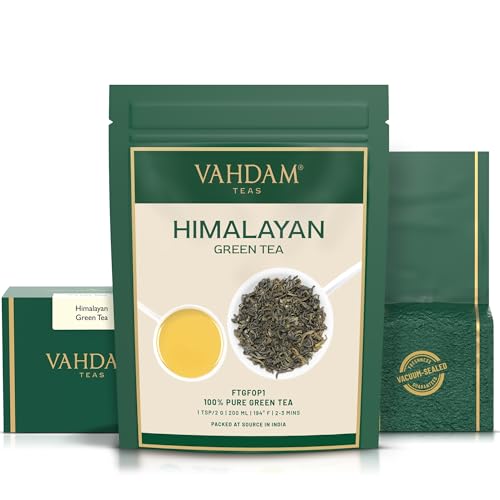
VAHDAM Himalayan Green Loose Leaf Tea
The everyday Himalayan green that 16 of 44 reviewers describe as a repeat purchase — one buyer is on their eleventh reorder.
🎯 Best for: everyday daily green-tea drinking, iced or cold-brewed preparation
🍃 Strength: Light

What Stands Out
🍃 Flavor Profile
Strength: Light
Clean is the word reviewers reach for first, with smooth and mild close behind. The flavor leans grassy and vegetal — a light, fresh-cup green rather than a savory umami-forward Japanese style — with the occasional minority mention of melon or earth in the finish. Aroma reads similarly grass-forward and fresh, occasionally edging into floral.
✅ What Customers Love
- clean, smooth, mild profile
- freshness — leaves arrive smelling and looking fresh
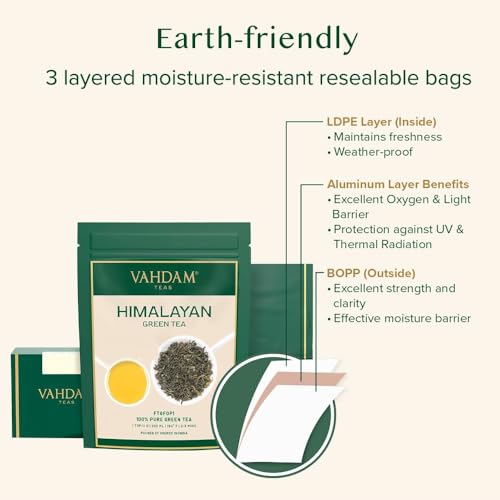
- vacuum-sealed packaging with resealable pouch
🎯 Best For
everyday daily green-tea drinking • iced or cold-brewed preparation • kombucha brewing base
Brand: VAHDAM
Category: Green Tea
As an Amazon Associate we earn from qualifying purchases.
About This Green Tea
A clean, everyday Himalayan green — 16 of 44 reviewers have made it a repeat purchase, and one buyer is on their eleventh reorder. Clean is the word reviewers reach for first, with smooth and mild close behind. The flavor leans grassy and vegetal — a light, fresh-cup green rather than a savory, umami-forward Japanese style — with occasional minority mentions of melon or earth in the finish. Aroma reads similarly grass-forward and fresh, occasionally edging into floral.
Reviewers reach for it both hot and cold-brewed overnight in the fridge, and a couple use it as a base for kombucha. We'd call this a forgiving pantry staple — closer to a daily workhorse than a contemplative single-origin cup, suited to drinkers who want a reliable green on hand rather than a layered tasting experience.
Steep at 180°F for about two minutes. Reviewers who let it run longer report bitterness, and one drinker found that 2 tsp tipped the cup into a dark, olive-colored over-extraction where 1 tsp gave a clean infusion. The leaves arrive in a vacuum-sealed, resealable pouch, and most reviewers note they smell and look fresh on opening.
A handful of reviewers find the cup one-dimensional or lacking the depth of a more premium green. Amazon has also flagged this listing as changed over time, so recent feedback is worth weighing alongside older reviews — sensory consistency may vary across batches.
A dependable daily green for hot cups or cold-brew jugs, rather than a tea to slow down and parse.
Is VAHDAM Himalayan Green Loose Leaf Tea Right for You?
What does Vahdam's Himalayan green tea actually taste like?
Reviewers reach for 'clean' first, with smooth and mild close behind — a light, grassy, vegetal cup rather than the savory umami of a Japanese green. A few drinkers mention melon or a touch of earth in the finish.
Is this a beginner-friendly green tea?
Yes — the mild, clean, smooth profile is forgiving rather than vegetal-bitter or savory-umami, and reviewers use it both hot and cold-brewed without much fuss. It reads more as a daily workhorse than a contemplative single-origin cup.
How should I brew this for the best cup?
Steep at around 180°F for about two minutes; reviewers who let it run longer report bitterness. One drinker found 2 tsp tipped the cup into a dark, olive-colored over-extraction where 1 tsp gave a clean infusion.
Can I cold-brew it or use it for iced tea?
Yes — several reviewers cold-brew it overnight in the fridge, and a couple use it as a base for kombucha. It's one of the more forgiving uses for this leaf.
What makes Vahdam's Himalayan green different from other green teas?
Reviewers describe a clean, mild, grassy cup with unrolled whole leaves — a few compared the lighter infusion to a less-rolled alternative to gunpowder, and others contrasted it favorably with grocery-aisle bagged tea. The high-elevation Himalayan growing region is what the listing leans on.
Will it feel complex enough for an experienced green-tea drinker?
Probably not — a handful of reviewers find the cup one-dimensional or lacking the depth of a more layered green. It's positioned by drinkers as a reliable daily pour rather than a contemplative single-origin.
As an Amazon Associate we earn from qualifying purchases.
Do the leaves arrive fresh?
Freshness is the single most-cited positive — four reviewers specifically call out leaves that smell and look fresh out of the vacuum-sealed pouch. A couple mention the aroma reads grassy and fresh, occasionally edging into floral.
Is the packaging sturdy enough to keep the tea fresh?
Reviewers like the vacuum-sealed, resealable pouch — packaging shows up 17 times across positive aspect mentions as a strength of this listing. One reviewer noted the bag isn't pre-filled into the zip-lock the way they expected, but that's a setup quirk rather than a seal issue.
Is this a good daily drinker to keep stocked at home?
It reads that way — 16 of 44 reviewers signal repeat purchase, including one buyer on their eleventh reorder and another buying almost monthly for years. We'd call it a forgiving pantry staple rather than an occasion tea.
Should I drink it in the evening?
Reviewers reach for it first thing in the morning or as a daily cup, and the synthesis flags late-evening or pre-bedtime use as something it's not well suited to — green tea still carries caffeine. Stick to earlier in the day if caffeine sensitivity is a concern.
Has the product been consistent over time?
Worth weighing carefully — Amazon has flagged the listing as changed over time across four signals, so sensory consistency may vary across batches. The synthesis suggests reading recent reviews alongside older ones rather than assuming the cup hasn't shifted.
How long will a 3.53 oz pouch last?
The listing positions it as 50+ cups from the 100g pouch, which lines up with reviewers using around 1 teaspoon per cup — 2 tsp ran too strong for at least one drinker. At a cup a day that's roughly a couple of months of daily drinking.
As an Amazon Associate we earn from qualifying purchases.
Category: Why does my green tea taste bitter?
Bitterness and astringency in green tea come mainly from catechins (especially EGCG) being over-extracted. The two biggest causes are water that is too hot — boiling water pulls catechins aggressively — and steeping for too long. Catechins also extract faster than the sweet, savory amino acids, so a shorter steep at lower temperature gives you the sweetness without the harshness.
Category: What water temperature should I use to brew green tea?
Most green teas brew best between 70C and 80C (160-175F). Boiling water aggressively extracts catechins and produces bitterness and astringency, while cooler water preserves the amino acids responsible for sweetness and umami. Shaded teas like gyokuro are typically brewed even lower, around 50-60C, specifically to draw out L-theanine without pulling harsh catechins.
Category: How can I tell good-quality green tea from low-quality?
Look at the leaf first — high-grade green tea has uniform color (vivid deep green for shaded, glossy emerald for sencha), tight needle or flake shape with minimal stems and dust, and a fresh, marine or grassy aroma rather than a dusty or hay-like smell. On the label, harvest date matters (April-May ichibancha beats summer harvests), and specificity in region or cultivar (Uji, Shizuoka, Yabukita, Saemidori) generally signals a producer targeting quality over volume.
Customer-Validated Strengths
based on 40-review analysis • Our methodology
- clean, smooth, mild profile
- freshness — leaves arrive smelling and looking fresh
- vacuum-sealed packaging with resealable pouch
- reliable daily-drinker with strong repeat purchase
Taste Profile
Clean is the word reviewers reach for first, with smooth and mild close behind. The flavor leans grassy and vegetal — a light, fresh-cup green rather than a savory umami-forward Japanese style — with the occasional minority mention of melon or earth in the finish. Aroma reads similarly grass-forward and fresh, occasionally edging into floral.
Brewing: Steep at 180°F for about two minutes; reviewers who let it run longer report bitterness, and one drinker found 2 tsp tipped the cup into a dark, olive-colored over-extraction where 1 tsp gave a clean infusion.
Best Use Cases
🎯 Best For
- everyday daily green-tea drinking
- iced or cold-brewed preparation
- kombucha brewing base
⚠️ Not Ideal For
- drinkers seeking layered, complex sensory profiles
- late-evening or pre-bedtime drinking
How People Use It
Reviewers reach for this both hot and cold-brewed overnight in the fridge, and a couple use it as a base for kombucha. We'd call this a forgiving pantry staple — closer to a daily workhorse than a contemplative single-origin cup.
Good for Beginners
✅ Yes
- mild, clean, smooth taste profile rather than vegetal-bitter or savory-umami
- forgiving across hot and cold-brewed preparations
What to Consider
A handful of reviewers find the cup one-dimensional or lacking the depth of a more premium green, and Amazon has flagged the listing as changed over time, so recent feedback is worth weighing alongside older reviews.
- minority of reviewers find it one-dimensional or lacking depth vs more premium greens
- product listing has changed over time — sensory consistency may vary across batches
based on 40-review sample.
About This Analysis
This analysis is based on 40 customer reviews. We're showing you everything we found, but with our analysis, there's always more to discover.
✅ What we're confident about: What customers love and best use cases
⚠️ What may be incomplete: Potential issues and considerations
For more perspectives, check customer reviews on Amazon.
Product Selection
In short: We only feature high-rated products.
Products on TeaDelight.net are selected based on strong Amazon customer ratings, sufficient review volume, and market presence. We focus on well-regarded products that tea enthusiasts are actively considering and purchasing.
As an Amazon Associate we earn from qualifying purchases.