
Available Alternatives

✅ Good size/capacity (200ml)
Liang Baobao Traditional Gaiwan Tea Set

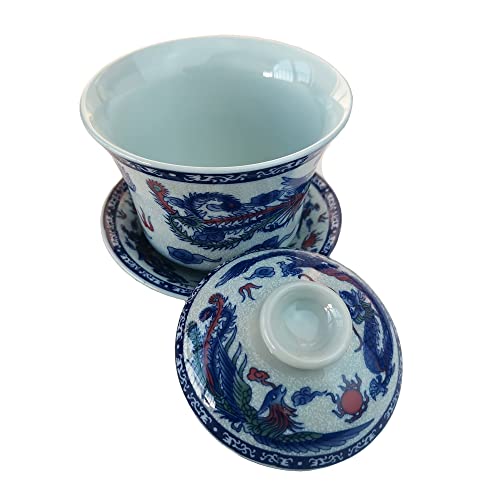
✅ Beautiful aesthetic design with dragon decoration
vv8oo Dragon Sancai Gaiwan Tea Set

✅ Easy to hold and use, lightweight design
Liang baobao Porcelain Gaiwan 5oz Green

✅ Large capacity - holds enough for multiple cups or generous servings
YXHUPOT White Porcelain Gaiwan with Beauty Pattern




We analyze real customer reviews to surface what matters: key strengths, ideal use cases, and honest considerations — so you can make an informed choice.
vv8oo Dragon Phoenix Porcelain Gaiwan
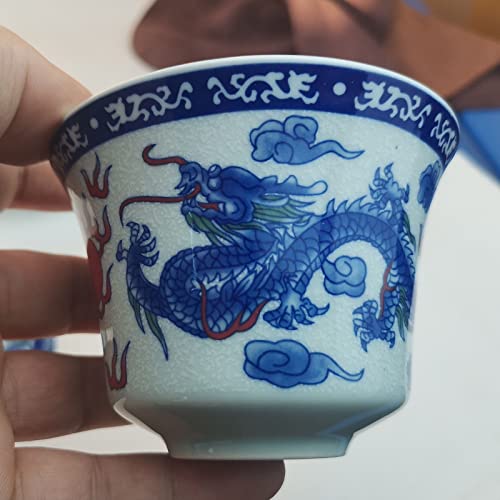
A compact porcelain gaiwan with traditional dragon and phoenix decoration, built for solo gongfu sessions and daily puerh practice.
🎯 Best for: Solo tea brewing sessions, Gongfu tea ceremony
✅ What Customers Love
- Attractive design/aesthetics (dragon/phoenix pattern) (8 mentions)
- Appropriate size for solo brewing (4 mentions)
- Good value for price ($8) (3 mentions)
🎯 Best For
Solo tea brewing sessions • Gongfu tea ceremony • Puerh tea preparation • Daily tea ritual practice
Brand: vv8oo
Category: Gaiwan

As an Amazon Associate we earn from qualifying purchases.
About This Product
This gaiwan features dragon and phoenix detailing on a smooth, easy-to-clean porcelain body sized for single-serving gongfu brewing. Reviewers find it performs comparably to premium gaiwans, handling puerh and other teas reliably. Note that actual capacity runs closer to 3oz than the stated 5.5oz — a meaningful gap for those expecting a larger vessel. The lid seating can be imprecise, and the rim flares less than traditional designs, requiring mindful finger placement when pouring. A practical option for beginners exploring gongfu technique or daily practitioners brewing puerh solo.
Is vv8oo Dragon Phoenix Porcelain Gaiwan Right for You?
What is the actual size of this vv8oo gaiwan?
This is worth knowing before you buy: while the listing says 5.5oz, the actual usable brewing capacity is closer to 3oz according to reviewers. That's not unusual for gaiwans — the advertised size typically includes the space all the way to the brim, but you'd never fill it that high. For gongfu brewing, 3oz is actually a very functional size and is standard for solo sessions. Just don't expect to be making large cups of tea with it. If you need to brew for two or more people at once, you'll want something larger.
Is this gaiwan easy to clean?
Yes — reviewers confirm it's easy to clean. Glazed porcelain like this doesn't absorb tea stains the way unglazed clay does, so a quick rinse with hot water after each session is usually all you need. For any stubborn tannin buildup over time, a gentle scrub with baking soda works well. The simple bowl shape of a gaiwan means there are no hidden crevices or mesh filters to deal with, which is one of the advantages over teapots with built-in strainers.
Is this gaiwan good for brewing puerh tea?
Yes — reviewers specifically call out puerh as one of the teas they brew regularly in this gaiwan. Porcelain is a great choice for puerh because it doesn't absorb the strong, earthy flavors the way unglazed clay can (unless you want a dedicated puerh vessel). The small working capacity is actually ideal for puerh gongfu brewing, where you use a high leaf-to-water ratio and do many short steeps. Several reviewers mention using this for daily puerh practice sessions and being happy with how it performs compared to more expensive options.
Can I use this gaiwan for a tea ceremony?
This gaiwan is well-suited for gongfu tea ceremony — that's exactly what it's designed for. Reviewers use it for daily tea rituals and mindfulness tea ceremonies, and multiple buyers confirm it performs all essential gaiwan functions. The dragon-phoenix motif adds a traditional aesthetic element that fits the ceremonial atmosphere. It's appropriate for personal practice and casual ceremonies. For a formal ceremony where you're serving guests, you'd want a larger gaiwan or multiple brewing vessels, since this one's 3oz working capacity is really sized for solo brewing.
Does this gaiwan keep tea warm?
Reviewers confirm it does retain heat during brewing. Porcelain is a decent heat insulator, and the lid helps trap warmth. For gongfu brewing, you're doing rapid steeps of 10-30 seconds anyway, so heat retention between pours isn't a major concern — the tea is in and out quickly. Where it matters more is if you're sipping directly from the gaiwan, and for that, it holds temperature well enough for the small volume. Just be aware that the porcelain itself gets hot, so handle it by the rim and saucer, not the body.
How to properly use a gaiwan for brewing tea?
Here's the basic process with this vv8oo gaiwan: Add your tea leaves (about 5-6 grams for the roughly 3oz working capacity), rinse them with a quick splash of hot water that you immediately discard, then do your first real steep for 10-15 seconds. Pour the tea out completely into a fairness pitcher or directly into small cups. Each subsequent steep, add about 5 seconds. The porcelain material of this gaiwan won't absorb flavors, so you can switch between tea types freely. Reviewers who use it daily for gongfu sessions say it handles the repeated short steeps well and keeps the tea warm enough between pours.
As an Amazon Associate we earn from qualifying purchases.
What is the etiquette for using a gaiwan?
Traditional gaiwan etiquette involves holding the saucer with your fingers underneath and using the lid to gently push back floating tea leaves before sipping or decanting. With this vv8oo gaiwan, the technique is the same — place your thumb and middle finger on the rim of the saucer, use your index finger to tilt the lid slightly to create a gap, and pour into your cup or pitcher. One thing to note with this particular gaiwan: reviewers mention the rim doesn't flare out as much as some others, so take a little extra care with your grip to avoid the hot porcelain. Practice with cooler water first until you get the feel for it.
How long do you steep tea in a gaiwan?
Steep times vary by tea type, but the gongfu approach this gaiwan is built for uses much shorter steeps than Western brewing. For puerh (a popular choice with this gaiwan), start at about 10 seconds and work up. For oolong, 15-20 seconds to start. Green tea, 15 seconds. Tie Guan Yin specifically does well at 15-20 seconds for the first steep, increasing by 5-10 seconds each round — you can easily get 6-8 infusions from good leaves. The small capacity of this gaiwan means you're using a high leaf-to-water ratio, which is why the steep times are so short. Pour off completely between steeps so the tea doesn't over-extract.
How to drink tea from a gaiwan?
There are two main approaches. For gongfu style — which is what this vv8oo gaiwan is designed for — you brew the tea in the gaiwan and then decant it into a small pitcher or directly into tiny tasting cups. You don't drink from the gaiwan itself in this method. The other approach, more common in casual Chinese tea drinking, is to drink directly from the gaiwan by tilting the lid to hold back the leaves and sipping from the rim. This gaiwan works for both methods, though reviewers primarily use it for gongfu decanting. Just be mindful that the rim runs a bit hot since it doesn't flare much, so if you're drinking directly from it, let it cool a moment first.
How to brew green tea in a gaiwan?
Green tea in a gaiwan requires lower water temperature than most other teas — around 160-175°F rather than boiling. With this vv8oo porcelain gaiwan, use about 3-4 grams of green tea for its roughly 3oz working capacity. Pour your cooled water in, steep for just 15-20 seconds on the first infusion, and pour off completely. You can get 3-4 good steeps from quality green tea this way, adding a few seconds each time. The porcelain material is ideal for green tea because it doesn't retain flavors or heat the way clay does, giving you a clean, true representation of the leaf. The smaller capacity actually works in your favor here since green tea is more temperature-sensitive and a smaller volume cools more predictably.
How are you supposed to drink oolong tea with a gaiwan?
Oolong is one of the best teas for gaiwan brewing. With this vv8oo gaiwan, use about 5-6 grams of oolong (roughly filling the bottom third of the gaiwan with dry leaves — rolled oolongs will expand dramatically). Rinse the leaves with a quick pour of near-boiling water, discard that, then do your first real steep for about 15-20 seconds. Pour completely into a pitcher or small cups. Good oolong will give you 6-8 steeps, each revealing different flavor notes as the leaves open up. This is where gongfu brewing really shines — you get to experience the tea evolving across multiple infusions, which you'd completely miss with a single Western-style steep.
What are the benefits of using a gaiwan instead of a teapot?
A gaiwan gives you much more control over your brew than a teapot. You can see the leaves directly, adjust steep times precisely, and pour off every last drop so your tea doesn't over-steep. This vv8oo gaiwan specifically works well for gongfu-style multiple short infusions — reviewers use it daily for puerh and other teas that benefit from repeated steeping. The porcelain won't hold onto flavors from previous sessions, so you can brew delicate greens in the morning and heavy puerh in the evening without cross-contamination. Plus, at this price point, it removes the anxiety of using expensive teaware for everyday practice.
What Makes This Product Special
⚠️ Preliminary analysis based on 15-review sample • Our methodology
- Attractive design/aesthetics (dragon/phoenix pattern) (8 mentions)
- Appropriate size for solo brewing (4 mentions)
- Good value for price ($8) (3 mentions)
- Sturdy/durable construction (3 mentions)
- Easy to clean (2 mentions)
- Keeps tea warm (1 mentions)
Best Use Cases
🎯 Best For
- Solo tea brewing sessions
- Gongfu tea ceremony
- Puerh tea preparation
- Daily tea ritual practice
- Mindfulness tea ceremonies
⚠️ Not Ideal For
- Brewing for multiple people (small capacity)
- Users who need exact 5oz capacity
What to Consider
- Actual capacity (~3oz) less than advertised (5.5oz) (1 mentions)
- Lid doesn't sit properly in cup (1 mentions)
- Rim doesn't flare enough to prevent burns when holding (1 mentions)
- Poor grip on lid handle (1 mentions)
- Very small size (1 mentions)
⚠️ based on 15-review sample. Some issues may not be captured.
About This Analysis
This analysis is based on 15 customer reviews. We're showing you everything we found, but with a moderate sample, there's a lot we likely haven't captured yet.
✅ What we're confident about: What customers love and best use cases
⚠️ What may be incomplete: Potential issues and considerations
For more perspectives, check customer reviews on Amazon.
Product Selection
In short: We only feature high-rated products.
Products on TeaDelight.net are selected based on strong Amazon customer ratings, sufficient review volume, and market presence. We focus on well-regarded products that tea enthusiasts are actively considering and purchasing.
As an Amazon Associate we earn from qualifying purchases.