


We analyze real customer reviews to surface what matters: key strengths, ideal use cases, and honest considerations — so you can make an informed choice.
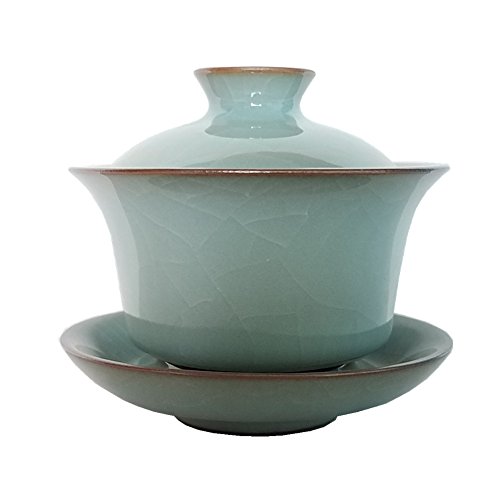
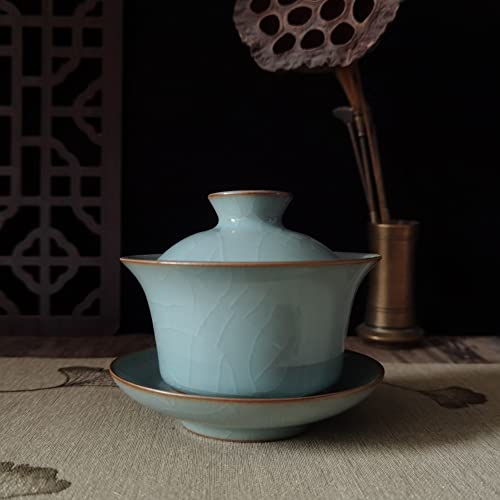
Handmade Celadon Gaiwan with Crackle Glaze
A substantial celadon gaiwan with a hand-crackled glaze that deepens in character with each session — built for the weight and ritual of gongfu tea.
🎯 Best for: Daily casual tea brewing, Formal gongfu tea ceremonies

✅ What Customers Love
- Beautiful celadon crackle glaze that ages with tea staining (7 mentions)
- Sturdy, heavy, well-built construction (6 mentions)
- Exceptional packaging protection during shipping (4 mentions)
🎯 Best For
Daily casual tea brewing • Formal gongfu tea ceremonies • Loose leaf oolong and other premium teas • Users who prefer substantial, sturdy teaware
Brand: Handmade Celadon
Category: Gaiwan
As an Amazon Associate we earn from qualifying purchases.
About This Product
Thick-walled construction distributes heat evenly and sustains brewing temperature across multiple infusions, a core requirement for gongfu practice. The authentic crackle glaze develops a tea patina over time, making each piece uniquely its own. Deep capacity handles longer steeping sessions, and the heavy build provides stability during ceremony. Some users note a tendency to dribble along the rim at certain pour angles — a technique adjustment most adapt to with regular use. Suits daily gongfu practitioners and ceremony enthusiasts who want substantial, durable teaware with long-term character.
Is Handmade Celadon Gaiwan with Crackle Glaze Right for You?
Can a beginner use this gaiwan?
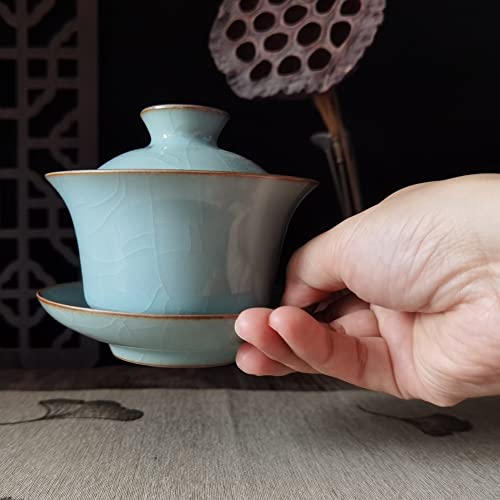
Absolutely — this Handmade Celadon gaiwan is actually one of the more beginner-friendly options out there. The thick walls mean you're much less likely to burn your fingers, which is the number one complaint from gaiwan newcomers. It's also heavier and sturdier than typical gaiwans, so it feels stable in your hands rather than precarious. Multiple reviewers describe it as easy to grip and maneuver, and one even said it becomes 'an extension of your arm' during longer sessions. It comes as a complete set with a saucer, so you don't need to buy anything separately to start brewing gongfu style.
Is this gaiwan too heavy for gongfu brewing?
It's heavier than most gaiwans, and a couple of reviewers note there's an adjustment period. But here's the thing — many users actually end up preferring the weight. It provides stability during pours and feels substantial and secure in your hands. One reviewer described it as becoming 'an extension of your arm' during extended gongfu sessions. The thickness that adds the weight also prevents your fingers from burning, which is a genuine practical benefit, especially during longer sessions with multiple infusions. If you're coming from a lightweight, thin-walled gaiwan, expect a transition period. If you've never used one before, the weight might actually make learning easier.
Does the celadon crackle glaze change over time with use?
Yes, and this is one of the most appealing features of this gaiwan. The crackle glaze develops a tea patina over time as tea seeps into the fine cracks in the glaze. Reviewers specifically mention the beautiful celadon crackle glaze that ages with tea staining, and many consider this a desirable feature — it gives your gaiwan a unique, lived-in character that reflects your personal tea history. Darker teas like pu-erh and black tea will stain the crackle lines more quickly, while lighter teas like green and white will develop the patina more gradually. If you prefer your teaware to stay pristine, this might not be ideal. But if you appreciate wabi-sabi aesthetics and the idea of your gaiwan telling a story, you'll love watching it evolve.
What are the benefits of using a gaiwan over a teapot?
A gaiwan gives you more control over every infusion — you can adjust steep time, water temperature, and leaf-to-water ratio much more precisely than with a teapot. You also get to watch the leaves unfurl, smell the wet leaf aroma by lifting the lid, and pour off the liquor quickly to prevent over-steeping. This particular gaiwan adds a few specific benefits: the porcelain doesn't absorb flavors (unlike clay teapots), so you can switch between tea types freely. Reviewers highlight the even heat distribution and the fact that it steeps tea perfectly under the lid. The 5-ounce size is also ideal for gongfu-style multiple short infusions, which really brings out the complexity of premium teas.
Does this gaiwan pour cleanly without dripping?
The majority of reviewers say it pours well, and one specifically confirmed that pouring is smooth. However, one reviewer did experience some dribbling down the side when pouring. This is a common issue with thicker-rimmed gaiwans and usually comes down to technique — a confident, decisive pour at the right angle typically prevents drips. If you tilt slowly or hesitantly, you're more likely to get dribbles. The lid fits well enough to act as a strainer, so leaves won't escape. Overall, most users don't report pouring issues, but it's worth mentioning that it may take a session or two to find the right pouring angle.
How durable is this celadon gaiwan for everyday use?
Multiple reviewers describe it as sturdy, heavy, and well-built — six separate reviewers mentioned the solid construction. It's designed for daily use and the thick walls provide more resilience than thin, delicate gaiwans. That said, it's still porcelain, so it will chip or break if dropped. One reviewer mentioned chipping around the rim, so handle the rim area with care when washing and storing. For normal daily brewing — picking it up, pouring, rinsing, setting it down — reviewers confirm it holds up well over time. The heavier weight actually makes accidental drops less likely since it feels secure in your hands.
As an Amazon Associate we earn from qualifying purchases.
What teas work best in this celadon gaiwan?
This gaiwan is versatile enough for any tea, but it particularly shines with oolongs and other premium loose leaf teas. The deep capacity gives rolled teas room to unfurl, and the heat retention is ideal for oolong's higher brewing temperatures. Reviewers confirm it works well for daily casual brewing as well as formal gongfu ceremonies. For dark teas like pu-erh and black tea, keep in mind the crackle glaze will develop staining faster — beautiful if you want that patina, but worth knowing. For delicate green and white teas, you'll want to use slightly cooler water and be mindful of the strong heat retention. The porcelain material is neutral and won't absorb flavors, so you can freely switch between tea types.
How do you drink tea directly from a gaiwan?
You can absolutely drink straight from a gaiwan — it's a common casual approach. Hold the saucer in one hand, use your other hand to slide the lid slightly off-center to create a small gap (this holds back the leaves), then bring the whole thing to your lips and sip through the gap. With this celadon gaiwan, the white rim provides a nice visual cue for positioning the lid. The heavier weight actually helps here since it feels secure in your hands. One thing to note: a couple of reviewers mention it can dribble slightly when pouring at certain angles, so if you're pouring into cups rather than drinking directly, pour with a steady, committed motion rather than a tentative tilt.
Is this gaiwan authentic celadon?
It has markers of authenticity — reviewers note there's a kiln stamp on the bottom, which is a traditional sign of craftsmanship. The crackle glaze is a classic celadon technique that's been used in Chinese pottery for centuries. However, one reviewer did note the color is darker than expected and doesn't perfectly match other celadon pieces they own, so the shade of grey-green may vary from what you picture as 'celadon.' The architectural shape with the white rim contrast gives it a distinctive look. If exact color matching with an existing celadon set is important to you, be aware there may be some variance — but as a standalone piece or paired with accessories from the same seller, reviewers find it attractive.
Who should NOT buy this gaiwan?
This gaiwan isn't the right choice if you prefer lightweight, thin-walled, delicate teaware — a couple of reviewers note the thick walls and heavier weight as drawbacks if that's your preference. It's also not ideal if you need exact color matching with an existing celadon collection, since the grey-green shade may differ from other sets. If you primarily brew very delicate green or white teas and want a gaiwan that cools quickly, the strong heat retention could work against you. And if you tend to be rough with teaware, one reviewer did note chipping around the rim with careless handling. But for beginners, daily brewers, or anyone who appreciates substantial, sturdy teaware with authentic character, it's a strong choice.
Can you build a matching tea set with this gaiwan?
Yes — reviewers mention that this gaiwan pairs well with koi cups from the same seller, even though there's some color variance between pieces. That's actually normal for handmade celadon; slight differences in firing temperature create natural variation in the glaze. If building a coordinated set, sticking with the same seller gives you the best chance at a cohesive look, even if pieces aren't perfectly identical. The grey crackle glaze aesthetic works as a versatile base that complements other celadon pieces. Just don't expect factory-perfect color matching — handmade ceramics have inherent variation, which is part of their charm.
How do I properly use a gaiwan for brewing tea?
Start by warming the gaiwan with hot water — pour it in, swirl, and discard. Add your tea leaves (about 5-7 grams for this 5-ounce size), pour hot water over them, and place the lid on. For a quick rinse on your first infusion, steep for just a few seconds and discard. Then brew subsequent infusions for 10-30 seconds, gradually increasing the time. Reviewers confirm this gaiwan steeps tea perfectly under the lid with even heat distribution, and the excellent heat retention means your water stays at the right temperature throughout the steep. The deeper capacity compared to typical gaiwans also gives leaves more room to unfurl, which is great for tightly rolled oolongs.
As an Amazon Associate we earn from qualifying purchases.
How do I choose the right gaiwan for tea?
The main things to consider are size, material, wall thickness, and weight. This Handmade Celadon gaiwan is 5 ounces, which is on the deeper side — great if you want a bit more tea per infusion or if you brew teas that need room to expand. Porcelain is the most versatile material since it doesn't absorb flavors, so you can use it for any tea type. Where this one stands out is the thick-walled construction — it's a trade-off. Thicker walls retain heat better and protect your hands, but some experienced brewers prefer thinner, lighter gaiwans for more delicate control. If you're starting out or want something sturdy for daily use, this heavier style is forgiving. If you already know you prefer featherlight teaware, this probably isn't your match.
How do you brew green tea in a gaiwan?
Green tea in a gaiwan requires slightly different technique than oolong. Use cooler water — around 170-180°F rather than boiling — and keep steep times short, starting at about 10-15 seconds. Green tea leaves are more delicate and will turn bitter if over-steeped or hit with water that's too hot. This gaiwan's thick walls and strong heat retention are actually something to watch with green tea — the porcelain holds heat longer, so you may want to let the water cool a few extra degrees before pouring it in. On the plus side, the 5-ounce capacity means you can do lighter infusions, and the porcelain won't impart any flavors to your delicate greens.
How are you supposed to drink oolong tea from a gaiwan?
Oolong is one of the best teas to brew in a gaiwan, and this one handles it particularly well. Use water around 195-205°F, add enough leaves to cover the bottom of the gaiwan, and do short steeps — starting at about 15 seconds and adding 5-10 seconds per infusion. You can easily get 5-8 infusions from good oolong this way. This celadon gaiwan's deep capacity gives rolled oolongs like Tie Guan Yin plenty of room to unfurl, and the heat retention keeps your water at the right temperature. Pour into small tasting cups between steeps. One thing reviewers love: the crackle glaze actually develops a tea patina over time from oolong brewing, which many gongfu enthusiasts consider a feature, not a flaw.
What is the etiquette for using a gaiwan?
Traditional gaiwan etiquette is straightforward once you know the basics. Hold the saucer in your palm, use your thumb and middle finger on the rim, and tilt the lid slightly to create a gap for pouring — the lid also acts as a strainer. With this particular celadon gaiwan, the white rim contrast actually makes it easier to see what you're doing when tilting the lid. In formal gongfu ceremonies, you'd pour into a fairness pitcher first, then into cups. For casual brewing, you can drink directly from the gaiwan by using the lid to hold back the leaves. This set's heavier weight actually helps here — it's more stable during the pour than lightweight gaiwans.
How long do you steep Tie Guan Yin tea in a gaiwan?
Tie Guan Yin is a perfect match for this gaiwan's deeper capacity, since the tightly rolled leaves need room to expand. Start with a quick rinse — pour hot water in (around 200°F), steep for 3-5 seconds, and discard. Then your first real infusion should be about 15-20 seconds. Add roughly 5 seconds per subsequent infusion. Good Tie Guan Yin will give you 6-8 infusions this way, with the flavor evolving from bright and floral to deeper and more buttery. This gaiwan's excellent heat retention helps maintain consistent water temperature, which matters since Tie Guan Yin is sensitive to temperature drops during steeping.
What Makes This Product Special
⚠️ Preliminary analysis based on 19-review sample • Our methodology
- Beautiful celadon crackle glaze that ages with tea staining (7 mentions)
- Sturdy, heavy, well-built construction (6 mentions)
- Exceptional packaging protection during shipping (4 mentions)
- Attractive architectural shape with white rim contrast (3 mentions)
- Excellent heat retention (2 mentions)
- Deep capacity - holds more than typical gaiwans (2 mentions)
- Kiln stamp authentication on bottom (1 mentions)
Best Use Cases
🎯 Best For
- Daily casual tea brewing
- Formal gongfu tea ceremonies
- Loose leaf oolong and other premium teas
- Users who prefer substantial, sturdy teaware
- Building a coordinated celadon tea set
⚠️ Not Ideal For
- Users seeking lightweight, delicate gaiwans
- Exact color matching with other celadon sets
- Careless handling (fragility concerns from one user)
What to Consider
- Dribbles tea down the side when pouring (1 mentions)
- Chips and breaks easily around the rim (1 mentions)
- Heavy weight may require adjustment period (2 mentions)
- Thick walls (some users prefer thinner) (1 mentions)
- Color darker than expected - doesn't match other celadon sets (1 mentions)
- Inadequate packaging leading to breakage (contradicts other reviews) (1 mentions)
⚠️ based on 19-review sample. Some issues may not be captured.
About This Analysis
This analysis is based on 19 customer reviews. We're showing you everything we found, but with a moderate sample, there's a lot we likely haven't captured yet.
✅ What we're confident about: What customers love and best use cases
⚠️ What may be incomplete: Potential issues and considerations
For more perspectives, check customer reviews on Amazon.
Product Selection
In short: We only feature high-rated products.
Products on TeaDelight.net are selected based on strong Amazon customer ratings, sufficient review volume, and market presence. We focus on well-regarded products that tea enthusiasts are actively considering and purchasing.
As an Amazon Associate we earn from qualifying purchases.
You Might Also Like
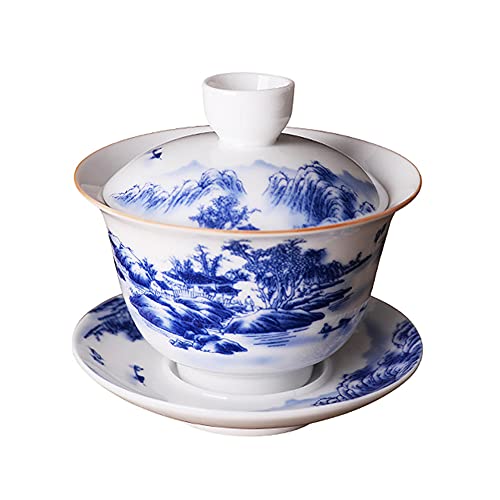
✅ High-quality porcelain construction
Jingdezhen Handmade Blue and White Porcelain Gaiwan

✅ Beautiful aesthetic design with dragon decoration
vv8oo Dragon Sancai Gaiwan Tea Set

✅ High quality materials and construction
Liang Baobao Porcelain Gaiwan with Auspicious Clouds

✅ Easy to hold and use, lightweight design