


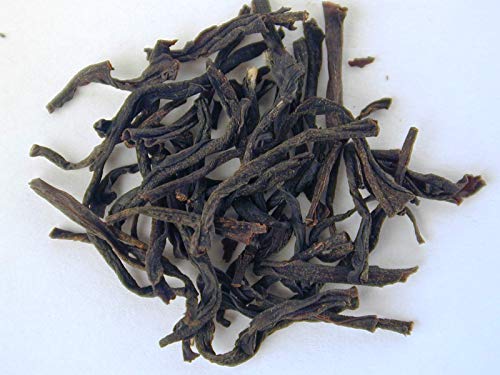
We analyze real customer reviews to surface what matters: key strengths, ideal use cases, and honest considerations — so you can make an informed choice.
The Tao of Tea Ceylon Orange Pekoe
A loose-leaf Ceylon orange pekoe that reviewers compare to the Lipton and Red Rose they grew up with — a classic register, not a showcase profile.
🎯 Best for: Morning cup, Iced tea
🍃 Strength: Light

What Stands Out
🍃 Flavor Profile
Strength: Light
Reviewers describe the cup as smooth, light, and fresh, with 8 of 10 landing positive. One picks out the orange-pekoe aroma specifically. We'd call the vocabulary evaluative rather than source-based — no muscatel or malt surfaces in the data.
✅ What Customers Love
- Delicious, familiar black-tea character — comparable to mass-market Ceylon blends
- Economical — leaves resteep across multiple pots
🎯 Best For
Morning cup • Iced tea • Switching from tea bags to loose-leaf to reduce microplastic exposure
Brand: The Tao of Tea
Category: Black Tea
As an Amazon Associate we earn from qualifying purchases.
About This Black Tea
The Tao of Tea's Ceylon Orange Pekoe is a loose-leaf Sri Lankan black tea that reviewers compare to the Lipton and Red Rose they grew up with — a classic register, not a showcase profile. Eight of ten reviewers land positive on the cup, describing it as smooth, light, and fresh, with one picking out the orange-pekoe aroma specifically. The vocabulary is evaluative rather than source-based; no muscatel or malt surfaces in the reviews.
Morning and iced are the use-context mentions that come up in reviews. A few drinkers note they switched from tea bags to loose-leaf specifically to cut microplastic exposure, and this product fits that brief. It suits drinkers who want a familiar, everyday black tea rather than a layered tasting profile — and with a moderate-to-high caffeine level, it's better placed early in the day than as a wind-down cup.
The leaves resteep well, so plan on stretching each portion across multiple pots — a practical economy that several reviewers appreciate. The listing positions it as a light-bodied tea with balanced sweetness and astringency, sourced from Rahuna, Sri Lanka.
A few honest caveats worth knowing before you buy. One reviewer flags the leaf as mixed-quality rather than what they'd consider a true orange pekoe, and there is a product-change signal on the listing suggesting recent batches may differ from what longer-time buyers remember. If you're seeking a layered, source-descriptor tasting experience — something that names its terroir on the palate — this isn't that tea; the reviewer vocabulary stays evaluative throughout.
For drinkers who want an approachable, familiar Ceylon in loose-leaf form and value getting multiple pots out of each measure, it lands in the right register.
Is The Tao of Tea Ceylon Orange Pekoe Right for You?
What does this Ceylon orange pekoe taste like?
Across a small set of reviewers, the cup comes through as smooth, light, and fresh, with 8 of 10 landing positive. The vocabulary is evaluative rather than source-based — no muscatel, malt, or stone-fruit notes surface in what drinkers wrote.
How does it compare to Lipton or Red Rose?
Reviewers compare it directly to both — one says it 'tastes exactly like Lipton,' another likens it to Red Rose. Read it as a familiar grocery-aisle Ceylon register in loose-leaf form, not a showcase orange pekoe.
Is this a good morning tea?
Morning is one of the two use contexts reviewers mention, and the smooth, light character fits a wake-up cup. With only a handful of drinkers weighing in, treat that as a fit rather than a defining role.
Can I use it for iced tea?
Yes — iced is the other use context reviewers call out, alongside morning. It's one mention in a sparse review set, so think of it as a confirmed-by-one-drinker option rather than the product's headline use.
Do the leaves hold up to multiple steeps?
One reviewer notes the leaves resteep well, and the synthesis brewing voice suggests stretching each portion across multiple pots by lengthening the brew time on later steeps.
Is this really orange pekoe, or a mixed-quality blend?
One reviewer flags the leaf as mixed-quality and 'not real orange pekoe,' and a product-change signal is set on the listing, so recent batches may differ from older ones. It's a single-reviewer concern at this review count, but worth knowing before you order.
As an Amazon Associate we earn from qualifying purchases.
Will this satisfy a drinker chasing layered, source-based flavor notes?
Probably not. The descriptor register reviewers use stays evaluative — delicious, smooth, light — with no muscatel, malt, or terroir notes surfacing. A seasoned palate looking for a connoisseur read may find the data thin.
Why would I switch from tea bags to this loose-leaf?
A few drinkers specifically called out moving to loose-leaf to cut microplastic exposure from bag material, and this listing is one they landed on. It's a small subset of the reviews, but it's a recurring reason in the data.
Is this a good pick if I'm new to loose-leaf black tea?
Yes — reviewers compare it directly to mass-market Ceylons they grew up with, and the cup reads smooth and light with no astringency or bitterness called out. It's a familiar landing pad rather than a steep learning curve.
Are reviewers buying it again?
Two of the reviewers signal repurchase intent, which is a meaningful share of the small eligible-review set. Take it as an encouraging signal rather than a settled verdict.
Category: What is black tea?
Black tea is the fully oxidized leaf of the Camellia sinensis plant, the same species used for green, white, and oolong tea. The defining step is enzymatic oxidation, in which polyphenol oxidase converts catechins in the leaf into theaflavins and thearubigins, the compounds responsible for the dark color, brisk astringency, and reddish-amber liquor. Black tea accounts for roughly 75% of global tea consumption.
Category: What is Assam tea?
Assam is a black tea from the Brahmaputra river valley in northeast India, grown from the indigenous assamica variety in hot, humid, low-lying terrain. It is bold, malty, and full-bodied with high tannin content, which is why it stands up so well to milk and sugar and forms the backbone of most English and Irish Breakfast blends. Most Assam is produced as CTC for tea bags, but Orthodox whole-leaf Assam with golden tips is a refined alternative.
As an Amazon Associate we earn from qualifying purchases.
Category: What does black tea taste like?
Black tea generally tastes brisk and full-bodied with a coppery to deep red liquor. Common descriptors include malty (Assam), muscatel grape (second-flush Darjeeling), citrusy and bright (Ceylon), cocoa or sweet potato (Yunnan and Guangdong), and toasty or biscuit-like from the Maillard reactions that occur during firing. Astringency is a structural feature of well-made black tea, not a flaw.
What Customers Love
⚠️ Limited sample based on limited customer feedback (10 reviews) • Our methodology
- Delicious, familiar black-tea character — comparable to mass-market Ceylon blends
- Economical — leaves resteep across multiple pots
Taste Profile
Reviewers describe the cup as smooth, light, and fresh, with 8 of 10 landing positive. One picks out the orange-pekoe aroma specifically. We'd call the vocabulary evaluative rather than source-based — no muscatel or malt surfaces in the data.
Brewing: Leaves resteep well — plan on stretching each portion across multiple pots.
Best Use Cases
🎯 Best For
- Morning cup
- Iced tea
- Switching from tea bags to loose-leaf to reduce microplastic exposure
⚠️ Not Ideal For
- Evening, bedtime, or wind-down cups
- Drinkers seeking a layered, source-descriptor tasting profile
How People Use It
Morning and iced are the use-context mentions; a few drinkers switched from bags to loose-leaf specifically to cut microplastic exposure.
Good for Beginners
✅ Yes
- Familiar mass-market Ceylon register — reviewers compare directly to Lipton and Red Rose
- Smooth, light, and fresh character with no reported astringency or bitterness
For Experienced Users
Has Some Depth
- Evaluative-only descriptor register with no source-based flavor notes (muscatel, malt, stone fruit, etc.) — data does not support a connoisseur read
What to Consider
One reviewer flags the leaf as mixed-quality rather than true orange pekoe, and a product-change signal on the listing suggests recent batches may differ from older ones.
- Authenticity / batch-consistency concern — one reviewer reports a mixed-quality leaf different from true orange pekoe, and a product-change flag is set on the listing
⚠️ Important: This analysis is based on limited customer feedback (10 reviews). We've shared what we found, but there may be additional considerations we haven't captured.
About This Analysis
This analysis is based on 10 customer reviews. We're showing you everything we found, but with a small sample, there's a lot we likely haven't captured yet.
✅ What we're confident about: What customers love and best use cases
⚠️ What may be incomplete: Potential issues and considerations
For more perspectives, check customer reviews on Amazon.
Product Selection
In short: We only feature high-rated products.
Products on TeaDelight.net are selected based on strong Amazon customer ratings, sufficient review volume, and market presence. We focus on well-regarded products that tea enthusiasts are actively considering and purchasing.
As an Amazon Associate we earn from qualifying purchases.
You Might Also Like

✅ Restaurant-authentic Thai iced tea flavor
Tea Zone Thai Tea Leaves

✅ decaf black tea that reviewers rate as strong and full-flavoured
Barry's Tea Decaf Black Tea
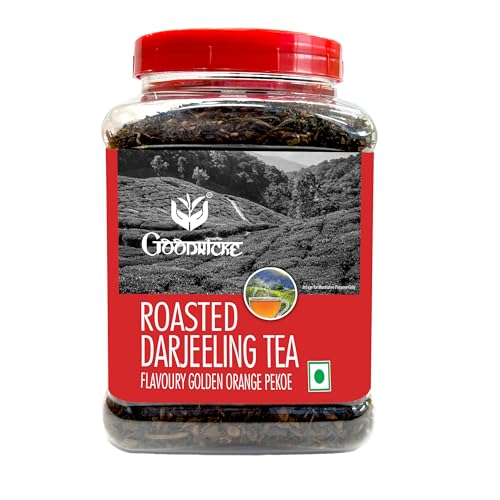
✅ Distinctive roasted processing signature
Goodricke Roasted Organic Darjeeling Tea

✅ Smooth, mellow character without bitterness