







We analyze real customer reviews to surface what matters: key strengths, ideal use cases, and honest considerations — so you can make an informed choice.
Makaibari Himalayan Spring First Flush Black Tea
A delicate single-estate First Flush Darjeeling with soft floral and herbal notes, brewing to a luminous light yellow cup — ideal for those who favor gentle, refined tea experiences.
🎯 Best for: Mid-morning refreshment, Light aromatic tea break
🍃 Tastes like: floral, herbal, slight toast

What Stands Out
🍃 Flavor Profile
Strength: Delicate
Notes: floral, herbal, slight toast
✅ What Customers Love
- Delicate, subtle floral notes (4 mentions)
- Smooth, refined taste (3 mentions)
- Light, gentle flavor profile (3 mentions)
🎯 Best For
Mid-morning refreshment • Light aromatic tea break • Gentle daily routine • Those seeking subtle flavors
Brand: Makaibari
Category: Black Tea
As an Amazon Associate we earn from qualifying purchases.
About This Black Tea
This single-estate loose leaf from Makaibari produces a pale, luminous cup with whisper-quiet floral and herbal notes and a faint toast finish — smooth and clean without any astringency. The flavor is deliberately light, rewarding patience and a careful 190°F brew for two minutes. Reviewers note it's notably forgiving for new loose leaf drinkers, with small quantities needed per serving. Those expecting a bold, brisk Darjeeling character will likely find the profile too mild. Best suited for sensitive palates, mid-morning sipping, or anyone seeking a low-intensity tea they can return to throughout the day.
Is Makaibari Himalayan Spring First Flush Black Tea Right for You?
What does Makaibari First Flush Darjeeling taste like?
Makaibari's First Flush has a delicate, subtle flavor profile that's quite different from what most people expect from black tea. Reviewers consistently describe floral notes with hints of herbal and slight toast character. The brew produces a beautiful light yellow hue rather than a deep amber. It's smooth and refined — think of it more like a sophisticated white wine than a robust red. If you're used to bold, malty black teas, this will surprise you with how gentle and nuanced it is.
Is this Makaibari Darjeeling too light or weak?
This is the most important thing to know before buying: if you like bold, strong black tea, this probably isn't for you. Multiple reviewers describe it as too light or weak for their taste, and some felt it lacked the traditional Darjeeling character they expected. However, other reviewers love exactly this quality — they describe the delicate floral notes and smooth, refined taste as what makes it special. It's a genuinely light, subtle tea. Know your preference before buying.
Who is this Makaibari First Flush Darjeeling best for?
This tea has two ideal audiences. First, beginners who want an approachable entry into quality loose leaf tea — it needs only one teaspoon per cup, has a forgiving 2-minute brew time, and the gentle flavor won't overwhelm anyone. Second, experienced tea enthusiasts who appreciate nuanced, subtle teas — the authentic First Flush character, single-estate sourcing, and complex floral notes reward careful brewing at 190°F. It's specifically not ideal for people who want a strong, bold cup or a traditional robust Darjeeling.
What is the number one black tea in the world?
That depends entirely on what you're looking for. Darjeeling First Flush teas like this Makaibari are often called the 'Champagne of Teas' and are considered among the finest black teas globally. Makaibari estate is one of the oldest and most respected tea gardens in Darjeeling, known for biodynamic and organic farming. However, if you prefer bold, malty teas, you might rank an Assam or a Kenyan black tea higher. This Makaibari is best appreciated if you value subtlety, floral complexity, and single-estate provenance over sheer strength.
What does First Flush mean for Darjeeling tea?
First Flush refers to the very first spring harvest of the year, typically plucked in March-April after the tea bushes have rested through winter. These leaves are tender and young, producing a lighter, more floral and complex cup compared to later harvests. This Makaibari is a Special Edition First Flush, which means it's from the earliest, most prized picking. That explains its light yellow brew color, delicate floral notes, and gentle character — these are hallmarks of authentic first flush Darjeeling, not flaws.
How does Makaibari compare to other Darjeeling teas?
Makaibari is one of the oldest tea estates in Darjeeling, established in 1859, and was a pioneer in organic and biodynamic tea farming. Their teas tend toward the more delicate, refined end of the Darjeeling spectrum. Compared to second flush Darjeelings (which are bolder and more muscatel), this first flush is noticeably lighter and more floral. Compared to other first flush Darjeelings, Makaibari's house style leans toward subtlety and smoothness rather than assertiveness.
As an Amazon Associate we earn from qualifying purchases.
What is the best way to brew this Makaibari First Flush?
This tea rewards careful brewing. Use one teaspoon of leaves per cup with water at around 190°F — not a full boil, which would scorch the delicate leaves. Steep for about 2 minutes. The lower temperature and shorter steep time bring out those beautiful floral and herbal notes without any bitterness. Reviewers who got the best results paid attention to water temperature specifically. If you use boiling water or steep too long, you'll lose the subtlety that makes this tea special.
How to make black tea step by step?
Here's how to brew this Makaibari Darjeeling specifically: Heat fresh, filtered water to 190°F (below boiling). Warm your cup or teapot by rinsing it with hot water. Add one teaspoon of the loose leaves per cup. Pour the 190°F water over the leaves. Steep for 2 minutes — set a timer, as over-steeping changes the character. Strain the leaves and enjoy. No milk or sugar needed for this one — its natural floral sweetness and smooth body are best appreciated on their own.
What are common black tea mistakes?
With a delicate First Flush like this Makaibari, the biggest mistakes are using boiling water (too hot — use 190°F), steeping too long (stick to 2 minutes, not 5), and adding milk or sugar that will completely mask the subtle floral notes. Another common mistake is expecting this to taste like a bold breakfast tea — it won't. It's a light, nuanced tea that's meant to be sipped and appreciated on its own. Using too many leaves can also make it astringent, so stick to one teaspoon per cup.
How much Makaibari tea should I use per cup?
One teaspoon of leaves per cup is the sweet spot for this tea. That's actually less than many loose leaf teas require, which is a nice practical benefit. If you find it too delicate for your taste, try using a slightly heaped teaspoon rather than increasing the steep time — more leaf at the same steep time gives you more flavor without the bitterness that over-steeping brings. For a standard 8oz cup, one level teaspoon with 190°F water for 2 minutes is where most reviewers find the best balance.
Can you use this Makaibari Darjeeling for milk tea?
Honestly, this isn't the right tea for milk tea. It has a very delicate, light flavor profile with subtle floral and herbal notes — adding milk would completely overpower everything that makes it special. If you're looking for a black tea to make chai or milk tea, you'd want something much bolder, like an Assam or a CTC black tea. This Makaibari First Flush is best enjoyed straight, where you can actually taste those nuanced flavors.
What does USDA Organic mean for this tea?
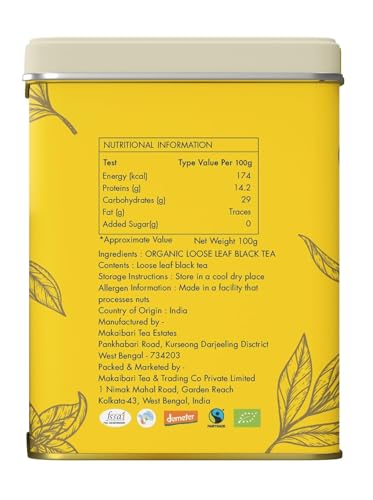
USDA Organic certification means the tea was grown without synthetic pesticides, herbicides, or fertilizers, and the estate undergoes regular inspections to maintain certification. For a tea you're drinking daily, this matters — conventionally grown teas can carry pesticide residues that end up directly in your cup. Makaibari actually goes beyond basic organic farming with biodynamic practices. The certification adds to the cost, but if clean sourcing is important to you, it's a meaningful differentiator.
As an Amazon Associate we earn from qualifying purchases.
Can you re-steep this Makaibari Darjeeling?
Yes, quality loose leaf teas like this can typically handle a second steep. The second infusion will be lighter than the first — and since this tea is already quite delicate, expect a very gentle cup. Try adding about 30 seconds to the steep time for the second round. Some tea lovers actually prefer the second steep of first flush Darjeelings for its softer, sweeter character. A third steep is possible but will be very faint.
Does this tea come in a nice package for gifting?
Reviewers specifically mention the nice packaging — it comes in a carved tin, which gives it a premium, giftable presentation. The Special Edition label and Makaibari's heritage story add to the gift appeal. Just be aware that one reviewer reported a missing lid on their container, so check the packaging when it arrives. The 100gm size is a reasonable gift quantity — enough to enjoy without being an overwhelming amount for someone trying Darjeeling for the first time.
How should I store this Makaibari Darjeeling?
First flush Darjeelings are best enjoyed relatively fresh — they're prized for their spring harvest character which fades over time. Store it in an airtight container away from light, heat, moisture, and strong odors. The carved tin it comes in works if it seals well. Avoid storing it near spices or coffee that could taint the delicate flavor. Try to finish it within a few months of opening for the best experience — those subtle floral notes are the first thing to fade with age.
Is this tea good for sensitive stomachs?
This Makaibari First Flush is actually a good choice if you have a sensitive stomach. It's a very light, smooth tea with low astringency — meaning fewer tannins that can irritate the stomach compared to bold, strongly-brewed black teas. Reviewers describe the flavor as gentle and mild. Brewing it for just 2 minutes at 190°F keeps tannin levels low. Being organic also means no chemical residues that could cause sensitivity. It's a notably gentle black tea all around.
Can you make iced tea with this Darjeeling?
You can, and it actually makes a lovely iced tea because of its light, smooth character. Cold brew it overnight in the fridge (about 1.5 teaspoons per cup of cold water, steeped 8-12 hours) for the best results — you'll get a delicate, refreshing brew with floral notes. That said, at this price point, you might prefer to enjoy it hot where you can fully appreciate the subtle complexity. There are more affordable teas that work just as well for iced tea.
Is black tea good for you in the morning?
Absolutely, and this Makaibari is specifically recommended by reviewers as a mid-morning refreshment. It provides a moderate caffeine boost that's gentler than coffee, paired with L-theanine for focused calm. The light, floral flavor is pleasant first thing without being overwhelming. If you need a serious caffeine kick to start your day, this might feel too gentle — but if you enjoy a more refined, mindful start to your morning, it's excellent.
As an Amazon Associate we earn from qualifying purchases.
Is black tea good for you when sick?
Yes, and this Makaibari might be particularly suitable when you're under the weather. Its gentle, smooth profile is easy on a sore throat, and reviewers have specifically noted it's effective for sensitive airways. The warm liquid provides comfort and hydration, and the moderate caffeine gives a gentle lift when you're feeling low energy. Being a light tea, it's also less likely to upset a sensitive stomach compared to stronger, more tannic black teas. Some reviewers mention it's especially good during winter months.
What are 5 benefits of drinking black tea?
Five benefits relevant to a tea like this Makaibari Darjeeling: (1) Rich in antioxidants that support cardiovascular health. (2) Contains L-theanine for calm, focused energy without coffee jitters. (3) Supports respiratory health — reviewers specifically mention this tea helping with sensitive airways. (4) USDA Organic means clean, pesticide-free daily hydration. (5) The ritual of properly brewing loose leaf tea provides a genuine mental health break in your day. The gentle flavor profile makes it easy to drink regularly without tiring of it.
Is black tea actually healthy?
Yes, black tea is well-documented for its health benefits — it's rich in antioxidants, polyphenols, and flavonoids. What's interesting about this Makaibari First Flush specifically is that reviewers have noted it's effective for sensitive airways, making it a good choice if you're looking for a gentle, soothing daily tea. Being USDA Organic certified also means you're not ingesting residual pesticides with each cup. First flush teas are harvested in spring after the plant has rested, which typically means higher antioxidant concentration.
What is the healthiest brand of tea?
Makaibari is one of the most reputable organic tea estates in the world. They've been producing tea in Darjeeling since 1859, and they hold USDA Organic certification, which requires rigorous standards. The single-estate sourcing means you know exactly where your tea comes from — no blending from multiple unknown sources. While 'healthiest brand' is hard to pin down definitively, a certified organic, single-estate loose leaf tea like this is about as clean as tea gets.
What happens if we drink black tea daily?
Daily black tea consumption is generally associated with positive health outcomes — improved heart health, antioxidant intake, and gut health support. This Makaibari is USDA Organic certified, so daily drinking means you're not accumulating pesticide residues over time, which is a real concern with conventionally grown teas. Reviewers specifically note it fits well into a gentle daily routine, and some found it helpful for sensitive airways during regular use. Just be mindful of caffeine if you're drinking multiple cups.
Is there enough caffeine in black tea to keep you awake?
Black tea has enough caffeine to provide alertness, but it works differently than coffee. This Makaibari Darjeeling, brewed for the recommended 2 minutes, delivers a moderate caffeine boost that most people find energizing without being disruptive. The L-theanine in tea also promotes calm focus rather than the spike-and-crash cycle of coffee. Reviewers mention it as a great mid-morning refreshment, which suggests it provides just the right amount of gentle energy.
As an Amazon Associate we earn from qualifying purchases.
Is black tea more caffeine than coffee?
No, black tea generally has about half the caffeine of coffee — roughly 40-70mg per cup compared to 95-200mg for coffee. A First Flush Darjeeling like this Makaibari tends to be on the moderate side for black tea caffeine content. It's enough to give you a gentle lift for a mid-morning break without the jitters that coffee can cause. If you're sensitive to caffeine, the 2-minute steep time also means you're extracting less caffeine than a longer steep would.
Which tea is highest in caffeine?
Among true teas, matcha typically has the highest caffeine because you're consuming the whole leaf. Among black teas, Assam and breakfast blends tend to be higher in caffeine than Darjeeling. This Makaibari First Flush, being a delicate spring harvest with a short 2-minute steep time, would deliver moderate caffeine — enough for a pleasant morning pick-me-up but not as much as a strong Assam or an English Breakfast.
What is the healthiest form of black tea?
Loose leaf black tea like this Makaibari Darjeeling is generally considered one of the healthiest forms because it's minimally processed and retains more of its natural compounds compared to tea bags with crushed leaves. This particular tea is also USDA Organic certified, meaning no synthetic pesticides or fertilizers were used in growing it. Single-estate teas tend to have cleaner sourcing and more transparent production practices, which matters if you're drinking tea for health reasons.
Which is healthier, black tea or green tea?
Both are healthy — they come from the same plant and share many beneficial compounds. Green tea gets more press for antioxidants (EGCG specifically), while black tea has its own unique antioxidants called theaflavins and thearubigins formed during oxidation. This Makaibari First Flush is interesting because it's so lightly processed for a black tea that it sits closer to green tea in some ways — the light yellow brew color and delicate profile reflect minimal oxidation. For daily health, choosing either consistently matters more than which type.
How to brew black tea loose leaf?
Loose leaf brewing is straightforward with this Makaibari. Use a teapot with an infuser basket, a gaiwan, or even a simple mesh strainer over your cup. Measure one teaspoon of leaves, pour 190°F water over them, and steep for 2 minutes. The leaves need room to expand, so avoid those tiny ball infusers if you can — a basket infuser or open pot gives better results. You can get a second steep from these leaves too, though the flavor will be lighter.
How to make black tea more tasty?
For this Makaibari First Flush, the best way to maximize flavor is actually to perfect your brewing technique rather than adding things to it. Make sure your water is 190°F (not boiling), steep exactly 2 minutes, and use fresh filtered water. If you find it too light for your taste — which some reviewers do — try adding a bit more leaf rather than steeping longer, which can introduce bitterness. A small drizzle of honey can complement the floral notes if you want a touch of sweetness, but avoid milk entirely.
As an Amazon Associate we earn from qualifying purchases.
How long do you boil black tea for?
For this Makaibari First Flush, you actually don't want a full boil at all. Heat your water to about 190°F (just before boiling, when you see small bubbles forming) and steep for 2 minutes. This is shorter and cooler than most black teas, which reflects its delicate first flush character. Over-steeping or using boiling water will flatten the subtle floral notes that make this tea worth drinking. The forgiving 2-minute steep time actually makes it pretty approachable for beginners.
Is black tea good for weight loss?
Black tea can support weight management as part of a healthy routine — it's virtually calorie-free, contains compounds that may boost metabolism, and the caffeine provides gentle energy. This Makaibari is best enjoyed without milk or sugar, which keeps it at zero calories. Its delicate, naturally smooth flavor doesn't need sweetening, unlike bolder teas that some people find they need to dress up. That said, no single tea is a magic weight loss solution.
What Customers Love
⚠️ Limited sample based on limited customer feedback (14 reviews) • Our methodology
- Delicate, subtle floral notes (4 mentions)
- Smooth, refined taste (3 mentions)
- Light, gentle flavor profile (3 mentions)
- Nice packaging (carved tin) (2 mentions)
- Beautiful light yellow hue (1 mentions)
Taste Profile
- light
- smooth
- delicate
- subtle
- mild
Best Use Cases
🎯 Best For
- Mid-morning refreshment
- Light aromatic tea break
- Gentle daily routine
- Those seeking subtle flavors
- Sensitive airway support
⚠️ Not Ideal For
- Those wanting strong, bold tea
- Traditional Darjeeling flavor seekers
What to Consider
- Too light/weak for some preferences (3 mentions)
- Little to no traditional Darjeeling flavor (2 mentions)
- Broken leaves (not full leaf) (1 mentions)
- Missing lid on container (1 mentions)
⚠️ Important: This analysis is based on limited customer feedback (14 reviews). We've shared what we found, but there may be additional considerations we haven't captured.
About This Analysis
This analysis is based on 14 customer reviews. We're showing you everything we found, but with a small sample, there's a lot we likely haven't captured yet.
✅ What we're confident about: What customers love and best use cases
⚠️ What may be incomplete: Potential issues and considerations
For more perspectives, check customer reviews on Amazon.
Product Selection
In short: We only feature high-rated products.
Products on TeaDelight.net are selected based on strong Amazon customer ratings, sufficient review volume, and market presence. We focus on well-regarded products that tea enthusiasts are actively considering and purchasing.
As an Amazon Associate we earn from qualifying purchases.
You Might Also Like

✅ Authentic restaurant-quality taste
Tea Zone Thai Tea Leaves
✅ Strong, authentic cinnamon flavor
Harney & Sons Hot Cinnamon Spice Black Tea

✅ Strong, authentic lychee aroma and flavor
Golden Sail Lychee Black Tea

✅ Non-bitter taste even with longer steeping