
ℹ️ Read carefully — this product has caveats
The bigger concern in recent reviews is quality drift — yellow dust in the box, small fragmented leaves and stems, and drinkers saying aroma and flavor have weakened versus the older Lipton 'connoisseur' tin — consistent with the product-change flag on this listing.
Available Alternatives

✅ Smooth, mellow body with minimal astringency
XIXICHA Red Jade Ruby Sun Moon Lake Tea
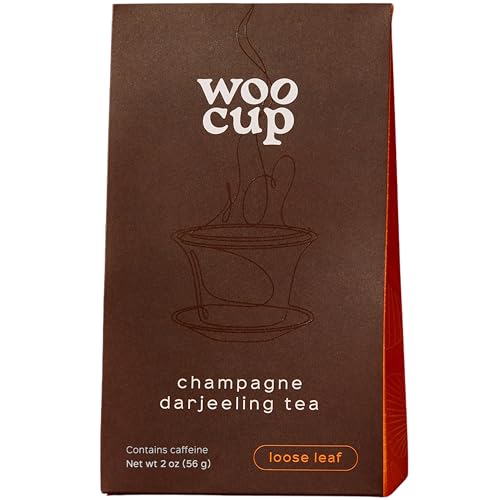
✅ Smooth, light-bodied character with no bitterness
Woocup Champagne Darjeeling Tea

✅ Brand loyalty / repeat purchase
Salada Decaffeinated Black Tea Original Blend
✅ majority-positive taste feedback
LeCharm Keemun Black Tea Loose Leaf


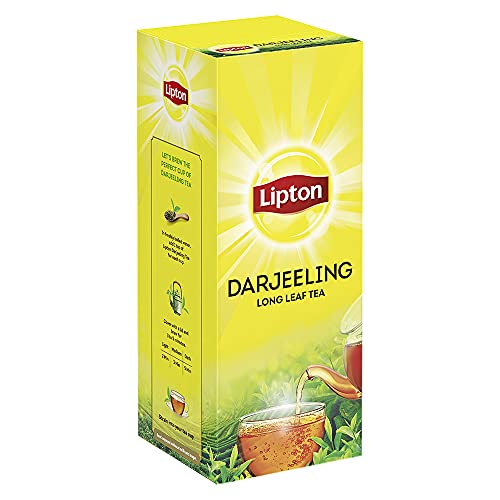


We analyze real customer reviews to surface what matters: key strengths, ideal use cases, and honest considerations — so you can make an informed choice.
Lipton Darjeeling Tea
Lipton's 500g loose Darjeeling sits in an awkward spot: a mass-market take on a named Indian black-tea region, with reviews splitting between long-time fans and recent buyers reporting noticeable drops in leaf and flavor quality.
🎯 Best for: An undemanding daily black-tea cup, Blending a small amount into a stronger black like Assam to add Darjeeling character
🍃 Strength: Light

🍃 Flavor Profile
Strength: Light
Sensory signals are thin in the review data — a handful describe the cup as rich and lightly floral, with one reviewer calling it delicately flavored. The descriptor register reads evaluative rather than source-based; we'd call this closer to an everyday black cup than the muscatel-forward Darjeeling some buyers expect.
✅ What Customers Love
- Familiar everyday black tea at an accessible bulk price
- Long-term loyalty for some buyers who liked the older formulation
🎯 Best For
An undemanding daily black-tea cup • Blending a small amount into a stronger black like Assam to add Darjeeling character
Brand: Lipton
Category: Black Tea
As an Amazon Associate we earn from qualifying purchases.
About This Black Tea
Lipton's 500g loose Darjeeling sits in an awkward spot — a mass-market take on a named Indian black-tea region, with reviews splitting between long-time fans and recent buyers reporting noticeable drops in leaf and flavor quality. Sensory data is thin: a handful of reviewers describe the cup as rich and lightly floral, with one calling it delicately flavored. The descriptors read evaluative rather than source-specific, closer to an everyday black cup than the muscatel-forward Darjeeling some buyers expect.
Most buyers reach for this as a daily cup. A couple blend half a teaspoon with regular Assam to lift color and body — a workaround for the lighter pull. Repeat-purchase rate sits at 11.8% (2 of 17), with two long-time buyers describing years of happy use before recent batches changed their minds.
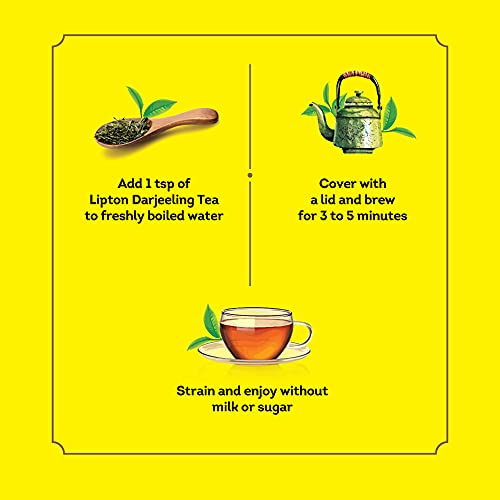
On brewing, don't boil the leaves outright. One reviewer's 15-minute extended brew didn't rescue the cup, and a shorter steep is the more commonly suggested approach. It's a tea that rewards restraint over force.
The bigger concern in recent reviews is quality drift — yellow dust in the box, small fragmented leaves and stems, and drinkers saying aroma and flavor have weakened versus the older Lipton 'connoisseur' tin. That tracks with a product-change flag on this listing. Pricing also reads as high relative to what's actually in the bag for some buyers. If you're chasing pronounced muscatel or floral character, this isn't the cup — a few reviewers have switched to Makaibari or Gopaldhara brands for that.
Best treated as an undemanding everyday black tea at a bulk price, not a benchmark Darjeeling. Skip it for evening drinking — caffeine sits in the moderate-to-high range.
Is Lipton Darjeeling Tea Right for You?
What does this Darjeeling taste like?
Sensory signals are thin in the reviews — a handful describe the cup as rich with a light floral note, which reads closer to an everyday black cup than a muscatel-forward premium Darjeeling. The descriptors lean evaluative rather than source-specific.
Does it deliver classic Darjeeling muscatel character?
Not strongly — reviewers note the floral pull is less pronounced than premium Darjeeling, and a couple of drinkers compensate by blending it with Assam to add color and body. If you're chasing pronounced muscatel or floral notes, this isn't the lot.
What's the most common complaint in recent reviews?
Quality drift — roughly 8 of 17 reviewers cite yellow dust in the box, fragmented leaves and stems, and weakened aroma versus the older Lipton 'connoisseur' tin. The listing carries a product-change flag consistent with that pattern.
How should I brew it?
Reviewers suggest a shorter steep and explicitly warn not to boil the leaves — one drinker's 15-minute extended brew didn't rescue the cup. Treat it like a standard black tea with just-off-boil water and a watchful steep.
Can I drink this every day?
Yes — reviewers most often reach for it as a daily black-tea cup, and it sits comfortably as an undemanding everyday option rather than a special-occasion lot. Just don't expect the complexity of a premium Darjeeling.
Can I blend this with another black tea?
A couple of reviewers do exactly that — mixing roughly half a teaspoon with regular Assam, or running two parts Assam to one part Darjeeling, to lift color and body. It's a workaround for the lighter pull some drinkers find here.
As an Amazon Associate we earn from qualifying purchases.
Who is this tea best suited for?
It fits buyers who want an undemanding daily black cup or who plan to blend a small amount of Darjeeling character into a stronger base like Assam. Drinkers chasing pronounced muscatel or premium-Darjeeling florals should look elsewhere.
Is it suitable for evening or bedtime drinking?
No — like other black teas this carries caffeine, and the synthesis explicitly flags it as not a fit for evening or bedtime use. Best kept for morning or daytime cups.
How does this compare to the older Lipton Connoisseur tin?
Several long-time buyers say recent batches feel inferior — weakened aroma and flavor versus the older Connoisseur formulation they remember. Two repeat purchasers still buy it, but the comparison generally runs against the newer lot.
Is it a good first Darjeeling for a beginner?
It leans toward experienced black-tea drinkers rather than newcomers seeking a textbook Darjeeling introduction — the floral and muscatel notes a beginner might expect are muted here. A first-time Darjeeling buyer is likely to want something more characterful.
Category: What is black tea?
Black tea is the fully oxidized leaf of the Camellia sinensis plant, the same species used for green, white, and oolong tea. The defining step is enzymatic oxidation, in which polyphenol oxidase converts catechins in the leaf into theaflavins and thearubigins, the compounds responsible for the dark color, brisk astringency, and reddish-amber liquor. Black tea accounts for roughly 75% of global tea consumption.
Category: What is Assam tea?
Assam is a black tea from the Brahmaputra river valley in northeast India, grown from the indigenous assamica variety in hot, humid, low-lying terrain. It is bold, malty, and full-bodied with high tannin content, which is why it stands up so well to milk and sugar and forms the backbone of most English and Irish Breakfast blends. Most Assam is produced as CTC for tea bags, but Orthodox whole-leaf Assam with golden tips is a refined alternative.
As an Amazon Associate we earn from qualifying purchases.
Category: What is Ceylon tea?
Ceylon is black tea from Sri Lanka, classified by altitude rather than region. High-grown Ceylons (above 1,200 m, from Nuwara Eliya, Dimbula, and Uva) are bright, floral, and brisk, with Uva known for a distinctive menthol note. Mid-grown Ceylons are fuller and maltier, while low-grown Ceylons are thick, dark, and intensely sweet. Authentic Ceylon tea carries the Sri Lanka Tea Board's Lion logo.
What Makes This Product Special
⚠️ Preliminary analysis based on 17-review sample • Our methodology
- Familiar everyday black tea at an accessible bulk price
- Long-term loyalty for some buyers who liked the older formulation
Taste Profile
Sensory signals are thin in the review data — a handful describe the cup as rich and lightly floral, with one reviewer calling it delicately flavored. The descriptor register reads evaluative rather than source-based; we'd call this closer to an everyday black cup than the muscatel-forward Darjeeling some buyers expect.
Brewing: Don't boil the leaves; one reviewer's 15-minute extended brew didn't rescue the cup, and a shorter steep is the more commonly suggested approach.
Best Use Cases
🎯 Best For
- An undemanding daily black-tea cup
- Blending a small amount into a stronger black like Assam to add Darjeeling character
⚠️ Not Ideal For
- Evening or bedtime drinking
- Buyers seeking premium Darjeeling character (muscatel, pronounced floral)
- Functional or wellness-focused tea use
How People Use It
Reviewers most often reach for this as a daily cup, and a couple blend half a teaspoon with regular Assam to lift color and body. Repeat-purchase rate sits at 11.8% (2 of 17), with two long-time buyers describing years of happy use before recent batches.
What to Consider
- Quality drift in recent batches — debris, dust, broken leaves, and weakened aroma versus older formulations
- Pricing seen as high relative to perceived quality
- Lighter pull than premium Darjeeling — reviewers compensate by mixing with Assam
⚠️ based on 17-review sample. Some issues may not be captured.
About This Analysis
This analysis is based on 17 customer reviews. We're showing you everything we found, but with a moderate sample, there's a lot we likely haven't captured yet.
✅ What we're confident about: What customers love and best use cases
⚠️ What may be incomplete: Potential issues and considerations
For more perspectives, check customer reviews on Amazon.
Product Selection
In short: We only feature high-rated products.
Products on TeaDelight.net are selected based on strong Amazon customer ratings, sufficient review volume, and market presence. We focus on well-regarded products that tea enthusiasts are actively considering and purchasing.
As an Amazon Associate we earn from qualifying purchases.