




We analyze real customer reviews to surface what matters: key strengths, ideal use cases, and honest considerations — so you can make an informed choice.
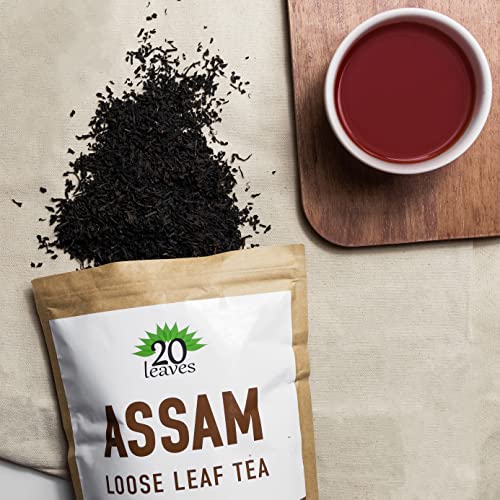
20 Leaves Assam Loose Leaf Black Tea
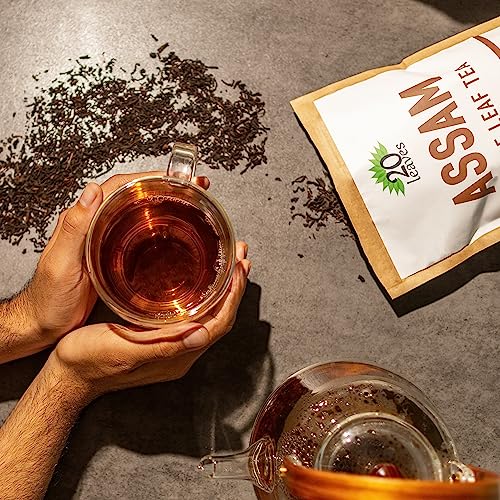
A bold Assam with classic malt and molasses notes that brews strong and smooth — remarkably forgiving of extended steep times and ideal for milk tea and chai.
🎯 Best for: Morning breakfast tea, Chai preparation - perfect for masala chai
🍃 Tastes like: malt, molasses, fruity

🍃 Flavor Profile
Strength: Bold
Notes: malt, molasses, fruity
✅ What Customers Love
- Malty flavor profile - characteristic Assam maltiness (4 mentions)
- Fresh quality - clear freshness from dry leaf (3 mentions)
- Low astringency - remarkably low bite even when brewed strong (2 mentions)
🎯 Best For
Morning breakfast tea • Chai preparation - perfect for masala chai • Iced tea/cold brewing - outstanding results • Kombucha brewing base
Brand: 20 Leaves
Category: Black Tea
As an Amazon Associate we earn from qualifying purchases.
About This Black Tea
This loose leaf Assam delivers characteristic malt and molasses richness with a smooth body and notably low astringency that holds even at full strength. Reviewers consistently find it takes milk beautifully and performs well as a masala chai base. Cold brewing reveals a more nuanced, fruity character not always apparent in hot preparation. Those seeking the sharp, brisk bite of a traditional Assam may find it too gentle — but that same softness makes it an excellent choice for beginners, daily drinkers, and anyone crafting milk tea or kombucha.
Is 20 Leaves Assam Loose Leaf Black Tea Right for You?
What does this 20 Leaves Assam actually taste like?
The dominant flavor is classic Assam maltiness — think malt biscuits or Ovaltine. Behind that, there are molasses-like sweetness notes and a subtle fruitiness that comes through more when you cold brew it. It's a bold tea but remarkably smooth — reviewers consistently note the low astringency, meaning it doesn't have that drying, tannic bite you get from many black teas. It's rich and full-bodied without being harsh. Some tea enthusiasts note it's a simpler, more straightforward Assam profile rather than a complex, multi-layered one, which could be either a pro or a con depending on what you're looking for.
Does this tea get bitter if you steep it too long?
No, and that's one of its standout features. Multiple reviewers specifically note that this Assam doesn't turn bitter even when oversteeped or brewed strong. That's unusual for a black tea — most Assams will punish you with harsh tannins if you forget about them for a few extra minutes. This makes it a great choice for anyone who doesn't want to babysit their tea timer, and it's one of the reasons it works so well for beginners. You can confidently steep it for 5+ minutes and still get a smooth, enjoyable cup.
Is this a good Assam tea for beginners?
It's one of the best beginner Assams you can find, honestly. Three things make it beginner-friendly: it doesn't turn bitter when oversteeped (so timing mistakes don't ruin your cup), it has low astringency (no harsh tannic bite), and it gives consistent results with a basic mesh infuser — no special equipment needed. The simpler flavor profile that some enthusiasts note as a drawback is actually an advantage here: you get clean, classic Assam flavor without needing a trained palate to appreciate it. A great starting point before exploring more complex single-origin Assams.
How does this compare to other Assam teas at this price?
This is where opinions split. The organic certification justifies some of the premium, but reviewers who've compared it to non-organic Assams like Ahmad Kalami or Barooti note those can offer more complexity for less money. The 20 Leaves version delivers a cleaner, simpler Assam profile — excellent malt, smooth body, no bitterness — but some experienced tea drinkers find it less nuanced than what they expected at this price point. If organic matters to you, it's solid value. If you're purely chasing flavor complexity per dollar, there are stronger competitors.
Is this tea too smooth for Assam lovers who want that classic 'bite'?
It might be, depending on your preference. Some reviewers who love traditional Assam note that the astringency is remarkably low — almost too low. If you specifically enjoy that brisk, drying sensation that a strong Assam delivers, this tea may feel like it's missing something. It's not a flaw per se — it's a smooth, malty, pleasant cup — but if you want your Assam to have teeth, you might prefer a more traditional CTC or a different single-origin. Think of this as the gentle side of Assam.
Who is this tea best for?
This Assam fits a surprisingly wide range of tea drinkers. Beginners will love it because it's incredibly forgiving — no bitterness even when oversteeped. Chai makers get a great bold base that holds up to spices and milk. Cold brew enthusiasts get a more complex, fruity profile. Kombucha brewers get a reliable base tea. Health-conscious buyers get organic certification. The one group that might be disappointed: experienced Assam lovers who specifically crave that brisk, astringent 'bite' — this tea plays it smoother than traditional Assam. It's a jack-of-all-trades tea that does many things well.
As an Amazon Associate we earn from qualifying purchases.
Can you use this Assam for kombucha?
Yes, and this is an unexpected highlight. Multiple buyers specifically report using this tea as a kombucha brewing base with great results. Black tea is ideal for kombucha because the SCOBY thrives on the caffeine and tannins, and the bold Assam flavor provides a strong base that comes through even after fermentation. The organic certification is a bonus here — no pesticide residues that might interfere with fermentation or end up in your brew. If you're a kombucha brewer looking for a reliable base tea, this is worth trying.
Is this good for making masala chai?
Yes — it's actually one of the recommended uses for this tea, and reviewers confirm it works well for chai. The bold, malty base stands up to strong spices like cardamom, ginger, and cinnamon without getting lost. It takes milk beautifully, which is essential for a good chai. The smooth, low-astringency profile means your chai won't be harsh or overly tannic even after simmering with spices. Some chai purists might prefer a tea with more astringent 'bite' to cut through the milk and sugar, but for a smooth, malty chai, this works really well.
What is Assam black tea good for?
This 20 Leaves Assam is particularly good for a few things. It's a standout morning tea — bold and malty enough to wake you up, and reviewers specifically mention it as a great morning energy boost. It's also excellent for chai preparation, since the malty, bold flavor holds up well with spices and milk. One surprise: multiple buyers use it as a kombucha brewing base, and it works really well for that. It also cold brews beautifully, bringing out more fruity, nuanced flavors you don't get when brewing hot.
How to brew black tea for milk tea?
This 20 Leaves Assam is practically made for milk tea. Brew it strong — use a heaping teaspoon per cup and steep for a full 5 minutes with boiling water. The bold, malty flavor stands up to milk without getting washed out. Reviewers specifically praise it for making classic malty Assam milk tea. For masala chai, simmer the leaves with your spices (cardamom, cinnamon, ginger, cloves) in a mix of water and milk for 5-10 minutes. The smooth, low-astringency profile means you get richness without harshness.
How to brew black tea for iced tea?
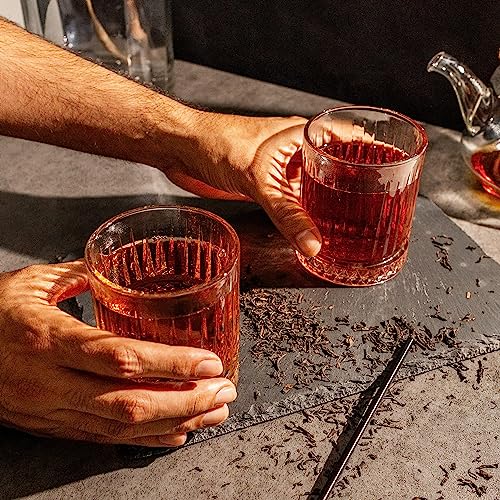
You have two great options with this Assam. For cold brew, add about 1.5 teaspoons per cup of cold water and refrigerate for 8-12 hours. Reviewers say the cold brew method brings out more fruity, nuanced flavors that you don't get from hot brewing — it's a different and arguably more complex experience. For quick iced tea, brew it double-strength hot (2 teaspoons per cup, 4 minutes) and pour over ice. Either way, this tea's low astringency means your iced tea will be smooth, not harsh.
What is the best way to brew this Assam black tea?
For hot brewing, use water just off the boil (around 200-212°F) and steep for 3 to 5 minutes. One of the best things about this particular Assam is that it's very forgiving — even if you overstep it, reviewers report it doesn't turn bitter, which is unusual for a black tea. A mesh infuser works great and gives consistent results. If you're making milk tea, brew it on the stronger side (closer to 5 minutes) so the flavor holds up against the milk. For cold brew, steep it overnight in the fridge — reviewers say this brings out more fruity, nuanced flavors you won't get from hot brewing.
As an Amazon Associate we earn from qualifying purchases.
How to make black tea more tasty?
With this Assam, you've already got a solid flavor base — malt, molasses, and a touch of fruitiness. To build on that: add a splash of whole milk to enhance the malty richness (this tea takes milk exceptionally well). A tiny pinch of salt can amplify the malt notes. Try cold brewing it overnight for a completely different, more fruity flavor profile. For chai lovers, simmer it with cardamom, ginger, and cinnamon. And make sure you're using enough leaf — going too light on the leaf is the most common reason tea tastes flat.
How should I store this tea to keep it fresh?
The bag is resealable, which is a good start — squeeze out excess air before sealing and keep it away from light, heat, moisture, and strong odors (tea absorbs smells from its environment). A cool, dark cupboard works fine for everyday storage. For longer-term storage, some buyers report success keeping it in the freezer — just make sure the bag is sealed airtight to prevent moisture absorption. At 16 oz, this is a decent amount of tea, so proper storage matters if it's going to take you a while to get through it.
What are common black tea mistakes?
The most common mistakes are using water that's not hot enough (black tea needs near-boiling water), steeping too short (under 3 minutes gives a weak, flat cup), and using too little leaf. With this 20 Leaves Assam specifically, you actually have more room for error than most black teas — it won't punish you for oversteeping with harsh bitterness. One less obvious mistake: storing tea poorly. This bag is resealable, which helps, and some buyers even store it in the freezer for long-term freshness.
Is black tea good for you in the morning?
Absolutely — and this Assam is specifically praised as a morning tea by reviewers. The caffeine content (40-70 mg per cup) gives a solid wake-up boost without the jitters many people get from coffee. Buyers describe it as a 'perfect morning energy boost.' The bold, malty flavor feels substantial enough for breakfast, and it pairs well with a meal. If you add milk, it becomes a proper breakfast tea. Unlike coffee, the L-theanine in tea promotes focused alertness rather than the anxious buzz some people experience.
Why is Assam tea so expensive?
Assam tea prices vary a lot depending on quality and sourcing. This 20 Leaves version carries a premium partly because it's 100% USDA certified organic, which means higher farming costs. Some reviewers note the price is higher than comparable non-organic Assams like Ahmad Kalami or Barooti, and a few felt the flavor complexity didn't quite justify the cost. That said, if organic certification matters to you, the premium makes more sense — you're paying for cleaner farming practices, not just flavor.
Is Assam black tea the same as regular black tea?
Not exactly. Assam is a specific type of black tea grown in the Assam region of northeastern India, known for its bold, malty character. This 20 Leaves version delivers that classic Assam profile — strong malt and molasses notes with a smooth, rich body. Compared to other black teas like Darjeeling (which is lighter and more floral) or Ceylon (which tends to be brighter and more citrusy), Assam hits harder and pairs better with milk. Think of it as the workhorse of the black tea world.
As an Amazon Associate we earn from qualifying purchases.
Is black tea good for you when sick?
Yes — black tea is a classic sick-day drink for good reason. The warm liquid soothes the throat, the caffeine can help with headache and fatigue, and the tannins have mild antimicrobial properties. This Assam is a particularly good choice when you're under the weather because it's smooth and low in astringency, so it won't irritate an already sensitive throat. You can brew it lighter than usual if your stomach is off. Adding honey and lemon works well with the malty base flavor. The fluids and antioxidants all support recovery.
Is black tea more caffeine than coffee?
No — coffee has significantly more caffeine per cup. A typical 8 oz cup of black tea like this Assam contains roughly 40-70 mg of caffeine, while a cup of coffee runs 80-100 mg or more. That said, Assam tends to be on the higher end of the caffeine spectrum for tea, so this 20 Leaves blend should give you a solid morning boost. Reviewers mention it works well as a morning energy kickstart and an afternoon pick-me-up. The caffeine in tea also releases more gradually than coffee thanks to L-theanine, so you get alertness without the jitters.
Which tea is highest in caffeine?
Among true teas, Assam black tea is consistently among the highest in caffeine — typically 50-70 mg per cup. This 20 Leaves Assam should be right in that range, making it a strong pick for anyone looking for a caffeinated tea. Matcha technically has more caffeine per serving (around 70 mg) since you consume the whole leaf, but among steeped teas, Assam is hard to beat. Reviewers specifically call this out as a good morning tea and afternoon pick-me-up.
Is there enough caffeine in black tea to keep you awake?
Yes, especially an Assam like this one. Black tea contains enough caffeine (40-70 mg per cup) to noticeably improve alertness. Reviewers of this 20 Leaves Assam specifically mention it as a morning energy booster and afternoon pick-me-up. It won't hit as hard as coffee, but the combination of caffeine and L-theanine in tea gives a more sustained, focused energy. If you're sensitive to caffeine, you might want to avoid brewing a strong cup in the evening.
What are 5 benefits of drinking black tea?
Based on research and what reviewers experience with this Assam specifically: (1) Morning energy and alertness — the caffeine content makes it a reliable wake-up tea. (2) Antioxidant intake from theaflavins, supporting cardiovascular health. (3) Gut health benefits from polyphenols that support beneficial gut bacteria. (4) Stress reduction — the L-theanine in tea promotes calm focus, and reviewers describe this as a good afternoon 'chill out' tea. (5) Hydration — despite the caffeine, tea is a net hydrator and a good way to increase your daily fluid intake. The organic certification on this blend means you get these benefits without pesticide exposure.
What happens if we drink black tea daily?
Daily black tea consumption is well-studied and generally considered beneficial. The antioxidants in black tea (theaflavins and thearubigins) support heart health and gut health. With this 20 Leaves Assam being certified organic, you're minimizing pesticide exposure in your daily cup. Reviewers use this as their daily drinker — it's smooth enough for everyday consumption without getting harsh. The main things to watch are caffeine intake (if you're drinking many cups) and tannins on an empty stomach. Most research suggests 3-4 cups of black tea daily is perfectly fine for most adults.
As an Amazon Associate we earn from qualifying purchases.
Is black tea actually healthy?
Yes, and there's solid research backing it up. Black tea is rich in antioxidants (theaflavins and thearubigins), supports cardiovascular health, promotes healthy gut bacteria, and provides a gentle caffeine boost. This 20 Leaves Assam adds the benefit of being certified organic, so you avoid pesticide exposure. Reviewers use it daily as both a morning energizer and an afternoon relaxation ritual, which speaks to its versatility for wellbeing. The main caveat is to be mindful of caffeine if you're sensitive — and avoid loading it with sugar, which would offset the benefits.
What is the healthiest form of black tea?
Loose leaf is considered the healthiest form, and that's exactly what this is. Loose leaf retains more of the beneficial compounds compared to the crushed, smaller particles in most tea bags. This 20 Leaves Assam has a mix of medium and long leaf pieces, which means a good balance of flavor extraction and health compound release. Organic certification (which this has) adds another layer — no pesticide residues. Brewing it plain (no sugar, no milk) maximizes the antioxidant benefit, though a splash of milk doesn't significantly reduce the health value.
What is the healthiest loose leaf tea to drink?
All true teas from the Camellia sinensis plant — including this Assam — deliver antioxidants, particularly theaflavins and thearubigins in black tea. This 20 Leaves Assam has the added benefit of being 100% certified organic, so you're not getting pesticide residues in your cup. Loose leaf tea in general is considered healthier than tea bags because you get whole or larger leaf pieces with more of the beneficial compounds intact. Whether black, green, or white tea is 'healthiest' depends on what you're optimizing for, but daily black tea consumption is well-supported by research.
Which is healthier, black tea or green tea?
They're different rather than one being clearly 'better.' Green tea has more catechins (especially EGCG), while black tea has more theaflavins and thearubigins — both are powerful antioxidants, just different types. Black tea like this Assam tends to have more caffeine, which is a plus if you want energy. The organic certification on this 20 Leaves tea is a health advantage regardless of tea type — no pesticide residues. Honestly, the healthiest tea is the one you'll actually drink daily, and this Assam's smooth, approachable flavor makes it easy to stick with.
Is black tea good for weight loss?
Black tea can support weight management as part of a healthy routine. It's essentially zero calories when brewed plain, and the caffeine provides a mild metabolic boost. Research suggests the polyphenols in black tea may help reduce fat absorption and support gut bacteria linked to healthy weight. This 20 Leaves Assam works well for this purpose — it's flavorful enough to enjoy without sweetener, and the natural malty sweetness means most people don't feel the need to add sugar. Just don't load it up with cream and sugar, or you'll undo the calorie advantage.
What is the number one black tea in the world?
There's no single 'best' — it depends on what you're looking for. Assam, Darjeeling, and Ceylon are the three most celebrated black tea regions. Assam (like this 20 Leaves tea) is prized for bold, malty flavor and is the backbone of most breakfast blends worldwide. Darjeeling is lighter and more floral, often called the 'champagne of teas.' Ceylon offers a bright, citrusy profile. This particular Assam delivers a smooth, approachable version of the classic Assam character — not the most complex, but reliably good and very forgiving to brew.
As an Amazon Associate we earn from qualifying purchases.
What is the healthiest brand of tea?
More than brand, what matters is leaf quality, organic certification, and how it's processed. This 20 Leaves Assam checks the organic box with its USDA certification, meaning no synthetic pesticides or fertilizers. Loose leaf tea is generally healthier than tea bags because you get larger leaf pieces with more intact antioxidants and fewer microplastics (some tea bags leach plastic particles). The fact that this is a single-origin Assam rather than a blended commodity tea also works in its favor for quality and transparency.
How to make black tea step by step?
Here's how to brew this 20 Leaves Assam: Start by boiling fresh, filtered water. While it heats, measure about 1 teaspoon of loose leaf per 8 oz cup into your infuser or teapot. Pour the boiling water over the leaves and steep for 3-5 minutes. Remove the leaves and enjoy. This tea has a mix of medium and long leaf pieces, so a mesh infuser with fine holes works best to keep smaller bits out of your cup. Add milk if you like — this Assam takes milk beautifully, creating a classic malty milk tea. No sugar needed for most people, as the natural maltiness and molasses notes give it a pleasant sweetness.
How to brew black tea loose leaf?
Loose leaf brewing is simple once you have the basics down. For this Assam, use about 1 teaspoon per cup, boiling water, and steep 3-5 minutes in a mesh infuser, teapot with built-in strainer, or even a French press. The mix of medium and long leaf in this tea means a mesh infuser gives the most consistent results. Don't pack the leaves too tight — give them room to unfurl and release flavor. After steeping, remove the leaves promptly (though with this tea, a minute or two extra won't ruin things).
How long do you boil black tea for?
You don't actually want to boil the tea leaves — boil the water, then pour it over the leaves and steep. For this 20 Leaves Assam, 3 to 5 minutes is the sweet spot. The good news is this tea is remarkably forgiving: multiple reviewers note that even when brewed strong or oversteeped, it doesn't turn bitter. That makes it a great choice if you tend to forget about your tea and come back to it a few minutes late. For a bolder cup (or if adding milk), lean toward the 5-minute mark.
How much caffeine in black tea vs coffee?
A cup of this Assam black tea will give you roughly 40-70 mg of caffeine, while a standard cup of drip coffee runs 80-100 mg. So coffee is roughly 1.5-2x the caffeine. But Assam is one of the stronger teas for caffeine content, and reviewers say this one delivers enough kick for a morning boost. The big difference is how the caffeine feels — tea releases it more gradually alongside L-theanine, so you get steady alertness rather than the spike-and-crash cycle some people get from coffee.
What Customers Love
⚠️ Limited sample based on limited customer feedback (10 reviews) • Our methodology
- Malty flavor profile - characteristic Assam maltiness (4 mentions)
- Fresh quality - clear freshness from dry leaf (3 mentions)
- Low astringency - remarkably low bite even when brewed strong (2 mentions)
- No bitterness when oversteeped - brews strong without bitter taste (2 mentions)
- Takes milk well - makes classic malty Assam milk tea (2 mentions)
- Resealable packaging for freshness (2 mentions)
- Excellent as iced tea/cold brewed - more fruity and nuanced when cold (1 mentions)
Taste Profile
- smooth
- malty
- flavorful
- rich
- bold
Best Use Cases
🎯 Best For
- Morning breakfast tea
- Chai preparation - perfect for masala chai
- Iced tea/cold brewing - outstanding results
- Kombucha brewing base
- Milk tea preparation
- Daily drinking routine
What to Consider
- Simpler flavor profile than expected at price point - less nuanced than comparable Assams (1 mentions)
- Lacks the characteristic Assam 'bite' - too low astringency for some preferences (1 mentions)
⚠️ Important: This analysis is based on limited customer feedback (10 reviews). We've shared what we found, but there may be additional considerations we haven't captured.
About This Analysis
This analysis is based on 10 customer reviews. We're showing you everything we found, but with a small sample, there's a lot we likely haven't captured yet.
✅ What we're confident about: What customers love and best use cases
⚠️ What may be incomplete: Potential issues and considerations
For more perspectives, check customer reviews on Amazon.
Product Selection
In short: We only feature high-rated products.
Products on TeaDelight.net are selected based on strong Amazon customer ratings, sufficient review volume, and market presence. We focus on well-regarded products that tea enthusiasts are actively considering and purchasing.
As an Amazon Associate we earn from qualifying purchases.
You Might Also Like

✅ Authentic restaurant-quality taste
Tea Zone Thai Tea Leaves
✅ Strong, authentic cinnamon flavor
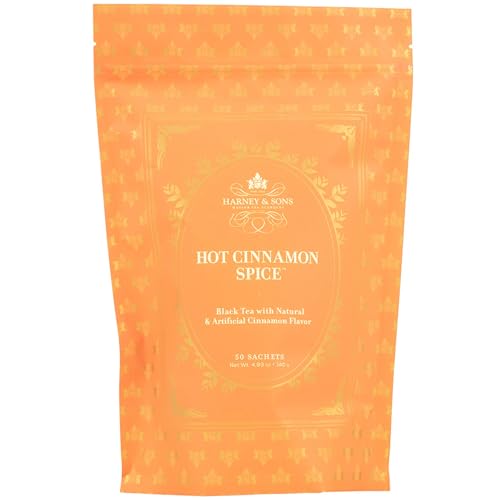
Harney & Sons Hot Cinnamon Spice Black Tea

✅ Non-bitter taste even with longer steeping
Red Rose Original Full Flavored Black Tea

✅ Strong, authentic lychee aroma and flavor